
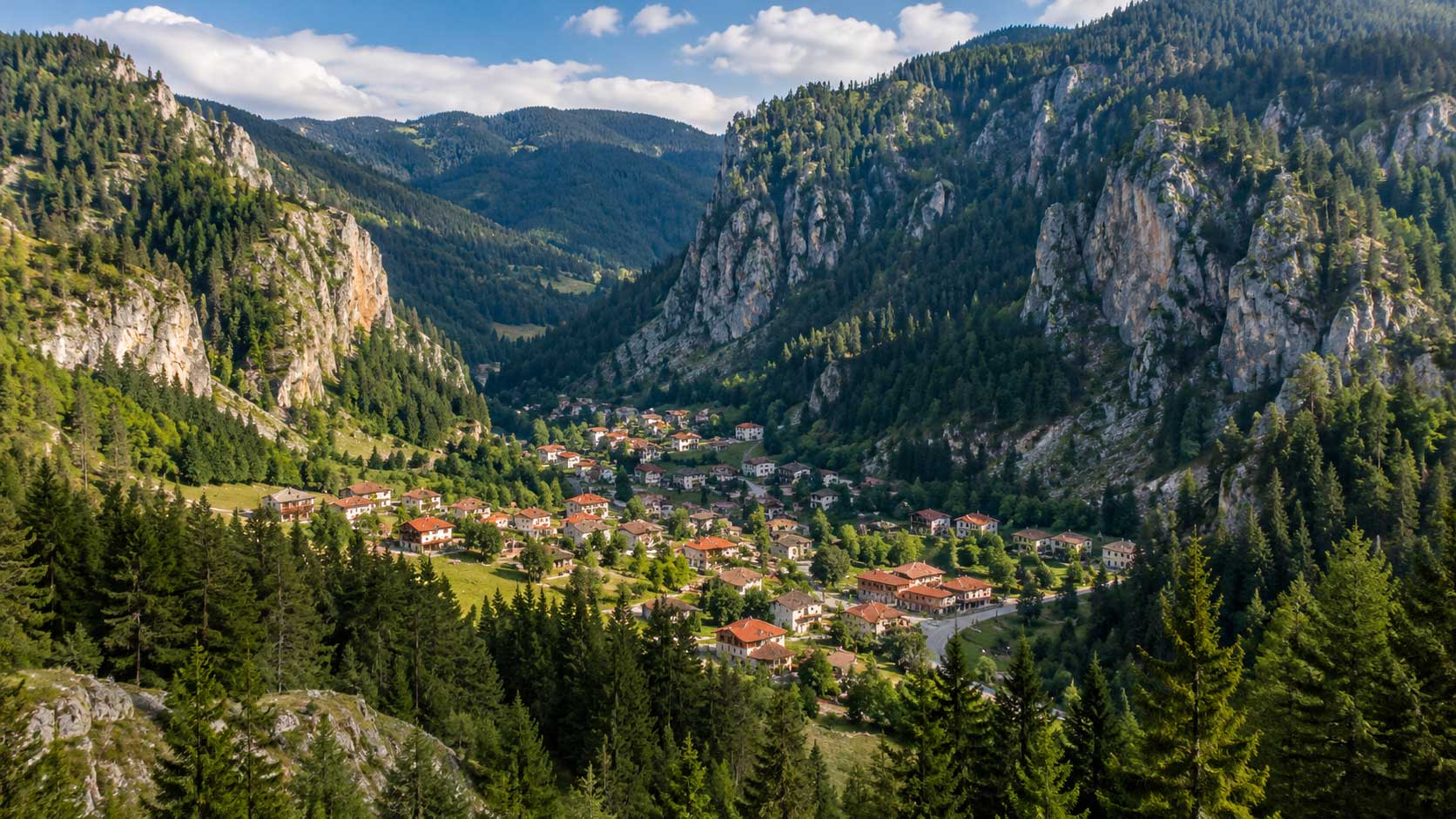
Trigrad – A Dramatic Mountain Village in the Rhodopes

- February 6, 2026
- 23
- Bulgarian Villages , Mountain Escapes , Mountain Villages
Trigrad Bulgaria is a dramatic mountain village hidden deep in the Western Rhodopes, where the journey is almost as memorable as the destination.
The road winds through dense pine forests before squeezing between the towering cliffs of Trigrad Gorge, creating a dramatic entrance to the village. Beyond the gorge, Trigrad sits among forested slopes, rocky ridges, and high mountain meadows not far from Bulgaria’s border with Greece.
Trigrad feels very different from Bulgaria’s better-known Revival-era villages. You do not come here mainly for ornate historic houses or perfectly preserved cobbled streets. The landscape is what gives the village its character.
Mountains rise around Trigrad in almost every direction. Pine forests cover the slopes, livestock graze in nearby meadows, and narrow roads lead toward caves, hiking routes, and quieter corners of the Rhodopes.
The area is especially famous for Devil’s Throat Cave, located around 2 kilometers from the village. According to one of the region’s best-known legends, the cave is connected with the story of Orpheus descending into the underworld in search of Eurydice. Inside, the Trigrad River disappears underground and forms an impressive waterfall deep within the cave.
But Trigrad deserves more than a quick stop on the way to the cave.
Spend some time walking through the village, looking toward the surrounding mountains, and enjoying the cool Rhodope air, and you begin to understand why this remote corner of Bulgaria leaves such a strong impression.
Trigrad is wild, mountainous, and deeply atmospheric — exactly the kind of place that makes the Rhodopes unforgettable.
What Makes Trigrad Special
What makes Trigrad memorable is the scale of the landscape around it.
The village sits deep in the Rhodopes, surrounded by steep cliffs, forested slopes, narrow valleys, caves, and high mountain ridges. Long before you reach the center of the village, the scenery already sets Trigrad apart.
The drive through Trigrad Gorge is one of the highlights. In places, the road passes between towering rock walls, making the approach feel dramatic and surprisingly secluded.
That sense of isolation is part of Trigrad’s appeal.
Although visitors come for the nearby caves, hiking routes, and mountain scenery, the village still feels like a real Rhodope settlement rather than a place built mainly for tourism. Small guesthouses, family-run restaurants, livestock, quiet homes, and forest roads are all part of everyday life here.
Trigrad is also a good place to combine outdoor exploration with local culture. You can spend the day visiting caves or walking through the mountains, then return to the village for traditional Rhodope food and a quiet evening surrounded by forested slopes.
It is this mix of dramatic scenery, remoteness, outdoor adventure, and everyday village life that gives Trigrad its distinctive character.
Quick Travel Guide to Trigrad Bulgaria
Planning a trip to Trigrad Bulgaria? Here are the key things to know before you go.
Region: Western Rhodope Mountains, Bulgaria
Nearest larger town: Devin
Best known for: Trigrad Gorge and Devil’s Throat Cave
Best time to visit: May through early October
Ideal stay: 1–2 nights
Best for: Nature, hiking, caves, photography, scenic drives, and slow travel
Getting around: A car is highly recommended
Accommodation: Mostly family-run guesthouses and small mountain lodgings
Local foods to try: Patatnik, klin, local cheese, yogurt, and traditional Rhodope dishes
Nearby places to explore: Yagodina Cave, Buynovo Gorge, Chairski Lakes, Devin, Shiroka Laka, and Gela
Why Add Trigrad to Your Bulgaria Itinerary?
Trigrad is a great choice if you want to experience a wilder and quieter side of Bulgaria.
Here, the main attractions are not museums or busy pedestrian streets, but towering cliffs, forested mountains, caves, scenic roads, and the peaceful atmosphere of a remote Rhodope village.
That combination makes Trigrad a natural stop on a road trip through the Rhodopes.
What to See and Do in Trigrad
There is plenty to see and do around Trigrad Bulgaria, despite the village’s small size.
Much of the appeal comes from the landscape itself. Gorges, caves, forest roads, hiking paths, and mountain views make Trigrad a natural base for exploring this part of the Western Rhodopes.
Explore Trigrad Gorge
The road through Trigrad Gorge is one of the most memorable parts of the visit.
Steep limestone cliffs rise on both sides as the road follows the river through the narrow valley. The scenery becomes especially dramatic where the rock walls close in around the road.
Do not rush this stretch. The gorge is more than simply the route into Trigrad — it is one of the highlights of the area.
Visit Devil’s Throat Cave
Devil’s Throat Cave is the best-known attraction near Trigrad.
The cave is famous for its vast underground chamber, a 42-meter underground waterfall, and legends connected with Orpheus and the underworld.
Inside, the roar of the water and the dark chamber create a very different experience from the scenery outside.
Walk Through the Village
Trigrad itself is worth exploring on foot.
You will pass mountain homes, family-run guesthouses, gardens, quiet streets, and open views toward the surrounding slopes.
There is no need to follow a strict sightseeing route. Part of the experience is simply walking slowly through the village and seeing what everyday life looks like in this remote corner of the Rhodopes.
Go Hiking in the Rhodope Mountains
There are plenty of places to walk around Trigrad.
Forest tracks and mountain paths lead through pine woods, open meadows, and higher ground overlooking the surrounding valleys.
You do not need to plan a long hike to enjoy the scenery. Even a shorter walk beyond the village can quickly take you into quieter surroundings.
Try Traditional Rhodope Food
After exploring the area, stop at a local restaurant or guesthouse for traditional Rhodope food.
Look for regional specialties such as patatnik, a potato-based dish, and klin, a traditional pastry often filled with rice, eggs, and cheese.
These simple, filling dishes feel especially appropriate after a day spent outdoors in the mountains.
Stay for the Evening
Trigrad changes once the daytime visitors begin to leave.
The roads become quieter, the mountains darken around the village, and the sound of traffic gives way to the stillness of the surrounding forests.
If your itinerary allows it, spend the night. The evening atmosphere is one of the best reasons not to treat Trigrad as only a quick stop on the way to Devil’s Throat Cave.
Best Time to Visit Trigrad
The best time to visit Trigrad Bulgaria depends on the kind of trip you have in mind. Each season brings a noticeably different feel to the village and surrounding mountains.
Spring
Spring brings greener forests, fuller mountain streams, and cooler weather.
The meadows around Trigrad begin to brighten again, and the area feels fresh after winter. It is a good season for walking and photography, although mountain weather can still change quickly.
Bring layers and something waterproof, especially earlier in the season.
Summer
Summer is one of the easiest times to explore Trigrad.
The days are long, temperatures are usually more comfortable than in Bulgaria’s lower and hotter regions, and conditions are well suited to cave visits, hiking, and scenic drives.
July and August are busier, particularly around Devil’s Throat Cave and Trigrad Gorge, but the village still feels much quieter than Bulgaria’s main tourist resorts.
Autumn
Autumn is one of the most beautiful times to be in Trigrad.
The forests begin to change color, the mornings turn cooler, and the mountains feel calmer once the busiest summer weeks are over.
September and early October are especially good for photography, walking, and travelers who prefer fewer visitors.
Winter
Winter gives Trigrad a much more remote feel.
Snow can cover the forests, rooftops, and surrounding slopes, but driving and walking conditions may also become more difficult.
A winter trip can be beautiful, but it is better suited to travelers who are comfortable with mountain roads and unpredictable weather.
For most visitors, late spring through early autumn is the easiest time to visit Trigrad, with better road conditions, longer days, and more opportunities to explore outdoors.
How to Get to Trigrad
Reaching Trigrad Bulgaria is part of the experience.
The village lies deep in the Western Rhodopes, and the final stretch takes you through forested valleys, winding mountain roads, and the dramatic approach through Trigrad Gorge.
By Car
Driving is the easiest way to reach Trigrad and gives you much more freedom to explore the surrounding area.
Most visitors approach through Devin before continuing south toward Trigrad.
The road becomes narrower and more winding as you enter the mountains, so it is worth taking your time, especially around blind bends or in wet weather.
From Sofia
From Sofia, expect a journey of several hours by car.
The route becomes more scenic as you move deeper into the Rhodopes, so it is better to leave some extra time rather than treating the drive as something to rush through.
From Plovdiv
Plovdiv is another good starting point for a trip to Trigrad.
The drive takes you through the Rhodope region and can easily be combined with stops in Devin, Shiroka Laka, or other nearby mountain villages.
Public Transportation
Public transportation to Trigrad is limited, and schedules can vary by season.
Check current connections before traveling if you are not driving. Having a car is much more convenient if you plan to visit caves, viewpoints, or smaller villages in the area.
Driving Tips
Fill up with fuel before heading deeper into the mountains, and do not rely completely on mobile reception.
Downloading an offline map is a good idea, especially if you plan to explore side roads, hiking areas, or nearby villages.
The final approach to Trigrad is one of the most memorable parts of the trip, so give yourself enough time to enjoy the road rather than simply focusing on reaching the village.
Where to Stay in Trigrad
Staying overnight in Trigrad lets you see a quieter side of the village after most day visitors have left.
Accommodation is mostly made up of small guesthouses and family-run properties rather than large hotels, which fits the character of this remote mountain village.
Stay in the Village
Choosing a guesthouse in Trigrad keeps you close to local restaurants, village streets, and the surrounding mountains.
Staying in the village also makes it easier to enjoy an early morning walk or a quiet evening without having to drive back to another town.
Look for a Family-Run Guesthouse
A locally run guesthouse is often the best fit for Trigrad.
Some offer breakfast or homemade Rhodope dishes, and the smaller setting can give you a better feel for everyday village life.
If meals are important to you, check what is available when booking, as facilities vary from one property to another.
Book Ahead in Summer
Trigrad has fewer accommodation options than larger tourist towns.
During summer weekends, holidays, and popular hiking periods, booking ahead is a good idea if you want to stay directly in the village.
Consider Nearby Devin
If you prefer a larger choice of hotels, restaurants, and spa facilities, Devin is another option.
It works well as a base for exploring this part of the Rhodopes, but staying in Trigrad puts you much closer to the gorge, caves, and mountain scenery.
If your schedule allows it, one night in Trigrad is enough to experience the village at a slower pace and enjoy the mountains after the daytime crowds have gone.
Places to Visit Near Trigrad
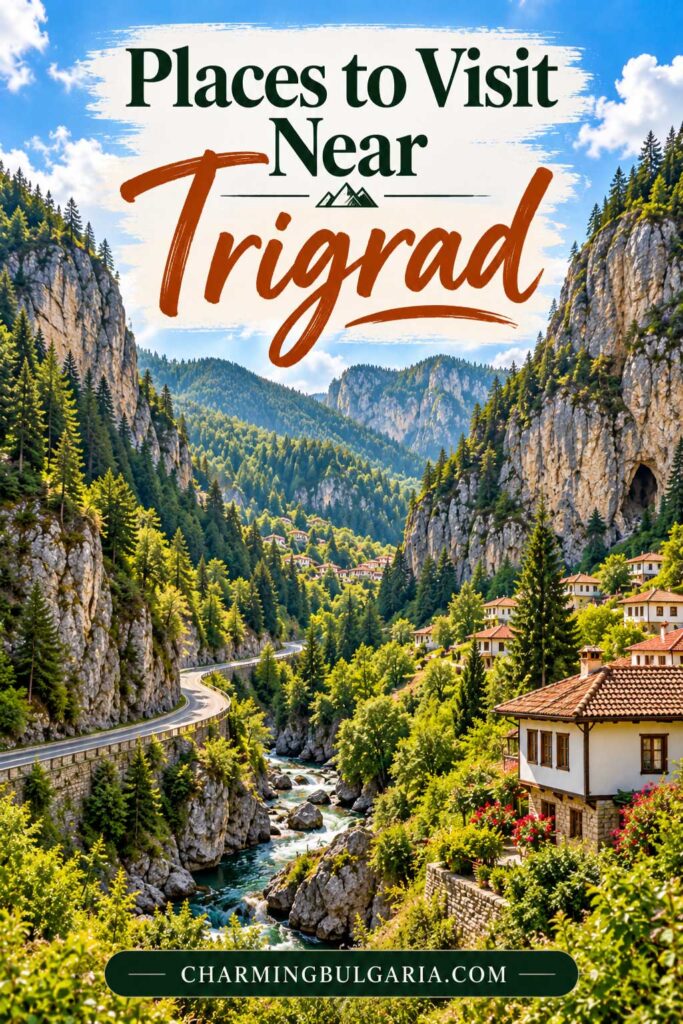
Trigrad is a good base for exploring some of the Western Rhodopes’ most impressive natural sights.
Within a relatively small area, you can visit caves, gorges, mountain lakes, and hiking routes, so it is worth giving yourself more than a few hours here.
Yagodina Cave
Yagodina Cave is one of the easiest places to combine with a visit to Trigrad.
Located near the village of Yagodina, it pairs naturally with a drive through Buynovo Gorge, making for a scenic half-day or full-day excursion through another dramatic part of the Rhodopes.
Buynovo Gorge
If you enjoyed the road through Trigrad Gorge, Buynovo Gorge offers another impressive stretch of mountain scenery.
The narrow road, steep rock walls, and forested slopes make the drive itself part of the experience.
Do not try to squeeze too much into the day. Leave enough time for photo stops, viewpoints, and short breaks along the way.
Chairski Lakes
For something quieter, consider the Chairski Lakes.
The Chairski Lakes are a group of seven natural lakes between Trigrad and Mugla, surrounded by mountain meadows, forests, and peatland areas.
If you enjoy walking and less-developed natural areas, this is a peaceful place to add to your itinerary.
Haramiyska Cave
More adventurous visitors may also come across Haramiyska Cave, located in Trigrad Gorge near Devil’s Throat Cave.
This is not a standard walk-in tourist cave. Visiting requires proper equipment and should only be done as part of an organized trip with a qualified guide.
For most travelers, Devil’s Throat Cave and Yagodina Cave are the more accessible choices.
Explore More of the Rhodope Mountains
Trigrad also fits naturally into a longer road trip through the Rhodopes.
You can combine Trigrad with mountain roads, forest walks, caves, and traditional villages such as Dolen as part of a longer trip through the Western Rhodopes.
This part of Bulgaria is best explored slowly, with enough time to stop when a viewpoint, village, or side road catches your attention.
What to Eat in Trigrad

Food is part of the Trigrad experience, especially after a day spent hiking, visiting caves, or exploring the surrounding mountains.
Rhodope cuisine is simple, filling, and closely tied to the ingredients traditionally available in mountain villages.
Try Patatnik
One of the best-known dishes from the Rhodopes is patatnik.
It is usually made with grated potatoes, onions, herbs, and sometimes cheese, then cooked until the outside becomes golden and crisp.
Recipes can vary from place to place, so it is worth trying a local version while you are in the region.
Order Klin
Another traditional dish to look for is klin, a Rhodope pastry commonly prepared with thin pastry layers and a filling that may include rice, eggs, cheese, or herbs.
It is a simple but satisfying dish and works well as either a light meal or something to share.
Look for Local Dairy Products
The Rhodopes are also known for dairy products such as white cheese, yogurt, and butter.
These often appear at guesthouse breakfasts or alongside other traditional dishes.
Smaller family-run places may also use ingredients produced locally or sourced from nearby villages.
Try Simple Mountain Food
Meals in Trigrad tend to be straightforward rather than elaborate.
You are more likely to find soups, grilled meats, potatoes, salads, bread, and traditional Rhodope dishes than fine dining.
After a day outdoors, that kind of hearty food fits the setting well.
Ask What Is Homemade
If you are staying at a family-run guesthouse, ask whether breakfast or dinner is available.
Some properties prepare homemade meals for guests, which can be a nice way to try regional dishes in a more local setting.
Food here is not just something to fit between sightseeing stops. It is another small part of experiencing everyday life in the Rhodopes.
How Long to Stay in Trigrad
You can see the main highlights around Trigrad on a day trip, but staying longer gives you more time to enjoy the village and the surrounding mountains.
One Day
If you only have one day, focus on Trigrad Gorge, Devil’s Throat Cave, and the village itself.
That gives you enough time to see the main sights, have a traditional Rhodope meal, and walk around Trigrad without trying to fit too much into a single day.
Two Days
A two-day stay works well for most visitors.
Spend the first day exploring Trigrad Gorge, Devil’s Throat Cave, and the village. On the second day, you can head toward Yagodina, visit another cave or gorge, take a longer walk, or spend more time enjoying the mountain scenery.
Staying overnight also lets you see Trigrad once most day visitors have left.
Three Days or More
If you enjoy hiking, photography, quiet villages, or slower travel, a three-day stay gives you more freedom.
You can follow quieter trails, visit nearby villages, stop at viewpoints, and leave room for unplanned detours along the mountain roads.
For most travelers, a two-night stay in or around Trigrad gives you enough time to see the main attractions while still enjoying the Rhodopes at a relaxed pace.
Practical Tips for Visiting Trigrad
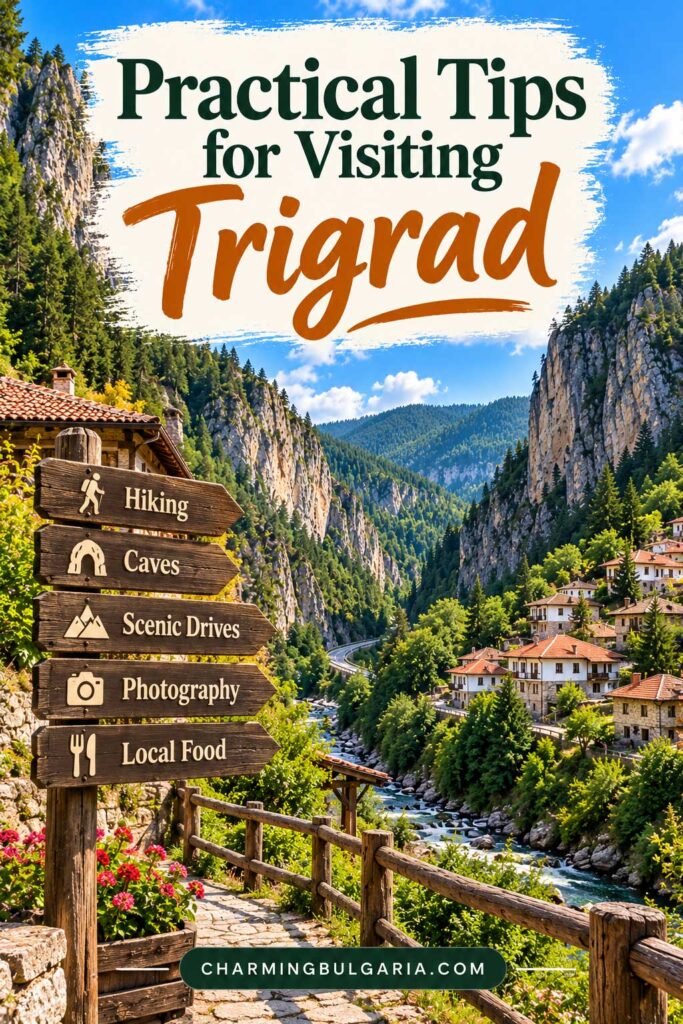
A little preparation can make your trip to Trigrad much easier, especially if you plan to explore the surrounding caves, roads, and hiking areas.
Bring Layers
Weather in the Rhodopes can change quickly.
Even in summer, mornings and evenings can feel cool, and caves are naturally colder than the air outside. A light jacket or extra layer is useful for most of the year.
Wear Comfortable Shoes
Good walking shoes are worth bringing.
Paths around caves, viewpoints, forests, and mountain trails can be uneven or slippery, especially after rain.
Carry Some Cash
Do not assume that every guesthouse, restaurant, or small local business will accept cards.
Keeping some Bulgarian leva with you is useful when traveling through smaller mountain villages.
Download Offline Maps
Mobile coverage can be unreliable in more remote parts of the mountains.
Downloading offline maps before you arrive makes it easier to navigate between Trigrad, nearby caves, hiking routes, and surrounding villages.
Take Your Time on the Roads
Roads around Trigrad can be narrow, winding, and slow in places.
Allow extra time, especially when driving through the gorges or in poor weather.
Check Cave Opening Hours
Opening hours for local attractions can change with the season.
If Devil’s Throat Cave or Yagodina Cave is high on your list, check the latest opening times before heading out.
Stay Overnight If You Can
Many visitors come to Trigrad for the day, but the village becomes much quieter in the evening.
Staying overnight gives you more time to explore without rushing and lets you experience the village after most day visitors have left.
Trigrad is best enjoyed without an overly packed schedule. Leave some extra time for viewpoints, roadside stops, and short walks that you may not have planned in advance.
Is Trigrad Worth Visiting?
Yes. Trigrad Bulgaria is especially worth visiting if you enjoy mountain scenery, caves, quiet villages, and places away from the country’s busiest tourist routes.
Trigrad is not a destination built around museums, shopping streets, or polished attractions.
The main reason to come is the setting.
Much of the appeal comes from Trigrad Gorge, Devil’s Throat Cave, the pine-covered slopes, and the quiet streets of the village itself.
For hikers, photographers, road-trip travelers, and anyone who enjoys nature, Trigrad can easily become one of the highlights of a trip through southern Bulgaria.
It is particularly appealing if you enjoy quieter Rhodope villages such as Gela, where the surrounding landscape is just as important as the village itself.
Who Will Enjoy Trigrad Most?
Trigrad is a good fit for travelers who enjoy:
- Mountain scenery and scenic drives
- Caves and gorges
- Hiking and outdoor activities
- Traditional Rhodope food
- Small mountain villages
- Photography
- Slower, quieter trips
Travelers looking mainly for nightlife, shopping, or resort-style amenities will probably prefer somewhere else.
But if you enjoy winding mountain roads, forests, limestone cliffs, and peaceful evenings in a small Rhodope village, Trigrad is well worth adding to your itinerary.
Frequently Asked Questions About Trigrad Bulgaria
Where is Trigrad located?
Trigrad Bulgaria lies in the Western Rhodope Mountains of southern Bulgaria, near the town of Devin and not far from the Greek border.
What is Trigrad famous for?
Trigrad is best known for Trigrad Gorge, Devil’s Throat Cave, and the dramatic mountain scenery surrounding the village.
Is Trigrad worth visiting?
Yes. Trigrad is a great choice if you enjoy caves, hiking, scenic drives, mountain villages, and quieter places away from Bulgaria’s busiest tourist areas.
How much time do you need in Trigrad?
You can see the main highlights in one day, but one or two nights give you more time to explore nearby caves, walking routes, and surrounding villages without rushing.
Can you visit Trigrad without a car?
Yes, but having a car makes the trip much easier.
Public transportation in this part of the Rhodopes is limited, and many nearby attractions are more convenient to reach independently.
What is the best time to visit Trigrad?
Late spring through early autumn is the easiest time for most visitors.
Summer works well for hiking and cave visits, while September and early October are especially good if you prefer cooler weather and fewer visitors.
Is the road to Trigrad difficult?
The road is paved, but it becomes narrow and winding as it passes through the mountains and Trigrad Gorge.
Take your time, especially around blind bends or in wet and foggy weather.
Is Devil’s Throat Cave close to Trigrad?
Yes. Devil’s Throat Cave is very close to the village and is one of the main reasons travelers visit the area.
Are there places to stay in Trigrad?
Yes. Most accommodation consists of small guesthouses and family-run properties rather than large hotels.
What food should you try in Trigrad?
Look for traditional Rhodope dishes such as patatnik and klin, along with local cheese, yogurt, soups, grilled meats, and other simple mountain food.
Can Trigrad be combined with other places in the Rhodopes?
Yes. Trigrad fits easily into a longer Rhodope itinerary with places such as Shiroka Laka, Yagodina, Devin, and nearby mountain villages and natural attractions.
Why Trigrad Is Worth the Journey
Trigrad Bulgaria is one of those mountain villages where the surroundings are just as important as the village itself.
The road through Trigrad Gorge, steep limestone cliffs, pine forests, caves, and quiet mountain slopes make the journey memorable long before you reach the center of the village.
Many visitors come mainly for Devil’s Throat Cave, but there is much more to experience once you arrive.
Walk through the village, try traditional Rhodope food, spend a night in a local guesthouse, and leave some time to explore the surrounding roads and countryside.
Trigrad does not have the preserved Revival architecture of villages such as Kovachevitsa or Leshten, and it does not need it.
If you are exploring the Western Rhodopes, give yourself time for the gorge, the village, and at least a little wandering beyond the main road.
Explore More Villages in the Rhodope Mountains
If Trigrad leaves you wanting to see more of Bulgaria’s mountain villages, several other beautiful places in the Rhodopes are worth adding to your trip.
Shiroka Laka is one of the region’s best-known traditional villages, with stone houses, narrow streets, old bridges, and a strong musical heritage.
Gela offers a quieter experience surrounded by open mountain landscapes and is closely connected with Rhodope folklore and traditional music.
Leshten combines stone-and-timber houses with peaceful mountain scenery and is an excellent choice for travelers interested in slow travel.
Kovachevitsa is another beautifully preserved Rhodope village known for its distinctive architecture, cobbled lanes, and dramatic setting.
Travelers exploring Bulgaria slowly can easily turn these villages into a longer Rhodope road trip, combining traditional culture with some of the country’s most beautiful mountain scenery.
Each village has its own personality, but together they reveal why the Rhodope Mountains are one of the best regions in Bulgaria for travelers who love authentic villages, nature, and local traditions.


