Yagodina Bulgaria – Cave, Eagle’s Eye & Rhodope Village Guide

- July 2, 2026
- 29
- Bulgarian Villages , Mountain Escapes , Mountain Villages
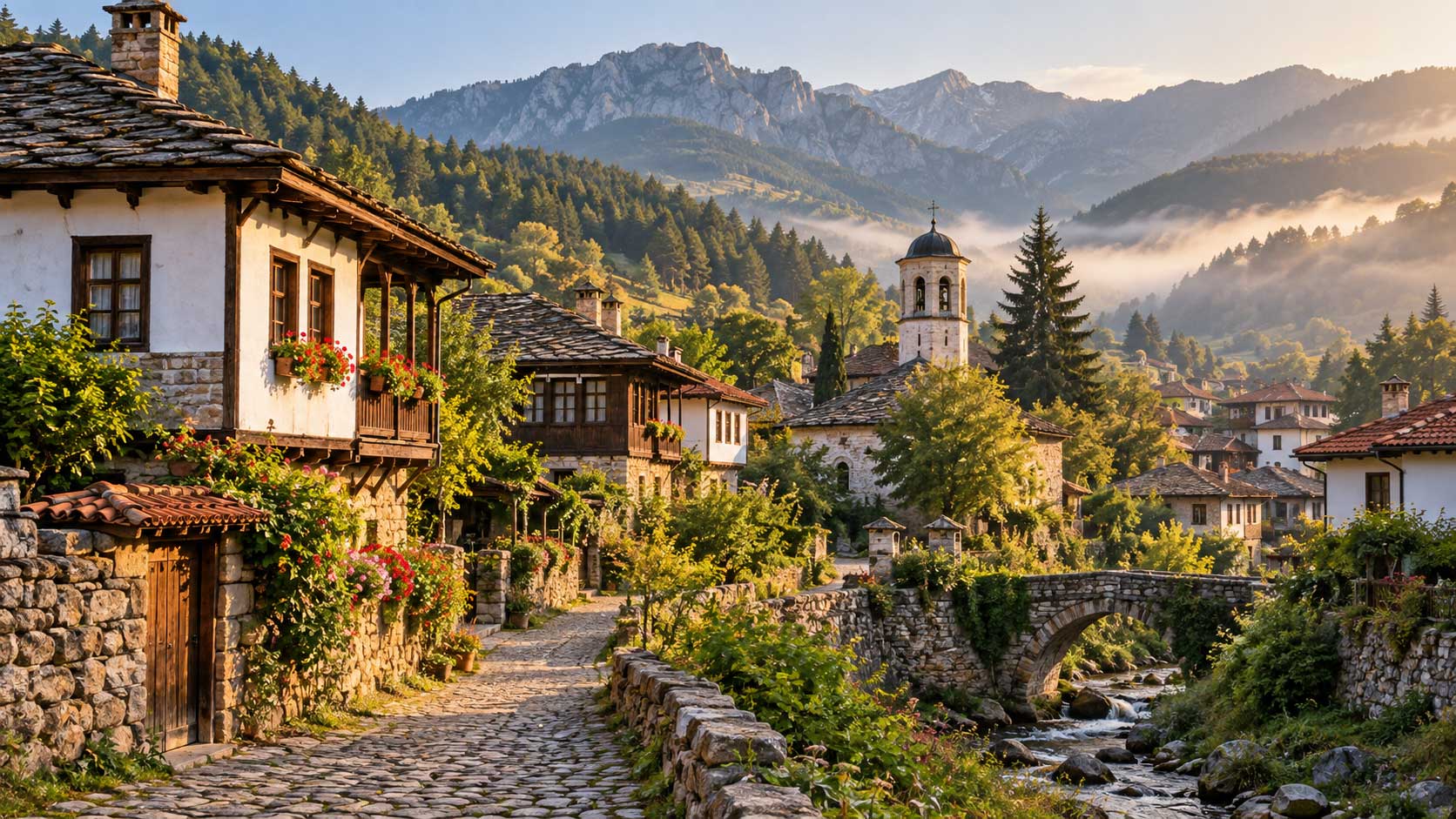
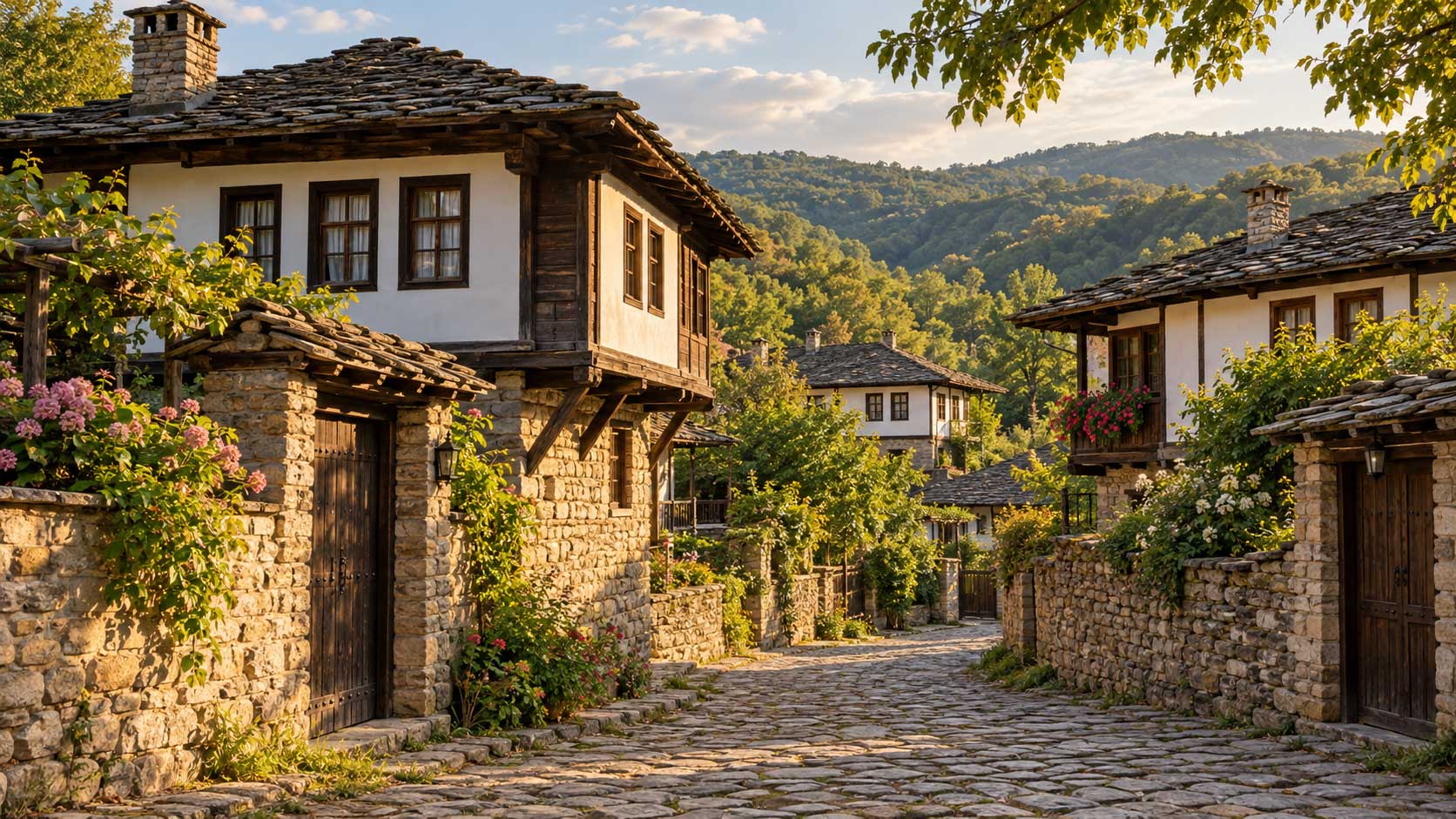
Hidden among the forested slopes of Bulgaria’s Western Rhodope Mountains, Yagodina, Bulgaria, is the kind of village that makes you want to slow down as soon as you arrive.
Surrounded by green meadows, pine-covered hills and dramatic karst scenery, the village feels wonderfully removed from Bulgaria’s larger towns and busy tourist centers. Houses are scattered across the mountain slopes, narrow roads wind through the valley, and almost every direction opens toward another beautiful Rhodope view.
Most travelers know Yagodina because of Yagodina Cave, one of the best-known natural attractions in this part of the Rhodopes. Located nearby in the spectacular Buynovo Gorge, the cave has three levels and is famous for its stalactites, stalagmites and unusual cave pearls. Bulgaria’s official tourism information confirms that only the developed visitor level is equipped for regular tourist access.
But the village deserves more than a quick stop on the way to the cave.
Yagodina is also a wonderful base for experiencing the quieter side of the Rhodopes—mountain walks, panoramic viewpoints, traditional rural landscapes and evenings when the surrounding mountains seem almost completely silent.
There is no grand town square packed with attractions here. That is part of its appeal.
The beauty of Yagodina comes from its setting, its slower rhythm and the feeling that the mountains are always close.
For travelers exploring the Rhodope villages of Bulgaria, Yagodina combines something particularly special: peaceful village life with some of the region’s most dramatic natural scenery. With caves, mountain trails, deep gorges and picturesque settlements all close together, this part of the Rhodopes is especially rewarding for slow travel.
Where Is Yagodina and Why Is It Special?
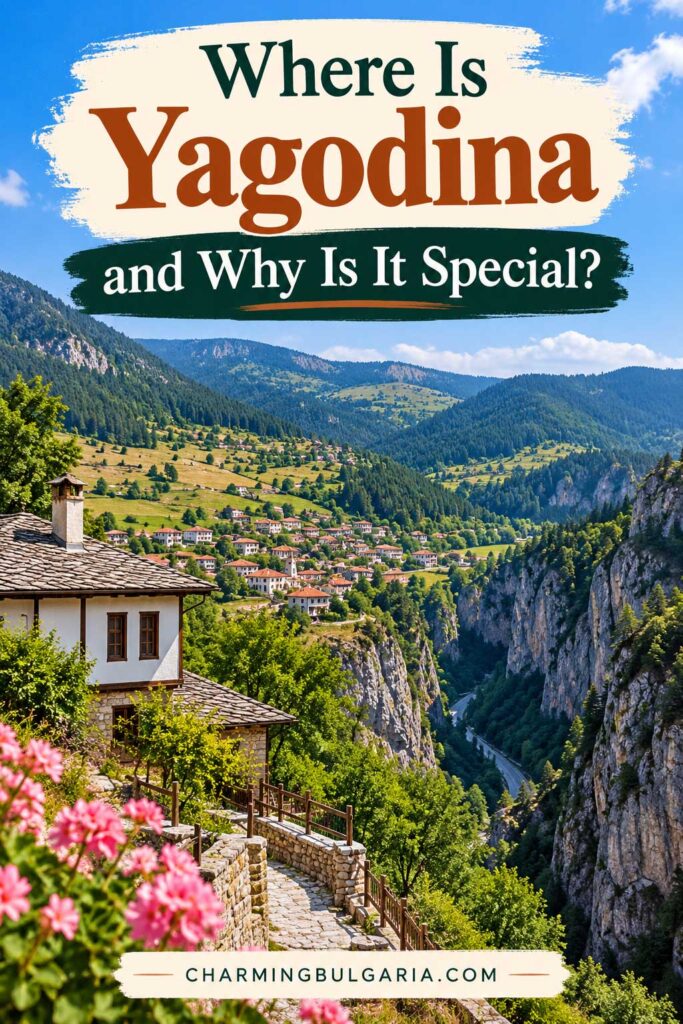
Yagodina is tucked deep into the Western Rhodope Mountains of southern Bulgaria, in Smolyan Province and not far from the better-known mountain village of Trigrad.
Getting there is part of the experience. The road winds through steep mountain scenery, dense forests and the dramatic Buynovo Gorge, one of the most impressive natural landscapes in this part of the Rhodopes.
Together with Yagodina Cave, the gorge is one of the main reasons travelers venture this deep into the mountains. The combination of narrow marble cliffs, quiet valleys and traditional villages gives the area a distinctly wild and remote feel.
What Makes Yagodina Special
What makes Yagodina memorable is the combination of a peaceful mountain village and spectacular nature almost immediately outside it.
You can spend the morning exploring Yagodina Cave, continue toward a panoramic viewpoint or hiking trail, and then return to a quiet village surrounded by meadows and forest. The cave itself has a visitor route stretching for more than a kilometer through a multi-level system formed in marble.
Nearby Buynovo Gorge adds a completely different kind of scenery, with towering rock walls and a narrow mountain road following the river through one of the most dramatic landscapes in the Western Rhodopes.
The surrounding countryside also offers plenty of opportunities for walking. One of the better-known routes is the Southern Rhodope eco-path near Yagodina, an approximately 18.5-kilometer trail that passes through river valleys, waterfalls and other natural scenery.
Yagodina also works well as a base for exploring nearby Trigrad Gorge and Devil’s Throat Cave, making it easy to combine several of the region’s best-known natural attractions in the same trip.
Yet Yagodina does not feel like a busy resort.
Once you move away from the main attractions, the atmosphere becomes much quieter. Green pastures stretch between the houses, forested slopes rise behind the village, and everyday rural life continues at its own pace.
That balance between dramatic scenery and quiet village life is exactly what gives Yagodina its charm.
The Story and Character of Yagodina Village
Yagodina is not the kind of village you visit for grand monuments or perfectly restored streets.
Its charm is quieter.
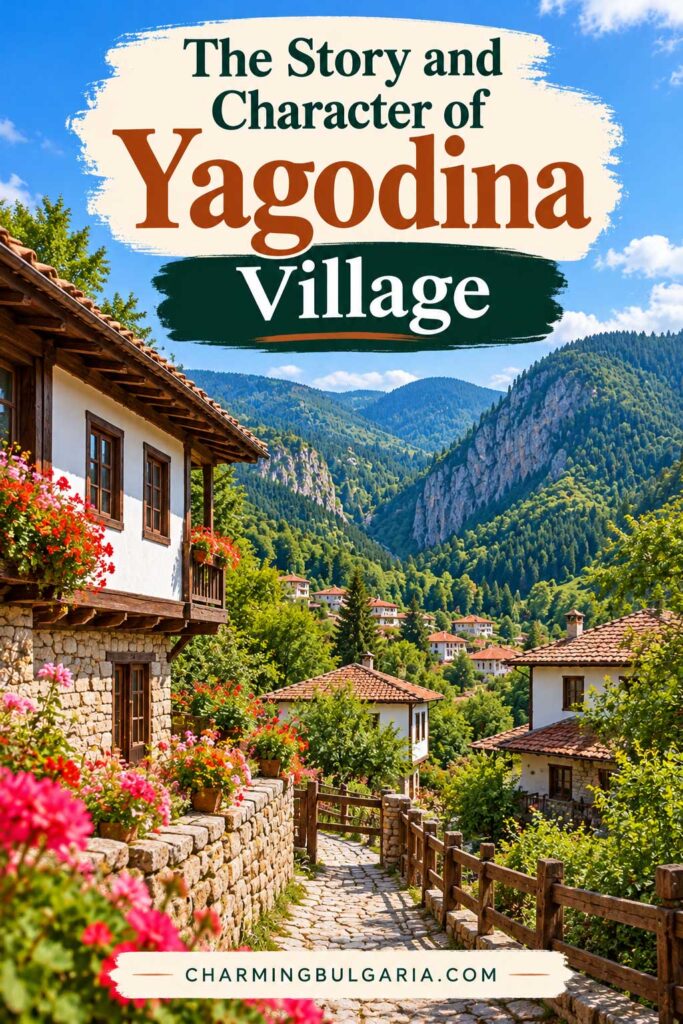
The village sits naturally within the Rhodope landscape, with homes scattered along the slopes and patches of meadow stretching toward the surrounding forests. From higher ground, red rooftops appear between the greenery while mountain ridges rise in almost every direction.
Like many Rhodope communities, Yagodina has long been shaped by farming, livestock and the rhythms of mountain life. You can still feel some of that rural character today.
Tourism has brought more visitors to the area, especially because of Yagodina Cave, Buynovo Gorge and the surrounding hiking routes, but the village itself still feels relaxed.
Walk away from the main road and you will find small gardens beside homes, animals grazing on nearby slopes and quiet lanes where everyday life continues at a much slower pace.
A Village Surrounded by Nature
Nature is impossible to separate from the identity of Yagodina.
Forested slopes rise almost immediately beyond the houses, while meadows and mountain paths stretch into the surrounding countryside. Yagodina Cave lies just outside the village, and the dramatic landscape of Buynovo Gorge is only a short distance away.
You do not have to travel far before the village gives way to open mountain scenery.
That closeness to nature is one of Yagodina’s biggest strengths. Even a short walk can lead to views over the valley, forest tracks or quieter corners where the only sounds are birds, livestock and the wind moving through the trees.
The Feeling of Yagodina
Perhaps the best way to experience Yagodina is simply not to rush.
Walk slowly through the village, look toward the surrounding hills and notice the small details—the mountain air, older homes beside newer guesthouses, quiet gardens and the changing light across the valley.
Yagodina may not have the architectural grandeur of Shiroka Laka or the stone-house character of Kovachevitsa, but it offers something different.
Here, the Rhodope Mountains themselves are the main attraction, and the village feels like a natural part of them.
Yagodina Cave – The Village’s Famous Underground Wonder
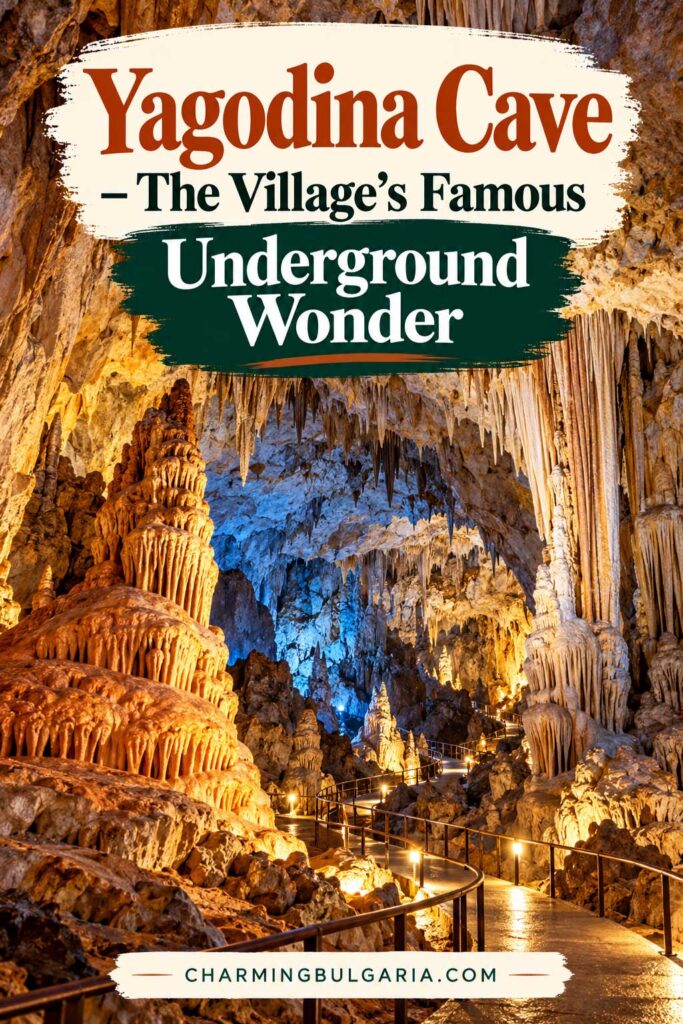
The biggest attraction near Yagodina is undoubtedly Yagodina Cave, one of the best-known caves in the Rhodope Mountains.
Set inside Buynovo Gorge, the cave was formed in marble and extends through several underground levels. The developed visitor route on the lowest level is more than a kilometer long, giving you a good sense of the scale of the cave without revealing the entire system.
What You Can See Inside
The cave is filled with formations created slowly by mineral-rich water over thousands of years.
As you move through the illuminated passages, you will see stalactites hanging from the ceiling, stalagmites rising from the floor, calcite columns and other unusual shapes formed inside the marble.
Among the most distinctive features are the cave pearls. These small rounded formations begin around grains of sand and gradually become coated with layers of calcite, eventually taking on a smooth, pearl-like shape. Official tourism information specifically highlights them as one of Yagodina Cave’s most impressive features.
More Than Just a Tourist Cave
Part of what makes Yagodina Cave so interesting is its scale.
Rather than being a single chamber, it is a complex system spread across three levels. Only the developed tourist section is equipped with lighting for regular visitors, while access to the other levels requires a guide and appropriate equipment.
The atmosphere changes almost immediately once you step inside. The bright Rhodope landscape disappears behind you, replaced by cool air, narrow passages and large underground spaces shaped over an enormous span of time.
A Perfect Contrast With the Village Above
Visiting the cave adds another dimension to a stay in Yagodina.
One moment you can be walking through sunny mountain meadows, and not long afterward you are underground beneath the Rhodope landscape, surrounded by marble passages and ancient cave formations.
That contrast between peaceful village life and dramatic underground scenery is one of the reasons Yagodina feels like much more than just another mountain village.
Before visiting, check the official Yagodina Cave visitor information for current opening hours, access details and practical advice.
Buynovo Gorge – The Dramatic Road to Yagodina
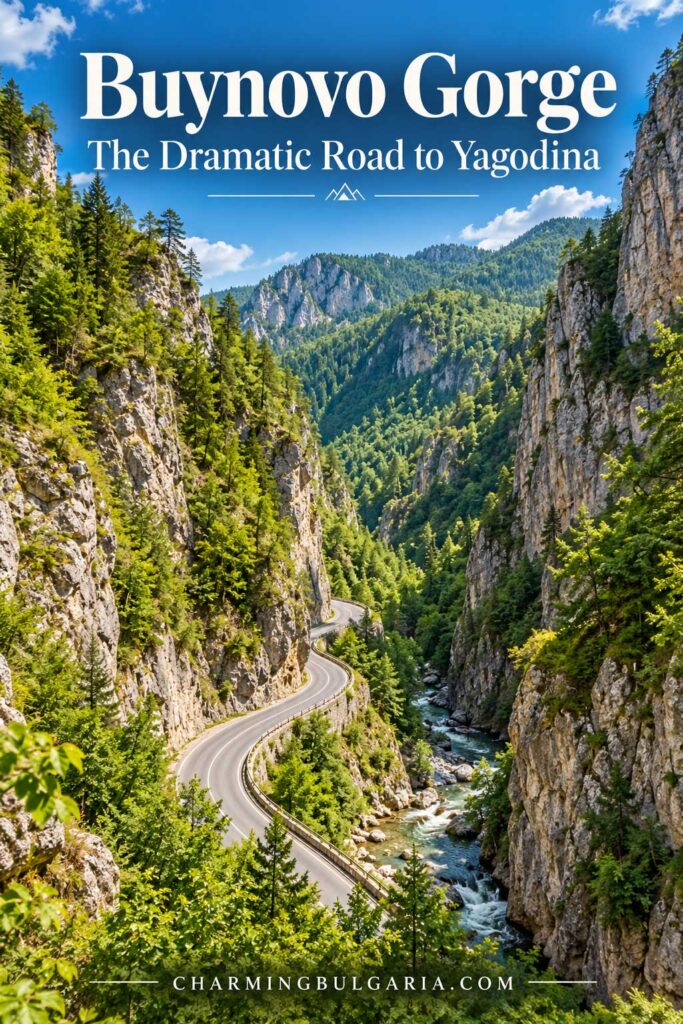
One of the most memorable parts of visiting Yagodina is simply getting there.
The road winds through Buynovo Gorge, a dramatic canyon carved by the Buynovo River through layers of marble rock. In places, the cliffs rise hundreds of meters above the road, creating the feeling that you are driving directly through the mountain. Bulgaria’s official tourism site describes Buynovo Gorge as the longest gorge in the country.
You can also check the official Buynovo Gorge visitor information before your trip for details about the gorge, Eagle’s Eye and access through the narrow mountain road.
Why the Drive Is So Memorable
This is not a road you rush through.
The scenery changes constantly as the route curves between towering rock walls, forested slopes and the river below. Some sections feel surprisingly enclosed, while others suddenly open toward greener mountain views.
If you enjoy scenic mountain roads, this stretch alone makes Yagodina worth adding to a Rhodope itinerary.
Take Your Time Through the Gorge
The road through Buynovo Gorge is paved, but parts of it are extremely narrow. Official visitor information notes that sections are effectively single-lane with traffic moving in both directions, so careful driving is essential.
During busier periods, you may need to slow down or wait for another vehicle to pass. The dramatic scenery can also be distracting, especially if you are behind the wheel.
Whenever you want to stop for photos, use a safe pull-off rather than stopping on the roadway.
More Than Just the Road to the Cave
Many visitors pass through Buynovo Gorge because they are heading toward Yagodina Cave, but the gorge deserves attention in its own right.
Its cliffs, river and dense forests give this part of the Rhodopes a very different feel from the open meadows around Yagodina itself.
The landscape also helps explain why caves are such an important part of the area. The surrounding marble and karst terrain contains numerous caves, with Yagodina Cave being the best known.
That contrast is part of what makes the journey so enjoyable.
You move from a narrow rocky canyon into a quiet mountain village, with caves, hiking routes and panoramic viewpoints all close by.
For many travelers, Buynovo Gorge becomes one of the unexpected highlights of visiting Yagodina rather than simply the road that gets you there.
Eagle’s Eye Viewpoint – One of the Best Panoramas in the Rhodopes
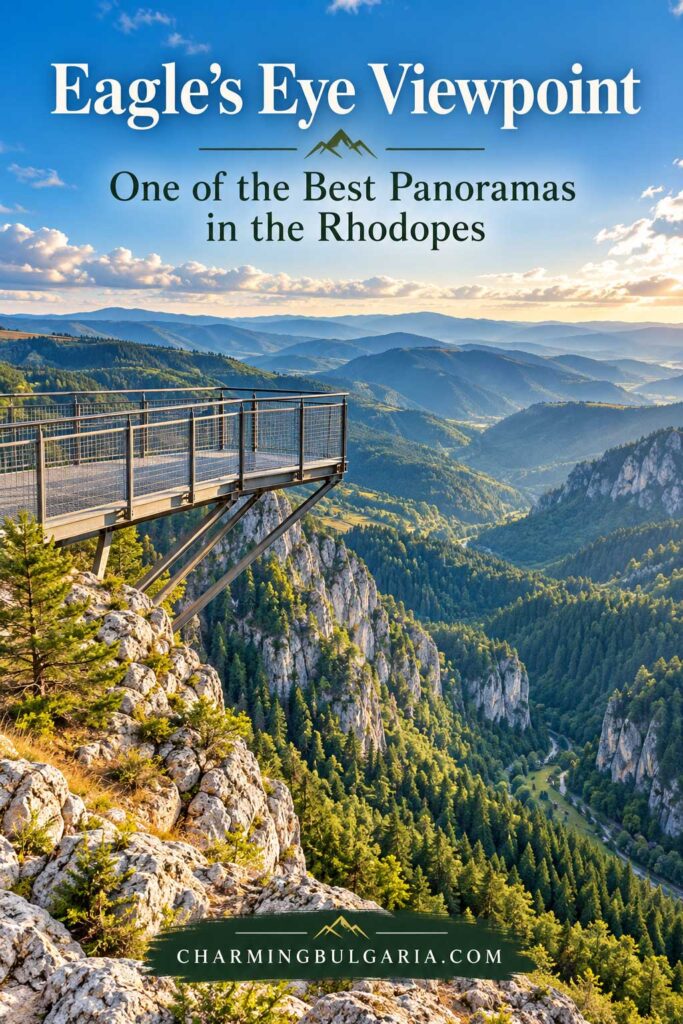
High above Yagodina, near St. Iliya Peak, you will find one of the most memorable viewpoints in the Western Rhodopes: Eagle’s Eye, known in Bulgarian as Orlovo Oko.
The metal viewing platform sits at about 1,563 meters above sea level and projects out from the mountainside, opening up wide views over Buynovo Gorge, Yagodina and the surrounding Rhodope landscape.
The View From Eagle’s Eye
The panorama is the main reason to come.
From the platform, forested ridges stretch toward the horizon while the gorge drops away far below. On a clear day, you can see Yagodina, the surrounding valleys and layers of distant peaks across the Western Rhodopes.
It is also one of the best places around Yagodina for photography.
From above, the village looks completely different. The houses and roads seem tiny against the scale of the surrounding landscape, giving you a much better sense of just how deeply Yagodina sits within the mountains.
Getting to Eagle’s Eye
Reaching the viewpoint is part of the experience.
The route from Yagodina climbs steeply into the mountains, and most visitors reach Eagle’s Eye either on foot or by an off-road vehicle.
Walking is a good option if you are comfortable with steep terrain and have enough time. The climb can be demanding in places, but the views become increasingly impressive as you gain elevation.
Local 4×4 rides are another popular option. The track is rough, so this is not a route for an ordinary passenger car.
Is Eagle’s Eye Worth Visiting?
Yes, especially on a clear day.
The platform itself does not take long to visit, but the setting makes it one of the highlights of the Yagodina area.
Standing above Buynovo Gorge with the Western Rhodopes spreading out around you gives a completely different perspective on the landscape you have just driven through.
If you have time for only a few experiences around Yagodina, combining Yagodina Cave, Buynovo Gorge and Eagle’s Eye gives you an excellent mix of underground scenery, mountain roads and panoramic views.
Hiking and Nature Around Yagodina
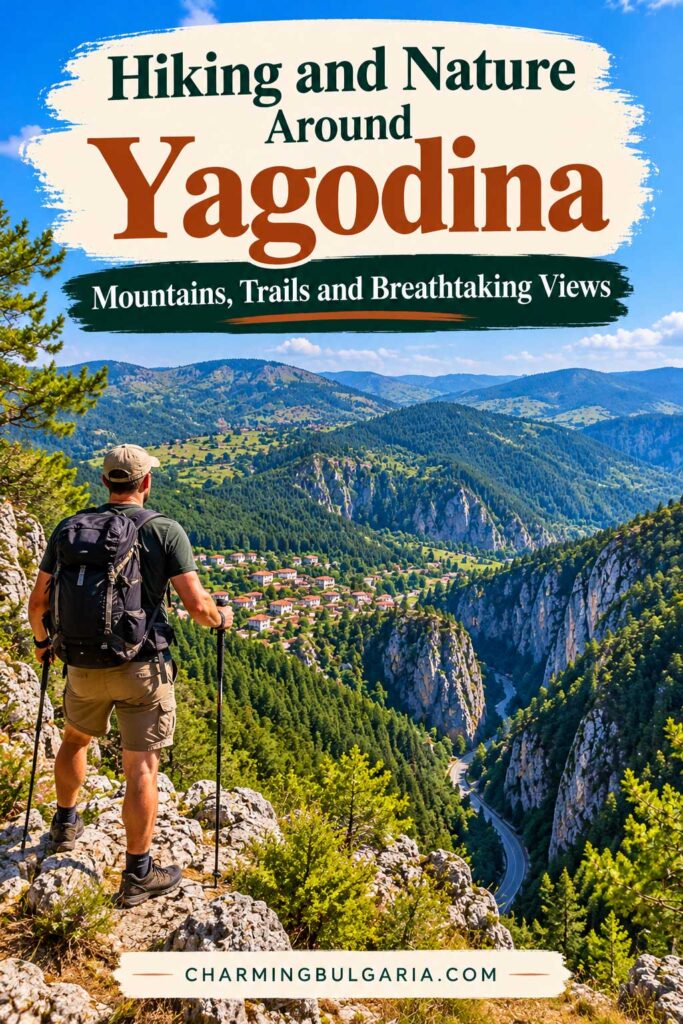
Yagodina is a great place to stay if you want to experience the Rhodopes on foot rather than only driving from one attraction to another.
The village is surrounded by forested ridges, limestone cliffs, open meadows and deep river valleys, so the scenery changes quickly once you leave the houses behind.
Southern Rhodope Eco Trail
One of the longer walking routes in the area is the Southern Rhodope Eco Trail near Yagodina.
Bulgaria’s official tourism information describes it as an approximately 18.5-kilometer route passing through river valleys, waterfalls and the locally known Devil’s Bridge.
It is a better choice for travelers who want to spend several hours in nature rather than take a short walk around the village.
The trail also gives you a very different perspective on the area. Instead of seeing the mountains from the road, you move gradually through forests, rocky valleys and quieter stretches where the landscape feels much more remote.
Hiking Toward Eagle’s Eye
Another popular option is the climb toward Eagle’s Eye viewpoint.
The route rises steeply above Yagodina toward the panoramic platform at roughly 1,563 meters above sea level. Walking gives you time to enjoy the changing views as the village gradually disappears below.
The climb can be demanding in places, especially in hot weather or after rain, so proper footwear and enough water are important.
Even before reaching Eagle’s Eye, higher sections of the route open toward beautiful views across Yagodina, Buynovo Gorge and the surrounding Rhodope ridges.
Short Walks Around the Village
You do not need to commit to a long hike to enjoy the landscape around Yagodina.
Simply walking beyond the edge of the village can bring you into open meadows, quiet forest tracks and higher ground overlooking the rooftops below.
These shorter walks are especially enjoyable in the morning or late afternoon, when the light across the hills becomes softer and the village feels even quieter.
For many visitors, this is one of the easiest ways to experience the Rhodopes without turning the day into a serious hike.
Take the Mountains Seriously
Although many walks around Yagodina are accessible to ordinary travelers, this is still mountain terrain.
Weather can change quickly, trails may become muddy after rain, and some routes include steep or rocky sections. Carry water, wear shoes with good grip and check local conditions before setting out on a longer route.
For anyone who enjoys combining traditional villages, hiking and mountain scenery, Yagodina makes an excellent base for exploring this part of the Western Rhodopes.
What to See and Do in Yagodina Village
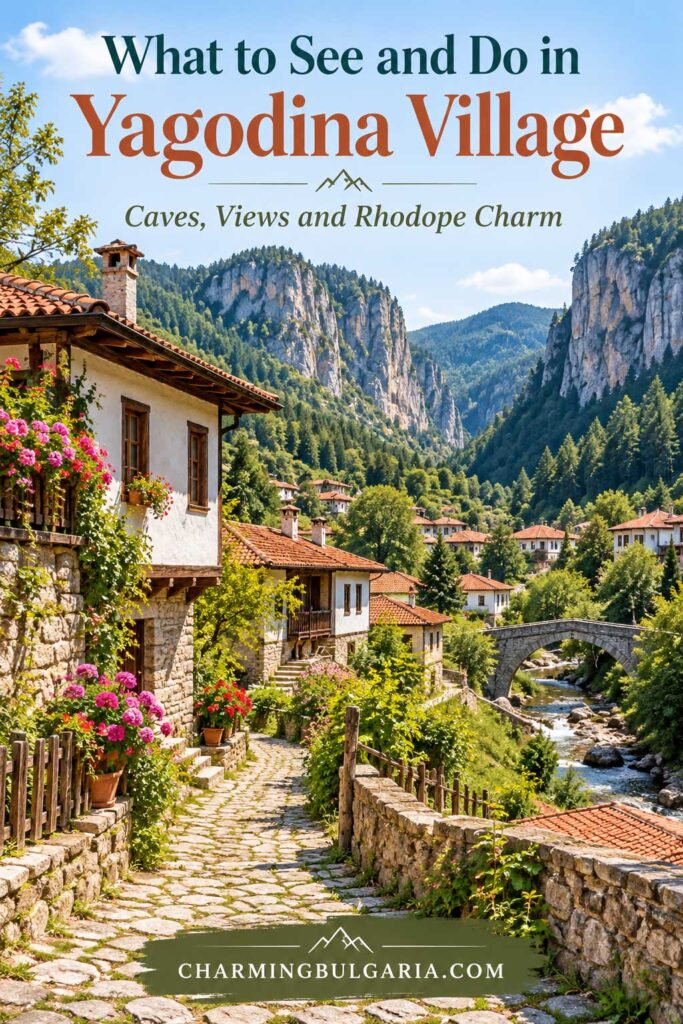
Even though most people come to Yagodina for the surrounding caves and mountain scenery, the village itself is worth spending some time in.
This is not a place packed with formal attractions. The experience is more about walking, slowing down and enjoying the Rhodope landscape around you.
Walk Through the Village
Start with a simple walk through Yagodina.
The village spreads across a green mountain valley, with red-roofed houses, small gardens, meadows and forested slopes rising around it. Older rural homes stand alongside newer guesthouses, giving Yagodina a mix of traditional village character and modern mountain tourism.
There is no need to follow a strict route. Wander along the quieter streets, look for views across the valley and take time to notice how naturally the village blends into its surroundings.
Visit Yagodina Cave
For most visitors, Yagodina Cave is the main attraction.
Located nearby in Buynovo Gorge, the cave offers a completely different experience from the open mountain scenery above. Its underground passages, marble formations and distinctive cave pearls make it one of the most memorable natural sights in this part of the Rhodopes.
See the View From Eagle’s Eye
If the weather is clear, head above the village toward Eagle’s Eye viewpoint.
From high above Yagodina, the landscape opens into deep valleys, forested ridges and distant mountain peaks. It is one of the best places in the area to appreciate the scale of the Western Rhodopes and an excellent stop for photography.
Explore Buynovo Gorge
Do not think of Buynovo Gorge as simply the road leading to Yagodina Cave.
The narrow canyon, steep rock walls and river scenery make the drive an attraction in its own right. Take your time through the gorge and only stop where there is a safe place away from traffic.
Spend Some Time Outdoors
Yagodina is also a good base for walking and hiking.
You can tackle one of the longer mountain routes or simply follow a quiet track beyond the edge of the village. Even a short walk can quickly take you into meadows, forest and open viewpoints above the valley.
Try Rhodope Food
After a day outside, look for traditional Rhodope cuisine at a local restaurant or guesthouse.
Regional dishes often rely on simple mountain ingredients such as potatoes, cheese, yogurt and herbs. A homemade meal can be one of the most enjoyable parts of staying in a small village like Yagodina.
Stay Overnight
Yagodina becomes noticeably quieter once many of the day visitors leave.
Staying overnight gives you time to see the village early in the morning or around sunset, when the light across the hills softens and the Rhodope landscape feels especially peaceful.
For travelers who enjoy slow travel, spending one or two nights here is much more rewarding than rushing through the village between attractions.
Yagodina works best when you leave enough time for both sides of the destination: the famous natural sights and the quiet mountain village in between.
Traditional Rhodope Food to Try in Yagodina
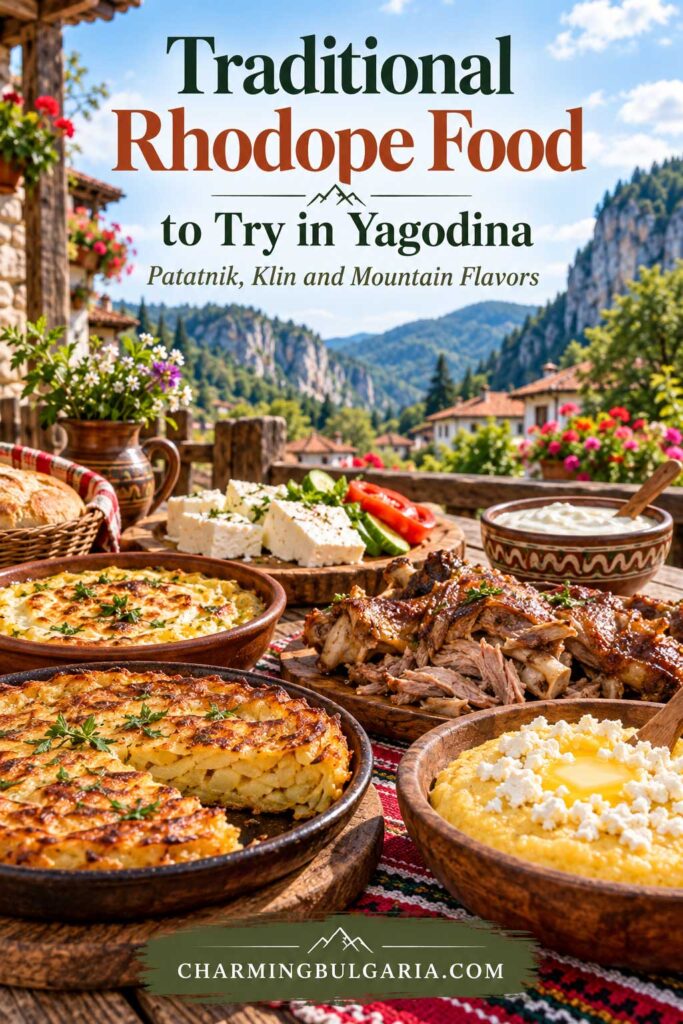
One of the pleasures of staying in Yagodina is trying traditional Rhodope food after a day of hiking, exploring caves or driving through the mountains.
Rhodope cuisine is hearty and uncomplicated, built around ingredients that have long been part of everyday life in mountain villages. Potatoes, cornmeal, cheese, yogurt, beans and slow-cooked meat appear in many of the region’s best-known dishes.
Yagodina is also among the Rhodope villages highlighted for local food experiences, particularly traditional specialties such as patatnik and cheverme.
Patatnik
If there is one dish closely associated with the Rhodopes, it is patatnik.
Made mainly from grated potatoes, it usually includes onion and herbs, with some versions adding egg or white cheese. The mixture is cooked until the outside develops a golden crust while the inside remains soft and filling.
There is no single recipe. Families and villages prepare patatnik in slightly different ways, which is part of what makes trying it in the Rhodopes so enjoyable.
Klin
Another regional dish worth looking for is klin, a traditional baked pie found throughout the Rhodopes.
Recipes vary, but the filling often includes rice, eggs and cheese between thin layers of pastry. It is simple, filling mountain food and works particularly well after spending several hours outdoors.
Kachamak
Kachamak is a cornmeal dish similar to polenta and another classic example of traditional Rhodope cooking.
It is often served warm with butter, white cheese or other dairy products. There is nothing elaborate about it, but that simplicity is exactly the point: basic ingredients turned into a comforting and satisfying meal.
Rhodope Cheverme
For something more substantial, look for cheverme.
Traditionally, a whole lamb is slowly roasted on a spit over or beside a fire for several hours. The result is tender meat with a richly roasted exterior.
Cheverme is strongly connected with the Rhodope Mountains, although it is more commonly associated with celebrations, family gatherings and special occasions than an everyday lunch.
Homemade yogurt, white cheese and other dairy products are also worth trying when available. They fit naturally with the region’s traditional dishes and are often served alongside simpler meals.
If you are staying in a family-run guesthouse, ask whether they prepare dinner or have anything homemade that day. A meal cooked by your hosts can be a much more memorable experience than searching for a long restaurant menu.
You do not need to try everything at once.
A warm plate of patatnik, some local cheese and a quiet evening overlooking the Rhodope hills can be one of the simplest—and most enjoyable—parts of staying in Yagodina.
Where to Stay in Yagodina
Yagodina is a small mountain village, so staying here feels very different from booking a large hotel in one of Bulgaria’s resort towns.
Accommodation is mainly made up of family-run guesthouses and small mountain hotels, often with gardens, terraces or views toward the surrounding Rhodope hills.
For the full village experience, a guesthouse is usually the best fit.
Stay in a Local Guesthouse
Small guesthouses suit the character of Yagodina particularly well. They tend to feel more personal, and some offer breakfast or homemade evening meals in addition to accommodation.
After a day exploring Yagodina Cave, Buynovo Gorge or the surrounding trails, returning to a quiet guesthouse in the village feels much more relaxed than driving back to a larger town.
If possible, look for a room with a balcony or terrace facing the mountains. The scenery is one of the main reasons to stay overnight, and early mornings can be especially beautiful when mist settles across the forested slopes.
One Night or Two?
You can visit Yagodina on a day trip, but spending one or two nights gives you much more freedom.
With one night, you can explore Yagodina Cave and Buynovo Gorge during the day, enjoy a quiet evening in the village and visit Eagle’s Eye the following morning.
Two nights work even better if you want to add hiking, spend more time around the village or combine Yagodina with nearby Trigrad without rushing.
Because most accommodation here is small, booking ahead is sensible for summer weekends and Bulgarian holiday periods.
Outside the busiest times, the village can feel wonderfully peaceful.
That is when staying in Yagodina becomes especially memorable: cool mountain evenings, quiet streets and the Rhodope landscape just beyond your window.
For travelers who enjoy small guesthouses, homemade food and mountain views, staying overnight is much more rewarding than visiting the cave and immediately continuing onward.
If this quieter style of travel appeals to you, Yagodina is also a natural addition to our guide to the best villages in Bulgaria for slow travel.
Best Time to Visit Yagodina
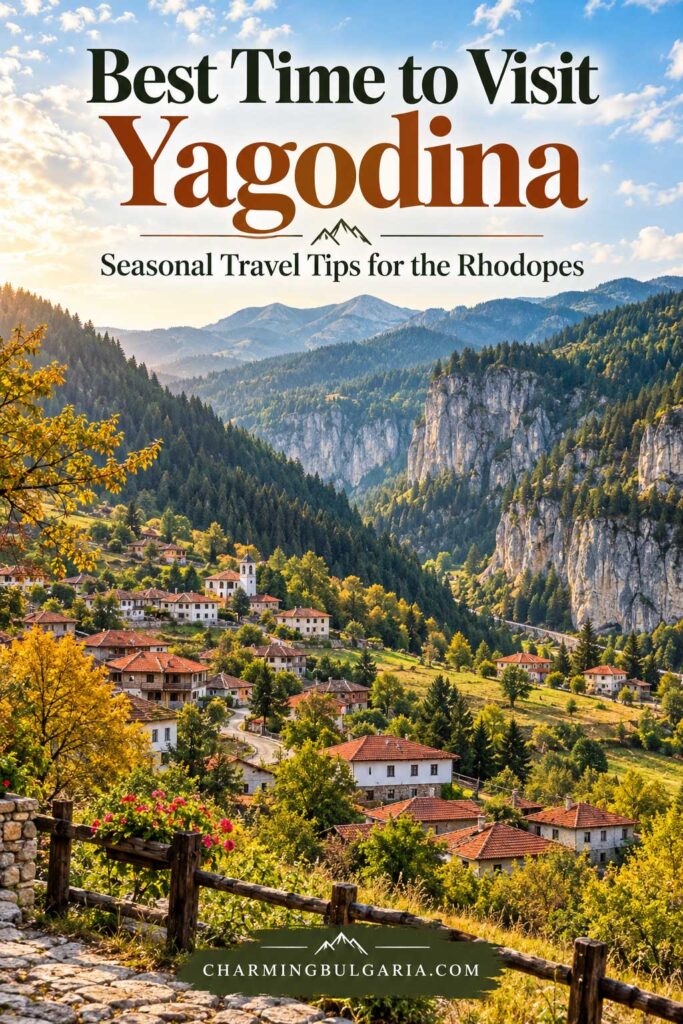
Yagodina can be visited throughout the year, but the experience changes noticeably with the seasons.
For most travelers, the best time to visit Yagodina is from late spring through early autumn, when mountain roads are easier to navigate, hiking conditions are better and the surrounding Rhodope landscape is at its most inviting.
Spring – Green Valleys and Quiet Trails
Spring brings fresh color back to the mountains.
Meadows turn green, forests begin to fill out and wildflowers appear around the village. It is also generally quieter than summer, making this a good season for peaceful walks and slower sightseeing.
Because Yagodina sits high in the Western Rhodopes, spring can arrive later than in Bulgaria’s lower regions. Cool mornings and unsettled weather are still possible, especially earlier in the season.
Summer – Best for Hiking and Exploring
Summer is the easiest time to combine everything Yagodina has to offer.
Long daylight hours give you plenty of time for Yagodina Cave, Eagle’s Eye, Buynovo Gorge and hiking, while the mountain setting can feel more comfortable than Bulgaria’s hotter lowlands.
July and August are also the busiest months, particularly around the main attractions. If you are visiting on a summer weekend, booking accommodation ahead is a good idea.
Autumn – Beautiful Colors and Mountain Atmosphere
Autumn is one of the most photogenic times to visit Yagodina.
The forests gradually change from green to shades of yellow, orange and gold, while cooler air and softer light make the surrounding mountains especially beautiful.
September and early October are particularly good for travelers who want to combine hiking, photography and quieter village stays before colder weather arrives.
Winter – Peaceful but More Challenging
Yagodina can look beautiful under snow, but winter requires more preparation.
Mountain roads may be more difficult, daylight hours are shorter and some outdoor activities become less practical. If you are driving into the area during winter, check current road and weather conditions before setting out.
This season is better suited to travelers who want quiet mountain scenery, snowy landscapes and a cozy guesthouse stay rather than a full schedule of hiking and sightseeing.
Our Favorite Time to Visit
For the best balance of pleasant weather, beautiful scenery and outdoor activities, late May through June or September through early October are excellent choices.
These periods usually avoid the busiest part of summer while still giving you good conditions for walking, photography and exploring the surrounding mountains.
No matter when you visit, Yagodina’s greatest appeal remains the same: the feeling of being tucked away in one of the quieter and most scenic corners of the Rhodopes.
How to Get to Yagodina
Yagodina feels remote, but reaching the village is part of what makes the trip memorable.
Because it sits deep in the Western Rhodope Mountains, driving is the easiest and most flexible way to visit. Having your own car also makes it much simpler to combine Yagodina with Yagodina Cave, Eagle’s Eye, Trigrad and other nearby attractions.
Driving From Plovdiv
Plovdiv is one of the most convenient major cities to start from.
The drive takes you gradually deeper into the Rhodopes, where straight roads give way to tighter curves, forested slopes and mountain valleys.
Allow more time than the distance might suggest. The final part of the journey is much slower than driving on Bulgaria’s main roads, but the scenery becomes increasingly beautiful as you approach Yagodina.
Driving From Sofia
Yagodina can also be reached from Sofia, although it is a longer journey.
If you are driving from the capital, leave enough time to complete the mountain section during daylight. The final roads are winding, and the scenery is much more enjoyable when you are not arriving after dark.
For a longer Bulgaria road trip, Yagodina works particularly well as part of a route through the Western Rhodopes rather than as a quick out-and-back trip from Sofia.
The Final Drive Through Buynovo Gorge
One of the most memorable parts of the journey comes near the end.
The road toward Yagodina passes through Buynovo Gorge, where steep rock walls rise beside the roadway and the river follows the narrow canyon below.
The paved road becomes extremely narrow in places, so drive slowly and be prepared to give way to vehicles coming from the opposite direction.
This is one of those rare drives where the road itself becomes part of the attraction.
Can You Reach Yagodina Without a Car?
It is possible, but much less convenient.
Public transportation in this part of the Rhodopes is limited, and reaching a small mountain village like Yagodina may require a combination of regional transport and a taxi or prearranged transfer.
If you want to explore several places around Yagodina and Trigrad, renting a car gives you far more freedom.
A Few Driving Tips
Before heading deep into the mountains, make sure you have enough fuel and download an offline map in case mobile coverage becomes unreliable.
Take your time on the narrow roads, especially through Buynovo Gorge, and only stop where there is a safe place to pull completely away from traffic.
In winter or after severe weather, check current road conditions before leaving.
Most importantly, allow extra time.
Getting to Yagodina is not simply transportation between two points. The winding roads, forests, cliffs and mountain views are part of the experience.
By the time you reach the village, you already feel as though you have traveled somewhere far removed from Bulgaria’s busier destinations.
Yagodina or Trigrad – Which Village Should You Visit?
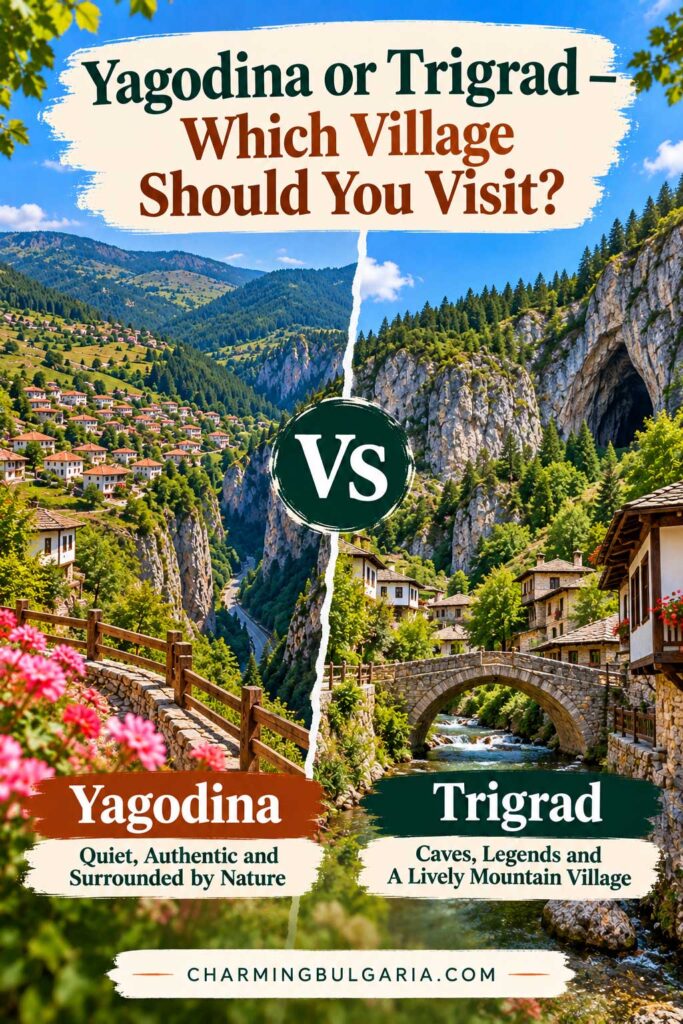
Yagodina and Trigrad are close enough that you do not really need to choose between them.
Both villages sit deep in the Western Rhodopes, both are surrounded by dramatic mountain scenery, and both make excellent bases for exploring caves, gorges and hiking trails.
Still, the experience is slightly different in each place.
Choose Yagodina for Caves, Views and Open Mountain Scenery
Yagodina is particularly appealing if Yagodina Cave and Eagle’s Eye are high on your list.
The village feels open and green, with meadows, forested slopes and broad views across the surrounding mountains.
Yagodina Cave is one of the major natural attractions in this part of the Rhodopes, while nearby Eagle’s Eye adds one of the region’s best panoramic viewpoints. Buynovo Gorge and the walking routes around the village make it especially rewarding for travelers who enjoy caves, photography, hiking and quieter guesthouse stays.
Yagodina is a good choice if you want to spend plenty of time outdoors without feeling as though every hour needs to be filled with formal sightseeing.
Choose Trigrad for a More Dramatic Mountain Setting
Trigrad has a different atmosphere.
The approach passes through Trigrad Gorge, where steep marble cliffs rise above the narrow valley and create a much more enclosed and dramatic setting.
Nearby Devil’s Throat Cave is also very different from Yagodina Cave. Rather than being known mainly for decorative formations, it is famous for its underground river and powerful waterfall.
Trigrad is particularly appealing if you enjoy steep canyon scenery, mountain trails and a slightly more adventurous feel. The village and surrounding area also offer several walking routes and other outdoor activities.
The Best Option: Visit Both
For most travelers, combining the two villages makes more sense than choosing only one.
They complement each other well.
Around Yagodina, spend time exploring Yagodina Cave, Buynovo Gorge and Eagle’s Eye. Around Trigrad, experience Trigrad Gorge, Devil’s Throat Cave and the surrounding mountain scenery.
You could see the main highlights in a very full day, but spending two or three nights in the area makes the trip much more enjoyable.
That gives you enough time for the caves and viewpoints without turning the Rhodopes into a race from one attraction to another.
The real charm of both Yagodina and Trigrad comes from having enough time to enjoy the mountains between the famous sights.
Best Places to Visit Near Yagodina
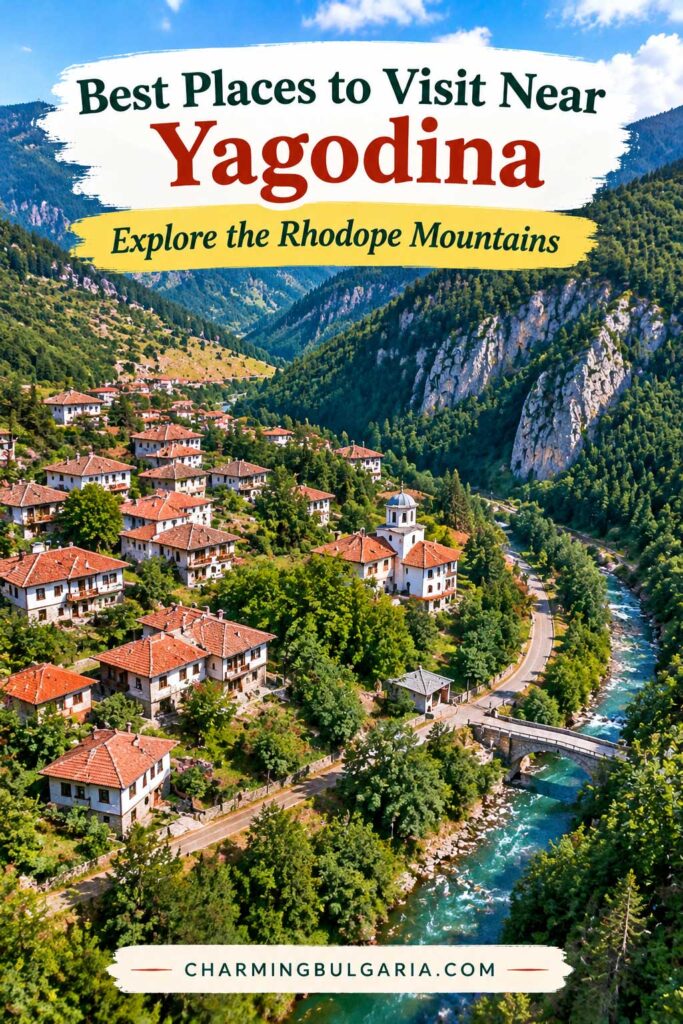
Yagodina is surrounded by some of the most interesting places in the Western Rhodopes, making it an excellent base for exploring more than just the village itself.
Within the same trip, you can combine caves, mountain gorges, traditional villages and one of the region’s best-known spa towns.
Trigrad
Trigrad is one of the easiest places to combine with Yagodina.
Like Yagodina, it is surrounded by steep mountains, forests and dramatic karst scenery, but the setting feels more enclosed because of nearby Trigrad Gorge.
If you are spending several days in the Western Rhodopes, visiting both villages gives you a much better sense of the landscape and character of this remote part of Bulgaria.
Devil’s Throat Cave
Near Trigrad is Devil’s Throat Cave, one of the most unusual natural attractions in the region.
Unlike Yagodina Cave, which is known for its formations and cave pearls, Devil’s Throat is shaped around an underground river and a powerful waterfall.
That makes the two caves surprisingly different, so visiting both does not feel repetitive. One offers intricate underground formations, while the other feels darker, louder and more dramatic.
Devin
If you want to combine mountain exploration with a more relaxing stop, continue toward Devin.
The town is one of the best-known spa destinations in the Western Rhodopes and is surrounded by forested mountains. It offers a wider choice of hotels, restaurants and mineral-water facilities than the smaller villages nearby.
Devin works particularly well after a few days of hiking, cave exploration and mountain driving.
It can also serve as a convenient base if you prefer staying in a town while making day trips into the surrounding Rhodope villages.
Shiroka Laka
For traditional architecture and Rhodope culture, Shiroka Laka is one of the most worthwhile stops in the wider region.
The village is known for its whitewashed houses, stone roofs and strong musical traditions. Its historic streets and distinctive architecture give it a very different character from Yagodina.
While Yagodina is primarily about caves, mountain scenery and outdoor experiences, Shiroka Laka is especially rewarding for travelers interested in architecture, folklore and traditional Rhodope culture.
Turn Yagodina Into a Rhodope Road Trip
If you have several days, it makes sense to treat Yagodina as part of a wider Western Rhodopes journey rather than an isolated stop.
A relaxed route could take you from Yagodina to Trigrad, then Devin and Shiroka Laka, combining caves, mountain gorges, panoramic viewpoints, traditional villages, local food and spa culture along the way.
The distances between these places are manageable, but mountain roads mean journeys often take longer than they appear on a map. That is another reason not to rush.
Spending several days in this part of the Rhodopes gives you time to experience the landscape properly instead of moving quickly from one attraction to the next.
How Many Days Do You Need in Yagodina?
You can see Yagodina’s main highlights in a single day, but the village is much more enjoyable when you do not rush it.
For most travelers, one night and two days is a very good amount of time. If you also want to explore Trigrad, hike longer trails or enjoy the Rhodopes at a slower pace, two nights is even better.
One Day in Yagodina
If your schedule is tight, you can still cover the essentials in one full day.
A realistic visit could include the drive through Buynovo Gorge, a tour of Yagodina Cave, some time walking around the village and a trip toward Eagle’s Eye if conditions and timing allow.
That is already a fairly full day, especially once you account for slower mountain roads and the time needed to enjoy each stop properly.
If you are visiting only for the day, start early and avoid trying to add too many extra attractions.
One Night and Two Days
For a first visit, this is probably the best balance.
Spend the first day exploring Yagodina Cave, Buynovo Gorge and the village, then stay overnight and enjoy a quieter evening once many day visitors have left.
The following morning can be used for Eagle’s Eye, a short hike or a slower walk around the surrounding countryside before continuing toward Trigrad or another stop in the Western Rhodopes.
This pace gives you enough time to enjoy the landscape rather than simply moving from one attraction to the next.
Two Nights for Slow Travel
Two nights make Yagodina especially enjoyable.
With an extra day, you can add Trigrad Gorge, Devil’s Throat Cave or a longer hike without sacrificing time in the village itself.
It also gives you more flexibility if the mountain weather changes or if you simply decide you want a slower morning.
Our Recommendation
If Yagodina is one stop on a larger Bulgaria road trip, stay one night.
If the Western Rhodopes are a major part of your trip, stay two nights and explore Yagodina and Trigrad together.
A longer stay makes the most sense for travelers who enjoy hiking, photography or simply spending a few quiet days in the mountains.
Yagodina does not need dozens of attractions to fill your time.
Its appeal comes from having enough space in your itinerary to enjoy the cave, the viewpoints, the village and the quiet moments in between.
A Perfect One-Day Yagodina Itinerary
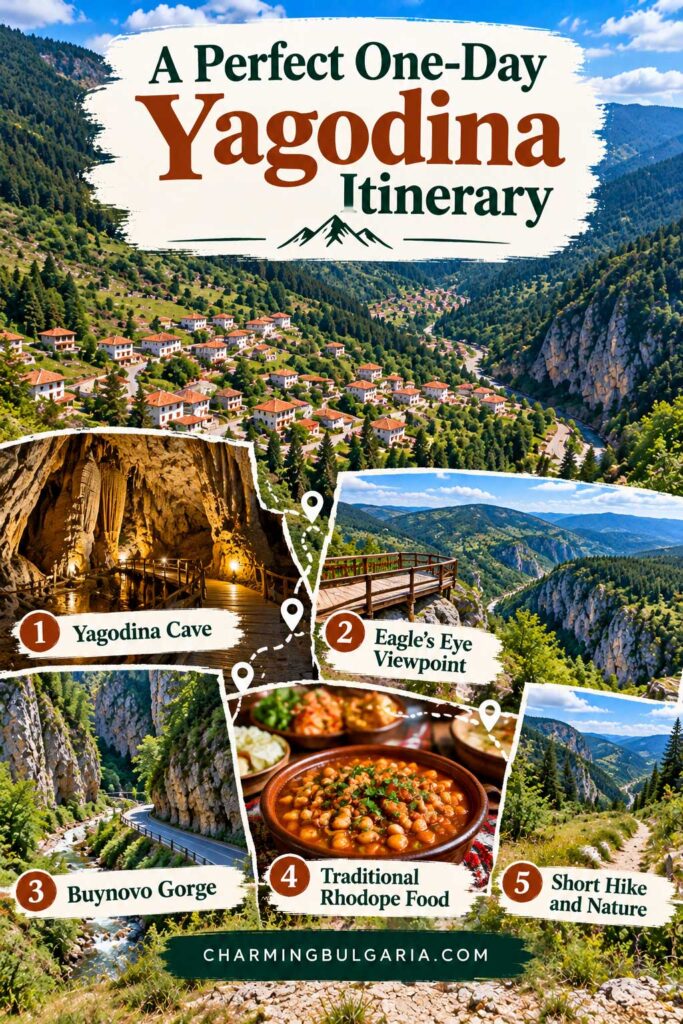
If you only have one day in Yagodina, you can still experience the area’s main highlights without turning the trip into a race.
The best approach is to start early and visit the attractions in a natural order.
Morning: Drive Through Buynovo Gorge
Begin with the drive through Buynovo Gorge.
The narrow road follows the river between steep rock walls, and the scenery becomes increasingly dramatic as you approach Yagodina Cave.
Take your time through the gorge. The road is paved but becomes very narrow in places, with traffic moving in both directions, so careful driving is important.
This is not simply the road to your first attraction. Buynovo Gorge is one of the highlights of the day in its own right.
Late Morning: Visit Yagodina Cave
Make Yagodina Cave your main morning stop.
The cave extends through several underground levels, with a developed section open to ordinary visitors. Inside, the temperature stays around 6–8°C throughout the year, so bring a light jacket even on a warm summer day.
Allow enough time for the visit rather than squeezing it between too many other stops.
Opening hours and tour arrangements can change, so check the latest information before your trip, especially outside the main summer season.
Lunch: Spend Time in Yagodina Village
After the cave, continue into Yagodina village for lunch.
This is a good opportunity to try a traditional Rhodope dish such as patatnik, klin or kachamak if it is available.
After eating, take a short walk through the village instead of immediately heading to the next attraction. The meadows, gardens and forested hills are part of what makes Yagodina worth visiting.
Afternoon: Head to Eagle’s Eye
In the afternoon, make your way toward Eagle’s Eye.
You can hike toward the viewpoint or arrange a local off-road ride, depending on your time and fitness level.
If you are walking, allow plenty of time, carry water and wear shoes with good grip. If you take a 4×4, the journey is much quicker but still gives you a taste of the rough mountain terrain above the village.
Once you reach the viewpoint, the panorama over Yagodina, Buynovo Gorge and the surrounding Western Rhodopes makes a fitting highlight of the day.
Late Afternoon: Slow Down in the Village
After returning from Eagle’s Eye, spend the final part of the afternoon simply enjoying Yagodina.
Follow one of the quieter lanes, find a view above the houses or sit somewhere overlooking the valley as the light begins to soften.
This is often when the village feels most peaceful, especially after some of the daytime visitors have left.
Evening: Stay for Dinner
If your schedule allows, finish the day with dinner in Yagodina rather than leaving immediately.
A simple Rhodope meal at a guesthouse or local restaurant is a much better ending than rushing back onto the mountain roads.
And if you can stay overnight, even better.
One day is enough to experience Buynovo Gorge, Yagodina Cave, Eagle’s Eye and the village itself, but spending the night lets you enjoy the quieter side of Yagodina that day-trippers often miss.
Practical Tips for Visiting Yagodina

Yagodina is easy to enjoy, but a little preparation makes the trip smoother, especially because you are traveling deep into the Western Rhodope Mountains.
Dress for the Cave and the Trails
Even on a hot summer day, Yagodina Cave stays cool, with temperatures between 6 and 8°C throughout the year. A light jacket or sweatshirt is a good idea.
Comfortable shoes are just as important. Between the cave, village streets, viewpoints and mountain trails, you may spend much of the day walking.
If you plan to hike toward Eagle’s Eye or explore longer routes, choose footwear with good grip rather than sandals or smooth-soled shoes.
Allow Extra Time on the Mountain Roads
Distances in the Rhodopes can look short on a map, but mountain roads are winding and progress is often slower than expected.
This is especially true around Buynovo Gorge, where the paved road becomes very narrow in places.
Avoid packing too many attractions into a strict schedule. Giving yourself extra time makes the drive safer and also allows you to enjoy the scenery instead of constantly watching the clock.
Bring Some Cash and Download an Offline Map
Cards are increasingly common in Bulgaria, but smaller guesthouses, local services or off-road rides may still be easier to pay for with cash.
Bring some euros with you rather than relying entirely on card payments. Bulgaria adopted the euro as its official currency on January 1, 2026.
It is also worth downloading the Yagodina and Trigrad area in your preferred navigation app before heading into the mountains. Mobile coverage can become less reliable in deeper valleys and remote stretches of road.
Check Current Cave and Road Conditions
Opening times and visitor arrangements at Yagodina Cave can change, so check current information before planning your day around a specific tour.
The developed lower level is open to regular visitors, while other connected parts of the cave can only be entered on specialized guided excursions with the proper equipment.
If you are visiting in winter or after severe weather, check road conditions as well. Mountain conditions can be very different from those in Sofia, Plovdiv or Bulgaria’s lower regions.
Take Your Time in Buynovo Gorge
Buynovo Gorge is one of the highlights of the journey, but it is also a place where careful driving matters.
Keep your speed low, expect vehicles approaching from the opposite direction and only stop where you can pull safely away from traffic.
The scenery is beautiful from almost every turn, so there is no reason to risk stopping in an unsafe place for a photograph.
Start Early and Leave Some Time Unplanned
During summer weekends, Yagodina Cave and Eagle’s Eye can attract more visitors, so starting earlier gives you greater flexibility.
It also leaves room for the part of Yagodina that is easiest to miss when you are following a strict itinerary.
Walk through the village without a destination, stop when you find a beautiful view, linger over a Rhodope meal or simply sit outside your guesthouse as the light changes over the hills.
Those slower moments often become some of the most memorable parts of visiting Yagodina.
Is Yagodina Worth Visiting?
Yes—especially if you enjoy mountain villages, caves, dramatic scenery and places that still feel quiet once you move away from the main attractions.
Yagodina is not the kind of destination where you arrive with a long checklist of monuments and museums. Its appeal comes from the combination of the village itself and the remarkable landscape surrounding it.
If peaceful mountain scenery is one of the reasons you are visiting Bulgaria, Yagodina also fits naturally into a longer journey through some of the best mountain villages in Bulgaria for a peaceful escape.
Why Yagodina Stands Out
Few places in this part of Bulgaria bring together so many different experiences within such a small area.
You can walk through a peaceful Rhodope village in the morning, explore Yagodina Cave, drive through the cliffs of Buynovo Gorge and later look down over the mountains from Eagle’s Eye.
Yet the natural attractions are only part of the reason to come.
Yagodina feels especially rewarding for travelers who enjoy scenic road trips, hiking, photography, traditional mountain villages and slower travel. Small guesthouses, Rhodope food and the quiet countryside give the village a character that is easy to miss if you visit only for the cave.
Come for the Nature, Stay for the Atmosphere
The surrounding scenery may be what first brings travelers to Yagodina, but the quieter side of the village is what often makes the strongest impression.
Broad meadows stretch between the houses, forested slopes rise around the valley and the mountains never feel far away.
Once many of the daytime visitors leave, the atmosphere becomes even more peaceful. That is why staying overnight can feel very different from simply stopping for Yagodina Cave and continuing onward.
Who Might Want to Skip Yagodina?
Yagodina may not be the right stop if you are mainly looking for nightlife, shopping, large resorts or a destination packed with historic monuments.
It also takes some effort to reach. The winding mountain roads make Yagodina better suited to a Western Rhodopes road trip than a quick detour from Sofia.
But if mountain scenery is one of the reasons you are visiting Bulgaria, that sense of remoteness is one of Yagodina’s greatest strengths.
Why Yagodina Is Worth the Trip
Yagodina deserves more than a quick visit to its famous cave.
Spend a night here if you can. Walk through the village, see the mountains from Eagle’s Eye, explore Buynovo Gorge, try traditional Rhodope food and leave enough time to enjoy the quieter moments between the main attractions.
Among Bulgaria’s mountain villages, Yagodina offers an especially appealing combination of natural beauty, outdoor adventure and peaceful rural atmosphere.
Yagodina Travel Guide – Quick Facts at a Glance
If you are planning a trip to Yagodina, these are the main things to know before you go.
| Quick Fact | Yagodina |
|---|---|
| Region | Western Rhodope Mountains, southern Bulgaria |
| Province | Smolyan Province |
| Best known for | Yagodina Cave, Buynovo Gorge and Eagle’s Eye |
| Main cave | Yagodina Cave |
| Cave length | About 8.5 km of galleries |
| Cave temperature | Around 6–8°C year-round |
| Nearby viewpoint | Eagle’s Eye on Saint Iliya Peak |
| Eagle’s Eye elevation | About 1,563 m |
| Nearby village | Trigrad |
| Best time to visit | Late spring through early autumn |
| Ideal stay | 1–2 nights |
| Best for | Nature, hiking, caves, photography and slow travel |
| Easiest transport | Car |
| Road conditions | Paved, but narrow and winding through Buynovo Gorge |
Why Add Yagodina to Your Bulgaria Itinerary?
Yagodina works especially well for travelers who want more than architecture and historic streets from Bulgaria’s villages.
Here, the surrounding landscape is a major part of the experience.
Within a relatively small area, you can explore a cave system, drive through a dramatic gorge, climb to a panoramic viewpoint, hike through the Western Rhodopes and return to a peaceful mountain village for the evening.
That makes Yagodina an excellent stop on a Western Rhodopes road trip and a natural place to combine with nearby Trigrad.
FAQs About Visiting Yagodina Bulgaria
Here are quick answers to some of the most common questions travelers may have when planning a visit to Yagodina.
Where Is Yagodina?
Yagodina is a small mountain village in the Western Rhodope Mountains of southern Bulgaria, in Smolyan Province.
It lies close to Buynovo Gorge and Yagodina Cave and is also within easy reach of Trigrad and Devil’s Throat Cave.
What Is Yagodina Famous For?
Yagodina is best known for Yagodina Cave, but the surrounding mountain scenery is just as important.
The village is also a popular base for visiting Buynovo Gorge, Eagle’s Eye and the hiking routes of the Western Rhodopes.
Is Yagodina Cave Worth Visiting?
Yes.
Yagodina Cave is one of the most interesting natural attractions in this part of Bulgaria, with underground passages, impressive formations and distinctive cave pearls.
The temperature inside stays around 6–8°C throughout the year, so bring a light jacket even in summer.
How Long Should You Stay in Yagodina?
You can see the main highlights in one full day, but one or two nights gives you a much more relaxed experience.
Two days allow enough time for Yagodina Cave, Buynovo Gorge, Eagle’s Eye, the village itself and possibly a trip to nearby Trigrad.
Can You Visit Yagodina and Trigrad on the Same Trip?
Yes, and the two villages work especially well together.
Yagodina offers Yagodina Cave, Buynovo Gorge and Eagle’s Eye, while Trigrad is known for Trigrad Gorge and Devil’s Throat Cave.
If you have two or three days in the Western Rhodopes, visiting both is an excellent choice.
Do You Need a Car to Visit Yagodina?
A car is the easiest way to visit.
Public transportation is limited in this remote part of the mountains, while having your own vehicle makes it much easier to explore Yagodina, Trigrad, Devin and other nearby places.
Is the Road to Yagodina Difficult?
The roads are paved, but sections through Buynovo Gorge can be very narrow and winding.
Drive slowly, allow more time than the distance on the map might suggest and only stop where you can safely pull away from traffic.
Can You Hike Around Yagodina?
Yes.
There are longer hiking routes through the surrounding mountains as well as shorter walks through meadows, forests and higher ground around the village.
The climb toward Eagle’s Eye is another popular option for travelers who want to explore the area on foot.
Is Yagodina Good for Families?
Yes, particularly for families who enjoy nature and outdoor activities.
Yagodina Cave, the village and the scenic drive through Buynovo Gorge can all work well with children. Steeper hikes and the Eagle’s Eye area require more care and should be chosen according to everyone’s age and ability.
What Should You Bring to Yagodina?
Comfortable walking shoes, a light jacket for the cave, water and some cash are useful.
If you plan to hike, bring proper outdoor footwear and download an offline map before heading deeper into the mountains.
What Is the Best Time of Year to Visit Yagodina?
For hiking, sightseeing and scenic drives, late spring through early autumn is generally the easiest time to visit.
Summer offers long days, while September and early October can be especially beautiful as autumn colors begin appearing across the forests.
Winter can also be atmospheric, but mountain driving requires more preparation.
Is Yagodina Worth Staying Overnight?
Yes.
The village becomes noticeably quieter after many day visitors leave, and staying overnight gives you time to experience the Rhodopes at a slower pace.
If your trip focuses on traditional villages, mountain scenery and slow travel in Bulgaria, Yagodina is a very good place to spend the night.
Why Yagodina Is Worth the Journey
Yagodina is one of those Rhodope villages where the surrounding landscape becomes just as important as the village itself.
You may come for Yagodina Cave, Buynovo Gorge and the view from Eagle’s Eye, but the quieter moments can be just as memorable—the green meadows, forested slopes, winding village roads and the feeling of being far away from Bulgaria’s busier destinations.
Yagodina deserves more than a quick stop on the way to the cave.
Stay overnight if you can. Walk through the village once the day becomes quieter, try traditional Rhodope food and give yourself time to enjoy the mountain scenery without constantly moving toward the next attraction.
If you have another day, combine Yagodina with nearby Trigrad for an even fuller experience of the Western Rhodopes.
What makes Yagodina special is how much variety surrounds such a small village. Caves, narrow gorges, panoramic viewpoints, hiking trails and peaceful rural landscapes are all within easy reach.
Yagodina is also one of several places worth adding to a longer journey through the most beautiful Bulgarian villages, especially if you want to combine traditional settlements with mountain scenery.
For travelers searching for beautiful villages in Bulgaria, Yagodina deserves a place on the itinerary—not because it is polished or packed with attractions, but because it still feels deeply connected to the mountains around it.
Come for the cave.
Stay for the Rhodopes.
Explore More of the Rhodope Mountains
If you enjoyed Yagodina, continue exploring some of the most beautiful villages and mountain landscapes in the Rhodopes:
- Trigrad – A Dramatic Mountain Village in the Rhodopes – Explore Trigrad Gorge, Devil’s Throat Cave and one of the most spectacular mountain settings in Bulgaria.
- Shiroka Laka – Traditional Houses, Music and Rhodope Culture – Wander through one of the Rhodopes’ best-known historic villages, famous for its architecture and musical traditions.
- Gela – A Peaceful Rhodope Village of Mountains and Folklore – Discover wide mountain views, hiking trails and a village closely connected with Rhodope legends and music.
- Smilyan – Rhodope Traditions, Mountain Scenery and the Famous Smilyan Bean – Experience local food, traditions and village life in the Upper Arda Valley.
- Dolen – A Beautiful Bulgarian Village Frozen in Time – Explore stone-roofed houses, narrow lanes and preserved Bulgarian Revival architecture in another quiet mountain setting.