
- October 16, 2026
- 2
- Culture & Traditions
Bulgaria has plenty of famous places to visit, but some of its most memorable corners are found far from the big cities and busy resorts.
Exploring the charming villages in Bulgaria is a wonderful way to discover a side of the country that many travelers overlook, from historic mountain settlements to communities where local traditions remain part of everyday life.
In the Rhodope Mountains, old stone houses cling to hillsides and narrow lanes lead to views across deep valleys. In the Balkan Mountains, wooden Revival-era homes tell stories of merchants, craftsmen, and village life centuries ago. Farther southeast, the forests of Strandzha shelter communities where remarkable traditions are still practiced today.
These are places where you can spend an afternoon wandering without a plan, stop for a homemade meal, or discover a small church hidden behind high stone walls.
Some villages, such as Arbanasi and Bozhentsi, are easy to include in a day trip. Others, including Kovachevitsa, Leshten, and Shiroka Laka, are worth staying overnight to enjoy the quieter mornings and evenings.
We’ve selected 15 of the most charming villages in Bulgaria, from well-preserved historic settlements to lesser-known mountain communities. Along the way, you’ll find practical suggestions for what to see, when to go, and which nearby places are worth visiting.
1. Shiroka Laka – A Storybook Village in the Rhodope Mountains
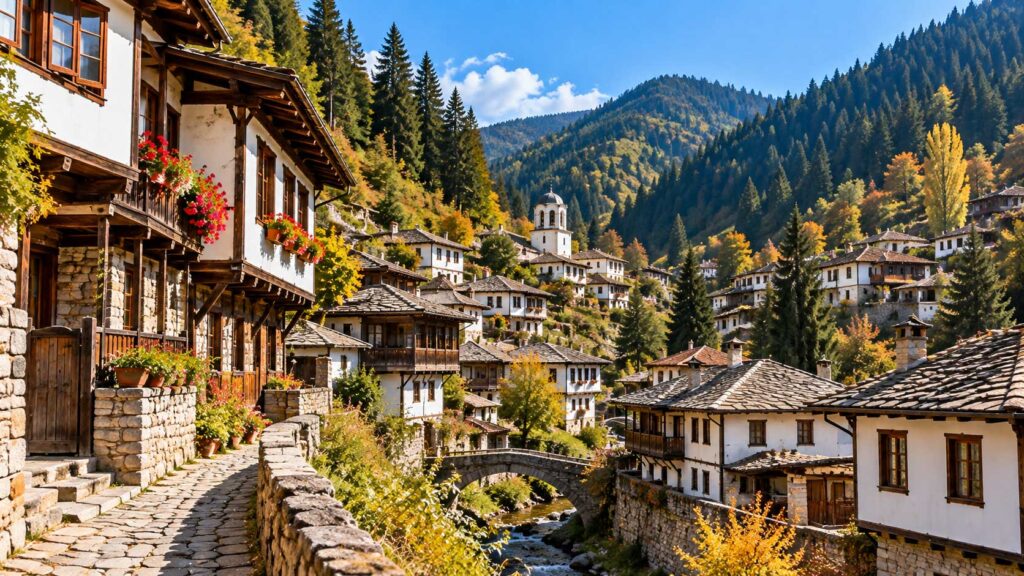
Nestled in a narrow valley in Bulgaria’s Rhodope Mountains, Shiroka Laka is one of the country’s most picturesque historic villages. Whitewashed houses with heavy stone roofs rise along the hillsides, narrow cobbled streets wind through the old center, and graceful stone bridges cross the river below.
The village is especially admired for its traditional Rhodope architecture, much of which dates to the Bulgarian National Revival period. Many houses feature thick stone foundations, projecting wooden upper floors, small windows, and broad stone-slab roofs designed to withstand mountain weather.
Unlike places where only a few historic buildings remain, Shiroka Laka has preserved much of its architectural character, making a walk through the village feel like a journey into Bulgaria’s past.
What Makes Shiroka Laka Special?
Shiroka Laka is more than a beautiful mountain village. It is also one of the important centers of Rhodope folk music and cultural traditions.
The village is closely associated with the kaba gaida, the deep-sounding traditional bagpipe that has become a symbol of the Rhodope Mountains. Its music is an essential part of regional celebrations, folklore performances, and local cultural identity.
Shiroka Laka is also home to the National School of Folk Arts, where young musicians and performers study Bulgarian traditional music, singing, and dance.
Another fascinating local tradition is the village’s Kukeri celebration, known as Pesponedelnik. Held around the beginning of March, the event features masked participants, elaborate costumes, and ritual performances traditionally associated with driving away evil and welcoming spring.
These living traditions make Shiroka Laka particularly interesting for visitors who want to experience more than historic architecture.
What to See in Shiroka Laka
The best way to discover Shiroka Laka is on foot. Its historic center is compact enough for a relaxed walk, but there are plenty of interesting details worth stopping to admire.
One of Shiroka Laka’s most important landmarks is the Church of the Assumption of the Virgin Mary, built in 1834 and consecrated the following year. Local historical accounts say villagers completed construction in just 40 days, making the church a remarkable example of the community’s determination during the Bulgarian National Revival.
As you explore the surrounding streets, look for old stone bridges, traditional houses with projecting upper floors, wooden balconies, and small courtyards tucked behind stone walls.
Another worthwhile stop is the Zgurovski Konak, a traditional Rhodope house that now accommodates an ethnographic museum collection. Its displays introduce visitors to everyday life in Shiroka Laka, including traditional weaving, dairy production, and domestic interiors. Check the museum’s visiting hours before planning your stop.
Some of the most beautiful views appear as you walk uphill from the village center, where the rooftops overlap against the forested slopes of the Rhodope Mountains.
Best Time to Visit Shiroka Laka
May through October is generally an excellent period for exploring Shiroka Laka and the surrounding mountains.
Late spring brings fresh greenery, while summer offers pleasant opportunities for walking, scenic drives, and discovering nearby villages.
Autumn is particularly beautiful, when the forests surrounding Shiroka Laka turn shades of gold, orange, and red.
Winter offers a completely different experience. Snow-covered stone roofs and quiet streets can make the village especially atmospheric, although mountain road conditions require extra attention.
If you’re interested in Bulgarian folklore, consider planning your visit around the Pesponedelnik Kukeri celebration, traditionally held in early March. Confirm the event date before traveling.
Nearby Places to Combine With Shiroka Laka
Shiroka Laka is a wonderful starting point for exploring the central Rhodope Mountains.
Just a short drive away, Gela offers open mountain meadows, panoramic scenery, and a strong connection to Rhodope bagpipe traditions.
The mountain resort of Pamporovo is another convenient stop, particularly if you enjoy hiking, scenic viewpoints, or winter sports.
Farther afield, Smolyan and Devin offer additional opportunities to discover mountain landscapes, regional food, and natural attractions.
If you have a full weekend, consider staying overnight in Shiroka Laka and exploring the surrounding villages at a relaxed pace.
Why visit: Beautiful Rhodope Revival architecture, traditional folk music, historic stone bridges, and a strong connection to Bulgarian mountain culture.
Best for: Architecture, photography, folklore, cultural experiences, mountain road trips, and slow travel.
2. Kovachevitsa – Bulgaria’s Timeless Stone Village
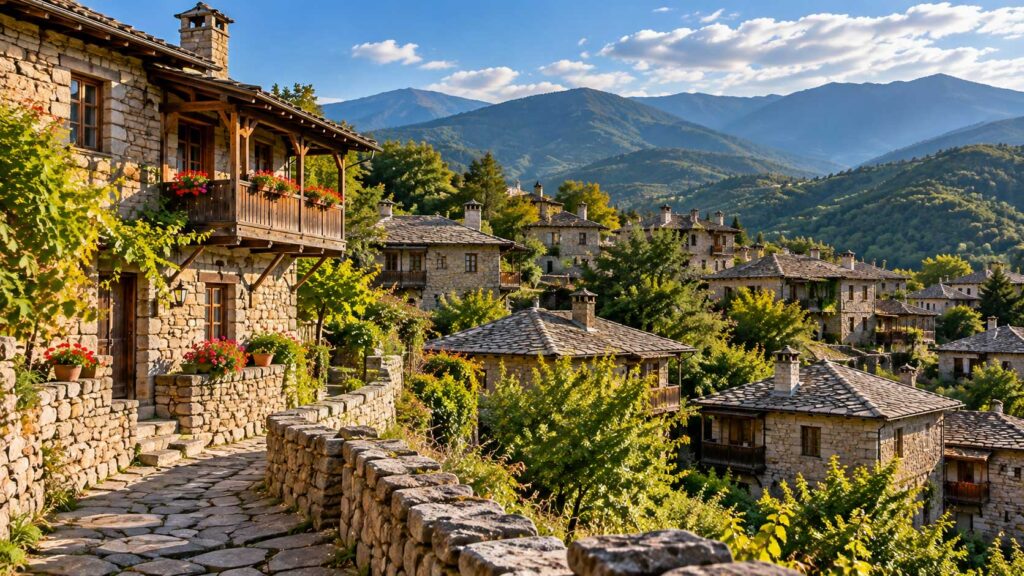
Hidden in the Western Rhodope Mountains, not far from Gotse Delchev, Kovachevitsa is one of Bulgaria’s most remarkable historic villages. Its steep cobbled streets wind between tall stone houses, while heavy stone-slab roofs and wooden balconies create a scene that seems to belong to another century.
Recognized as an architectural and historical reserve, Kovachevitsa has preserved an impressive collection of traditional houses, many dating from the 18th and 19th centuries. Built to follow the natural contours of the hillside, these homes often feature thick stone walls, projecting upper floors, wooden verandas, and distinctive roofs made from locally sourced stone slabs.
The result is a village where traditional architecture isn’t limited to a few restored landmarks. Much of the historic settlement still retains its original appearance, making Kovachevitsa one of the most atmospheric places to explore in the Rhodopes.
What Makes Kovachevitsa Special?
What sets Kovachevitsa apart is the remarkable consistency of its architecture.
As you walk through the village, one historic house follows another, separated by narrow lanes, stone walls, and small enclosed courtyards. Some buildings rise several stories above the streets, creating an almost fortress-like appearance from below.
The traditional houses reflect the craftsmanship of local builders who adapted their construction techniques to the mountainous landscape. Stone provided strength and durability, while wood was used for upper floors, balconies, and interior details.
Kovachevitsa has also attracted Bulgarian filmmakers, photographers, and artists over the years. Its preserved streets and historic buildings have served as settings for film productions, helping establish the village’s reputation as one of Bulgaria’s most visually distinctive rural destinations.
Despite its popularity with visitors interested in architecture, Kovachevitsa still offers a peaceful atmosphere, particularly outside busy weekends and holiday periods.
What to See in Kovachevitsa
The greatest attraction in Kovachevitsa is the village itself.
Rather than following a long list of landmarks, take your time exploring the historic center. Walk along the uneven cobbled lanes, admire the traditional houses, and notice how the buildings rise naturally with the steep terrain.
One landmark worth seeking out is the Church of St. Nicholas, an important part of the village’s religious and architectural heritage.
The higher streets offer some of the most rewarding photography opportunities. From these viewpoints, you can see layers of stone rooftops descending toward the valley, framed by the surrounding Rhodope Mountains.
Look closely at the architectural details as well. Wooden gates, projecting balconies, stone stairways, and small courtyards reveal how local families adapted their homes to village life and the mountain environment.
If your schedule allows, consider staying overnight in a restored traditional guesthouse. Early mornings and evenings are especially pleasant for walking, when the streets are quieter and the changing light brings out the textures of the old stone buildings.
Best Time to Visit Kovachevitsa
May through October is generally the most convenient period for exploring Kovachevitsa on foot.
Spring brings fresh greenery to the surrounding mountains, while summer is well suited to combining the village with nearby settlements and countryside walks.
Autumn is particularly beautiful for photography. The gray stone rooftops and pale facades contrast with forests turning shades of yellow, orange, and red.
Winter offers a quieter experience, especially when snow settles over the traditional houses. However, the village’s steep cobbled streets can become slippery, and mountain roads may require additional care during poor weather.
For the most relaxed experience, consider visiting on a weekday or spending a night in the village rather than arriving only for a short daytime stop.
Nearby Places to Combine With Kovachevitsa
Kovachevitsa is an excellent starting point for exploring the traditional villages of the Western Rhodopes.
Nearby Leshten is especially worth visiting for its restored stone houses, peaceful atmosphere, and beautiful views across the Mesta Valley.
You can also continue toward Dolen, another architectural reserve where historic houses and quiet streets offer a glimpse into rural Bulgaria’s past.
Farther south, Delchevo provides a different mountain village experience, with traditional houses overlooking the countryside near Gotse Delchev.
The town of Gotse Delchev and the mineral springs around Ognyanovo are also useful additions to a longer regional trip.
Together, these destinations make an excellent two- or three-day road trip through some of southwestern Bulgaria’s most picturesque villages.
Why visit: Remarkably preserved stone architecture, steep cobbled streets, historic houses, and an authentic Western Rhodope atmosphere.
Best for: Architecture, photography, romantic weekends, traditional guesthouses, mountain road trips, and slow travel.
3. Leshten – A Tiny Rhodope Village With Incredible Mountain Views
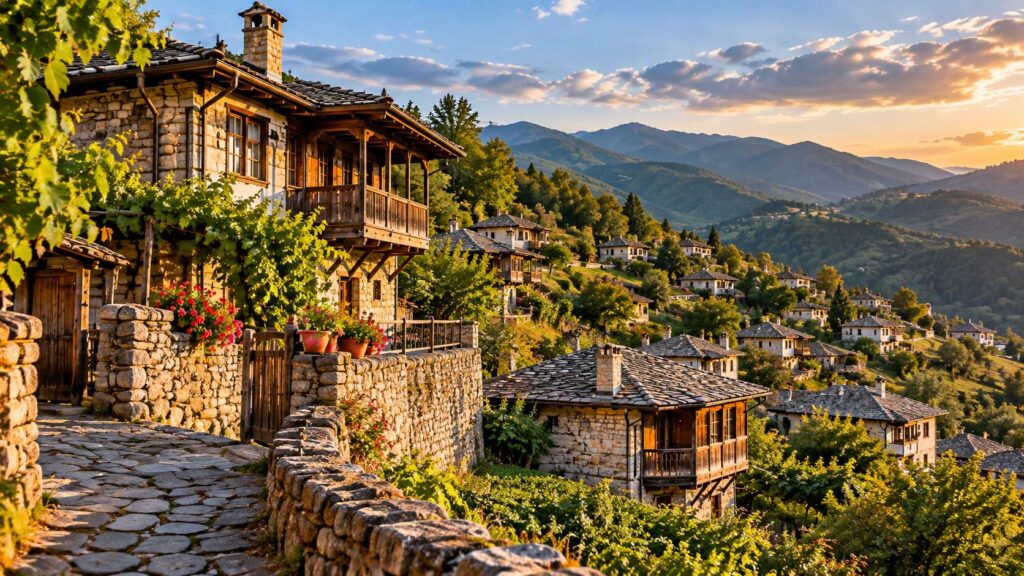
Perched on a hillside above the Mesta Valley, Leshten is one of the most picturesque small villages in Bulgaria’s Western Rhodope Mountains. Just a short drive from Kovachevitsa, it offers a quieter, more intimate setting, with traditional stone houses overlooking a landscape of forested hills and distant mountain ridges.
Many of Leshten’s older buildings date from the 18th and 19th centuries. Their thick stone walls, wooden details, and heavy stone-slab roofs reflect the traditional building techniques of the region. Several have been carefully restored and transformed into welcoming guesthouses, allowing visitors to experience the village’s historic atmosphere while enjoying modern comforts.
What makes Leshten particularly memorable is its setting. Unlike villages tucked into narrow valleys, Leshten opens toward the surrounding countryside, with beautiful views across the Mesta Valley and the mountains beyond.
What Makes Leshten Special?
Leshten has a relaxed atmosphere that makes it easy to forget about schedules and sightseeing checklists.
The village is small enough to explore at an unhurried pace. Narrow lanes pass between old stone houses, wooden gates, and enclosed gardens, occasionally opening onto views of the surrounding hills.
Although Leshten shares many architectural features with nearby Kovachevitsa, the two villages feel noticeably different. Kovachevitsa is particularly impressive for its tightly grouped historic houses and steep cobbled streets, while Leshten is known for its peaceful guesthouses and scenic mountain setting.
One of the nicest ways to enjoy the village is to stay overnight. A quiet morning on a guesthouse terrace, with the mountains stretching into the distance, can be just as memorable as visiting a famous landmark.
For couples, photographers, and travelers who enjoy slower journeys, Leshten is an especially appealing destination.
What to See in Leshten
Leshten doesn’t have a long list of major attractions, and that’s part of its appeal. The village itself is the main reason to visit.
Start with a walk through the older streets, where restored houses, stone walls, and traditional courtyards preserve much of the settlement’s historic character.
As you explore Leshten, look for the village’s small church, which forms part of its traditional religious and cultural landscape. Even if the building is closed, the surrounding streets and historic houses are worth exploring.
Another unusual attraction is the Clay House, a distinctive modern building with rounded walls and organic shapes. Its almost fairytale-like appearance contrasts with the surrounding stone houses and makes it one of the village’s most recognizable sights.
Don’t miss the viewpoints around the village. From several spots, you can look across the Mesta Valley toward the surrounding mountain ridges. The changing light in the morning and late afternoon makes these views particularly rewarding for photography.
If you have time, stop for a meal at a local guesthouse or restaurant and enjoy the quiet atmosphere rather than rushing to your next destination.
Best Time to Visit Leshten
May through October is generally the best period for exploring Leshten and the surrounding countryside.
Spring brings green hillsides, blooming gardens, and pleasant conditions for walking. Summer is ideal for combining the village with scenic drives and other destinations in the Western Rhodopes.
September and October are particularly beautiful. As the surrounding forests begin to change color, the traditional stone houses stand out against the warmer shades of the landscape.
Winter can also be atmospheric, especially when snow covers the rooftops and nearby slopes. However, the mountain roads may become slippery, so checking weather and driving conditions is important.
For a peaceful experience, consider visiting during the week or staying overnight when the village is generally quieter.
Nearby Places to Combine With Leshten
Leshten is ideally located for exploring several of the Western Rhodopes’ most attractive traditional villages.
Nearby Kovachevitsa is the most obvious addition, with its remarkable stone architecture, steep cobbled streets, and historic atmosphere. The two villages make an excellent combination for a relaxed day trip.
You can also continue toward Dolen, another historic settlement known for its traditional houses and peaceful mountain setting.
Farther south, Delchevo offers beautiful views from its hillside location above Gotse Delchev.
The nearby village of Ognyanovo is also worth considering, particularly if you’d like to combine sightseeing with a relaxing stay near its mineral springs.
With two or three days in the area, you can explore several villages without rushing and enjoy one of the most scenic corners of southwestern Bulgaria.
Why visit: Beautiful mountain panoramas, restored stone houses, peaceful guesthouses, and a relaxed village atmosphere.
Best for: Romantic weekends, photography, couples, traditional accommodation, scenic road trips, and slow travel.
4. Zheravna – Wooden Houses and Cobbled Streets Frozen in Time
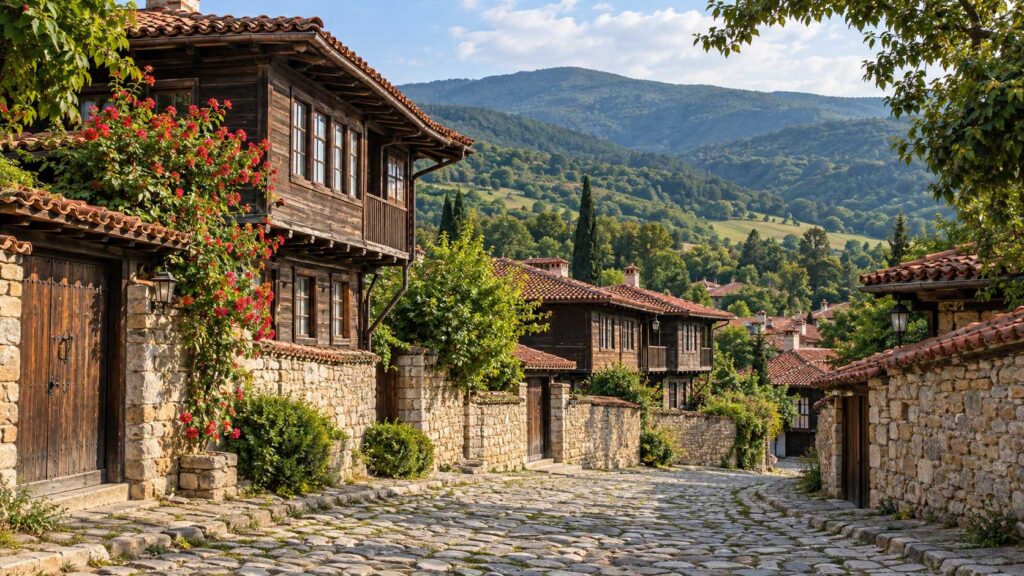
Tucked into the eastern Balkan Mountains, Zheravna is one of Bulgaria’s most beautifully preserved historic villages. Its narrow cobbled streets wind between centuries-old wooden houses, high stone walls, and quiet courtyards, creating an atmosphere that feels wonderfully removed from modern life.
Unlike the stone-built villages of the Rhodope Mountains, Zheravna is especially known for its Bulgarian National Revival architecture. Many of its traditional houses date from the 18th and 19th centuries, when the village prospered through crafts, trade, and livestock-related activities.
Broad overhanging roofs, dark wooden facades, stone foundations, and beautifully carved interior details give Zheravna a character unlike almost anywhere else in Bulgaria.
With much of its historic center preserved, the village offers more than a collection of individual landmarks. Walking through its streets feels like discovering an entire chapter of Bulgarian history.
What Makes Zheravna Special?
Zheravna developed into an important craft and trading settlement during the Bulgarian National Revival period, leaving behind a remarkable architectural legacy.
Many traditional houses were built around enclosed courtyards, with sturdy stone foundations and wooden upper floors. Wealthier families decorated their homes with intricately carved ceilings, wooden cupboards, built-in seating, and other handcrafted details.
These buildings reflect both the practical needs of mountain life and the prosperity of the merchants and craftsmen who once lived here.
Today, Zheravna is protected as an architectural reserve, with a large concentration of historic houses that preserve the village’s traditional appearance.
One of its greatest pleasures is simply wandering through the old streets. Wooden gates open into hidden courtyards, stone fountains appear beside narrow lanes, and traditional houses seem to follow the natural curves of the hillside.
What to See in Zheravna
Zheravna is best explored on foot, allowing plenty of time to appreciate its historic buildings and quiet village atmosphere.
One of the most important attractions is the Yordan Yovkov House Museum, dedicated to the celebrated Bulgarian writer who was born in Zheravna. The museum introduces visitors to his early life and literary connection to the region.
Another interesting landmark is the Rusi Chorbadzhi House, a preserved National Revival home that offers insight into the lifestyle and domestic architecture of a prosperous local family.
The Church of St. Nicholas, built during the 19th century, is another significant part of the village’s religious and cultural heritage.
Beyond these landmarks, some of the most memorable sights are found along the streets themselves. Look for carved wooden balconies, old stone fountains, heavy wooden gates, and traditional houses surrounded by enclosed gardens.
If you enjoy photography, the quieter lanes and higher parts of the village are particularly rewarding in the early morning or late afternoon.
Festival of the National Costume
One of Zheravna’s most famous cultural events is the annual Festival of the National Costume, which celebrates Bulgarian folklore, traditional clothing, music, and customs.
During the festival, participants dress in traditional Bulgarian costumes, and the village comes alive with folk singing, dancing, and cultural performances.
The event is particularly special because it encourages visitors to experience Bulgarian traditions in a setting where historic architecture and cultural heritage naturally belong together.
For travelers interested in folklore, attending the festival can be one of the most memorable experiences in rural Bulgaria.
However, Zheravna becomes considerably busier during the event, and accommodation can fill up well in advance. Check the official festival dates and participation requirements before planning your visit.
If you prefer peaceful walks and quiet village streets, visiting outside the festival weekend may be a better choice.
Best Time to Visit Zheravna
May through October is generally an excellent time to explore Zheravna.
Late spring brings green mountain landscapes, blooming gardens, and comfortable conditions for walking through the historic center.
Summer is popular with visitors interested in folklore events and regional sightseeing, although weekends and festival periods can be busy.
September and October are particularly appealing for photography. The dark wooden houses contrast beautifully with the golden and reddish colors of the surrounding forests.
Winter offers a quieter atmosphere, especially after snowfall, when the traditional rooftops and cobbled lanes take on a different character. However, mountain roads and walking surfaces may become slippery during colder weather.
For a relaxed experience, consider spending a night in one of the village’s restored traditional guesthouses.
Nearby Places to Combine With Zheravna
Zheravna is an excellent base for exploring the historic settlements and mountain landscapes around Kotel.
Nearby Kotel is known for its National Revival history, traditional crafts, and carpet-weaving heritage. Its museums and historic buildings make it a natural addition to a visit to Zheravna.
The village of Medven offers a quieter experience, with traditional houses, peaceful streets, and attractive countryside.
You can also explore Ichera, another traditional village in the eastern Balkan Mountains, or continue toward Sliven for additional historical attractions and access to the Blue Stones Nature Park.
A two-day trip combining Zheravna, Kotel, and Medven is an excellent way to experience the architecture, history, and cultural traditions of this part of Bulgaria.
Why visit: Exceptionally preserved wooden National Revival houses, cobbled streets, historic museums, and one of Bulgaria’s most celebrated folklore festivals.
Best for: History, traditional architecture, Bulgarian folklore, photography, cultural road trips, and romantic village getaways.
5. Bozhentsi – One of Bulgaria’s Most Beautiful Historic Villages

Hidden among the wooded hills near Gabrovo, Bozhentsi is one of Bulgaria’s most charming historic villages. Its narrow cobbled streets wind between whitewashed houses with dark stone roofs, while old fountains, wooden gates, and peaceful courtyards preserve the atmosphere of a traditional Bulgarian settlement.
Located in the foothills of the Balkan Mountains, Bozhentsi is particularly well known for its Bulgarian National Revival architecture. Many of its surviving houses date from the 18th and 19th centuries, when the village prospered through trade and craftsmanship.
Today, Bozhentsi is protected as an architectural and historical reserve. Its compact historic center is easy to explore on foot, making it a wonderful destination for travelers interested in Bulgarian history, traditional architecture, and quieter countryside escapes.
What Makes Bozhentsi Special?
Bozhentsi developed into a prosperous trading settlement during the Bulgarian National Revival period. Local merchants traveled to markets beyond the village, bringing wealth and new influences that were reflected in the homes they built.
Many traditional houses feature stone-built ground floors, projecting upper levels, wooden balconies, and broad roofs covered with stone slabs. Enclosed courtyards and sturdy wooden gates offered privacy, while the upper floors provided comfortable living spaces for merchant families.
Unlike some historic destinations where preserved buildings stand among modern development, much of Bozhentsi’s old village atmosphere remains intact.
The surrounding landscape is just as important to its character. Forested hills rise beyond the rooftops, small gardens brighten the streets, and the village feels closely connected to the countryside around it.
Bozhentsi is especially enjoyable when explored without a strict schedule. A quiet walk through its cobbled lanes often reveals architectural details and small corners that are easy to overlook when rushing between attractions.
What to See in Bozhentsi
Although Bozhentsi is a relatively small village, several historic buildings and cultural landmarks are worth discovering.
One of Bozhentsi’s notable historic buildings is the Doncho Popa House Museum, part of the village’s architectural and historical museum complex. It offers an opportunity to discover the domestic architecture and heritage of a prosperous Bulgarian Revival-era settlement. Check which museum houses are open before your visit.
Another important landmark is the Church of St. Prophet Elijah, built in the 19th century. The church forms part of the village’s religious and architectural heritage and is worth including during a walk through the historic center.
Bozhentsi also has restored houses and ethnographic displays that introduce visitors to traditional domestic life, local crafts, and the village’s trading history. Check current museum opening arrangements before planning an interior visit.
Beyond the museums, take time to explore the cobbled streets, old stone fountains, wooden gates, and small bridges that contribute to the village’s character.
For photography, early morning and late afternoon are particularly rewarding, when softer light brings out the textures of the whitewashed walls, dark rooftops, and surrounding greenery.
If you have extra time, stop for a traditional Bulgarian meal or spend the night in a local guesthouse. The village is especially peaceful after many day visitors have departed.
Best Time to Visit Bozhentsi
April through October is generally an excellent period for exploring Bozhentsi and the surrounding countryside.
Spring brings fresh greenery, blooming gardens, and comfortable temperatures for walking through the historic streets.
Summer is convenient for combining Bozhentsi with nearby cultural attractions, although weekends and holidays can bring more visitors.
Autumn is particularly beautiful. As the surrounding forests turn shades of gold, orange, and red, the village’s whitewashed houses and dark stone roofs create a picturesque contrast.
Winter offers a quieter atmosphere, especially after snowfall. However, cobbled streets can become slippery, and road conditions should be checked during periods of severe weather.
For a more relaxed experience, consider visiting on a weekday or staying overnight rather than making only a short stop.
Nearby Places to Combine With Bozhentsi
Bozhentsi is ideally located for exploring some of the most interesting cultural destinations in central Bulgaria.
Nearby Gabrovo is known for its history of craftsmanship, industry, and humor. The city makes a convenient base for exploring the surrounding region.
One of the best nearby attractions is the Etar Open-Air Ethnographic Museum, where traditional workshops, historic buildings, and demonstrations introduce visitors to Bulgarian crafts and everyday life from earlier centuries.
The town of Tryavna is another excellent addition, particularly if you enjoy National Revival architecture, woodcarving, and traditional streets.
You can also continue toward Dryanovo Monastery, set in a scenic gorge, or explore the mountain landscapes around Shipka and the historic Shipka Memorial.
With two or three days in the area, it’s possible to combine Bozhentsi, Gabrovo, Etar, and Tryavna into a rewarding cultural road trip through central Bulgaria.
Why visit: Beautifully preserved National Revival houses, peaceful cobbled streets, historic merchant homes, and a picturesque setting in the Balkan foothills.
Best for: History, traditional architecture, photography, family day trips, cultural sightseeing, and relaxed countryside weekends.
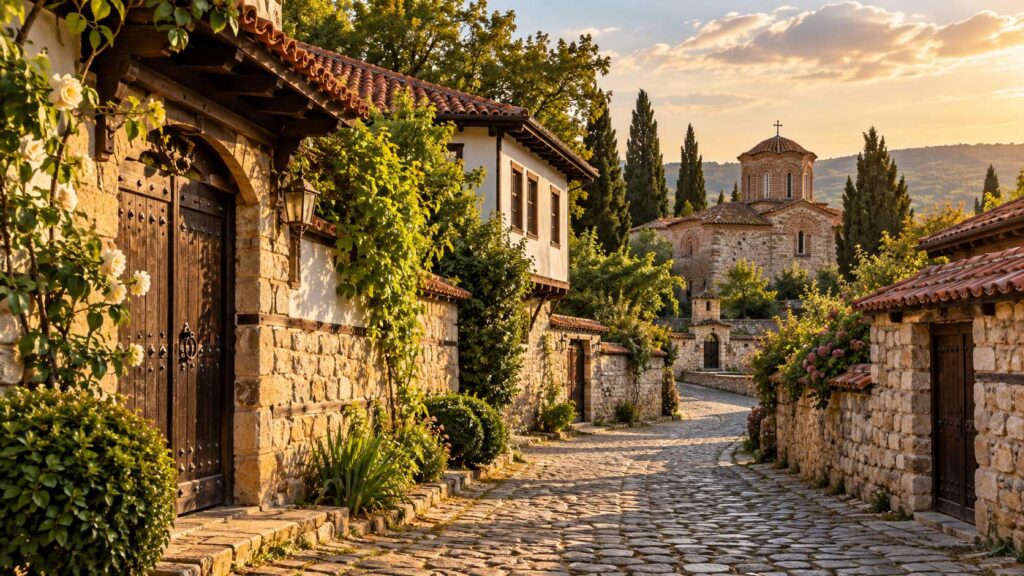
6. Arbanasi – Historic Houses and Churches Above Veliko Tarnovo
Just a few kilometers from Veliko Tarnovo, Arbanasi is one of Bulgaria’s most fascinating historic villages. Set on a plateau overlooking the surrounding countryside, it offers a striking combination of fortified merchant houses, centuries-old churches, and beautifully preserved architecture.
Unlike the mountain villages of the Rhodopes, Arbanasi developed into a prosperous trading settlement, particularly during the 17th and 18th centuries. Wealthy merchants built impressive homes behind high stone walls, while local patrons supported the construction and decoration of remarkable religious buildings.
Today, Arbanasi is best known for its fortress-like houses and richly painted Orthodox churches. Its location near Veliko Tarnovo also makes it one of the easiest traditional villages to include in a cultural journey through central Bulgaria.
What Makes Arbanasi Special?
Arbanasi’s architecture tells the story of a wealthy settlement where security and comfort were equally important.
Many historic houses were built with thick stone walls, heavy wooden gates, small exterior windows, and enclosed courtyards. From the street, some resemble miniature fortresses designed to protect their residents and possessions.
Step inside one of these preserved homes, however, and the atmosphere changes completely. Elaborately carved wooden ceilings, decorated rooms, built-in furnishings, and spacious interiors reveal the wealth and craftsmanship of the families who lived here.
This contrast between protective exteriors and beautifully finished interiors is one of the most distinctive features of Arbanasi.
The village is equally remarkable for its religious heritage. Several historic churches preserve extensive frescoes, offering a glimpse into Orthodox art and the cultural life of the community during the Ottoman period.
What to See in Arbanasi
One of Arbanasi’s most important landmarks is the Church of the Nativity of Christ, famous for its extraordinary interior frescoes.
The building has a relatively modest exterior, but inside, its walls and vaulted ceilings are covered with elaborate religious paintings. The extensive fresco cycles make it one of the most impressive historic churches in the region.
Another important stop is the Konstantsalieva House, a beautifully preserved merchant residence that demonstrates the village’s fortified domestic architecture.
Its thick walls, enclosed courtyard, and carefully arranged interior rooms provide insight into the lifestyle of a prosperous Arbanasi family.
The Church of the Archangels Michael and Gabriel is also worth visiting. Known for its richly decorated interior and historic frescoes, it offers another opportunity to appreciate the religious art that makes Arbanasi so special.
Beyond these landmarks, take time to explore the quieter streets. Old stone walls, wooden gates, traditional houses, and views toward the surrounding hills are all part of the experience.
Arbanasi is compact enough for a relaxed walking visit, although some attractions may have separate admission fees or seasonal opening hours.
Best Time to Visit Arbanasi
April through June and September through October are particularly pleasant periods for exploring Arbanasi.
Spring brings green landscapes and comfortable temperatures for walking between the historic houses and churches.
Summer is also a popular time to visit, especially for travelers staying in Veliko Tarnovo. However, afternoons can be hot, and the main attractions may become busier during weekends and holiday periods.
Autumn offers another excellent opportunity to explore the village, with generally comfortable weather and changing colors across the surrounding countryside.
Winter visits are possible as well, although shorter daylight hours and seasonal museum schedules may require additional planning.
For photography and a quieter atmosphere, early morning or late afternoon is often preferable to the middle of the day.
Nearby Places to Combine With Arbanasi
Arbanasi is perfectly positioned for exploring the historic landmarks and natural attractions around Veliko Tarnovo.
The most obvious addition is Veliko Tarnovo, one of Bulgaria’s most important historic cities. Its dramatic setting above the Yantra River, traditional old streets, and impressive medieval fortifications make it a rewarding destination.
The famous Tsarevets Fortress is a must-see for visitors interested in Bulgaria’s medieval history, while the nearby Trapezitsa hill preserves additional remains of the former capital.
Another worthwhile stop is Preobrazhenski Monastery, known for its religious architecture and wall paintings in a scenic setting outside the city.
Nature lovers can also consider Hotnitsa Waterfall, a picturesque destination surrounded by greenery and walking paths.
If you have more time in the region, explore Arbanasi’s historic houses and churches in our dedicated guide, including its remarkable frescoes and traditional merchant residences.
For a deeper look into the region’s ancient history, the archaeological site of Nikopolis ad Istrum preserves the remains of a Roman city founded during the reign of Emperor Trajan.
With two or three days in the area, you can comfortably combine Arbanasi with Veliko Tarnovo and several nearby cultural or natural attractions.
Why visit: Remarkable frescoed churches, fortified merchant houses, traditional architecture, and convenient access from Veliko Tarnovo.
Best for: Bulgarian history, Orthodox art, architecture, cultural sightseeing, photography, and first-time visitors to Bulgaria.
7. Gela – A Peaceful Rhodope Village Surrounded by Mountains
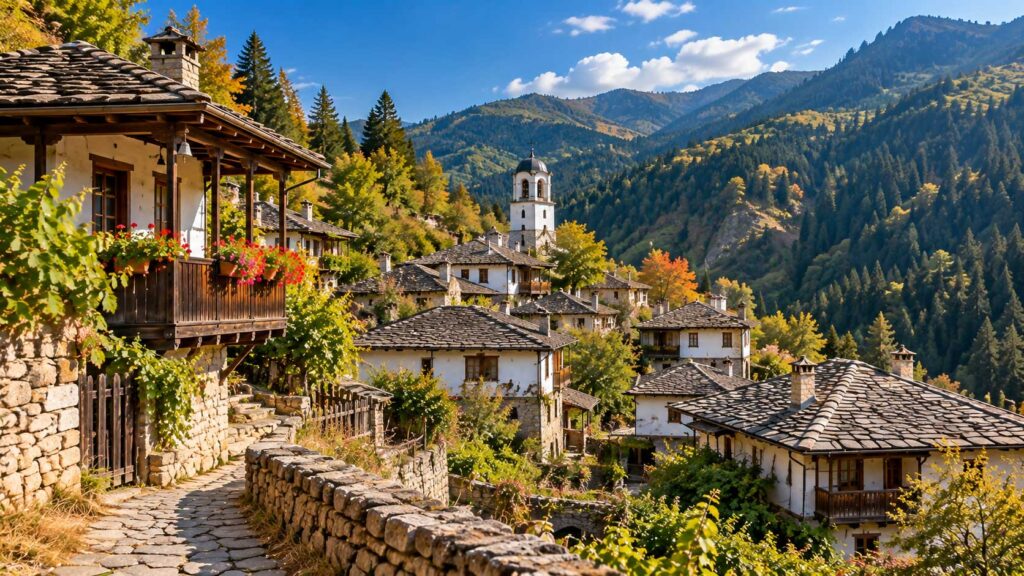
High in Bulgaria’s Rhodope Mountains, Gela is a peaceful mountain village where traditional houses are scattered across rolling green slopes, surrounded by forests, meadows, and beautiful mountain views.
Unlike the tightly grouped stone houses of Kovachevitsa or the narrow streets of Shiroka Laka, Gela feels wonderfully open. Small clusters of homes sit along the hillsides, while mountain ridges stretch into the distance and quiet country roads lead through the surrounding landscape.
Located near Shiroka Laka, Gela is an excellent destination for travelers who want to experience the quieter side of the Rhodopes. Its appeal comes from the scenery, traditional music, and the opportunity to spend time in a rural setting that feels closely connected to nature.
What Makes Gela Special?
Gela is particularly well known for its connection to Rhodope folk music and the traditional kaba gaida, the deep-sounding bagpipe that has become one of the region’s most recognizable cultural symbols.
One of the village’s best-known events is the Gela Bagpipe Gathering, traditionally held during the summer. The celebration brings together bagpipe players, folk musicians, and visitors who come to enjoy traditional Rhodope music in a beautiful mountain setting.
The sound of the kaba gaida echoing across the surrounding hills is one of the experiences that makes this gathering so memorable.
Gela is also associated with local legends about Orpheus, the mythical musician of ancient Greek tradition. The Rhodope Mountains have long been linked to stories about Orpheus, and local folklore connects the wider area with his legendary life.
These stories are part of the region’s cultural identity rather than verified historical accounts, but they add another fascinating dimension to the landscape.
Beyond music and mythology, Gela’s greatest attraction is its peaceful atmosphere. The scattered houses, open meadows, and mountain views make it an inviting place for travelers who enjoy walking, photography, and spending time outdoors.
What to See in Gela
Gela is not a village filled with museums or major architectural monuments. Instead, the surrounding landscape is the main attraction.
Start by exploring the village’s quieter roads and paths, where traditional Rhodope houses stand among gardens, meadows, and forested slopes.
Several elevated areas around the settlement offer beautiful views of the surrounding mountains. On clear days, the open landscape provides excellent opportunities for photography, particularly in the morning and late afternoon.
The village’s small churches and local religious landmarks also reflect the history and traditions of the community.
For visitors interested in hiking, the countryside around Gela offers access to mountain paths and scenic walking routes. The nearby Karluk area and surrounding Rhodope ridges are worth researching when planning a longer outdoor excursion.
Choose routes appropriate to your experience, and check trail markings and weather conditions before heading into the mountains.
If your visit coincides with the Gela Bagpipe Gathering, allow additional time to enjoy the music and cultural atmosphere. Event arrangements and dates should be confirmed in advance.
Best Time to Visit Gela
June through September is generally the most convenient period for exploring Gela and enjoying the surrounding mountain landscape.
Late spring brings green meadows, blooming wildflowers, and fresh mountain air, although temperatures can remain cool at higher elevations.
Summer is particularly attractive for walking, hiking, and attending regional folklore events. Even when lower parts of Bulgaria experience hot weather, Gela’s mountain setting can offer more comfortable conditions, especially in the evenings.
September and early October are excellent for travelers who prefer quieter surroundings. As autumn progresses, the nearby forests begin to change color, creating beautiful contrasts with the open mountain slopes.
Winter can be equally picturesque, especially after snowfall, but access may become more difficult because of icy roads and changing mountain conditions.
If you’re planning to attend the annual bagpipe gathering, check the official event schedule before booking accommodation.
Nearby Places to Combine With Gela
Gela is ideally located for exploring some of the most beautiful destinations in the central Rhodope Mountains.
Nearby Shiroka Laka is the most natural addition to your itinerary. Its preserved Revival-era houses, historic stone bridges, and strong connection to Rhodope folklore provide an interesting contrast to Gela’s open mountain setting.
The mountain resort of Pamporovo offers additional opportunities for hiking, scenic viewpoints, and winter sports.
You can also continue toward Smolyan, where the surrounding lakes, forests, and mountain attractions make the area rewarding for nature lovers.
For a longer trip, consider visiting Devin or exploring the dramatic landscapes around Trigrad, including the famous Trigrad Gorge.
A relaxed day combining Gela and Shiroka Laka is an excellent introduction to the region, while two or three days will allow more time for hiking, photography, and discovering the surrounding mountains.
Why visit: Beautiful mountain panoramas, peaceful meadows, Rhodope bagpipe traditions, and a strong connection to regional folklore.
Best for: Hiking, nature photography, folklore, traditional music, scenic mountain drives, and peaceful countryside escapes.
8. Dolen – A Quiet Stone Village Hidden in the Western Rhodopes
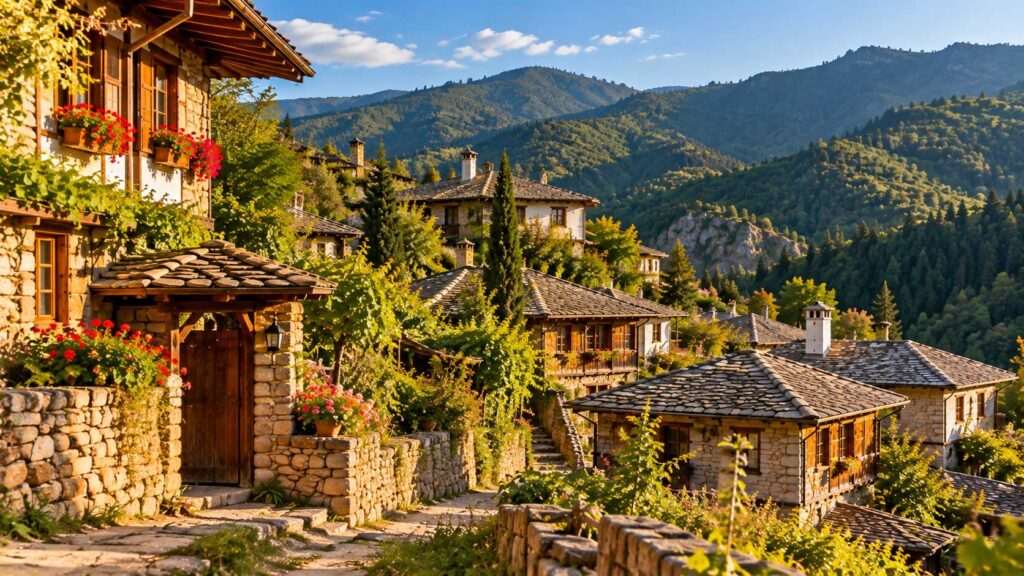
Tucked into the Western Rhodope Mountains, Dolen is one of Bulgaria’s most atmospheric historic villages. Its narrow stone-paved streets wind between traditional houses, wooden balconies, and high garden walls, creating a peaceful setting that feels far removed from busy tourist destinations.
Located in the mountainous countryside north of Gotse Delchev, Dolen shares many architectural features with nearby Kovachevitsa and Leshten. Yet it has a character of its own, with quiet residential streets, historic buildings, and a strong connection to the surrounding landscape.
The village is recognized as an architectural and historical reserve, preserving a valuable collection of houses from the Bulgarian National Revival period. Many feature sturdy stone foundations, wooden upper floors, and traditional roofs that reflect the building techniques of the Western Rhodopes.
For travelers who enjoy discovering smaller settlements at their own pace, Dolen offers an appealing combination of architecture, history, and rural tranquility.
What Makes Dolen Special?
Dolen’s greatest attraction is its remarkably peaceful atmosphere.
Unlike some of Bulgaria’s more frequently visited historic villages, Dolen has relatively few major tourist attractions. Instead, its appeal comes from the streets themselves, where traditional houses and stone walls create an almost continuous historic setting.
Many older homes follow the natural contours of the hillside, with stone-built lower levels and wooden upper floors. Projecting balconies, enclosed courtyards, and heavy wooden gates reveal the practical building traditions of the region.
The village’s historic character reflects a time when local families depended on agriculture, livestock, crafts, and trade for their livelihoods.
What makes Dolen especially rewarding is the opportunity to experience this architectural heritage without feeling that every building has been turned into a tourist attraction.
Some houses remain private residences, while others have been restored or adapted for visitors. Together, they preserve the appearance of a traditional Rhodope settlement.
What to See in Dolen
The best way to discover Dolen is to explore its historic center on foot.
Follow the narrow stone-paved lanes, admire the traditional houses, and take time to notice the wooden balconies, carved details, old gates, and small courtyards.
One of the village’s notable religious landmarks is the Church of St. Nicholas, which forms part of Dolen’s historic and cultural heritage.
Old stone fountains and traditional public spaces also contribute to the village’s character, offering reminders of everyday life in earlier generations.
As you walk toward the higher parts of the settlement, you’ll find attractive views over the surrounding hills and wooded slopes of the Western Rhodopes.
Dolen is particularly appealing to photographers interested in traditional architecture. The combination of weathered stone walls, wooden details, and quiet lanes provides plenty of interesting compositions without needing to search for a famous viewpoint.
Because much of the village remains residential, remember to respect private property and avoid entering enclosed courtyards without permission.
Best Time to Visit Dolen
May through October is generally the most convenient time to explore Dolen and the surrounding countryside.
Late spring brings fresh greenery, blooming gardens, and pleasant conditions for walking through the village.
Summer is ideal for combining Dolen with other Western Rhodope destinations, although daytime temperatures can become warm during sunny periods.
September and October are especially attractive for photography. As the nearby forests begin to change color, the stone houses and traditional rooftops stand out against the autumn landscape.
Winter can also be beautiful, particularly after snowfall, when the historic streets take on a quieter appearance. However, icy surfaces and changing mountain road conditions can make travel more challenging.
For a relaxed experience, allow enough time to explore without rushing. Even a couple of hours can be rewarding, particularly if you enjoy architecture and photography.
Nearby Places to Combine With Dolen
Dolen fits naturally into a longer journey through the traditional villages of the Western Rhodopes.
Kovachevitsa is one of the most impressive nearby destinations, known for its tall stone houses, steep cobbled streets, and beautifully preserved historic center.
Leshten offers a different experience, with restored traditional guesthouses and panoramic views across the Mesta Valley.
Farther south, Delchevo is another attractive mountain village where traditional houses overlook the countryside around Gotse Delchev.
The town of Gotse Delchev provides a convenient base for exploring the region, while nearby Ognyanovo is known for its mineral springs and accommodation options.
A two- or three-day road trip combining Dolen, Kovachevitsa, Leshten, and the surrounding villages is an excellent way to experience the architecture and landscapes of southwestern Bulgaria.
Why visit: Preserved National Revival architecture, quiet stone-paved streets, traditional houses, and a peaceful mountain atmosphere.
Best for: Slow travel, traditional architecture, photography, countryside exploration, and travelers looking for quieter places in Bulgaria.
9. Delchevo – A Hillside Village With Sweeping Mountain Views
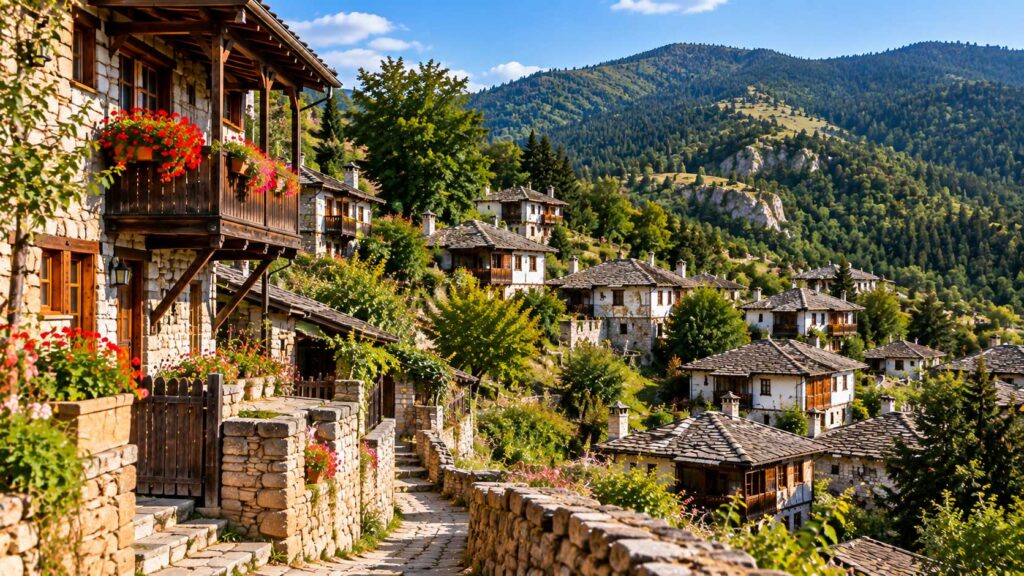
Perched on the slopes of the Southwestern Rhodope Mountains, high above the town of Gotse Delchev, Delchevo is one of the most picturesque hillside villages in southwestern Bulgaria. Its traditional houses climb the mountainside, while open views stretch across the valley toward the impressive peaks of the Pirin Mountains.
Unlike some of Bulgaria’s historic villages hidden deep in narrow valleys, Delchevo feels wonderfully open. Stone-built foundations, whitewashed walls, wooden balconies, and old rooftops create a beautiful contrast with the surrounding mountain landscape.
The village preserves elements of Bulgarian National Revival architecture, and several traditional homes have been restored as guesthouses. Combined with its quiet atmosphere and scenic setting, Delchevo makes an appealing destination for travelers looking to experience rural Bulgaria at a slower pace.
What Makes Delchevo Special?
Delchevo’s greatest attraction is its remarkable hillside location.
The village rises steeply above the valley, creating layered views of rooftops, traditional houses, and distant mountain ridges. From certain streets and terraces, the landscape opens dramatically toward the Pirin Mountains.
Its architecture is another important part of the experience. Many older houses feature stone ground floors, wooden upper levels, enclosed courtyards, and traditional construction details adapted to the steep terrain.
These buildings reflect the village’s historical development during the Bulgarian National Revival period, when local communities relied on agriculture, livestock, crafts, and regional trade.
Today, Delchevo remains relatively peaceful compared with some of Bulgaria’s better-known heritage destinations.
Rather than offering a long list of major tourist attractions, the village invites visitors to enjoy quiet walks, mountain scenery, and the simple pleasure of spending time in a traditional rural setting.
What to See in Delchevo
The best way to discover Delchevo is to explore its older streets on foot.
Walk through the historic parts of the village, where traditional houses, stone walls, wooden gates, and narrow lanes reveal its architectural character.
One of the village’s religious landmarks is the Church of the Assumption of the Virgin Mary, which forms part of Delchevo’s cultural and spiritual heritage.
The village’s central area and surrounding streets are also worth exploring, particularly if you enjoy discovering small architectural details and photographing traditional buildings.
However, the most memorable attraction is the scenery.
From the higher parts of Delchevo, you can enjoy sweeping views across the Gotse Delchev valley toward the Pirin Mountains. Early morning and late afternoon are particularly rewarding, when softer light brings out the layers of hills and distant peaks.
If you have time, consider staying overnight in a traditional guesthouse. Delchevo is especially pleasant in the evening, when the streets become quieter and the surrounding mountains create a peaceful backdrop.
The village is also a good starting point for exploring nearby countryside roads and mountain landscapes, although walking routes should be checked before setting out.
Best Time to Visit Delchevo
April through October is generally an excellent period for visiting Delchevo.
Spring brings green hillsides, blooming gardens, and comfortable temperatures for exploring the village.
Summer is also a good time to visit, particularly for travelers who enjoy scenic drives and outdoor activities. Because of its elevated location, Delchevo can feel more comfortable in the evenings than the lower valley around Gotse Delchev.
September and October are especially attractive for photography, when the surrounding countryside begins to take on warmer autumn colors.
Winter can offer beautiful mountain scenery and a quieter atmosphere, but snow, ice, and changing road conditions may affect access.
For the best views and most relaxed experience, consider arriving in the afternoon and staying overnight rather than treating Delchevo as a quick roadside stop.
Nearby Places to Combine With Delchevo
Delchevo is well positioned for exploring several of southwestern Bulgaria’s most interesting traditional villages and natural attractions.
The nearby town of Gotse Delchev is a convenient starting point for exploring the region and offers additional accommodation, restaurants, and services.
Leshten is especially appealing for its restored stone houses and panoramic views across the Mesta Valley, while Kovachevitsa is famous for its remarkably preserved historic architecture and cobbled streets.
Another worthwhile destination is Dolen, a quieter architectural reserve where traditional Rhodope houses and narrow lanes preserve the atmosphere of an older mountain settlement.
For a relaxing addition to your itinerary, consider Ognyanovo, known for its mineral springs and spa accommodation.
You can also explore the wider countryside toward Hadzhidimovo, where small settlements and mountain landscapes offer a different perspective on southwestern Bulgaria.
A two- or three-day trip through Delchevo, Leshten, Kovachevitsa, and the surrounding area provides an excellent combination of traditional architecture, scenic viewpoints, and peaceful countryside experiences.
Why visit: Beautiful hillside architecture, sweeping views toward the Pirin Mountains, traditional guesthouses, and a quiet rural atmosphere.
Best for: Scenic drives, couples, photography, romantic weekends, mountain landscapes, and peaceful overnight stays.
10. Momchilovtsi – Traditional Rhodope Life in a Mountain Setting
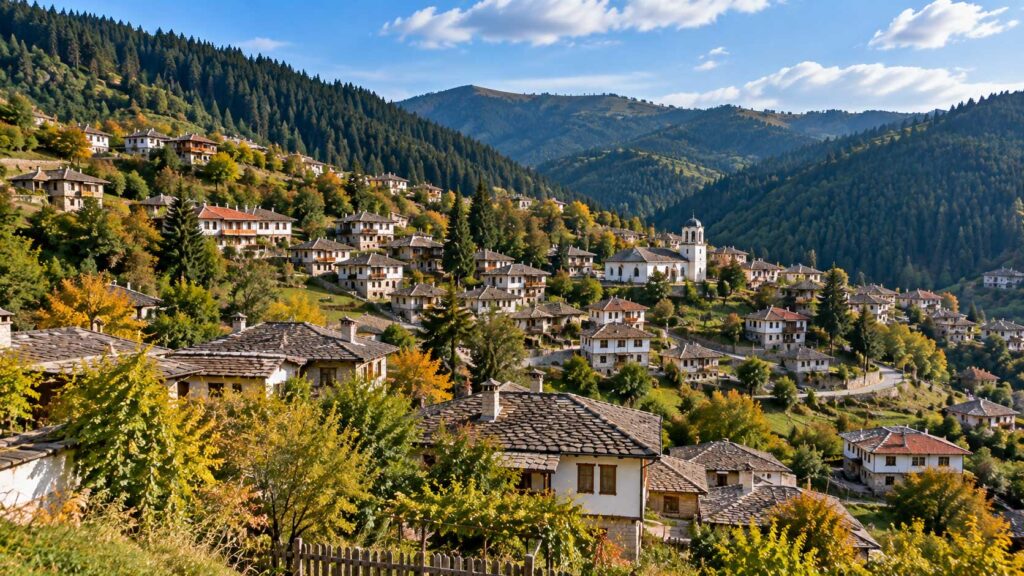
Surrounded by forested hills, green meadows, and the beautiful landscapes of the central Rhodope Mountains, Momchilovtsi is a welcoming mountain village where traditional Bulgarian culture remains part of everyday life.
Located near Smolyan, the village offers a different experience from the architectural reserves found elsewhere in Bulgaria. Rather than being preserved mainly as a historic attraction, Momchilovtsi is an active community where local families, small businesses, guesthouses, and traditional customs exist alongside modern village life.
Its peaceful setting, strong cultural identity, and connection to Rhodope food and folklore make it particularly appealing to travelers who want to experience rural Bulgaria beyond its famous monuments.
What Makes Momchilovtsi Special?
Momchilovtsi is closely associated with traditional Rhodope culture, dairy products, local cuisine, and mountain village life.
The surrounding region has a long history of livestock farming and dairy production, and Momchilovtsi has become particularly well known for its connection to Bulgarian yogurt.
One of the village’s distinctive cultural events is the Momchilovtsi Yogurt Festival, which celebrates local dairy traditions, food, folklore, and cultural exchange. The event has also attracted international attention through the popularity of yogurt products associated with the village.
Traditional Rhodope music and customs are another important part of local identity. Folk songs, regional costumes, and community celebrations reflect traditions passed down through generations.
What makes Momchilovtsi especially interesting is that these cultural elements exist within a living community.
You can walk through the village, stop at a local café, enjoy a traditional meal, and observe the ordinary rhythm of life in the mountains.
The surrounding landscape adds to the experience, with wooded slopes, open meadows, and mountain views that make the village attractive throughout much of the year.
What to See in Momchilovtsi
Begin your visit in the village center, where local shops, cafés, and community buildings provide a glimpse into everyday life.
One of the village’s notable landmarks is the Church of Sts. Constantine and Helena, which reflects the religious and cultural traditions of the local community.
Momchilovtsi also has a local cultural and historical heritage connected with Rhodope customs, traditional occupations, and village life. Visitors interested in these subjects can look for local exhibitions or cultural activities, depending on what is available during their stay.
Beyond the central streets, explore the quieter parts of the village, where traditional Rhodope houses, stone walls, gardens, and mountain scenery create a peaceful atmosphere.
The surrounding countryside is equally rewarding. Forest paths, meadows, and scenic roads offer opportunities for walking, photography, and enjoying the fresh mountain air.
Food is another good reason to spend time here.
If you have the opportunity, try traditional Rhodope dishes such as patatnik, a regional potato specialty, or klin, a savory dish often prepared with rice, eggs, and cheese. Local dairy products are also an important part of the area’s culinary identity.
Rather than rushing through Momchilovtsi in an hour, consider spending an afternoon or staying overnight in a local guesthouse.
Best Time to Visit Momchilovtsi
May through October is generally an excellent period for visiting Momchilovtsi and exploring the surrounding Rhodope Mountains.
Spring brings fresh greenery, blooming meadows, and comfortable conditions for walking through the village and nearby countryside.
Summer is especially appealing for hiking, cultural events, and outdoor activities. The village’s mountain location can provide a welcome escape from the heat experienced in Bulgaria’s lower regions.
One of Momchilovtsi’s best-known events is the Yogurt Festival – Culture and Traditions, which celebrates Bulgarian dairy products alongside Rhodope music, food, and craftsmanship. The eighth edition took place from August 28 to 30, 2026, featuring local producers, cultural performances, traditional crafts, and culinary activities. Travelers interested in attending a future edition should check the festival’s official website for updated dates and programs.
September and October are particularly beautiful for photography, when the surrounding forests begin to turn shades of yellow, orange, and red.
Winter offers a quieter mountain atmosphere, often accompanied by snow-covered slopes and traditional village scenery. However, road conditions and access to outdoor walking routes may be affected by winter weather.
For travelers seeking peace and quiet, weekdays and periods outside major local events are often the most relaxing times to visit.
Nearby Places to Combine With Momchilovtsi
Momchilovtsi is well positioned for exploring some of the most attractive destinations in the central Rhodope Mountains.
Nearby Smolyan offers additional cultural attractions, restaurants, and access to the surrounding mountain landscape.
The Smolyan Lakes are another worthwhile destination, particularly for travelers who enjoy nature, forest walks, and photography.
The mountain resort of Pamporovo provides opportunities for skiing in winter and hiking or scenic outings during the warmer months.
You can also visit Shiroka Laka, one of the Rhodopes’ best-known historic villages, famous for its National Revival architecture and traditional folk music.
The Rozhen area is another appealing addition, with open mountain landscapes, scenic viewpoints, and the nearby Rozhen Observatory.
A two- or three-day trip combining Momchilovtsi, Smolyan, the Smolyan Lakes, and Shiroka Laka offers a wonderful introduction to the cultural traditions and natural beauty of the central Rhodopes.
Why visit: Traditional Rhodope culture, local dairy and food traditions, beautiful mountain scenery, and the atmosphere of a living Bulgarian village.
Best for: Cultural travel, traditional food, folklore, nature photography, mountain walks, family trips, and peaceful countryside stays.
11. Brashlyan – A Traditional Village Hidden in Strandzha Nature Park

Tucked among the wooded hills of Strandzha Nature Park in southeastern Bulgaria, Brashlyan is one of the country’s most atmospheric traditional villages. Its quiet streets, historic houses, and lush forest surroundings offer a glimpse into a part of Bulgaria that many international travelers never get to experience.
Located inland from the Black Sea coast, near Malko Tarnovo, Brashlyan has preserved much of its traditional Strandzha architecture. Old houses with stone foundations, timber-framed upper floors, and broad tiled roofs stand along narrow lanes, surrounded by gardens, courtyards, and greenery.
Unlike the better-known architectural villages of the Rhodopes, Brashlyan has a character shaped by the traditions and landscapes of southeastern Bulgaria.
The village is protected as an architectural and historical reserve, making it an especially rewarding destination for travelers interested in rural heritage, local culture, and peaceful countryside escapes.
What Makes Brashlyan Special?
Brashlyan’s greatest attraction is the combination of traditional architecture and its setting within Strandzha Nature Park.
The village preserves examples of the region’s distinctive building traditions. Many older homes feature stone-built lower sections, wooden upper floors, enclosed courtyards, and roofs designed for the local climate.
These houses reflect generations of rural life in Strandzha, where farming, livestock raising, and traditional crafts shaped the development of small communities.
Walking through Brashlyan feels different from visiting a large open-air museum. Although several historic buildings have been preserved or restored, the village remains a living settlement with private homes, gardens, and everyday routines.
The surrounding landscape is equally important. Strandzha is known for its extensive forests, rich biodiversity, and cultural traditions, some of which are found nowhere else in Bulgaria.
For travelers who enjoy discovering lesser-known destinations, Brashlyan offers a wonderful opportunity to experience the quieter side of southeastern Bulgaria.
What to See in Brashlyan
The best way to explore Brashlyan is on foot, following the village’s quiet streets and taking time to appreciate its traditional architecture.
Look for the old Strandzha houses with their stone walls, wooden details, and enclosed courtyards. These buildings are among the village’s most recognizable features and provide excellent opportunities for photography.
One of the main landmarks is the Church of St. Demetrius, an important part of Brashlyan’s religious and cultural heritage.
The village is also associated with traditional educational and community life, and its preserved historic buildings offer insight into how local families lived in earlier generations.
Beyond the historic center, the surrounding countryside is well worth exploring.
Forest paths and rural roads lead into the beautiful landscapes of Strandzha Nature Park, where visitors can enjoy peaceful walks, birdwatching, and nature photography.
The wider region is particularly interesting for its mixture of natural and cultural heritage, including traditional villages, historic chapels, and local customs that have survived through generations.
Brashlyan is not a destination that requires a packed sightseeing schedule. Its appeal comes from wandering slowly, enjoying the surroundings, and discovering small details along the way.
Best Time to Visit Brashlyan
April through June and September through October are particularly pleasant periods for visiting Brashlyan.
Spring is especially beautiful in Strandzha, when the forests become lush and green, wildflowers appear, and the countryside feels full of life.
Summer is suitable for combining the village with other destinations in southeastern Bulgaria, including the Black Sea coast. However, daytime temperatures can become warm, particularly during July and August.
Early autumn offers comfortable conditions for walking and photography, while the surrounding forests gradually begin to change color.
Winter is generally quieter, although cooler temperatures, rain, and occasional snow can affect walking conditions and travel through the region.
For the most enjoyable experience, allow enough time to explore the village and surrounding countryside without rushing.
Nearby Places to Combine With Brashlyan
Brashlyan is an excellent starting point for discovering the villages, forests, and cultural traditions of Strandzha.
Nearby Malko Tarnovo is one of the region’s main towns and provides a useful base for exploring the nature park and its historical attractions.
The village of Balgari is particularly interesting for its connection to the traditional nestinarstvo fire-dancing ritual, one of the most distinctive cultural traditions associated with Strandzha.
You can also explore Gramatikovo, another village surrounded by the region’s characteristic forests and rural landscapes.
For travelers interested in combining mountain villages with coastal scenery, Tsarevo, Ahtopol, and Sinemorets are attractive destinations along Bulgaria’s southern Black Sea coast.
A two- or three-day journey through Brashlyan, Malko Tarnovo, and the surrounding Strandzha villages offers a rewarding introduction to one of Bulgaria’s most distinctive cultural and natural regions.
Why visit: Traditional Strandzha architecture, peaceful historic streets, beautiful forest surroundings, and an authentic rural atmosphere.
Best for: Slow travel, traditional architecture, nature photography, forest walks, cultural exploration, and discovering lesser-known Bulgaria.
12. Balgari – The Strandzha Village of the Ancient Fire-Dancing Tradition
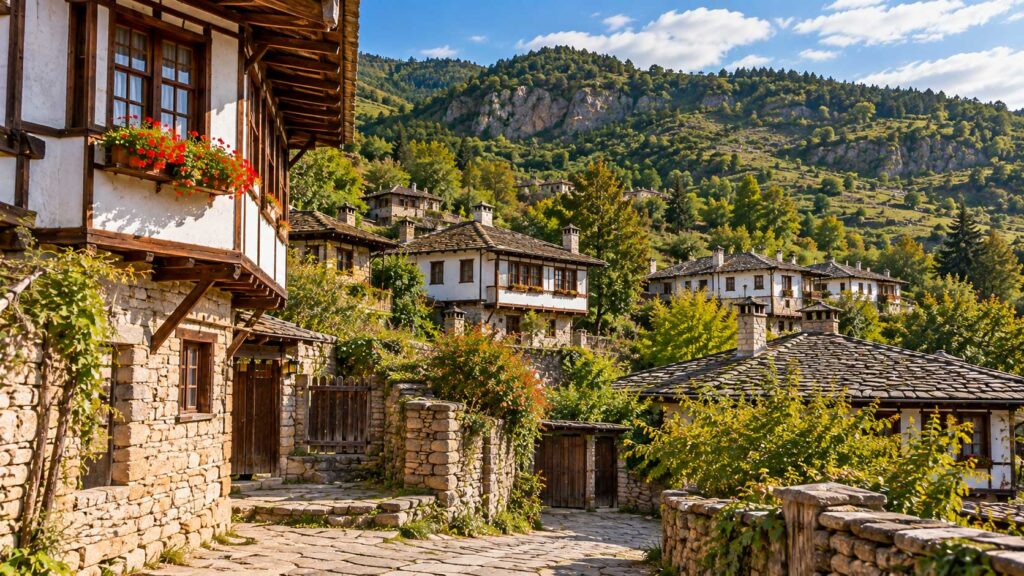
Hidden among the forested hills of Strandzha Nature Park in southeastern Bulgaria, Balgari is a small village with an extraordinary cultural heritage. Although its quiet streets and traditional houses may seem unassuming at first, Balgari is closely associated with one of Bulgaria’s most remarkable surviving folk traditions: nestinarstvo, the ritual of dancing barefoot on glowing embers.
Located inland from the southern Black Sea coast, the village offers a glimpse into the customs and beliefs that have shaped Strandzha communities for generations.
Unlike Bulgaria’s better-known architectural reserves, Balgari is primarily a destination for travelers interested in living traditions, folklore, and regional history.
Its peaceful surroundings, modest rural architecture, and deep connection to the fire-dancing ritual make it one of the most distinctive villages in Bulgaria.
What Makes Balgari Special?
Balgari is particularly famous for its connection to nestinarstvo, a traditional ritual involving barefoot dancing on glowing embers.
The practice is associated with the feast of Saints Constantine and Helena and combines Orthodox Christian elements with older ritual traditions. Its precise historical origins remain debated, but the custom has been passed down through generations in the Strandzha region.
During the ceremony, participants known as nestinari carry religious icons and perform ritual dances, accompanied by the rhythmic sound of a traditional drum and bagpipe.
The most dramatic moment comes when the nestinari step onto a bed of glowing embers and dance barefoot while holding sacred icons.
However, nestinarstvo is much more than a spectacular performance. For the communities that preserve it, the ritual has deep spiritual and cultural meaning.
In 2009, UNESCO inscribed nestinarstvo on its Representative List of the Intangible Cultural Heritage of Humanity, recognizing its importance as a living cultural tradition.
Balgari remains especially significant because of its historical association with the ritual and the continued efforts to preserve it.
What to See in Balgari
The main reason to visit Balgari is to experience the village’s cultural atmosphere and learn about its fire-dancing heritage.
Begin with a walk through the village center, where traditional houses, quiet streets, and rural gardens reflect the everyday life of a small Strandzha community.
One of the village’s important landmarks is the Church of Saints Constantine and Helena, closely associated with the religious traditions surrounding nestinarstvo.
The church and the village’s sacred spaces play an important role in the cultural identity of the community, particularly during the annual celebrations.
If your visit coincides with the traditional nestinarstvo ceremony, you may have an opportunity to witness the ritual in its local setting.
Balgari’s traditional nestinarstvo celebrations are associated with the feast of Saints Constantine and Helena, observed locally on June 3. The 2026 celebrations took place on June 3–4, with religious rituals, folklore performances, and the fire-dancing ceremony forming part of the program. Visitors hoping to witness this tradition should check the official schedule published by Tsarevo Municipality, as arrangements can change from year to year.
Because the ceremony is a meaningful religious and community tradition, visitors should observe respectfully, follow local guidance, and avoid interrupting participants.
Outside the festival period, Balgari offers a quieter experience. You can explore the village streets, appreciate the surrounding forests, and enjoy the atmosphere of rural Strandzha without the crowds associated with major cultural events.
Best Time to Visit Balgari
The best time to visit Balgari depends on whether you want to experience its cultural traditions or simply enjoy the village and surrounding nature.
Late May and early June are particularly interesting for travelers hoping to learn more about nestinarstvo and the celebrations associated with Saints Constantine and Helena.
If witnessing the traditional fire-dancing ceremony is your main reason for visiting, confirm the event schedule with local organizers before making travel arrangements.
Spring is also a beautiful season in Strandzha, when the forests become lush and green and the surrounding countryside is ideal for walking.
Summer is convenient for combining Balgari with a holiday along Bulgaria’s southern Black Sea coast, although temperatures can become warm during the day.
September and October offer a quieter alternative, with pleasant conditions for exploring nearby villages and forest landscapes.
Winter is generally peaceful, but shorter daylight hours and changing weather conditions may limit outdoor activities.
Nearby Places to Combine With Balgari
Balgari is well positioned for exploring the cultural heritage and natural landscapes of Strandzha Nature Park.
Nearby Brashlyan is one of the region’s most attractive traditional villages, known for its preserved Strandzha architecture and peaceful historic atmosphere.
The town of Malko Tarnovo provides additional opportunities to learn about the history, archaeology, and cultural traditions of southeastern Bulgaria.
You can also visit Gramatikovo, a village surrounded by forests and characteristic Strandzha landscapes.
For travelers interested in combining cultural sightseeing with coastal scenery, Tsarevo, Ahtopol, and Sinemorets are worthwhile destinations along the southern Black Sea coast.
A two- or three-day journey through Balgari, Brashlyan, and the surrounding Strandzha region offers a fascinating combination of traditional villages, forest landscapes, and living Bulgarian folklore.
Why visit: The remarkable nestinarstvo fire-dancing tradition, Strandzha folklore, peaceful village surroundings, and a unique connection to Bulgaria’s living cultural heritage.
Best for: Folklore, cultural travel, traditional festivals, photography, rural heritage, and exploring lesser-known southeastern Bulgaria.
13. Medven – A Peaceful National Revival Village Near Zheravna
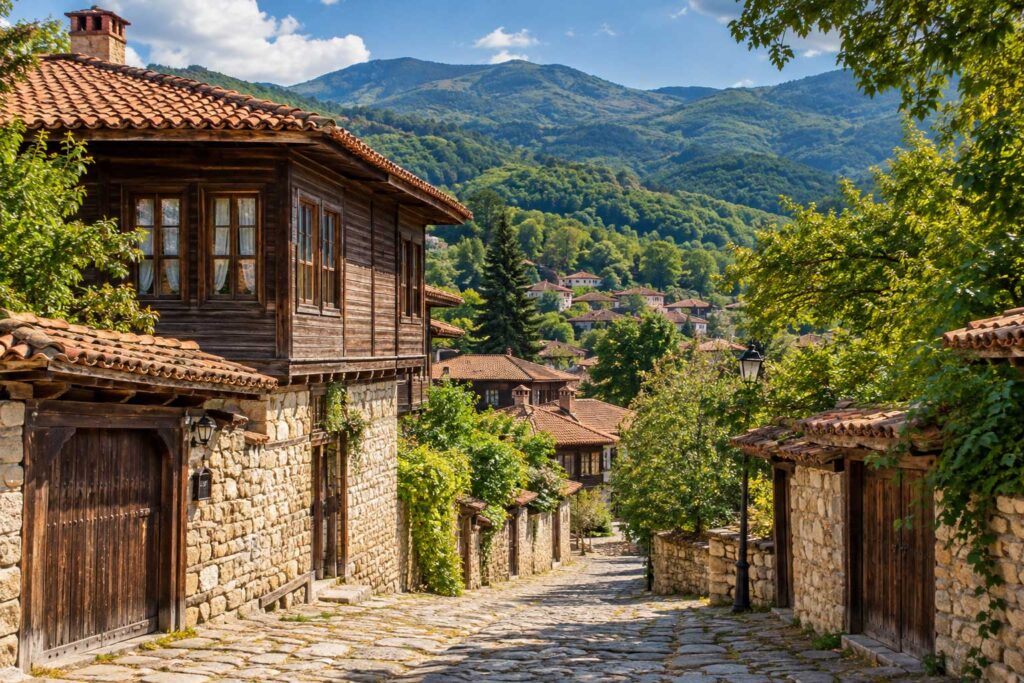
Nestled in the eastern Balkan Mountains, Medven is one of Bulgaria’s quieter historic villages. Located near Kotel and Zheravna, it offers a beautiful combination of traditional National Revival houses, narrow village streets, and peaceful mountain scenery.
While nearby Zheravna is famous for its beautifully preserved wooden architecture and cultural attractions, Medven has a more understated character. Old houses stand behind stone walls and wooden gates, gardens brighten the streets, and forested hills surround the settlement.
The village is also connected to Bulgaria’s National Revival history and the lives of several important historical figures. Yet its greatest appeal is the opportunity to experience a traditional mountain community without the busy atmosphere of a major tourist destination.
For travelers exploring the Kotel region, Medven is a rewarding stop that combines architecture, history, and nature.
What Makes Medven Special?
Medven is particularly interesting for its traditional Bulgarian National Revival architecture and its connection to the cultural and revolutionary movements of the 19th century.
Many older houses feature stone foundations, wooden upper floors, broad roofs, and enclosed courtyards. Their construction reflects the practical needs of mountain life as well as the craftsmanship of local builders.
Unlike villages where nearly every historic building has been converted into tourist accommodation or a museum, Medven retains the character of a small residential settlement.
One of Medven’s most important cultural attractions is the Zahari Stoyanov House Museum, located in the writer’s former family home. The exhibition explores his life and contribution to Bulgarian history through photographs, personal belongings, and historical objects, including his traveling suitcase and formal coat. As published opening schedules differ, contact the Historical Museum in Kotel before visiting.
His writings, particularly his accounts of the Bulgarian uprisings, remain important sources for understanding the country’s struggle for independence during the 19th century.
This connection gives Medven an additional historical significance beyond its traditional architecture.
The surrounding mountain landscape is another reason to visit. Forests, streams, and quiet country roads make the village appealing to travelers who enjoy combining cultural sightseeing with time outdoors.
What to See in Medven
Begin with a relaxed walk through the older parts of the village.
Traditional houses, wooden gates, stone walls, and quiet courtyards create a pleasant setting for exploring on foot. Rather than following a strict sightseeing route, allow yourself time to notice the architectural details that make Medven distinctive.
One of the village’s important cultural landmarks is the Zahari Stoyanov House Museum, associated with the life and legacy of the celebrated Bulgarian revolutionary and writer.
The village’s historic church and traditional public spaces also reflect the religious and community life of earlier generations.
For nature lovers, one of the most appealing nearby attractions is Sini Vir Waterfall, a scenic waterfall surrounded by forested mountain terrain.
The waterfall is a popular destination for visitors exploring the countryside around Medven, although reaching it involves a walk along a nature trail. Conditions can vary depending on the season and recent rainfall, so suitable footwear is recommended.
The surrounding forests and mountain paths also provide opportunities for photography and peaceful walks.
If you prefer a slower experience, consider staying overnight in a traditional guesthouse and enjoying the village in the morning or evening, when the streets are especially quiet.
Best Time to Visit Medven
May through October is generally the best period for exploring Medven and the surrounding countryside.
Spring brings fresh greenery, blooming gardens, and pleasant conditions for walking through the village.
Late spring and early summer can be particularly attractive for visiting nearby natural sights, including Sini Vir Waterfall, although water levels depend on rainfall and seasonal conditions.
Summer is convenient for combining Medven with Zheravna and Kotel. The surrounding mountain landscape offers plenty of opportunities for scenic drives and countryside walks.
September and October are especially beautiful for photography, when the nearby forests begin to turn shades of gold, orange, and red.
Winter provides a quieter atmosphere, particularly after snowfall, but icy roads and slippery walking paths may make some outdoor attractions more difficult to reach.
For the most relaxed visit, consider spending at least a few hours in Medven rather than treating it as a quick stop between larger destinations.
Nearby Places to Combine With Medven
Medven is ideally located for exploring several of the eastern Balkan Mountains’ most attractive historic settlements.
Nearby Zheravna is one of Bulgaria’s best-preserved National Revival villages, famous for its wooden houses, cobbled streets, and traditional costume festival.
The town of Kotel is another excellent destination, particularly for travelers interested in Bulgarian history, traditional crafts, and carpet weaving.
You can also visit Ichera, a quieter mountain village known for its traditional houses and peaceful rural atmosphere.
For a longer trip, continue toward Sliven, where the surrounding Blue Stones Nature Park offers scenic landscapes, walking routes, and opportunities for outdoor recreation.
A relaxed two-day journey combining Medven, Zheravna, and Kotel is an excellent way to discover the architectural heritage and mountain scenery of this part of Bulgaria.
Why visit: Traditional National Revival houses, connections to Bulgarian revolutionary history, peaceful village streets, and the nearby Sini Vir Waterfall.
Best for: History, traditional architecture, nature photography, quiet weekends, countryside walks, and cultural road trips.
14. Ichera – A Quiet Mountain Village Near Kotel and Sliven
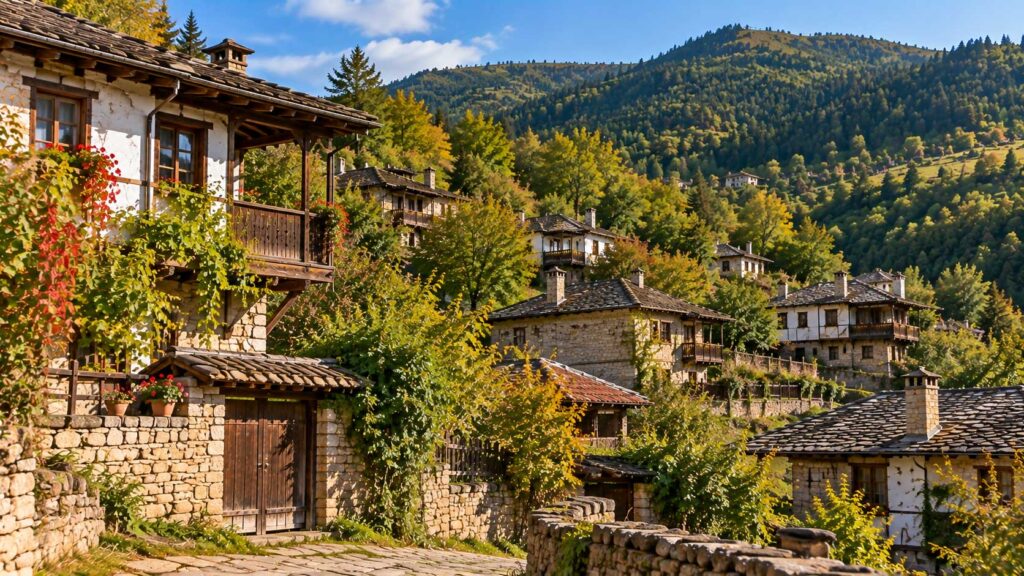
Hidden among the forested slopes of the eastern Balkan Mountains, Ichera is a peaceful Bulgarian village where traditional houses, winding streets, and beautiful mountain scenery create a welcoming rural atmosphere.
Located between the wider Kotel and Sliven regions, Ichera is less familiar to international travelers than nearby Zheravna or Kotel. Yet its quiet setting and surviving examples of traditional architecture make it an appealing stop for visitors who enjoy discovering smaller places away from busy tourist routes.
Old houses with stone foundations, wooden upper floors, and broad roofs stand along village lanes, while gardens and wooded hills give the settlement a relaxed, lived-in character.
Ichera is particularly suited to travelers who prefer slow walks, countryside photography, and the experience of visiting a traditional Bulgarian village without a long list of organized attractions.
What Makes Ichera Special?
Ichera’s greatest appeal is its combination of traditional architecture and peaceful mountain surroundings.
The village preserves elements of Bulgarian National Revival building traditions, with older houses reflecting the practical needs and craftsmanship of communities living in the Balkan Mountains.
Stone was commonly used for foundations and lower walls, while timber provided flexibility for upper floors, balconies, and other architectural details.
Unlike some of Bulgaria’s better-known heritage destinations, Ichera has not developed primarily around sightseeing. It remains a residential village where everyday life continues among older buildings and newer homes.
This gives the settlement a different atmosphere from the architectural reserves of Zheravna or Bozhentsi.
The surrounding forests and hills are equally important to its character. Quiet roads, green slopes, and mountain views make Ichera attractive to visitors looking for a slower, more nature-focused experience.
For travelers exploring the Kotel–Sliven region, Ichera provides an opportunity to see a less-publicized side of rural Bulgaria.
What to See in Ichera
The best way to experience Ichera is to explore its village streets on foot.
Begin around the central area, then follow the quieter lanes toward the older residential parts of the settlement. Along the way, look for traditional houses, wooden gates, stone walls, and small courtyards that reflect the village’s architectural heritage.
The village’s church and local community buildings also contribute to its historic character, although access to individual buildings may be limited.
One of the most enjoyable aspects of visiting Ichera is the surrounding landscape.
Forested hills rise around the settlement, and rural roads offer opportunities to appreciate the mountain scenery. Depending on the route, you may encounter open views, traditional agricultural land, and quiet stretches of woodland.
Ichera is particularly rewarding for photography, especially if you enjoy capturing village architecture in a natural setting rather than focusing only on famous monuments.
The village is not a destination where you need to rush between attractions. Allow time to wander, enjoy the atmosphere, and perhaps stop for a quiet break before continuing through the mountains.
Best Time to Visit Ichera
May through October is generally the most convenient period for visiting Ichera and exploring the surrounding countryside.
Spring brings fresh greenery, blooming gardens, and pleasant conditions for walking through the village.
Summer is well suited to scenic drives and countryside exploration, although afternoons can become warm during sunny weather.
September and October are especially attractive for photography, when the surrounding forests begin to change color and the mountain landscape takes on warmer tones.
Winter can offer a peaceful atmosphere, particularly after snowfall, but mountain roads may become icy and some smaller routes can be more challenging.
For the most enjoyable experience, plan to visit during daylight hours and allow extra time for the winding roads through the surrounding mountains.
Nearby Places to Combine With Ichera
Ichera fits naturally into a longer trip through the historic villages and mountain landscapes of the eastern Balkan Mountains.
Nearby Zheravna is one of Bulgaria’s most beautifully preserved National Revival villages, known for its wooden houses, cobbled streets, and historic museums.
Medven offers another peaceful village experience, with traditional architecture and access to the scenic Sini Vir Waterfall.
The town of Kotel is particularly interesting for its National Revival history, traditional crafts, and carpet-weaving heritage.
You can also continue toward Sliven, where the dramatic landscapes of Blue Stones Nature Park provide opportunities for hiking, scenic viewpoints, and outdoor activities.
A two- or three-day road trip through Ichera, Zheravna, Medven, and Kotel is an excellent way to discover the architecture and rural landscapes of this part of Bulgaria.
Why visit: Traditional mountain houses, quiet village streets, forested landscapes, and a peaceful atmosphere away from major tourist destinations.
Best for: Slow travel, countryside photography, scenic mountain drives, traditional architecture, and exploring lesser-known Bulgarian villages.
15. Oreshak – Traditional Crafts and Monastery Heritage in the Balkan Mountains
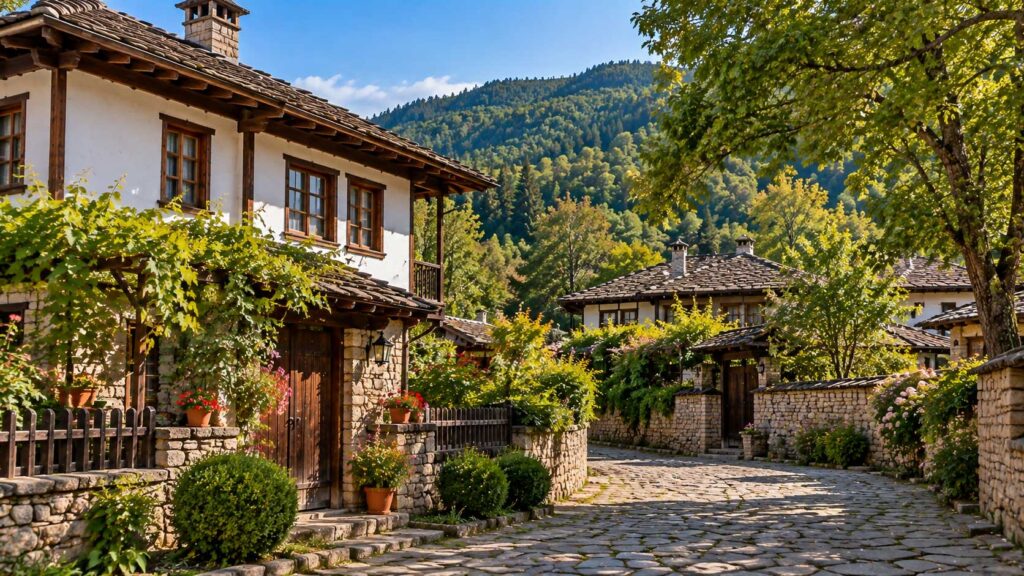
Nestled in the foothills of the central Balkan Mountains, near the town of Troyan, Oreshak is a charming Bulgarian village known for its traditional crafts, peaceful countryside, and close connection to one of the country’s most important monasteries.
Surrounded by forested hills and beautiful mountain scenery, Oreshak offers a different experience from Bulgaria’s famous architectural reserves. Rather than being defined by a compact historic center, the village is closely associated with generations of skilled artisans, especially potters, woodcarvers, and craftspeople working with traditional materials.
Its location beside the celebrated Troyan Monastery makes Oreshak an excellent destination for travelers interested in Bulgarian culture, Orthodox heritage, and the artistic traditions of the Balkan Mountains.
For visitors who enjoy discovering places where traditional skills remain part of local life, Oreshak is one of the most rewarding stops in central Bulgaria.
What Makes Oreshak Special?
Oreshak is particularly well known for its connection to traditional Bulgarian craftsmanship.
The wider Troyan region has a long history of pottery production, and its distinctive ceramic designs have become an important part of Bulgarian decorative art.
Traditional Troyan pottery is especially recognizable for its flowing, multicolored patterns, often created using a technique in which colored slips are applied to the surface of a vessel and drawn into decorative designs.
Bowls, plates, jugs, and other ceramic objects frequently feature earthy tones, colorful stripes, and swirling motifs inspired by local artistic traditions.
Oreshak is also associated with woodcarving and other traditional crafts, reflecting the skills that have been passed down through generations in the region.
A highlight of visiting Oreshak is the National Exhibition of Arts and Crafts, established in 1971. Its exhibition complex brings together traditional Bulgarian craftsmanship and contemporary artistic work, with displays and events celebrating the country’s creative heritage. The venue also hosts cultural festivals and temporary exhibitions throughout the year. Check its official website for current exhibitions, special events, and any changes to visiting hours.
The combination of workshops, exhibitions, and local craft traditions makes Oreshak especially appealing to travelers who want to experience Bulgarian culture beyond historic buildings and museums.
What to See in Oreshak
The most important attraction near Oreshak is undoubtedly Troyan Monastery, officially known as the Monastery of the Dormition of the Most Holy Mother of God.
Founded during the Ottoman period and developed over subsequent centuries, it is one of Bulgaria’s largest and most significant Orthodox monasteries.
The monastery is particularly famous for its beautiful architecture, peaceful courtyards, and remarkable frescoes painted by Zahari Zograf, one of the most celebrated artists of the Bulgarian National Revival.
Visitors can admire the monastery’s historic buildings, richly decorated church, and tranquil mountain setting.
Another worthwhile stop is the National Exhibition of Arts and Crafts in Oreshak, where traditional Bulgarian artistic techniques and locally produced crafts take center stage.
Depending on current exhibitions and activities, visitors may have opportunities to see pottery, woodcarving, textiles, and other handmade objects.
The village and surrounding area also offer opportunities to discover small artisan workshops and purchase locally made souvenirs.
If you enjoy photography, the monastery’s architecture, traditional ceramic designs, and nearby mountain scenery provide plenty of interesting subjects.
Beyond the cultural attractions, take time to explore the peaceful countryside around Oreshak. Forested hills, quiet roads, and the nearby mountain landscape make the area pleasant for relaxed walks and scenic drives.
Best Time to Visit Oreshak
April through October is generally an excellent period for visiting Oreshak and exploring the surrounding Troyan region.
Spring brings fresh greenery, blooming gardens, and comfortable temperatures for sightseeing around the monastery and village.
Summer is particularly convenient for combining cultural attractions with mountain walks and scenic drives. The surrounding Balkan Mountains provide beautiful landscapes and opportunities for outdoor activities.
Late summer and early autumn can also be interesting for visitors hoping to experience local craft events and traditional celebrations, although schedules vary from year to year.
September and October are especially attractive for photography, when the surrounding forests begin to change color and the mountain landscape takes on warm autumn tones.
Winter offers a quieter atmosphere, and Troyan Monastery can be particularly beautiful after snowfall. However, colder temperatures and changing mountain road conditions may affect travel plans.
For the most enjoyable visit, allow enough time to explore both the monastery and the craft-related attractions rather than treating Oreshak as a brief roadside stop.
Nearby Places to Combine With Oreshak
Oreshak is an excellent base for exploring the cultural heritage and mountain scenery of the Troyan region.
The nearby town of Troyan is known for its pottery traditions, museums, and connection to the Bulgarian National Revival.
The Troyan Pass, also known as Beklemeto, offers beautiful mountain scenery and access to some of the central Balkan Mountains’ most impressive viewpoints.
Travelers interested in traditional villages can also consider Chiflik, known for its mountain setting and mineral-water accommodation, or Shipkovo, another destination associated with mineral springs and peaceful countryside surroundings.
For a longer cultural journey, you can continue toward Apriltsi, where the surrounding mountain landscapes provide opportunities for hiking, photography, and exploring small rural communities.
A two-day trip combining Oreshak, Troyan Monastery, Troyan, and the surrounding mountain villages offers a rewarding introduction to the craftsmanship, religious heritage, and natural beauty of central Bulgaria.
Why visit: Traditional Troyan pottery, artisan workshops, the National Exhibition of Arts and Crafts, and the magnificent Troyan Monastery.
Best for: Bulgarian crafts, pottery, Orthodox heritage, cultural sightseeing, traditional souvenirs, photography, and scenic mountain trips.
Which Bulgarian Village Should You Visit?
With so many charming villages in Bulgaria, choosing where to go depends on what interests you most. Some villages are known for their beautifully preserved architecture, while others offer mountain scenery, traditional festivals, or a peaceful countryside escape.
If you’re visiting Bulgaria for the first time, Arbanasi, Bozhentsi, and Shiroka Laka are excellent starting points. They’re full of character and can be combined with other well-known attractions nearby.
For a quieter getaway, Kovachevitsa, Leshten, and Dolen offer a slower pace, traditional architecture, and beautiful surroundings.
Best Bulgarian Villages for Different Travel Interests
| Your Travel Interest | Recommended Villages | Why Visit |
|---|---|---|
| Traditional architecture | Kovachevitsa, Zheravna, Bozhentsi | Beautifully preserved historic houses and cobbled streets |
| Mountain scenery | Gela, Leshten, Momchilovtsi | Panoramic views, forests, and mountain landscapes |
| Bulgarian history | Arbanasi, Zheravna, Bozhentsi | Historic churches, museums, and National Revival heritage |
| Photography | Shiroka Laka, Kovachevitsa, Delchevo | Stone houses, picturesque streets, and mountain backdrops |
| Romantic weekend | Leshten, Zheravna, Medven | Cozy guesthouses, peaceful streets, and scenic surroundings |
| Folklore and traditions | Gela, Shiroka Laka, Balgari | Rhodope bagpipe music and Strandzha’s fire-dancing heritage |
| Quiet countryside escapes | Dolen, Brashlyan, Ichera | Traditional village atmosphere away from major tourist routes |
| Family day trips | Arbanasi, Bozhentsi, Oreshak | Cultural attractions and interesting places to explore nearby |
Our Recommendations for First-Time Visitors
If you only have time for one or two villages, consider where you’ll already be traveling.
Exploring Veliko Tarnovo? Arbanasi is an easy addition to your itinerary, with historic churches, traditional houses, and nearby cultural landmarks.
Traveling through central Bulgaria? Bozhentsi offers a lovely introduction to National Revival architecture and combines well with Gabrovo, Tryavna, and the Etar Open-Air Museum.
Heading into the Rhodope Mountains? Shiroka Laka is an excellent choice for traditional architecture and folklore, while Kovachevitsa and Leshten are particularly rewarding for travelers who enjoy quieter mountain settings.
Interested in lesser-known Bulgaria? Consider Brashlyan and Balgari in Strandzha, where traditional village life, regional history, and distinctive local customs offer a different experience from the country’s more familiar tourist destinations.
There is no single best village for everyone. The most rewarding choice is often one that fits naturally into your route and gives you enough time to explore without rushing.
Best Road Trips Through Bulgaria’s Historic Villages

One of the most enjoyable ways to discover the charming villages in Bulgaria is by car. Many of the country’s most beautiful traditional settlements are tucked into mountain valleys or scattered across rural regions where public transportation can be limited.
Rather than trying to visit villages in different parts of the country on the same day, it’s better to explore them in regional groups. This gives you more time to wander through historic streets, enjoy local food, stop at scenic viewpoints, and discover places you might otherwise miss.
Here are three rewarding road trips that bring together some of Bulgaria’s most memorable villages.
1. Rhodope Mountains Road Trip – Stone Villages and Mountain Views
Suggested duration: 3–5 days
Villages to explore: Shiroka Laka, Gela, Momchilovtsi, Leshten, Kovachevitsa, and Dolen
The Rhodope Mountains are home to some of Bulgaria’s most distinctive traditional villages. Stone-roofed houses, forested slopes, mountain meadows, and a rich musical heritage make this region especially rewarding for travelers who enjoy scenery and local culture.
Begin around Shiroka Laka, where traditional architecture and Rhodope folklore are part of the village’s identity. Nearby Gela offers a different experience, with scattered houses, open meadows, and wide views across the mountains.
Continue exploring the central Rhodopes around Smolyan and Momchilovtsi before heading southwest toward the villages near Gotse Delchev.
In this part of the mountains, Leshten and Kovachevitsa are particularly memorable. Their stone houses and narrow streets make them excellent places to explore on foot, while nearby Dolen offers another opportunity to experience the quieter side of rural Bulgaria.
The central and western Rhodopes cover a large area, so allow enough time for the drive between the two village clusters. Mountain roads can be winding, and the journey is more enjoyable when you aren’t rushing.
Worth adding along the way: Pamporovo, Smolyan Lakes, Devin, Ognyanovo, and Gotse Delchev.
Best for: Mountain photography, traditional architecture, hiking, local food, and peaceful guesthouse stays.
2. Balkan Mountains Heritage Road Trip – Historic Villages and Traditional Crafts
Suggested duration: 5–7 days for the full route, or 2–3 days for one regional cluster.
The Balkan Mountains stretch across a large part of Bulgaria, and their historic villages are spread across several distinct areas. Rather than trying to visit every destination in a few days, divide your journey into smaller sections.
Begin around Veliko Tarnovo and Gabrovo, exploring Arbanasi, Bozhentsi, Tryavna, and the Etar Open-Air Museum.
Continue toward the eastern Balkan Mountains, where Zheravna, Medven, Ichera, and nearby Kotel offer traditional architecture, historic houses, and mountain scenery.
If time allows, add a separate stop around Troyan and Oreshak to discover traditional pottery and visit Troyan Monastery.
Each area deserves time of its own, particularly if you want to visit museums, explore historic streets, and enjoy the countryside without rushing.
Worth adding along the way: Veliko Tarnovo, Tryavna, Etar Open-Air Museum, Gabrovo, Kotel, Troyan Monastery, and Sliven.
Best for: History lovers, architecture enthusiasts, traditional crafts, museums, and cultural road trips.
3. Strandzha Road Trip – Hidden Villages and Living Traditions
Suggested duration: 2–3 days
Villages to explore: Brashlyan and Balgari
Strandzha offers a different kind of Bulgarian village experience. Located in the southeastern corner of the country, the region is known for its dense forests, quiet roads, traditional houses, and distinctive cultural heritage.
Begin with Brashlyan, one of the most atmospheric traditional villages in Strandzha. Its stone-and-wood houses, narrow lanes, and peaceful surroundings make it an excellent place to explore without a strict sightseeing schedule.
Continue toward Balgari, a village closely associated with nestinarstvo, the traditional fire-dancing ritual practiced in parts of Strandzha. The custom is recognized by UNESCO as part of humanity’s intangible cultural heritage.
Although Balgari is particularly interesting during traditional celebrations, it is also worth visiting for its rural atmosphere and connection to the region’s cultural identity. If you hope to experience a fire-dancing ceremony, check local event arrangements before traveling rather than assuming demonstrations take place regularly.
Strandzha is best explored at a relaxed pace. Small forest roads, traditional villages, and occasional viewpoints are part of the appeal, and some of the most enjoyable moments come from stopping somewhere you hadn’t originally planned to visit.
Worth adding along the way: Malko Tarnovo, Gramatikovo, Tsarevo, Sinemorets, and the natural landscapes of Strandzha Nature Park.
Best for: Cultural traditions, nature, quiet villages, photography, and exploring lesser-known Bulgaria.
How Many Villages Should You Visit in One Day?
Although some Bulgarian villages are small enough to explore in an hour or two, visiting too many in a single day can make the experience feel rushed.
For most travelers, two villages per day is a comfortable starting point, especially when they are close together. If you plan to visit museums, enjoy a long lunch, or explore hiking trails, one village and a nearby attraction may be enough.
Whenever possible, consider spending at least one night in a traditional guesthouse. Early mornings and quiet evenings often reveal a side of village life that day-trippers miss.
And remember that mountain driving in Bulgaria can take longer than the distance suggests. Check road conditions, allow extra time between stops, and leave room in your itinerary for unexpected discoveries.
Best Time to Explore Bulgaria’s Charming Villages
The charming villages in Bulgaria are worth visiting throughout the year, but each season offers a different experience. Spring brings green hillsides and blooming gardens, summer is ideal for mountain walks and cultural festivals, autumn transforms the forests into colorful landscapes, and winter gives traditional villages a peaceful, sometimes snow-covered atmosphere.
For most travelers, May, June, September, and early October offer an especially good balance of pleasant weather, beautiful scenery, and comfortable sightseeing conditions.
The best time to visit also depends on which part of Bulgaria you plan to explore.
Spring (March–May): Green Landscapes and Peaceful Streets
Spring is a lovely time to discover Bulgaria’s traditional villages, particularly from late April onward when the countryside becomes greener and temperatures are generally more comfortable.
In the lower foothills around Arbanasi, Bozhentsi, and Zheravna, gardens begin to bloom, forests turn bright green, and the historic streets are often quieter than during the summer holiday season.
Higher in the Rhodope Mountains, spring arrives more slowly. Villages such as Gela and Shiroka Laka may still experience chilly mornings and unsettled weather, especially in March and early April.
Late spring is particularly appealing for photography, countryside walks, and exploring traditional architecture without the busiest summer crowds.
Best villages for spring: Arbanasi, Bozhentsi, Zheravna, Medven, and Brashlyan.
Summer (June–August): Mountain Escapes and Traditional Festivals
Summer is one of the most popular seasons for exploring Bulgaria’s mountain villages. While larger cities and lowland areas can become quite hot, higher-elevation settlements often offer cooler evenings and more comfortable conditions for outdoor activities.
The Rhodope Mountains are especially attractive during this period. Shiroka Laka, Gela, Momchilovtsi, Kovachevitsa, and Leshten provide opportunities for scenic walks, mountain photography, and relaxing stays in traditional guesthouses.
Summer is also an important season for local celebrations, folklore events, and village festivals. Some communities organize traditional music performances, craft demonstrations, and cultural gatherings that offer visitors a closer look at regional customs.
One particularly well-known event is the Festival of the National Costume in Zheravna, which celebrates Bulgarian traditional clothing, music, and folklore. Festival dates and visitor arrangements should be checked before planning a trip.
Summer is a good choice if you want to combine village sightseeing with hiking, mountain drives, and longer days outdoors.
Best villages for summer: Shiroka Laka, Gela, Momchilovtsi, Kovachevitsa, Leshten, and Zheravna.
Autumn (September–November): Colorful Forests and Beautiful Photography
Autumn may be the most rewarding season for exploring Bulgaria’s historic mountain villages.
During September and October, forests across the Balkan Mountains and Rhodopes gradually turn shades of yellow, orange, and red. Traditional stone roofs, wooden houses, and cobbled streets look especially beautiful against the changing landscape.
Villages such as Bozhentsi, Zheravna, Kovachevitsa, and Shiroka Laka are particularly photogenic at this time of year.
September often brings pleasant daytime temperatures, while October can be cooler, especially at higher elevations. The timing of autumn colors varies with altitude and weather, so peak foliage does not arrive everywhere at once.
Another advantage is the quieter atmosphere after the main summer travel season. Popular villages may still attract weekend visitors, but weekdays can feel wonderfully peaceful.
If your main interests are photography, traditional architecture, scenic drives, and relaxed countryside travel, autumn is an excellent choice.
Best villages for autumn: Bozhentsi, Zheravna, Kovachevitsa, Leshten, Shiroka Laka, and Dolen.
Winter (December–February): Snowy Rooftops and Cozy Mountain Stays
Winter gives Bulgaria’s traditional villages a completely different character.
When snow settles over stone roofs and narrow streets, mountain settlements such as Shiroka Laka, Kovachevitsa, and Zheravna can look especially atmospheric.
Traditional guesthouses, warm fireplaces, and hearty regional food make winter appealing for travelers who enjoy quiet weekends away from busy tourist destinations.
However, winter travel requires more planning. Mountain roads may become icy or snow-covered, daylight hours are shorter, and some smaller museums, restaurants, and guesthouses may operate on reduced schedules.
Snow is not guaranteed in every village, particularly those at lower elevations. Travelers should check local forecasts and road conditions before setting out.
Best villages for winter: Shiroka Laka, Kovachevitsa, Zheravna, Leshten, and Gela, when access and weather conditions permit.
Best Time to Visit Bulgaria’s Villages by Region
| Region | Recommended Months | What to Expect |
|---|---|---|
| Rhodope Mountains | May–October | Mountain scenery, hiking, traditional architecture, and folklore |
| Central Balkan Mountains | April–October | Historic villages, green landscapes, and autumn colors |
| Strandzha Mountains | April–June, September–October | Forest walks, traditional villages, and generally milder sightseeing weather |
| Villages near Veliko Tarnovo | April–June, September–October | Comfortable conditions for churches, museums, and walking tours |
| Higher mountain villages | June–September | Generally easier road access and comfortable outdoor exploration |
Our Recommendation: When Should You Plan Your Trip?
If you’re planning your first journey through Bulgaria’s traditional villages, late May through June or September through early October would be our preferred periods.
These months offer a good combination of comfortable temperatures, attractive landscapes, and opportunities to explore without the strongest summer heat.
For colorful mountain scenery and photography, aim for October, keeping in mind that higher elevations may experience colder weather earlier in the season.
If festivals and folklore are your main interests, summer can be especially rewarding, provided you plan around confirmed local event dates.
Whatever season you choose, try to leave some flexibility in your itinerary. Bulgaria’s villages are often at their most memorable when you have time to enjoy the surroundings rather than rushing between attractions.
Practical Tips for Visiting Traditional Bulgarian Villages
Exploring the charming villages in Bulgaria is one of the best ways to experience the country’s traditional architecture, mountain landscapes, and rural culture. However, visiting smaller settlements requires a little more preparation than traveling between major cities.
Many historic villages are located along winding mountain roads, public transportation can be limited, and services may be less predictable than in popular tourist destinations. A few practical considerations will help you enjoy the journey without unnecessary surprises.
Getting Around: Is Renting a Car Necessary?
Renting a car is generally the most convenient way to explore Bulgaria’s traditional villages, particularly if you want to visit several destinations during the same trip.
Some villages, such as Arbanasi, are relatively easy to reach from nearby cities. Others, including Kovachevitsa, Dolen, and Brashlyan, are more remote and may have limited public transportation connections.
Having your own vehicle allows you to travel at a comfortable pace, stop at scenic viewpoints, and combine several nearby villages without depending on bus schedules.
Mountain roads can be narrow, steep, and winding, especially in the Rhodopes and Strandzha. Allow extra driving time, avoid rushing, and check road conditions before traveling during winter or after severe weather.
If you prefer not to drive, consider arranging a private transfer or guided excursion from a nearby city. For some destinations, this may be more practical than relying on infrequent rural buses.
Parking and Walking Through Historic Village Centers
Many of Bulgaria’s historic villages have narrow cobbled streets that were never designed for modern traffic.
In places such as Kovachevitsa, Bozhentsi, and Zheravna, some streets are steep, uneven, or restricted to local vehicles. Even where driving is permitted, navigating the oldest parts of a village may be difficult.
Whenever possible, use designated parking areas and explore the historic center on foot. This is often the most enjoyable way to appreciate traditional houses, old fountains, wooden gates, and architectural details.
Avoid blocking narrow roads, private entrances, or access routes used by residents. Remember that many of these beautiful historic settlements are still living communities rather than open-air museums.
Where to Stay: Traditional Guesthouses and Family-Run Accommodation
One of the most memorable parts of visiting Bulgaria’s villages is spending the night in a traditional guesthouse.
Many restored houses now offer comfortable accommodation while preserving architectural features such as wooden ceilings, stone walls, enclosed courtyards, and traditional fireplaces.
Villages such as Leshten, Kovachevitsa, Zheravna, and Shiroka Laka are particularly appealing for overnight stays.
Accommodation ranges from simple family-run rooms to carefully restored historic properties with modern amenities. Some guesthouses also serve homemade meals featuring regional Bulgarian dishes.
Booking ahead is recommended during summer weekends, major holidays, and local festivals. In smaller villages, accommodation choices may be limited, especially outside the main tourist season.
If you’re traveling in winter, check whether your accommodation has reliable heating and whether the access road is suitable for your vehicle.
What to Wear and Bring
Comfortable walking shoes are essential when exploring Bulgaria’s traditional villages.
Cobbled lanes, stone steps, and steep hillside streets can be slippery, particularly after rain or snowfall. Shoes with good traction are much more practical than sandals with smooth soles.
Weather can also change quickly in mountain regions. Even during summer, mornings and evenings in higher villages may feel cool, so carrying an extra layer is sensible.
Bring drinking water, a charged phone, and any personal essentials you may need during the day. Small village shops do not always have the same selection or opening hours as stores in larger towns.
If you plan to hike beyond the village, check the route and weather conditions beforehand rather than assuming that every visible path is a maintained walking trail.
Cash, Restaurants, and Local Services
Although Bulgaria uses the euro, it’s still useful to carry some cash when traveling through smaller villages.
Guesthouses, family-run restaurants, local markets, and small craft workshops may not always accept card payments. ATMs can also be difficult to find in remote settlements.
Restaurants in popular villages are generally easier to find during weekends and the main tourist season. In quieter places, dining options may be limited, and some establishments operate only on certain days or by advance arrangement.
If you’re staying overnight, ask your guesthouse whether meals are available or if they can recommend somewhere nearby.
Trying regional dishes is part of the experience. Depending on where you travel, you may encounter Rhodope specialties such as patatnik and klin, traditional bean dishes, homemade banitsa, or other recipes associated with local mountain communities.
Respecting Local Traditions and Village Life
One of the things that makes Bulgaria’s historic villages special is that many are still home to permanent residents.
While traditional houses and courtyards are beautiful to photograph, not every historic-looking building is a museum or public attraction. Respect private property, avoid entering courtyards without permission, and be considerate when photographing people.
When visiting churches and monasteries, dress respectfully and follow any posted photography restrictions.
If you attend a local festival or traditional celebration, take time to learn about its cultural meaning. Events connected with folklore, religion, and community traditions are more than tourist performances.
A friendly greeting can also go a long way. Even learning a few Bulgarian words, such as zdraveyte (hello) and blagodarya (thank you), is a thoughtful gesture when visiting smaller communities.
Plan for Limited Mobile Coverage and Changing Conditions
Mobile coverage is generally available in many Bulgarian villages, but signals can become weaker along remote mountain roads, forest routes, and isolated valleys.
Downloading offline maps before leaving a larger town is a sensible precaution, especially when exploring the Western Rhodopes or Strandzha.
Check the location of your accommodation in advance, as some guesthouses are reached by narrow streets or roads that may not be obvious on navigation apps.
During winter, heavy rain, or periods of poor visibility, be prepared to adjust your route. Mountain weather can change quickly, and reaching a remote village safely is more important than following a fixed itinerary.
Travel Slowly and Leave Room for Unexpected Discoveries
Perhaps the most important advice is not to treat Bulgaria’s traditional villages as a checklist.
Some of the best experiences happen between the main attractions: discovering a quiet lane, stopping beside an old fountain, talking with a guesthouse owner, or enjoying a long lunch overlooking the mountains.
Instead of trying to visit five or six villages in a single day, choose a smaller number and give yourself time to explore.
The real charm of rural Bulgaria is often found in these unplanned moments, when you stop following the itinerary and simply enjoy being there.
Frequently Asked Questions About Bulgarian Villages
Planning a trip through Bulgaria’s countryside often brings up questions about which villages to visit, how to reach them, and what to expect. Here are answers to some of the most common questions travelers have when exploring the country’s traditional settlements.
What Are the Most Beautiful Villages in Bulgaria?
Some of the most beautiful villages in Bulgaria include Shiroka Laka, Kovachevitsa, Leshten, Zheravna, Bozhentsi, and Arbanasi. Each offers something different, from traditional stone houses and cobbled streets to mountain scenery and historic churches.
For dramatic mountain views, Leshten and Gela are particularly appealing. Travelers interested in Bulgarian National Revival architecture may prefer Zheravna or Bozhentsi, while Arbanasi is especially rewarding for its historic houses and richly decorated churches.
Which Bulgarian Villages Are Best for First-Time Visitors?
Arbanasi, Bozhentsi, and Shiroka Laka are excellent choices for first-time visitors because they combine traditional architecture with interesting nearby attractions.
Arbanasi is easy to include in a trip to Veliko Tarnovo, while Bozhentsi works well alongside Gabrovo, Tryavna, and the Etar Open-Air Museum. Shiroka Laka is a wonderful introduction to the Rhodope Mountains and their distinctive folklore.
If you have more time, consider adding Kovachevitsa and Leshten for a quieter mountain village experience.
Can You Visit Bulgaria’s Traditional Villages Without a Car?
Yes, although reaching some villages without a car can be challenging.
Arbanasi is relatively accessible from Veliko Tarnovo, and certain other villages have regional bus connections. However, public transportation to smaller mountain settlements may be infrequent or require transfers.
For remote destinations such as Kovachevitsa, Dolen, and Brashlyan, renting a car or arranging private transportation is usually more convenient.
Always check current bus schedules before traveling, as services to rural communities can change.
Where Can You Find the Most Charming Villages in Bulgaria?
Many of the most charming villages in Bulgaria are located in the Rhodope Mountains, the Balkan Mountains, and Strandzha. The Rhodopes are especially known for stone-built villages such as Kovachevitsa, Leshten, and Shiroka Laka. The Balkan Mountains are home to historic settlements including Zheravna, Bozhentsi, and Medven, while Strandzha offers traditional villages such as Brashlyan and Balgari.
What Is the Best Time of Year to Visit Bulgarian Villages?
May, June, September, and early October are among the best months to explore Bulgaria’s traditional villages. These periods generally offer pleasant temperatures, attractive scenery, and comfortable conditions for walking.
Summer is particularly good for higher mountain villages and cultural festivals, while autumn brings beautiful colors to the Rhodope and Balkan Mountains.
Winter can be magical after snowfall, but mountain roads may become difficult to navigate, and some tourist services operate on reduced schedules.
Are Bulgaria’s Historic Villages Worth Visiting in Winter?
Yes, especially if you enjoy peaceful surroundings, traditional guesthouses, and snowy mountain scenery.
Villages such as Shiroka Laka, Kovachevitsa, and Zheravna can be particularly atmospheric during winter. However, snowfall is not guaranteed, and access to some settlements may be affected by icy roads or severe weather.
Before traveling, check local forecasts, road conditions, accommodation availability, and seasonal opening hours.
How Many Days Do You Need to Explore Bulgaria’s Villages?
A single day is enough to visit one or two villages located close together, but three to five days allows for a more relaxed regional road trip.
For example, you could spend a weekend exploring Bozhentsi and nearby attractions around Gabrovo, or dedicate several days to the traditional villages of the Western Rhodopes.
If you want to explore villages across different mountain regions, plan a longer journey rather than trying to cover the entire country in a few days.
Can You Stay Overnight in Traditional Bulgarian Village Houses?
Yes. Many historic villages have restored traditional houses that now operate as family-run guesthouses or small boutique accommodations.
Kovachevitsa, Leshten, Zheravna, Shiroka Laka, and Bozhentsi are particularly appealing for overnight stays.
Depending on the property, you may find original wooden ceilings, stone walls, traditional courtyards, and homemade regional food alongside modern comforts.
Staying overnight is also one of the best ways to enjoy the peaceful atmosphere of a village after most day visitors have left.
Discover the Beauty of Rural Bulgaria
You don’t need to visit all 15 villages to appreciate what makes rural Bulgaria special.
Perhaps you’ll remember the stone rooftops of Kovachevitsa, the carved wooden houses of Zheravna, or the sound of a Rhodope bagpipe drifting across the hills near Gela. You might find your favorite place somewhere less familiar, on a quiet street in Medven or among the forests of Strandzha.
Every village has a different story, and that’s what makes exploring them so enjoyable.
What makes the charming villages in Bulgaria so memorable is their variety. Each region has its own architecture, landscapes, food, and traditions, giving travelers a different reason to explore beyond the country’s familiar destinations.
Choose a region, stay a little longer than you originally planned, and leave some space for unexpected stops. Some of Bulgaria’s loveliest places are the ones you discover along the way.
Explore More Beautiful Places in Bulgaria
If you’re planning your next journey, these CharmingBulgaria travel guides will help you discover even more of the country’s historic villages and traditional culture.
- Arbanasi – Historic Houses and Churches Near Veliko Tarnovo – Explore fortified merchant houses, remarkable church frescoes, and one of the most interesting historic villages near Bulgaria’s former capital.
- Bozhentsi – A Beautiful National Revival Village – Wander along cobbled streets lined with traditional houses in the wooded hills near Gabrovo.
- Zheravna – A Step Back in Time – Discover wooden Revival-era houses, historic museums, and a village deeply connected with Bulgarian traditions.
- Kotel – Traditional Crafts, History, and Mountain Scenery – Learn about the region’s craft heritage and explore a historic mountain town near Zheravna and Medven.
- Medven – A Quiet Revival Village Near Zheravna – Experience traditional architecture and a peaceful setting in the eastern Balkan Mountains.