Bozhentsi Bulgaria – Cobblestone Streets & Revival Houses

- July 15, 2026
- 2
- Culture & Traditions
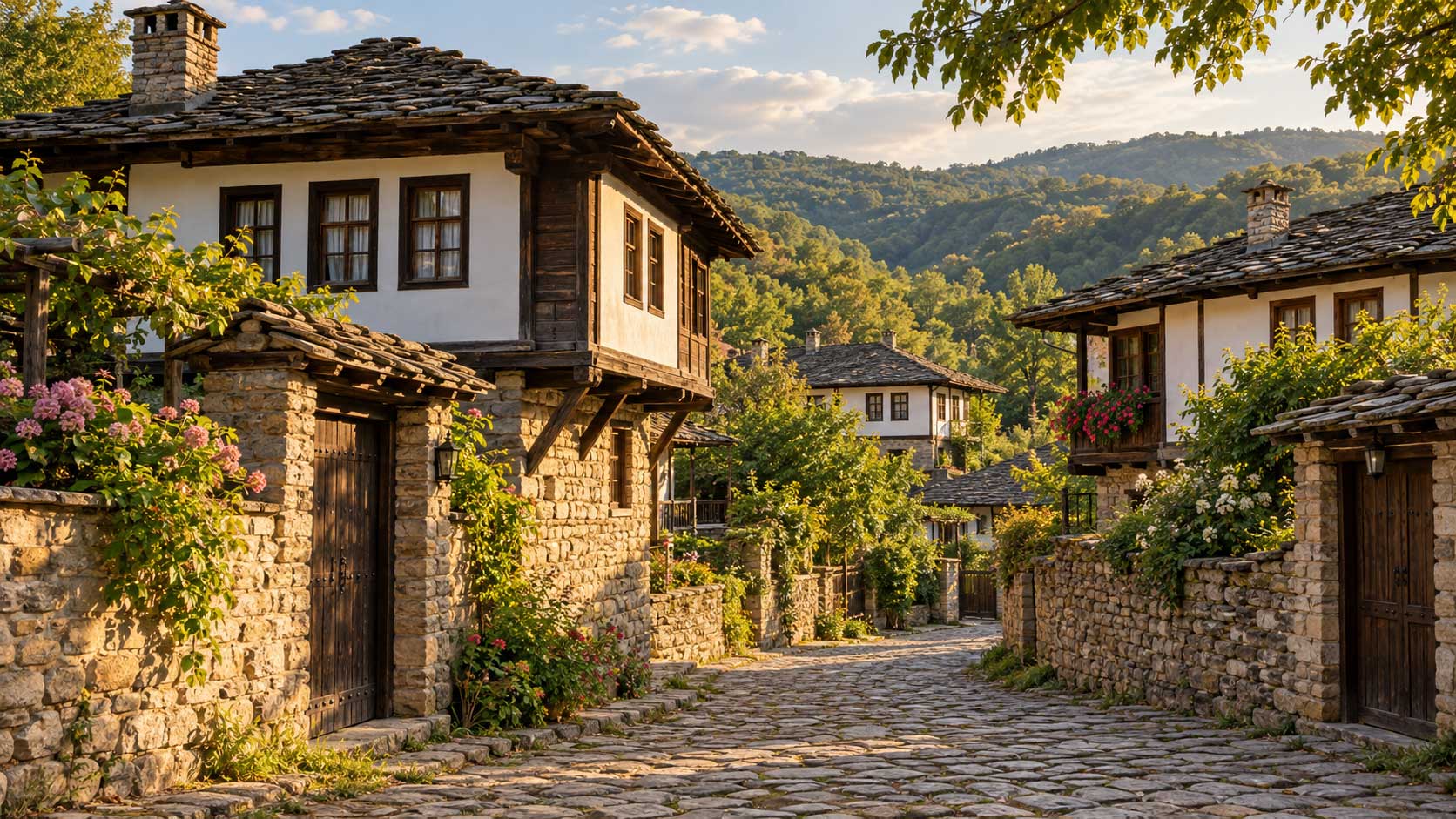
Bozhentsi, Bulgaria, is one of those villages where simply walking down the street becomes part of the experience.
Hidden among the green hills near Gabrovo, this small historic village is known for its cobblestone lanes, whitewashed houses, dark wooden details and heavy stone roofs. Much of its traditional Bulgarian Revival character has been preserved, giving Bozhentsi an atmosphere that feels far removed from a modern town.
The village lies about 15 kilometers from Gabrovo and was declared a historical and architectural reserve in 1964. Around a hundred traditional houses remain within the reserve, along with old fountains, stone walls, workshops and historic buildings that now serve as small museums. You can learn more about the protected village through the Bulgarian Ministry of Tourism.
There is no need to rush through Bozhentsi.
Much of its charm comes from following the uneven stone streets wherever they lead, passing wooden gates and quiet courtyards, and noticing the small architectural details that have survived for generations.
Bozhentsi also has a long history, shaped by centuries of village life, craftsmanship and trade. That prosperity eventually helped create many of the Revival-era homes that still define the village today.
For travelers interested in traditional Bulgarian villages, historic architecture and places that still preserve a strong connection with the past, Bozhentsi deserves much more than a quick photo stop.
What Makes Bozhentsi Special?
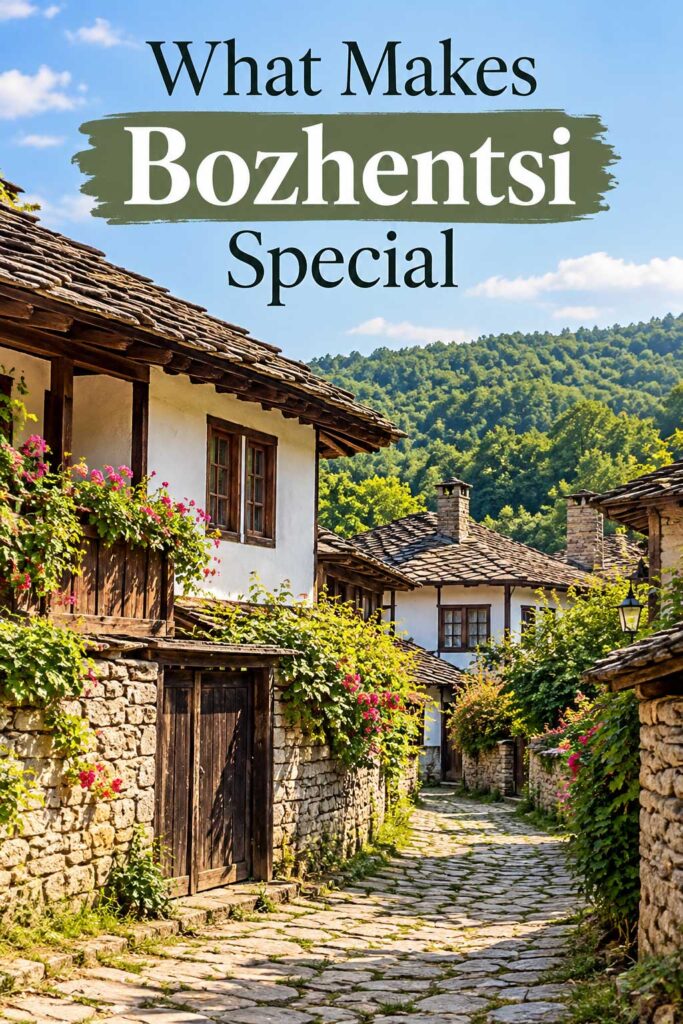
What makes Bozhentsi memorable is how much of its traditional character has survived.
The village is especially known for its Bulgarian National Revival architecture, with houses built from a distinctive mix of stone, wood and white plaster. Many have solid stone foundations, timber-framed upper floors and broad stone roofs that give the village its unmistakable appearance.
The cobblestone streets are just as important to the atmosphere.
They twist gently between old homes, stone walls, wooden gates and small courtyards, making Bozhentsi feel as though it grew naturally over generations rather than being planned around modern roads.
The village is also small enough to explore without a fixed route.
Much of the experience comes from noticing the details: an old wooden balcony, a stone drinking fountain, flowers spilling over a courtyard wall or the sound of footsteps across uneven cobbles.
Unlike larger historic towns, Bozhentsi does not rely on grand monuments or impressive public squares.
Its charm comes from the way the houses, streets and surrounding green hills fit together, creating a quiet and intimate atmosphere that feels distinctly rural.
For travelers who enjoy history, traditional architecture, photography and slow travel, that sense of authenticity is what makes Bozhentsi especially rewarding.
A Brief History of Bozhentsi
The history of Bozhentsi is closely connected with the centuries that followed the Ottoman conquest of medieval Bulgaria.
According to local tradition, the village was founded by Bozhana, a noblewoman who fled the old Bulgarian capital of Tarnovo and settled with her family in the wooded hills of the Balkan Mountains. Other families gradually joined them, and a small mountain settlement began to grow.
Over time, Bozhentsi became increasingly prosperous through crafts, livestock, agriculture and trade.
By the 18th and 19th centuries, local merchants were traveling to markets across the Ottoman Empire, and some families had become wealthy enough to build the large Revival-era homes that still shape the village today.
Many of these houses served more than one purpose.
They were family homes, but they also provided space for storing goods, conducting business and supporting the everyday work of merchant households. Their thick stone foundations, spacious upper floors and enclosed courtyards reflected both practicality and the growing prosperity of the village.
After Bulgaria’s Liberation in 1878, Bozhentsi gradually lost some of its importance as trade routes changed, industry expanded and more people moved toward larger towns.
In an unexpected way, that slower pace of development helped protect the village.
Many older buildings escaped major modernization, allowing Bozhentsi to preserve much of the architecture and atmosphere that had disappeared elsewhere.
Today, walking through the village offers a rare glimpse into the life of a prosperous Bulgarian Revival-era community, where history is still visible in the houses, streets and courtyards that have survived for generations.
Bulgarian Revival Architecture in Bozhentsi
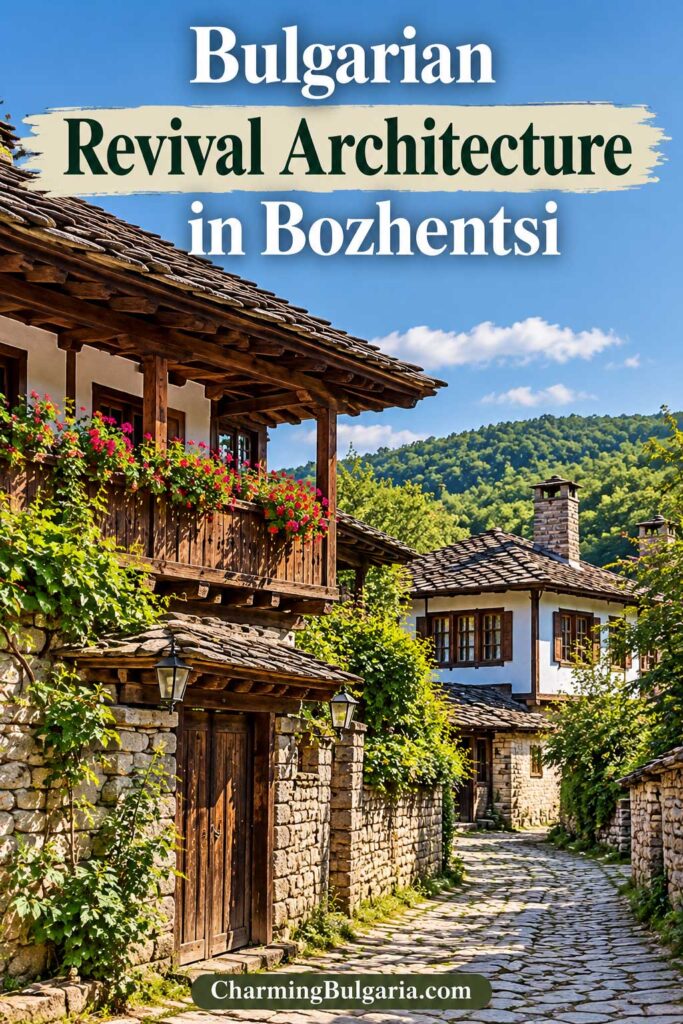
The traditional houses are what give Bozhentsi its unmistakable character.
Most were built during the Bulgarian National Revival period, when prosperous merchants and craftsmen began creating larger, more comfortable family homes. Although no two houses are exactly alike, many share the same distinctive combination of stone, wood and white plaster.
The lower floors were typically built from thick stone, giving the houses strength and helping keep the interiors cooler during the summer months. Above them, wooden upper floors often project slightly outward and feature small windows, exposed beams and sheltered balconies.
One of the most recognizable details is the heavy stone roofing.
Instead of modern roof tiles, many houses are covered with broad stone slabs that create the gray, textured rooftops Bozhentsi is known for. Set against the surrounding green hills, they form one of the village’s most memorable views.
Large wooden gates once opened into private courtyards where families worked, stored goods and kept animals. Inside, rooms were arranged around everyday family life, while some of the larger homes also included spaces used for trade or craftwork.
The architecture is not overly decorative.
Its beauty comes from the materials themselves, the proportions of the buildings and the skill of the craftsmen who created houses sturdy enough to survive for generations.
As you walk through Bozhentsi today, these details come together naturally. Stone walls follow the lanes, wooden balconies overlook small gardens, and traditional houses seem to sit comfortably along the natural slope of the hills.
For anyone interested in Bulgarian Revival architecture, Bozhentsi is one of the most rewarding villages in Bulgaria to explore slowly on foot.
If you enjoy this style of traditional architecture, Zheravna is another beautifully preserved Revival village worth exploring.
Things to See in Bozhentsi
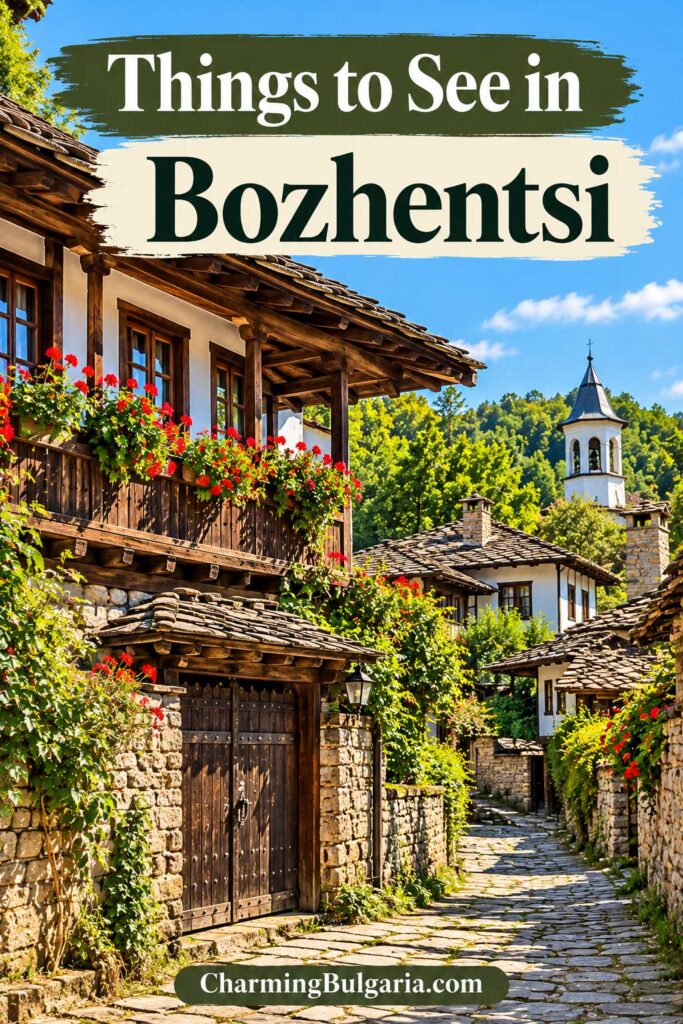
Bozhentsi is not packed with major attractions, and that is part of its charm.
The village itself is the main reason to visit. Its cobblestone lanes, Revival-era houses, stone bridges and quiet courtyards create the kind of place that is best explored slowly.
Walk Through the Historic Center
Start by wandering through the historic center without following a strict route.
Some of the most photogenic corners appear unexpectedly, especially where narrow streets curve between stone walls, wooden gates and traditional houses.
Part of the experience is simply seeing where the lanes lead.
Visit the Church of St. Prophet Elijah
The Church of St. Prophet Elijah is one of Bozhentsi’s most important historic landmarks and a natural stop while exploring the upper part of the village.
Step Inside a Historic House
Several preserved houses and workshops offer a closer look at everyday life during the Bulgarian Revival period, with traditional interiors, household objects and displays connected with local crafts.
Notice the Smaller Details
Some of the most memorable sights in Bozhentsi are also the easiest to overlook.
Stone fountains, weathered roofs, wooden balconies, old gates and flower-filled courtyards all add to the character of the village.
If you enjoy photography, early morning and late afternoon are especially rewarding, when softer light brings out the texture of the cobblestones, timber and stone.
Rather than trying to check off attractions quickly, give yourself time to wander.
In Bozhentsi, the spaces between the landmarks are often just as memorable as the landmarks themselves.
Walking the Cobblestone Streets of Bozhentsi
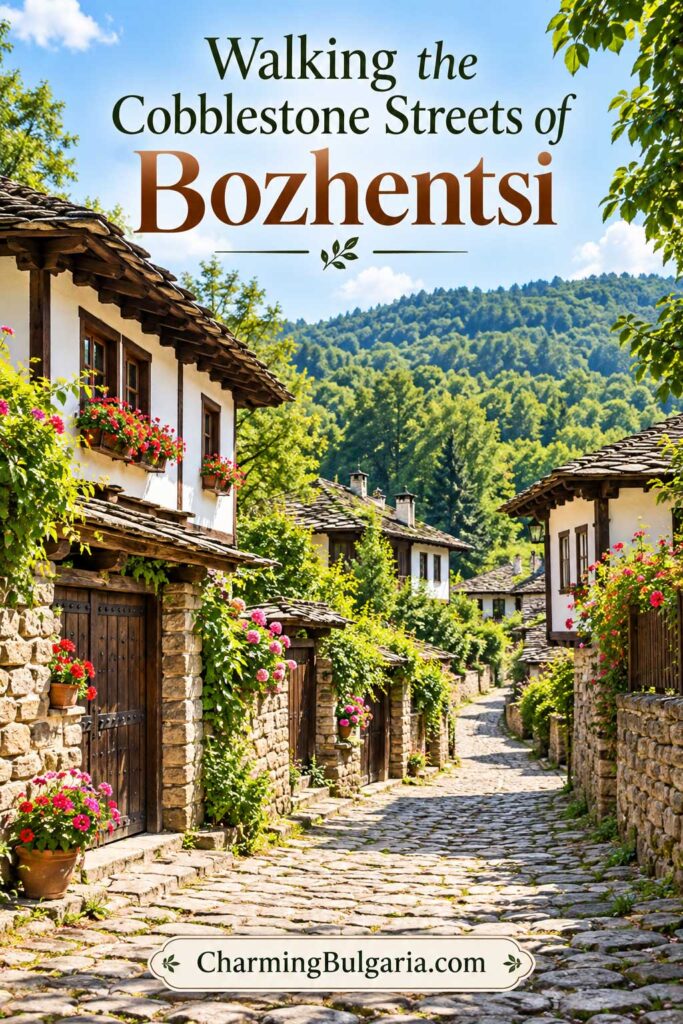
One of the best things to do in Bozhentsi is also the simplest: walk through the village without rushing.
Narrow cobblestone streets wind between whitewashed Revival houses, tall stone walls, wooden gates and small gardens throughout the historic center. These old lanes, together with stone fountains and bridges, are among the features that give Bozhentsi its distinctive character. You can read more about the village through the Bulgarian Ministry of Tourism.
Because Bozhentsi developed across gently hilly terrain, the streets rise and fall naturally instead of following a perfectly straight layout.
Around almost every bend, another scene appears: a traditional house tucked behind a stone wall, a weathered roof, a shaded courtyard or a quiet lane disappearing between trees.
This is where the character of the village becomes easiest to appreciate.
Once you move away from the busier central area, some streets become remarkably peaceful. At times, you may hear little more than birds, footsteps across the cobbles and the occasional sound drifting from a nearby house or tavern.
Comfortable shoes are worth bringing because the old paving stones are uneven and can become slippery after rain.
If you enjoy photography, allow extra time to wander.
Some of the best images in Bozhentsi are not of individual landmarks at all, but of the streets themselves—especially where the cobblestones lead toward clusters of stone-roofed houses or curve out of sight between old walls.
In many ways, walking these quiet lanes is the experience that best captures why Bozhentsi has remained one of Bulgaria’s most memorable historic villages.
Historic Houses and Museums in Bozhentsi
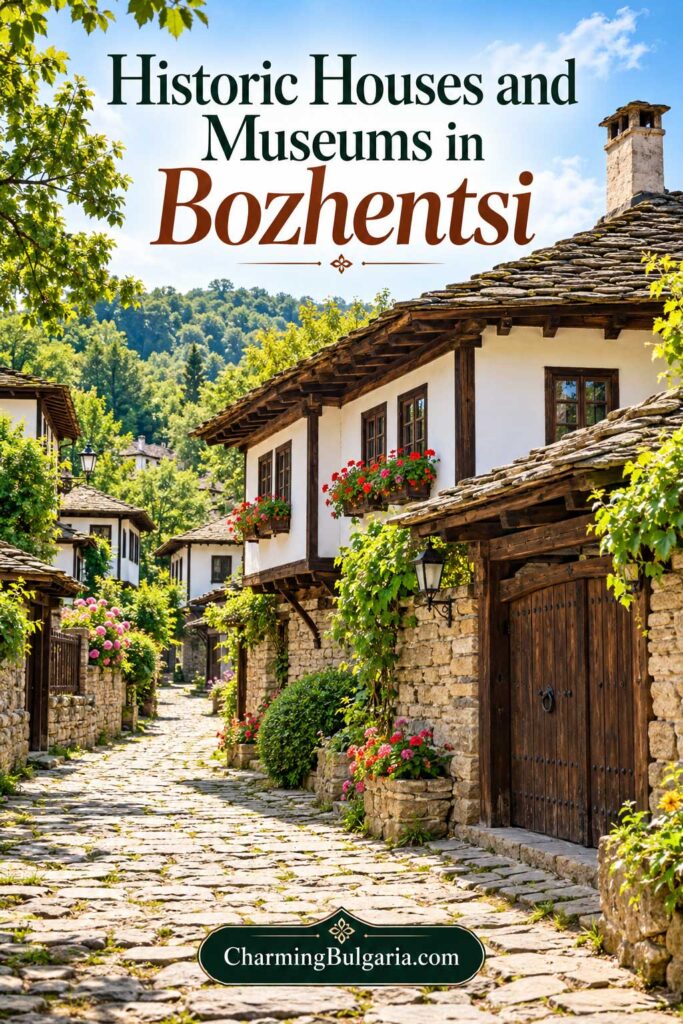
Several preserved buildings in Bozhentsi have been turned into small museums, offering a closer look at how local families lived and worked during the 18th and 19th centuries. You can find more information about them through the Bulgarian Ministry of Tourism.
One of the most interesting is the Baba Rayna House Museum, where an ethnographic exhibition recreates aspects of everyday life in the 18th century. Traditional furnishings, household objects and the arrangement of the rooms help make the history of the village feel more tangible.
The Doncho Popa House Museum focuses more on life during the 19th century, when trade and craftsmanship played an important role in Bozhentsi’s prosperity.
Another unusual stop is the Mengemata, a historic wax-processing workshop. An early-19th-century press used for cleaning wax has been preserved here, giving visitors a glimpse into one of the specialized trades once practiced in the village.
You can also see the old cell school, along with exhibition spaces in the Old School and New School buildings. Together, these places reveal more about education, family life, craftsmanship and the development of Bozhentsi over time.
You do not need to visit every museum to appreciate the village.
Even stepping inside one preserved house or workshop adds another layer to the experience and makes it easier to imagine daily life behind the stone walls and wooden façades.
From the street, Bozhentsi is beautiful.
Inside its old homes, schools and workshops, its history feels much more personal.
The Church of St. Prophet Elijah
One of the most important landmarks in Bozhentsi is the Church of St. Prophet Elijah, located in the higher part of the village.
The Church of St. Prophet Elijah
Built in 1839, the church reflects the prosperity and confidence of the local community during the Bulgarian Revival period. Its thick stone walls and simple exterior blend naturally with the traditional houses and streets around it. More historical details are available from the Bulgarian Ministry of Tourism.
Inside, the church is a three-nave pseudo-basilica with vaulted ceilings and a semicircular apse. One of its most notable features is the carved iconostasis, created by craftsmen Nedyalko and Tsanyu Ganchevi, relatives of the well-known master builder Usta Gencho Kanev. A bell tower was added later, in 1895.
Beyond its architecture, the church also offers a glimpse into the religious and community life of Bozhentsi during the 19th century.
Its elevated position makes the surrounding area a pleasant place to pause and look back across the village, where stone roofs, whitewashed houses and wooded hills come together in one of Bozhentsi’s most characteristic views.
If you are exploring the historic center on foot, the Church of St. Prophet Elijah is an easy and worthwhile stop along the way.
Traditional Food and Local Flavors
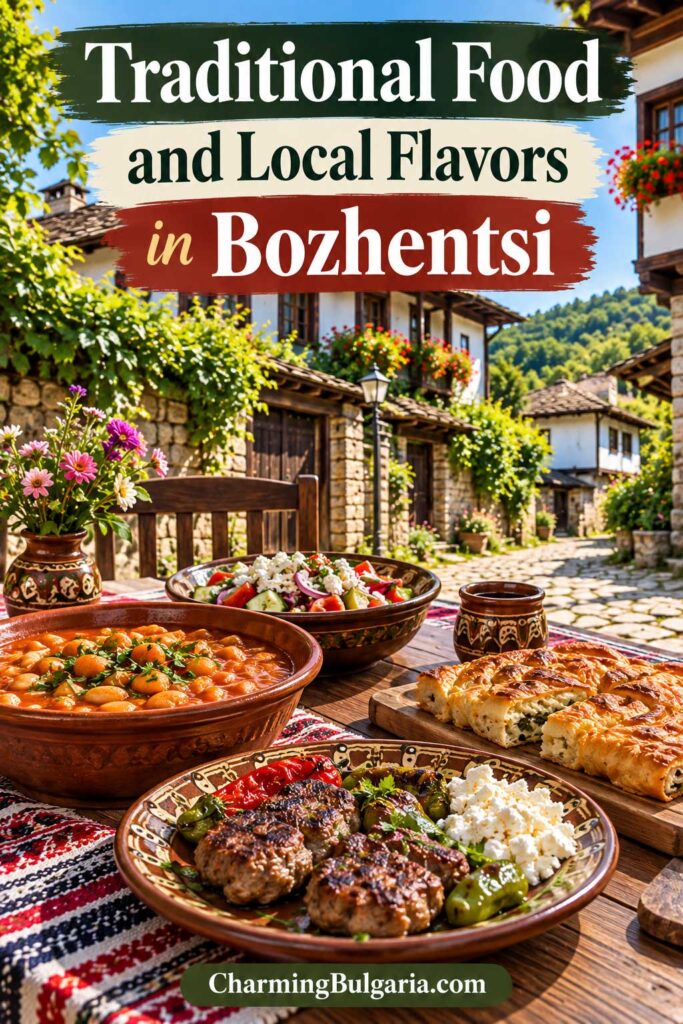
A visit to Bozhentsi is also a good chance to enjoy traditional Bulgarian food in a setting that feels closely connected to the village itself.
Local taverns and guesthouses often serve familiar dishes such as shopska salad, grilled meats, bean dishes, homemade bread and slow-cooked meals. In cooler weather, a warm soup or stew feels especially satisfying after walking the cobblestone streets.
Just as memorable as the food is the atmosphere.
Some places are set inside traditional-style houses or courtyards, where stone walls, wooden beams and shaded outdoor seating make a meal feel like part of the Bozhentsi experience rather than simply a lunch stop.
If seasonal or regional dishes are available, they are worth trying. The food in this part of Bulgaria tends to be simple, hearty and built around familiar ingredients such as vegetables, dairy products, beans, meat and preserved foods.
If your schedule allows, do not rush the meal.
Bozhentsi is the kind of place where sitting down for a long lunch, followed by coffee or tea in a quiet courtyard, feels perfectly natural.
Food may not be the main reason to visit the village, but it adds warmth to the experience and makes a day in Bozhentsi feel more connected to traditional Bulgarian life.
Best Time to Visit Bozhentsi
Bozhentsi can be visited throughout the year, and every season gives the village a different character.
Spring is one of the most pleasant times to come. The surrounding hills turn green, gardens begin to bloom and temperatures are usually comfortable for walking. It is also a good choice if you prefer a quieter atmosphere before the main summer travel season.
Summer brings long days, lush scenery and plenty of time to explore the village at an easy pace. It is also a convenient season for combining Bozhentsi with nearby Gabrovo, Tryavna or walks in the surrounding countryside. Weekends can be busier, so arriving earlier in the day is a good idea if you want the streets to feel more peaceful.
Autumn is especially beautiful. The forests around Bozhentsi turn shades of yellow, orange and red, creating a striking contrast with the village’s gray stone roofs and whitewashed houses. For photography, this may be the most rewarding season.
Winter has a completely different atmosphere. Snow can transform the village into an almost storybook scene, especially around the stone-roofed houses and narrow lanes. Keep in mind that cobblestones may become slippery and daylight hours are shorter.
For most travelers, late spring and early autumn offer the best combination of comfortable weather, beautiful scenery and a relaxed atmosphere.
Whatever season you choose, give yourself enough time to slow down and enjoy Bozhentsi rather than treating it as a quick sightseeing stop.
How to Get to Bozhentsi
Bozhentsi is located about 15 kilometers east of Gabrovo, making it an easy stop on a trip through central Bulgaria. You can find official visitor information through the Bulgarian Ministry of Tourism.
For most travelers, driving is the easiest way to reach the village.
From Gabrovo, follow the road toward Veliko Tarnovo and take the turn for Bozhentsi near the village of Donino. The route is signposted, and parking is available near the entrance to the historic area.
Public transportation from Gabrovo may also be available, but services can be limited and schedules may change. If you are not traveling by car, it is best to check current local bus information before your visit.
Once you arrive, Bozhentsi is best explored on foot.
The historic center is compact, and walking gives you time to appreciate the cobblestone streets, Revival-era houses, stone walls and small architectural details that are easy to miss when moving quickly.
Bozhentsi also fits naturally into a wider Central Bulgaria itinerary. Nearby Gabrovo, Tryavna and the Etar open-air museum make it easy to turn a visit into a full day of traditional architecture, crafts and local history.
If you are driving, try not to treat Bozhentsi as a quick detour.
The peaceful setting is one of the main reasons to come, and the village is much more enjoyable when you have enough time to wander without watching the clock.
How Long to Spend in Bozhentsi
You do not need several days to enjoy Bozhentsi, but the village deserves more than a rushed stop.
For most visitors, two to four hours is enough to walk the historic streets, visit one or two museum houses, see the church and sit down for a relaxed meal or coffee.
If you enjoy photography, traditional architecture or slower travel, a half-day visit is even better.
That gives you time to wander beyond the main streets, explore quieter corners of the village and notice the small details that make Bozhentsi so memorable.
Staying overnight can also be worthwhile.
An overnight stay gives you more time to explore the surrounding area and enjoy Bozhentsi without fitting everything into a single afternoon. Early morning is especially peaceful, and waking up among the old stone-roofed houses offers a very different experience than arriving for only a few hours in the middle of the day.
An overnight stay also makes it easier to combine Bozhentsi with nearby places such as Gabrovo, Tryavna and Etar without trying to squeeze everything into one busy itinerary.
For a first visit, plan at least a few hours.
Bozhentsi is small, but much of its charm comes from having enough time to slow down and simply enjoy being there.
Where to Stay in Bozhentsi
If you want to experience Bozhentsi beyond the busier daytime hours, staying overnight can be a great choice.
Accommodation in and around the village is mostly made up of small guesthouses, family-run properties and traditional-style homes rather than large hotels. That suits the character of Bozhentsi and often creates a more personal, relaxed stay.
Some guesthouses are set inside restored Revival-style buildings, where wooden ceilings, stone walls and quiet courtyards add to the historic atmosphere.
Others are newer properties designed to blend in with the traditional architecture of the village.
The biggest advantage of staying overnight is experiencing Bozhentsi in the early morning and evening.
Once many day visitors leave, the cobblestone streets become noticeably quieter. Early morning is also one of the best times for photography, when the village feels peaceful and the light is softer.
If you prefer a wider choice of hotels, restaurants and other services, Gabrovo or Tryavna can also make convenient bases for visiting Bozhentsi as a day trip.
But if atmosphere matters most, spending one night in the village can make the visit feel much more complete.
Bozhentsi is especially memorable when you have time to enjoy it after the day-trippers are gone.
Best Things to Do Near Bozhentsi
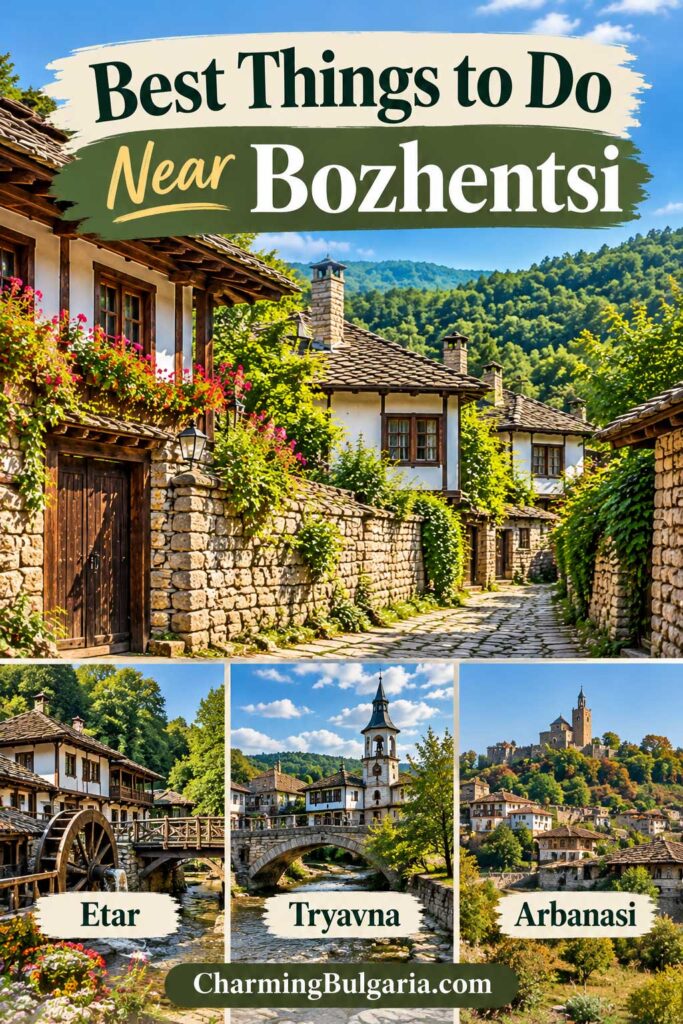
Bozhentsi is small enough that it pairs easily with several other worthwhile places in central Bulgaria.
Gabrovo is the most obvious nearby stop. The town is closely associated with Bulgarian craftsmanship, industry and humor, and it also makes a practical base if you want a wider choice of hotels, restaurants and services.
Another excellent place to visit is Etar Open-Air Museum, just outside Gabrovo. Its traditional workshops, water-powered machinery and demonstrations of old crafts make it a natural companion to Bozhentsi, especially if you are interested in how people lived and worked in the past.
Tryavna is also well worth adding to the same trip. Its historic center is known for Revival-era houses, woodcarving traditions, narrow streets and one of the most attractive old-town settings in Bulgaria.
If your trip continues toward Veliko Tarnovo, consider adding Arbanasi, another historic village known for its old houses and remarkable churches.
If you have more time, the surrounding Balkan Mountains offer plenty of opportunities for scenic drives, forest walks and quieter rural stops away from the better-known attractions.
Together, Bozhentsi, Gabrovo, Etar and Tryavna make an excellent cultural route through this part of central Bulgaria.
Each destination has its own character, but together they reveal different sides of the region’s traditional architecture, craftsmanship, local history and mountain culture.
Photography in Bozhentsi
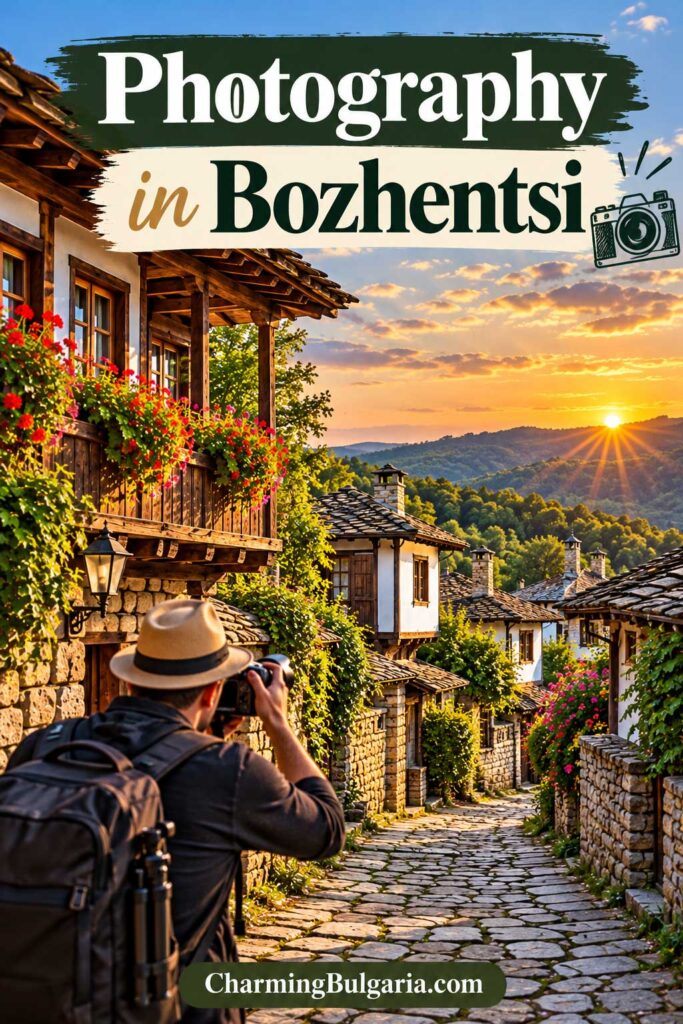
Bozhentsi is especially rewarding for photographers because so much of its character is found in the streets themselves.
You do not need to search for a long list of designated viewpoints. Some of the best scenes appear while simply wandering through the village and looking for combinations of cobblestones, stone roofs, whitewashed walls, wooden balconies and old gates.
Early morning and late afternoon usually offer the most flattering light, while cloudy days can work surprisingly well with Bozhentsi’s muted palette of gray stone, dark timber and white plaster.
Cloudy weather works surprisingly well too.
The softer light suits Bozhentsi’s muted palette of gray stone, dark timber and white walls, often giving the village an even more atmospheric feel.
Some details worth looking for include:
- Narrow lanes disappearing between traditional houses
- Stone roofs viewed from higher parts of the village
- Wooden gates, balconies and carved details
- Courtyard walls covered with flowers or vines
- Old fountains and weathered stonework
- Wider views of the village against the surrounding green hills
Do not focus only on the most perfectly restored buildings.
Uneven paving stones, faded walls, old doors and small signs of everyday village life often create the most authentic images.
For anyone interested in architecture, street photography or rural landscapes, Bozhentsi offers something around almost every corner. The whole village feels less like a collection of separate attractions and more like one continuous scene waiting to be explored.
Practical Tips for Visiting Bozhentsi
Bozhentsi is easy to explore, but a few simple tips can make the visit more comfortable.
Wear comfortable shoes with good grip. Many of the cobblestone streets are uneven, and they can become slippery after rain.
It is also a good idea to carry some cash. Smaller guesthouses, shops and traditional businesses may not always offer the same payment options you would expect in a larger town.
If you are visiting in summer, arriving earlier in the morning can help you enjoy quieter streets and cooler temperatures. In spring and autumn, bring an extra layer, as the weather in the hills can change quickly.
Give yourself enough time to explore without rushing.
Bozhentsi is compact, but much of its appeal comes from the atmosphere, architecture and small details you notice while walking.
Before your visit, check current opening hours for museums and historic houses, especially outside the main travel season.
If you are driving, parking near the edge of the historic area and continuing on foot is usually the easiest option.
Most importantly, remember that Bozhentsi is still a living village, not just an open-air attraction.
Respect private homes and courtyards, keep noise low in residential areas and ask permission before photographing people at close range.
A little extra time and consideration will help you enjoy the peaceful character that makes Bozhentsi so special.
Is Bozhentsi Worth Visiting?
Yes, especially if you enjoy traditional villages, historic architecture, photography and slower travel.
Bozhentsi is not filled with major monuments or large attractions. Its appeal comes from walking the cobblestone streets, exploring Revival-era houses and experiencing a quieter side of Bulgaria.
It is also easy to combine with Gabrovo, Etar and Tryavna, making it a worthwhile stop on a wider trip through central Bulgaria.
Frequently Asked Questions About Bozhentsi
Where is Bozhentsi located?
Bozhentsi is located in central Bulgaria, in the hills near Gabrovo. Its location makes it easy to combine with nearby cultural destinations such as Tryavna and Etar.
Is Bozhentsi easy to explore on foot?
Yes. The historic part of the village is compact and best explored on foot.
Many of the streets are cobbled and uneven, so comfortable walking shoes are a good idea.
How much time do you need in Bozhentsi?
For most visitors, two to four hours is enough to see the main sights.
If you want to visit museums, enjoy a relaxed meal, take photos and explore quieter streets, plan for around half a day.
Can you stay overnight in Bozhentsi?
Yes.
Bozhentsi has guesthouses and traditional-style accommodations, and staying overnight is a good way to experience the village after many day visitors have left.
What is Bozhentsi famous for?
Bozhentsi is best known for its Bulgarian Revival houses, cobblestone streets, stone roofs and well-preserved historic atmosphere.
The village is also recognized as one of Bulgaria’s notable architectural reserves.
Is Bozhentsi good for photography?
Yes.
Traditional houses, winding lanes, wooden gates, stone roofs and surrounding green hills make Bozhentsi especially photogenic.
Early morning and late afternoon are particularly good for softer light and quieter streets.
Can you visit Bozhentsi as a day trip?
Yes.
Bozhentsi is an easy day trip from Gabrovo and can also be combined with Tryavna or Etar as part of a longer itinerary through central Bulgaria.
Is Bozhentsi suitable for families?
Yes.
Families can enjoy walking through the village, visiting historic houses and stopping for traditional food.
If you are traveling with very young children, keep in mind that the uneven cobblestones can make using a stroller more difficult in some areas.
What should you wear when visiting Bozhentsi?
Comfortable walking shoes are the most important thing to bring.
In spring and autumn, an extra layer is useful because temperatures can change quickly in the hills. During summer, bring water and sun protection.
Is Bozhentsi worth visiting in winter?
Yes, especially if you enjoy quieter travel.
Snow can make the stone-roofed houses and cobblestone streets particularly beautiful, although roads and walking conditions may be more difficult during poor weather.
Why Bozhentsi Deserves a Place on Your Bulgaria Itinerary
Bozhentsi does not need grand landmarks to make an impression.
Its charm comes from the combination of cobblestone streets, Bulgarian Revival houses, stone roofs, wooden gates and quiet mountain surroundings. The village feels remarkably complete, and simply walking through it is one of the most rewarding parts of the visit.
Bozhentsi is also a place that rewards slower travel.
Instead of rushing from one sight to another, take time to wander through side streets, step inside a historic house, stop for traditional food and notice the small architectural details that have survived for generations.
The village fits especially well into a cultural trip through central Bulgaria, particularly when combined with Gabrovo, Etar and Tryavna.
For an even deeper look at Bulgaria’s traditional mountain villages, you can also explore Dolen and Shiroka Laka, each with its own distinctive architecture and regional character.
But Bozhentsi is worth visiting on its own too, especially if you want to experience a quieter and more traditional side of Bulgaria.
For travelers drawn to old villages, local history and authentic architecture, Bozhentsi is the kind of place that stays with you long after you leave.
Explore More Charming Bulgarian Villages
If Bozhentsi appeals to you, there are several other historic villages in Bulgaria worth adding to your itinerary.
- Arbanasi – Historic Houses and Churches Near Veliko Tarnovo – Explore grand Revival-era homes, old churches and panoramic views just outside Veliko Tarnovo.
- Zheravna – A Step Back in Time – Wander through one of Bulgaria’s best-preserved Revival villages, filled with wooden houses and quiet cobblestone streets.
- Dolen – One of Bulgaria’s Best-Preserved Mountain Villages – Discover traditional Rhodope architecture, stone streets and a peaceful mountain setting.
- Shiroka Laka – Traditional Houses, Music and Rhodope Culture – Experience distinctive stone houses, folklore traditions and the cultural character of the Rhodope Mountains.
- Best Villages Near Veliko Tarnovo – Find more traditional villages that are easy to combine with a trip through central Bulgaria.
Together, these places reveal different sides of Bulgarian village life, Revival architecture and regional traditions, making them natural next stops after Bozhentsi.