
- February 11, 2026
- 6
- Bulgarian Villages , Historic Villages
Zheravna Bulgaria is one of those rare places where mountain scenery, history and traditional village life come together beautifully. Some Bulgarian villages are memorable because of their setting. Others stand out because of their past. Zheravna offers both, but what makes it truly special is the feeling that modern life has somehow been left behind at the edge of the village.
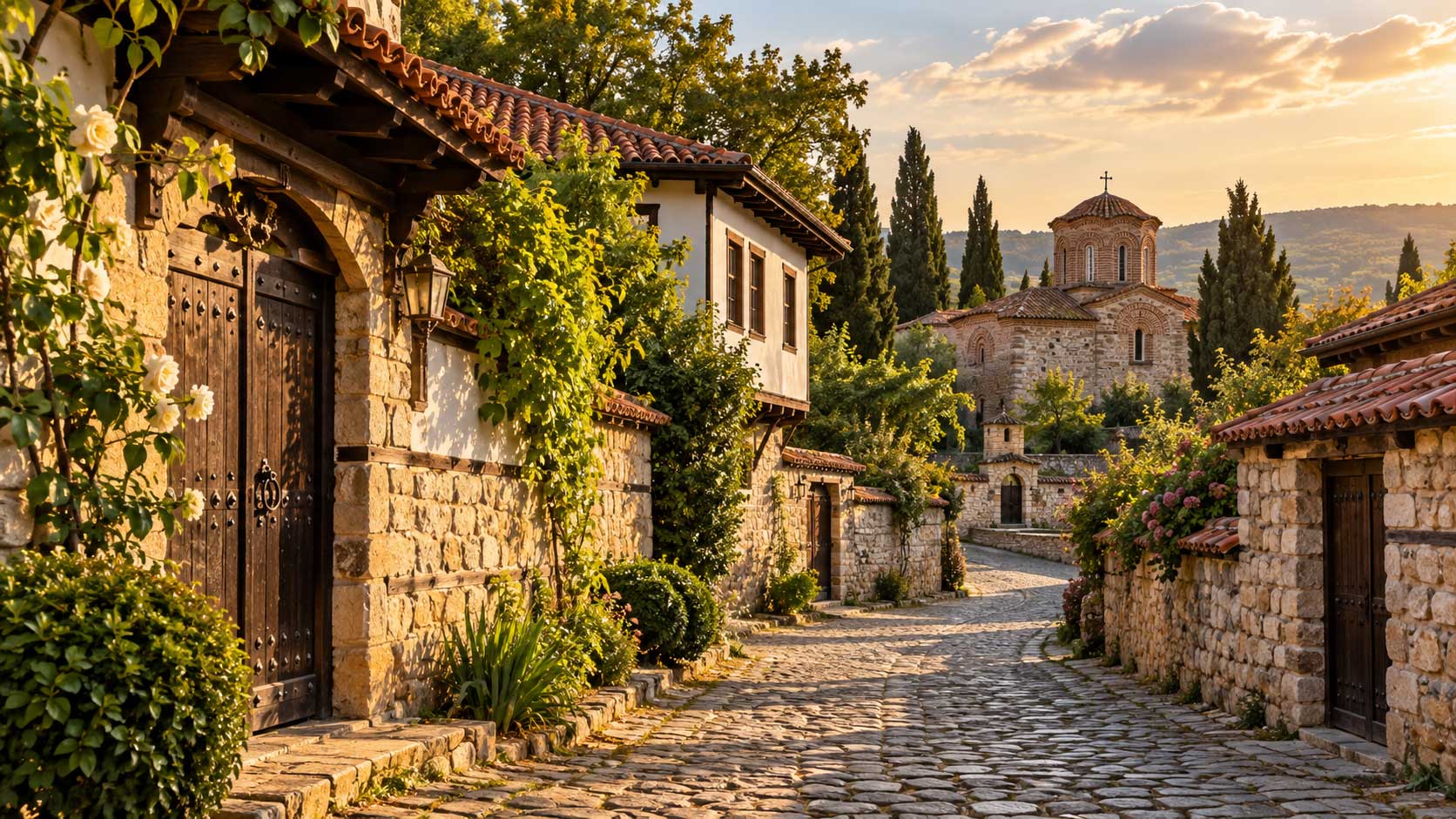
Set in the eastern Balkan Mountains near Kotel, Zheravna is an architectural and historical reserve filled with dark timber houses, stone walls, red-tiled roofs and narrow cobblestone lanes.
According to the Bulgarian Ministry of Tourism, Zheravna is an architectural-historical reserve with 172 houses officially recognized as cultural monuments.
There is no reason to rush here, because doing so would mean missing much of what makes Zheravna so appealing.
The best way to experience the village is simply to walk. Follow the uneven stone streets between old wooden homes, peek through open gateways into quiet courtyards and pause beside one of the traditional fountains along the way. Around almost every corner is another scene that feels as though it belongs to a different century.
Zheravna developed into an important center of crafts and local culture, particularly from the 17th century onward, when sheep breeding, trade and skilled craftsmanship helped the village prosper. That history can still be explored through its preserved houses, museum collections and historic buildings.
Yet Zheravna never feels like an outdoor museum created only for visitors.
The old houses remain part of the village landscape, traditions are still visible, and the surrounding wooded hills give the settlement a peaceful atmosphere that encourages you to stay longer than you originally planned.
For travelers interested in traditional Bulgarian architecture, village life, craftsmanship and history, Zheravna is one of those rare places where simply being there becomes the experience.
Quick Facts About Zheravna Bulgaria
Planning a trip to Zheravna Bulgaria is relatively easy. Before planning your visit, here are a few useful things to know about the village:
- Location: Eastern Balkan Mountains, near Kotel
- Region: Sliven Province, Bulgaria
- Known for: Preserved National Revival houses, cobblestone streets and traditional Bulgarian culture
- Best time to visit: Late spring through early autumn
- Recommended stay: Half a day at minimum; a full day or overnight is better
- Best for: History, architecture, photography, culture and slow travel
- Getting around: The historic center is best explored on foot
- Nearby places: Kotel, Medven and the surrounding Balkan Mountains
- Good to know: Comfortable shoes are important because many streets are steep and uneven
Zheravna may be small, but its preserved architecture, mountain setting and strong sense of history make it one of the most memorable village stops in this part of Bulgaria.
Where Is Zheravna?
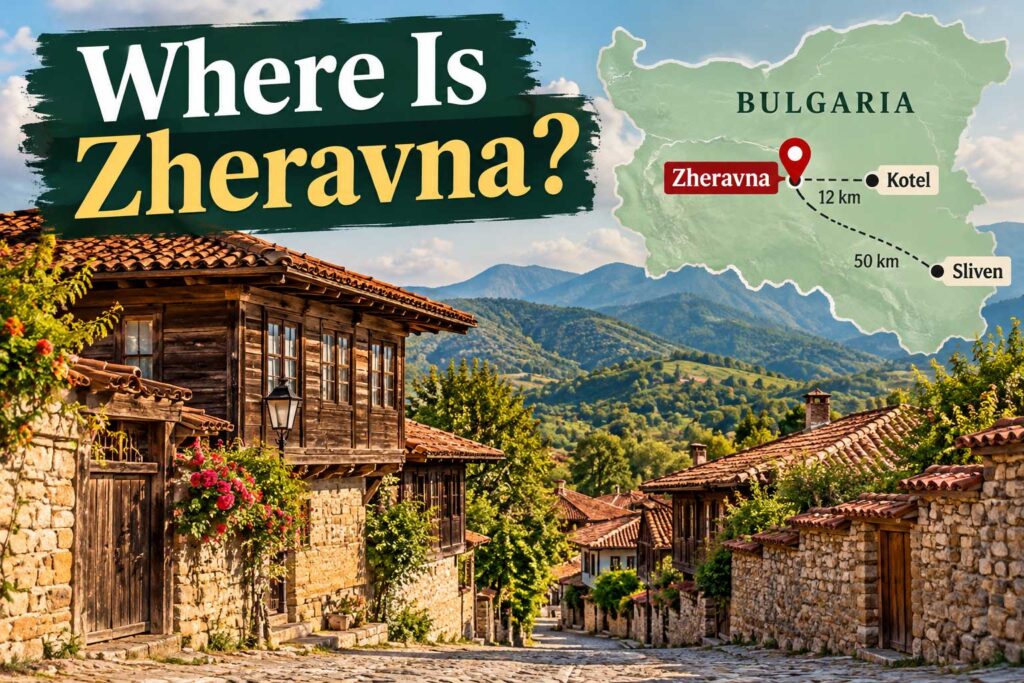
Zheravna is located in the eastern Stara Planina Mountains in Sliven Province, about 12 km from Kotel and roughly 50 km from Sliven.
The village sits among wooded hills in a relatively quiet part of southeastern Bulgaria, away from the country’s larger cities and busiest tourist routes.
That slightly secluded location is part of Zheravna’s appeal.
The mountain setting, slower pace of life and limited modern development have all helped the village preserve its distinctive character, making it feel noticeably different from more commercialized destinations.
Zheravna is especially easy to combine with Kotel and Medven, creating a scenic route through one of Bulgaria’s most interesting areas for traditional architecture, local history and mountain scenery.
Why Zheravna Is So Special
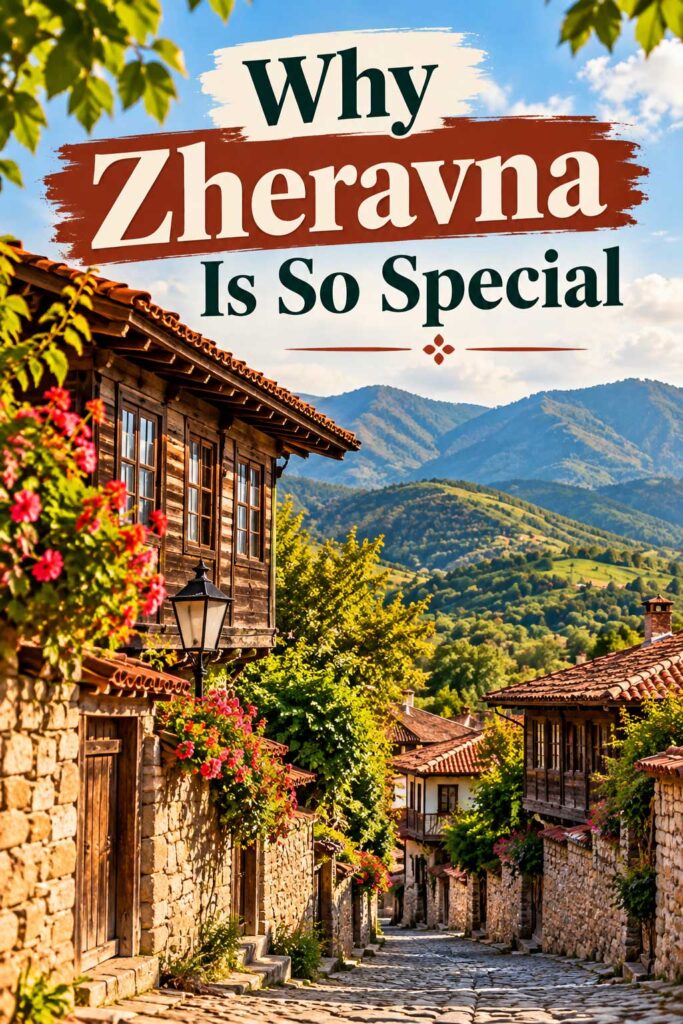
Zheravna is special because it has preserved much more than a collection of old houses.
The village still feels remarkably complete, with traditional wooden homes rising above stone foundations, narrow lanes curving between high walls and heavy gates opening into hidden courtyards. Many of these buildings date from the Bulgarian National Revival period and reflect the skill of the craftsmen who shaped some of Bulgaria’s most distinctive mountain settlements.
What makes Zheravna especially memorable is the way everything seems to belong together.
In many historic places, old buildings sit beside newer construction that changes the character of the surroundings. Here, large parts of the village still feel visually connected, allowing you to walk from one street to the next without constantly being pulled back into the modern world.
That sense of continuity is a big part of Zheravna’s charm.
The village is also closely tied to Bulgarian culture and history. Writers, merchants, craftsmen and other important figures all form part of its story, while several preserved homes now serve as museums that help bring the past to life.
But you do not need to know every name or historical date to appreciate Zheravna.
Much of its appeal is immediate.
Walk slowly through the old streets, listen to the quiet around the courtyards, and notice how the wood, stone and tiled roofs fit naturally into the surrounding hills.
Early morning and late afternoon are especially atmospheric, when the streets are quieter and the softer light makes the village feel even more timeless.
Traditional Architecture in Zheravna
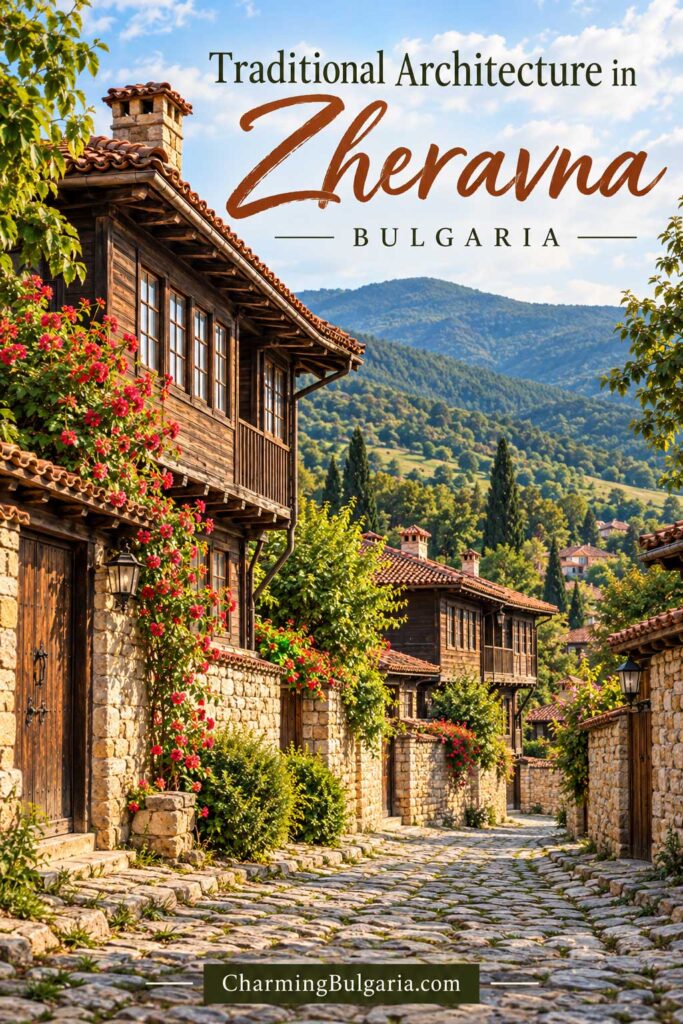
Architecture is one of the main reasons Zheravna feels so different from an ordinary Bulgarian village.
Many of Zheravna’s historic houses were built or expanded during the Bulgarian National Revival period, using a style shaped by mountain life, locally available materials and the practical needs of large households.
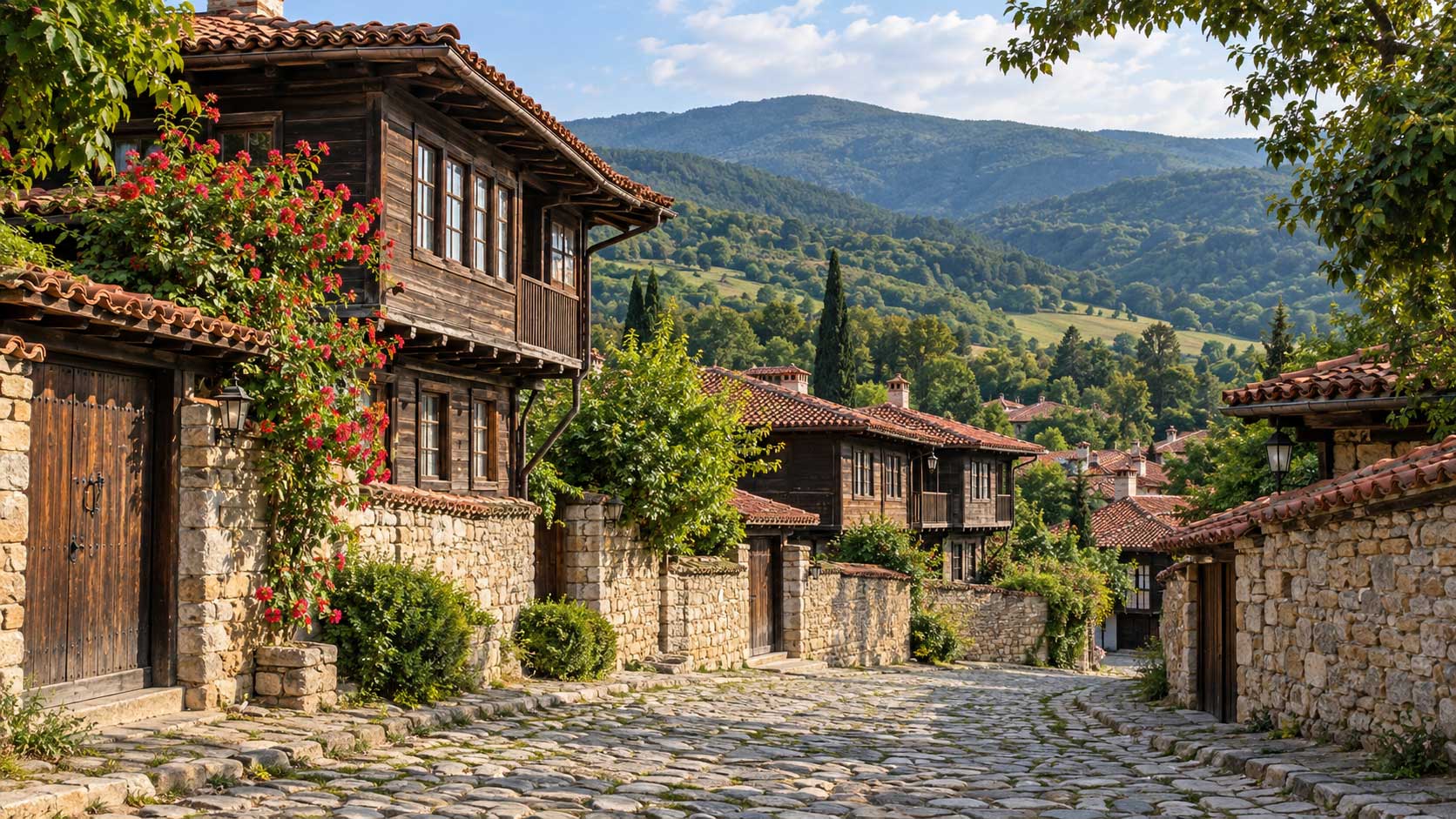
Typical homes combine solid stone foundations with dark wooden upper floors, creating a look that is both functional and distinctive. Broad tiled roofs extend beyond the walls, while enclosed balconies, projecting upper stories and wooden details give many houses their characteristic appearance.
The streets add just as much character as the buildings themselves.
Rather than following a straight modern layout, they twist naturally between homes, stone walls and private courtyards. Some lanes climb steeply uphill, while others suddenly open onto a small square or a view across the surrounding hills.
The smaller details are easy to miss if you move too quickly.
Look for carved wooden gates, weathered shutters, stone foundations, decorative woodwork and the way neighboring houses seem to fit together despite having been built at different times.
These details are what make Zheravna feel lived-in and authentic rather than carefully arranged for visitors.
For anyone interested in traditional Bulgarian architecture, this is one of the best places to slow down and notice how homes were designed to suit both the mountain landscape and everyday village life.
What to See in Zheravna
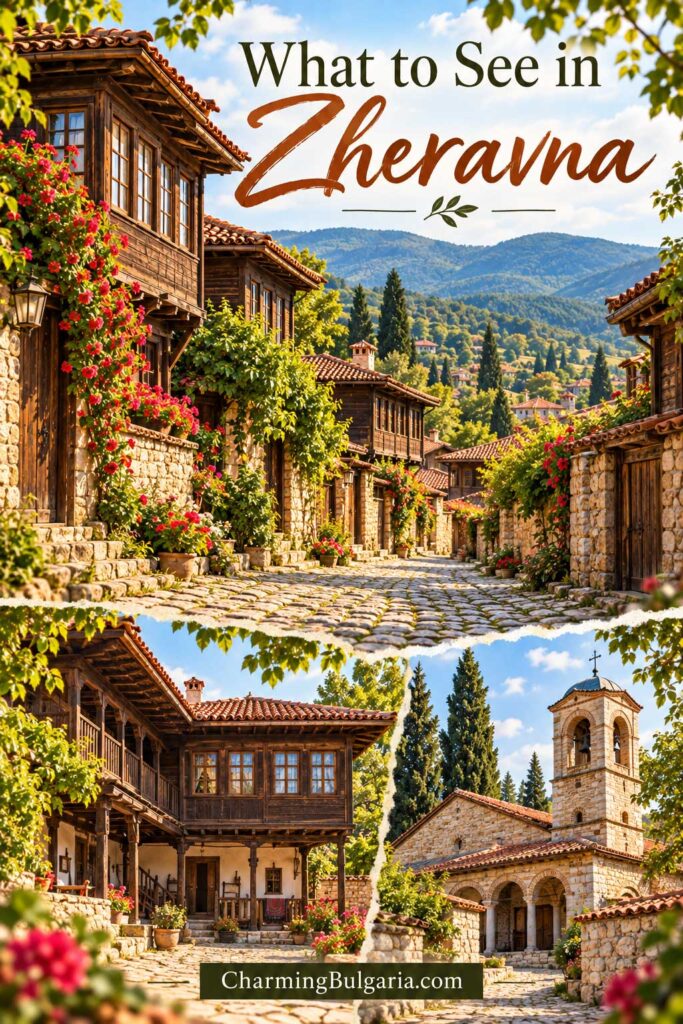
Zheravna is small enough to explore comfortably on foot, but there is much more to discover than its cobblestone streets and traditional houses.
Several historic buildings have been preserved as museums, giving visitors a closer look at the people, crafts and everyday life that shaped the village over the centuries.
Visitors planning to explore the historic houses can also check the Historical Museum – Kotel for information about the museum exhibitions in Zheravna.
Yordan Yovkov House Museum
One of the most important places to visit is the birthplace of Yordan Yovkov, one of Bulgaria’s best-known writers.
The house stands on Golyamo Bardo Square and has been preserved as a museum dedicated to his life and work. Yovkov lived in the house until he was 13, when his family moved to Dobruja.
Even if you are not familiar with his writing, the house is worth seeing for its traditional interior and its connection to Bulgarian literary history.
Sava Filaretov House Museum
The Sava Filaretov House offers a broader look at Zheravna’s past.
Its exhibitions help explain how the village developed into an important center of craftsmanship, trade and culture during the Bulgarian National Revival.
Visiting the house adds useful context to the streets and buildings you see outside, showing how Zheravna became both prosperous and culturally significant.
Rusi Chorbadzhi House Museum
The Rusi Chorbadzhi House focuses more closely on traditional daily life.
Inside, you can see household objects, tools and examples of local craftsmanship from the 18th and 19th centuries.
One of the most interesting displays is a large traditional loom, along with examples of finely woven textiles that reflect the skill of local women and the importance of weaving in village life.
Church of St. Nicholas
The Church of St. Nicholas, built in 1834, is another important stop in the historic center.
Its collection includes religious icons, church objects and decorative stonework, offering another glimpse into Zheravna’s spiritual and cultural life during the National Revival period.
You do not need to visit every museum to appreciate Zheravna.
Even stepping inside one or two historic buildings makes it much easier to imagine what life here once looked like.
The streets show you the beauty of the village.
The museums reveal the story behind it.
Walking Through the Old Village
One of the best things to do in Zheravna is also the simplest: walk without a strict plan.
The village’s narrow cobblestone streets curve between timber houses, stone walls and old fountains, making the walk itself part of the experience. Zheravna is protected as an architectural reserve, and many of its Revival-era homes still line these old lanes much as they have for generations.
Some streets climb gently uphill, while others disappear between high garden walls before suddenly opening onto a small square or a view of the surrounding hills.
That sense of discovery is part of Zheravna’s charm.
You might pass a beautifully carved wooden gate, an old balcony draped with grapevines, a stone fountain or a quiet courtyard where flowers spill over the walls.
There is no single landmark that captures the entire village.
Instead, Zheravna is best experienced through a collection of small moments.
Take your time and wander beyond the most obvious streets. The cobblestones can be uneven, so comfortable shoes are important, but those old stone lanes are also part of what gives the village its character.
Early morning is especially peaceful, when the streets are nearly empty.
Late afternoon is equally beautiful, as softer light brings out the warm tones of the wood, stone and red-tiled roofs.
For photographers, simply walking through Zheravna may be one of the most rewarding parts of the visit.
For everyone else, it is an easy place to slow down, follow whichever street looks interesting and enjoy the feeling of being somewhere still deeply connected to the past.
The History of Zheravna
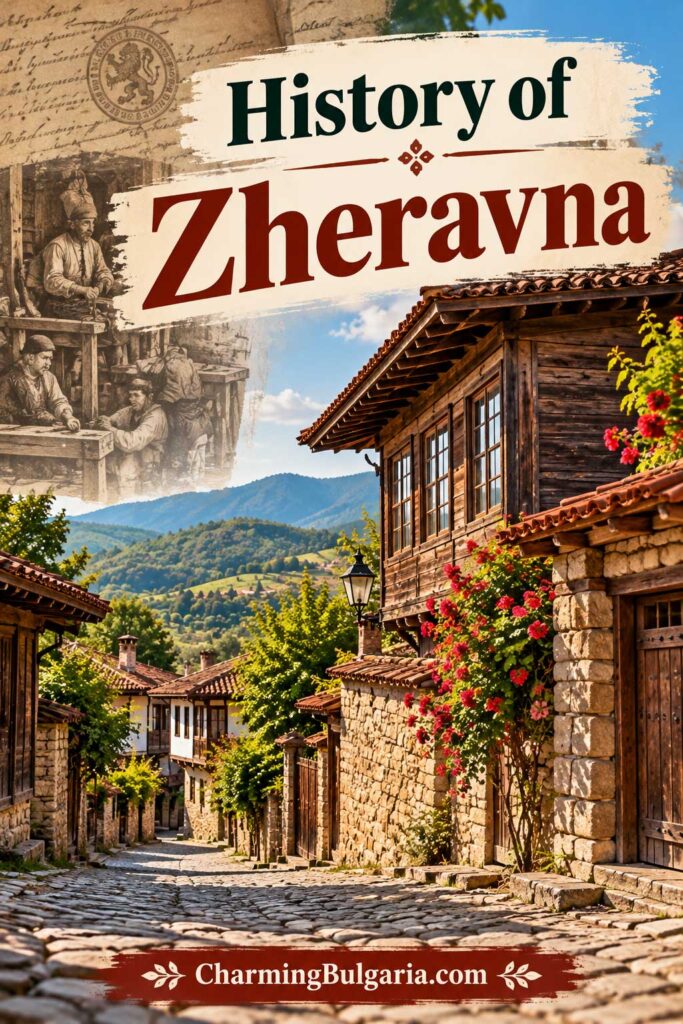
By the 17th century, Zheravna had already developed into an important center of crafts, trade and local culture. Sheep breeding and skilled craftsmanship helped bring prosperity to the village, and that growth continued into the Bulgarian National Revival period.
Local merchants traveled beyond the region, while craftsmen worked with wood, textiles and other materials that supported both everyday village life and the local economy.
Local merchants traveled beyond the region, while skilled craftsmen worked with wood, textiles and other materials that were important to everyday life and the local economy.
As some families became wealthier, they built larger and more elaborate homes.
Many of the houses that still define Zheravna today date from this period. Their spacious interiors, carved wooden ceilings, enclosed courtyards and decorative details reflected both practical mountain living and the growing prosperity of their owners.
Zheravna also became part of Bulgaria’s wider cultural awakening.
Schools and churches gained greater importance, literacy expanded, and people connected with the village contributed to the literary, educational and intellectual life that helped shape modern Bulgaria.
Over time, economic activity gradually shifted toward larger towns and cities, and Zheravna lost some of the commercial importance it once had.
That change, however, also helped preserve the village.
Because large-scale modern development never completely transformed the historic center, many of its traditional houses, lanes and architectural details survived.
Today, walking through Zheravna is not simply about admiring beautiful old buildings.
It is a chance to see how a prosperous mountain community once lived, worked and contributed to Bulgaria’s cultural and national revival.
Traditions and Local Culture in Zheravna
Zheravna is known for much more than its architecture.
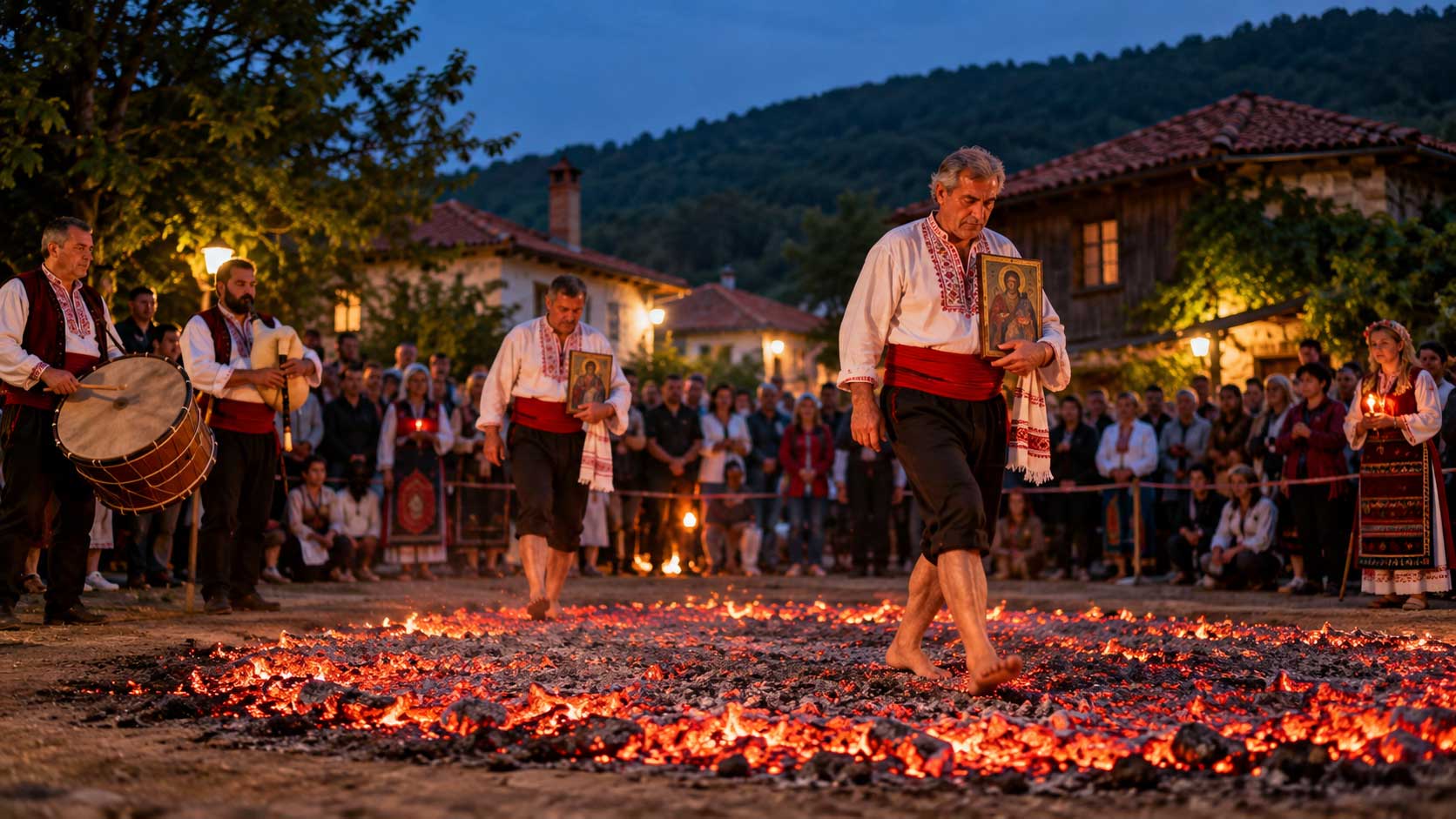
The village also has a strong connection with Bulgarian folk traditions, music, crafts and local customs, all of which remain an important part of its identity.
Traditional clothing, folk dancing and handmade crafts are especially visible during cultural events, when the usually quiet village becomes much more lively.
The best-known celebration is the Festival of Folk Costume, which draws visitors from across Bulgaria. Participants wear traditional clothing, folk groups perform music and dances, and the event creates a rare chance to see regional costumes and customs brought together in one place.
For a few days, much of modern life is intentionally pushed into the background.
That idea fits Zheravna remarkably well.
Even outside the festival, traces of local culture are easy to notice in museum collections, guesthouses, traditional interiors and small decorative details around the village.
Food adds another layer to the experience, with regional meals often reflecting the hearty cooking traditions of the Balkan Mountains.
What makes Zheravna especially appealing is that these traditions do not feel completely separated from everyday life.
Architecture, food, music and local customs all add to the same sense of place, helping visitors understand how closely village life here has always been connected to the surrounding mountains.
The Festival of Folk Costume in Zheravna
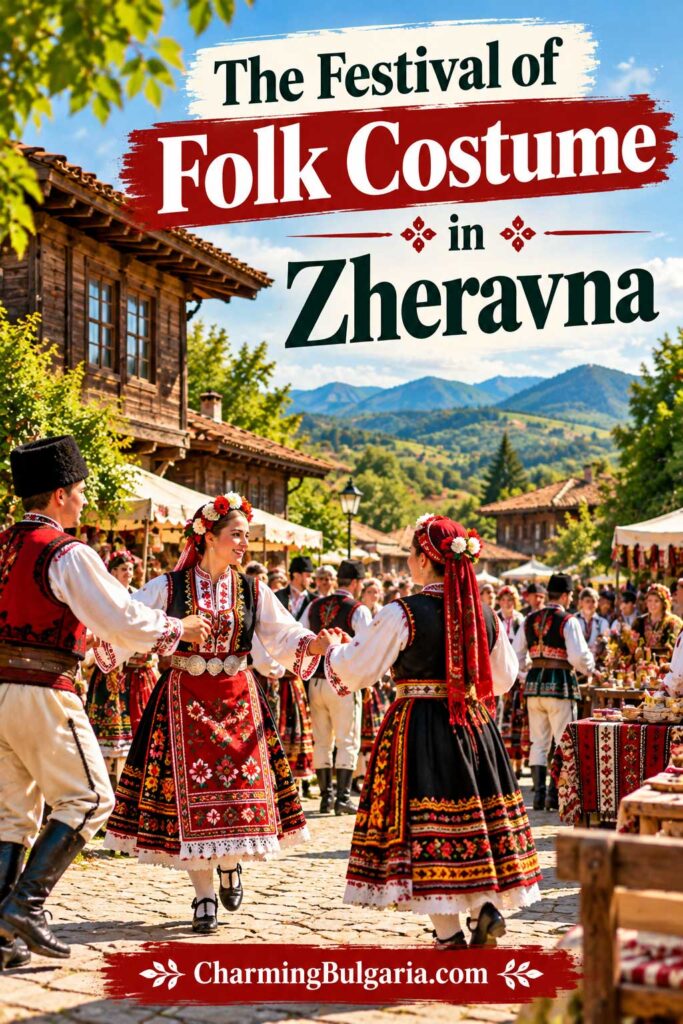
One event has become especially closely associated with Zheravna: the Festival of Folk Costume.
Held in the countryside near the village, the festival celebrates Bulgarian traditions through folk clothing, music, dancing, crafts and food.
For current dates, admission details and festival rules, check the official Zheravna Festival of Folk Costume website before planning your visit.
What makes it stand out is the effort to recreate the feeling of an earlier time.
Festival rules traditionally require visitors entering the festival grounds to wear Bulgarian folk costume or other approved historical clothing, helping create the feeling of stepping into an earlier era.
Folk groups perform traditional music and dances, artisans demonstrate crafts, and visitors from different parts of the country wear costumes that reflect Bulgaria’s remarkable variety of regional traditions.
The forested hills surrounding the festival grounds make the celebration feel naturally connected to Zheravna and the landscape around it.
The festival does, however, make the area considerably busier.
Travelers hoping to experience Zheravna at its quietest may prefer visiting at another time, while those interested in Bulgarian folklore, traditional clothing and village culture may find the festival one of the most memorable times to come.
For a few days, Zheravna’s reputation as a place where time seems to slow down feels especially real.
Best Time to Visit Zheravna
Zheravna has a different character in every season, so the best time to visit depends on the kind of experience you want.
Spring is a great choice for a quieter trip. The hills turn green, gardens begin to bloom, and the village feels fresh after winter. Temperatures are usually comfortable for walking, and visitor numbers are lower than in summer.
Summer brings warmer weather and a livelier atmosphere. It is a good time for long walks through the village, outdoor meals and combining Zheravna with Kotel, Medven and other nearby places.
August can be especially busy around major cultural events, including the Festival of Folk Costume.
Autumn may be the most beautiful season of all.
The surrounding forests shift to shades of gold, orange and red, creating a striking backdrop for the dark wooden houses and stone streets. Cooler temperatures also make exploring on foot especially pleasant.
Winter shows a much quieter side of Zheravna.
When snow covers the tiled roofs and cobblestones, the village can feel almost storybook-like. Mountain weather, however, can make driving and walking more difficult, so it is worth checking conditions before setting out.
For a balance of pleasant weather, beautiful scenery and fewer crowds, late spring and early autumn are excellent choices.
Whatever the season, try to leave enough time to experience Zheravna slowly.
This is a place that rewards wandering rather than rushing.
How Long to Spend in Zheravna
You can see the main sights in Zheravna in half a day, but spending longer gives you a much better feel for the village.
With only a few hours, there is enough time to walk through the historic center, visit one or two museum houses and stop at the Church of St. Nicholas.
But Zheravna is not really about checking attractions off a list.
Its appeal comes from slowing down.
Spend a full day and you can wander through the smaller streets, photograph the traditional houses, stop for lunch and explore the museums without constantly watching the time.
An overnight stay is even better if your schedule allows it.
Once many day visitors leave, the village becomes noticeably quieter. Early morning is just as peaceful, when the cobblestone lanes are almost empty and the old houses feel even more atmospheric.
Because Zheravna is only about 12 km from Kotel, the two destinations are also easy to combine on the same trip.
For most travelers, one full day or one night is enough to experience Zheravna without feeling rushed.
The goal is not to see as much as possible.
It is to enjoy one of Bulgaria’s most beautifully preserved villages at the pace it deserves.
Where to Stay in Zheravna
One of the best ways to experience Zheravna is to spend the night in a traditional guesthouse.
Many places to stay are set inside restored historic homes, giving visitors the chance to enjoy the village atmosphere long after most day-trippers have left.
Rooms often feature wooden ceilings, exposed beams, stone details and traditional furnishings, although the style can range from simple family-run guesthouses to more polished boutique stays.
If atmosphere matters most, look for accommodation in or close to the historic center.
That way, you can step outside in the evening and walk straight onto the old cobblestone streets without needing to drive anywhere.
Staying overnight also changes the rhythm of the visit.
During the day, Zheravna can feel lively, especially on summer weekends. By evening, the village becomes much quieter, and the streets take on a calmer, more intimate feel.
Morning can be even more rewarding, when you can walk the old lanes before most day visitors arrive and photograph the village in softer light.
If you prefer a wider choice of hotels or are using one base to explore the region, Kotel is another practical option.
But for the most memorable experience, staying directly in Zheravna is hard to beat.
Sleeping in one of its old houses makes the village feel less like a sightseeing stop and more like somewhere you have briefly become part of.
What to Eat in Zheravna
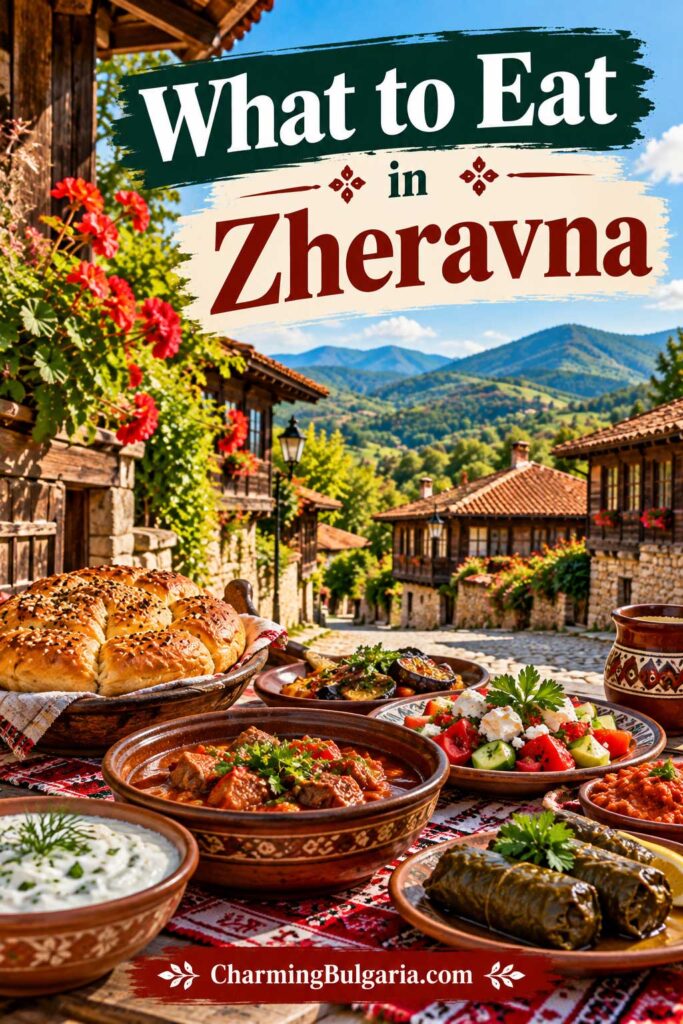
A visit to Zheravna is a good opportunity to enjoy traditional Bulgarian food in a setting that suits the character of the village.
Local restaurants and guesthouses often serve familiar dishes built around simple ingredients, generous portions and the kind of hearty flavors that work especially well in the mountains.
You may find classics such as shopska salad, grilled meats, bean dishes, banitsa, yogurt, homemade bread and seasonal vegetable dishes.
In cooler weather, soups, baked dishes and slow-cooked meals are especially welcome after a few hours spent walking the village’s steep cobblestone streets.
If you are staying in a family-run guesthouse, it is worth asking whether breakfast or dinner is available.
A homemade meal can sometimes be one of the most memorable parts of the stay, especially when it includes recipes prepared in a more traditional local style.
Zheravna does not have a large restaurant scene, and that is part of its appeal.
Meals here are best enjoyed slowly, whether on a quiet terrace or inside an old wooden house where the surroundings feel closely connected to the village itself.
And if you come across homemade preserves, local honey or other regional products, they can make a simple and meaningful souvenir to take home.
Things to Do Near Zheravna

Zheravna is worth visiting on its own, but the surrounding region has enough interesting places to turn the trip into a longer mountain escape.
Visit Kotel
The nearby town of Kotel is the easiest place to combine with Zheravna.
It has strong connections with Bulgarian history, traditional crafts and National Revival culture, along with several museums and a scenic setting beneath the Balkan Mountains.
Because the drive is short, Kotel and Zheravna fit naturally into the same day without making the itinerary feel rushed.
Explore Medven
Another worthwhile stop is Medven, a quieter mountain village west of Kotel.
It is known for its old houses, peaceful streets and connection with Bulgarian writer and revolutionary Zahari Stoyanov.
Medven feels less visited than Zheravna, which makes it a good choice if you want another historic village with a more secluded atmosphere.
Spend Time in the Balkan Mountains
The countryside around Zheravna is ideal for travelers who enjoy combining culture with nature.
Forested hills, quiet mountain roads and walking routes make it easy to spend part of the day outdoors before returning to the village.
Even a short drive through the region reveals a much quieter side of Bulgaria than the Black Sea coast or the country’s larger cities.
Plan a Small Village Road Trip
Zheravna works especially well as part of a short road trip through the eastern Balkan Mountains.
A route linking Zheravna, Kotel and Medven gives you traditional architecture, museums, mountain scenery and rural landscapes without requiring long drives between stops.
For travelers interested in Bulgaria’s historic villages and slower countryside travel, this region deserves more than a quick detour.
How to Get to Zheravna

Zheravna Bulgaria is easiest to reach by car, which also gives you the freedom to explore Kotel, Medven and other nearby places during the same trip.
The village lies in the eastern Balkan Mountains, a short drive from Kotel, and the final part of the journey follows smaller roads through a more rural landscape.
The drive is part of the experience.
As you get closer to Zheravna, busy roads give way to forested hills, quieter stretches of countryside and the slower pace that defines this part of Bulgaria.
From Sofia, Zheravna works best as part of a longer road trip through central Bulgaria rather than a quick day trip.
From Burgas and the Black Sea coast, it makes an excellent inland escape, especially if you want to combine mountain scenery with traditional villages.
Travelers coming from Sliven or Veliko Tarnovo can also include Zheravna as part of a wider route through the Balkan Mountains.
Public transportation is more limited than in larger Bulgarian destinations, so buses require more planning and offer less flexibility for visiting nearby villages.
For most travelers, especially those hoping to explore the wider region, having a car is the simplest option.
Once you arrive, however, Zheravna is best explored on foot.
Its narrow cobblestone lanes were built long before modern traffic, and walking allows you to notice far more of the old houses, courtyards and small architectural details along the way.
Practical Tips for Visiting Zheravna Bulgaria
Zheravna is an easy place to enjoy, but a few simple preparations can make the visit much more comfortable.
Wear good walking shoes. The cobblestone streets are one of the village’s most attractive features, but they can be uneven and slippery, especially after rain.
It is also a good idea to carry some cash.
Small guesthouses, cafés and local shops may not always offer the same payment options you would expect in a larger city, so having Bulgarian leva with you can be useful.
If you are visiting in summer, try to arrive earlier in the day.
The village is quieter in the morning, the light is softer, and the cooler temperatures make walking more pleasant.
In spring and autumn, bring an extra layer. Even when the daytime weather feels mild, evenings in the mountains can become noticeably cooler.
Photography is one of the pleasures of visiting Zheravna, but remember that many of the historic houses are still private homes.
Enjoy the architecture from the street unless a building is clearly open to visitors, and be respectful when photographing courtyards or local residents.
Finally, do not over-plan the day.
Zheravna is at its best when you leave enough time to wander, stop for coffee, sit for a while in a quiet corner and follow whichever street looks interesting.
A loose itinerary works much better here than a packed schedule.
Why Zheravna Is Perfect for Photography
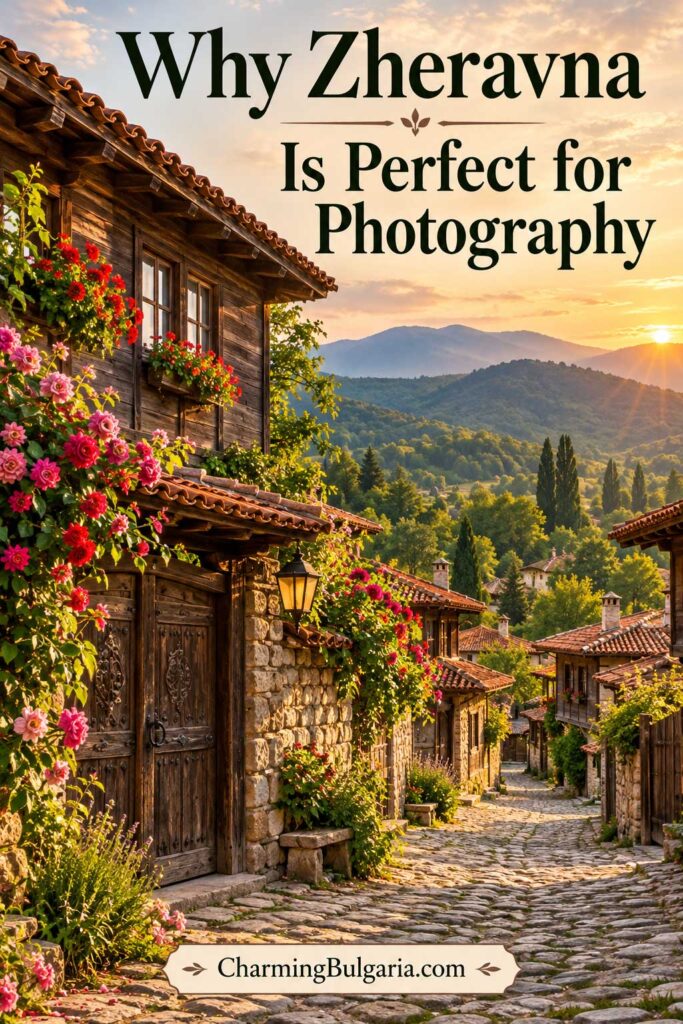
Zheravna is one of those villages where you rarely need to search very hard for a good photograph.
The combination of wooden houses, stone walls, tiled roofs, narrow streets and mountain scenery creates interesting compositions almost everywhere you turn.
Early morning is especially rewarding.
The streets are quieter, the light is softer, and there are fewer people moving through the historic center. Small details such as carved gates, old windows, wooden balconies and weathered stonework stand out more clearly before the stronger midday light takes over.
Late afternoon is another excellent time to explore with a camera.
The warmer light brings out the texture of the timber and stone, while longer shadows give the narrow lanes even more depth and character.
Do not focus only on the largest or most famous houses.
Some of the best images come from smaller details: an old doorway, flowers growing beside a stone wall, firewood stacked beneath a balcony, or a quiet lane disappearing between traditional homes.
The surrounding hills add another layer.
Step slightly beyond the center and you can capture wider views showing how naturally Zheravna sits within the landscape of the Balkan Mountains.
Most importantly, photograph the village respectfully.
Many of these beautiful buildings are still private homes, so avoid entering courtyards or photographing residents closely without permission.
Zheravna rewards patience more than speed.
Slow down, notice the details, and the village will give you plenty of scenes worth remembering.
Frequently Asked Questions About Zheravna Bulgaria
Where is Zheravna located?
Zheravna is located in the eastern Balkan Mountains in Sliven Province, close to the town of Kotel.
What is Zheravna Bulgaria famous for?
The village is best known for its beautifully preserved Bulgarian National Revival architecture, traditional wooden houses, cobblestone streets and strong sense of history.
How much time do you need in Zheravna?
A few hours are enough to see the main sights, but a full day or an overnight stay gives you more time to explore the museums, wander through the quieter streets and enjoy the village without rushing.
Is Zheravna easy to explore on foot?
Yes. The historic center is compact and best explored on foot. The cobblestones can be uneven, however, so comfortable walking shoes are recommended.
Can you stay overnight in Zheravna?
Yes. Zheravna has traditional guesthouses, including accommodations inside restored historic homes. Staying overnight also lets you experience the village after most day visitors have left.
Is Zheravna good for families?
Yes. Families interested in history, traditional culture and relaxed countryside travel should enjoy the village. Younger children may need a little extra supervision on the uneven stone streets.
When is the best time to visit Zheravna Bulgaria?
Late spring and early autumn are excellent choices for pleasant walking weather, beautiful scenery and fewer crowds. Summer is livelier, particularly around cultural events.
Is Zheravna worth visiting from the Black Sea coast?
Yes. Zheravna makes a rewarding inland escape from the Black Sea region, especially if you want to combine mountain scenery, traditional architecture and Bulgarian history in one trip.
Why Zheravna Deserves a Place on Your Bulgarian Itinerary
Zheravna is one of those places that shows how much character a small village can hold when its history, architecture and traditions remain part of everyday life.
You do not come here for busy attractions or a tightly packed sightseeing schedule.
You come for the cobblestone streets, dark wooden houses, quiet courtyards, mountain air and the sense that life moves at a slower pace.
That is what gives Zheravna its lasting appeal.
A few hours are enough to see the main sights, but staying longer gives you time to notice the details that make the village memorable: an old wooden gate, a stone fountain, flowers spilling from a balcony or the late-afternoon light falling across a centuries-old house.
For travelers exploring Zheravna Bulgaria, staying overnight is one of the best ways to experience the village at its most peaceful. Once the daytime visitors leave, the cobblestone streets grow quieter, the historic houses feel even more atmospheric, and the slower rhythm of village life becomes much easier to appreciate.
More than somewhere to simply see, Zheravna is a place to wander, pause and experience a quieter side of Bulgaria that still feels deeply connected to the past.
More Charming Bulgarian Villages to Explore
If Zheravna has made you want to discover more of Bulgaria’s historic villages, there are several other places worth adding to your route.
- Kovachevitsa – Known for its stone houses, mountain views and beautifully preserved historic center.
- Leshten – A small Rhodope village with traditional homes, quiet lanes and an ideal atmosphere for slow travel.
- Shiroka Laka – Famous for its distinctive Rhodope architecture, folk music and strong local traditions.
- Dolen – One of Bulgaria’s best-preserved mountain villages, with old stone houses and peaceful cobbled streets.
- Gela – A scenic Rhodope village surrounded by mountain landscapes and closely connected with local folklore.
- Trigrad – A dramatic mountain village near some of the Rhodopes’ most impressive natural attractions.
- Smilyan – A welcoming Rhodope settlement known for mountain scenery, local traditions and its famous beans.
Each village offers a different glimpse into rural Bulgaria, but together they show just how much history, architecture and local character can still be found beyond the country’s larger cities.