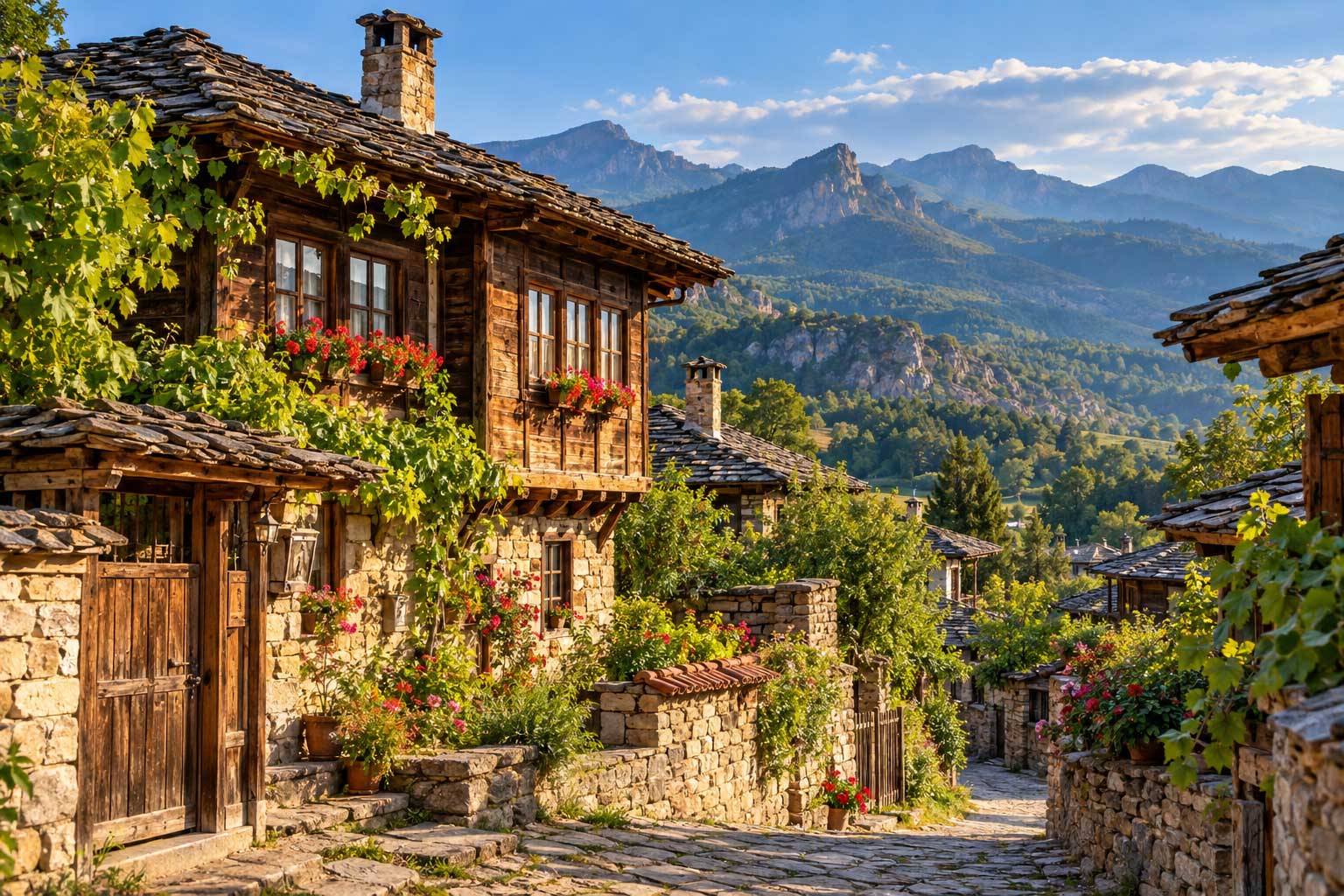
10 Best Villages in Bulgaria for Slow Travel

- April 2, 2026
- 12
- Bulgarian Villages , Slow Travel Bulgaria
Bulgaria is a country that rewards travelers who are willing to slow down.
Beyond the busy streets of Sofia, the summer crowds along the Black Sea, and the country’s famous landmarks, you will find small villages where life still moves at a gentler pace. Stone houses climb mountain slopes, wooden balconies overlook cobbled lanes, and quiet streets invite you to wander without worrying about what comes next.
The best villages in Bulgaria for slow travel are not necessarily the places with the longest sightseeing lists. Their appeal is much simpler: waking up to mountain views, enjoying homemade Bulgarian food, walking without a schedule, talking with local hosts, and spending an afternoon exploring streets you could technically cross in just a few minutes.
Some villages, such as Kovachevitsa and Leshten, are tucked into the mountains of southwestern Bulgaria. Others preserve beautiful examples of Bulgarian National Revival architecture and centuries-old local traditions. A few are surrounded by forests, hiking trails, caves, and landscapes that make staying an extra day feel completely natural.
Slow travel in Bulgaria might mean sleeping in a restored village house instead of a large hotel, buying honey or homemade preserves from a local producer, lingering over dinner at a family-run guesthouse, or simply sitting outside as the evening light moves across the mountains.
This guide explores 10 Bulgarian villages where slowing down is part of the experience. They are worth visiting not only for their traditional architecture and beautiful scenery, but also for the chance to experience a quieter side of Bulgaria that is easy to miss when traveling too quickly.
Whether you have a long weekend or several weeks to explore the country, these villages are a good reminder to leave a little empty space in your itinerary.
1. Kovachevitsa – Slow Down Among Stone Houses and Mountain Silence
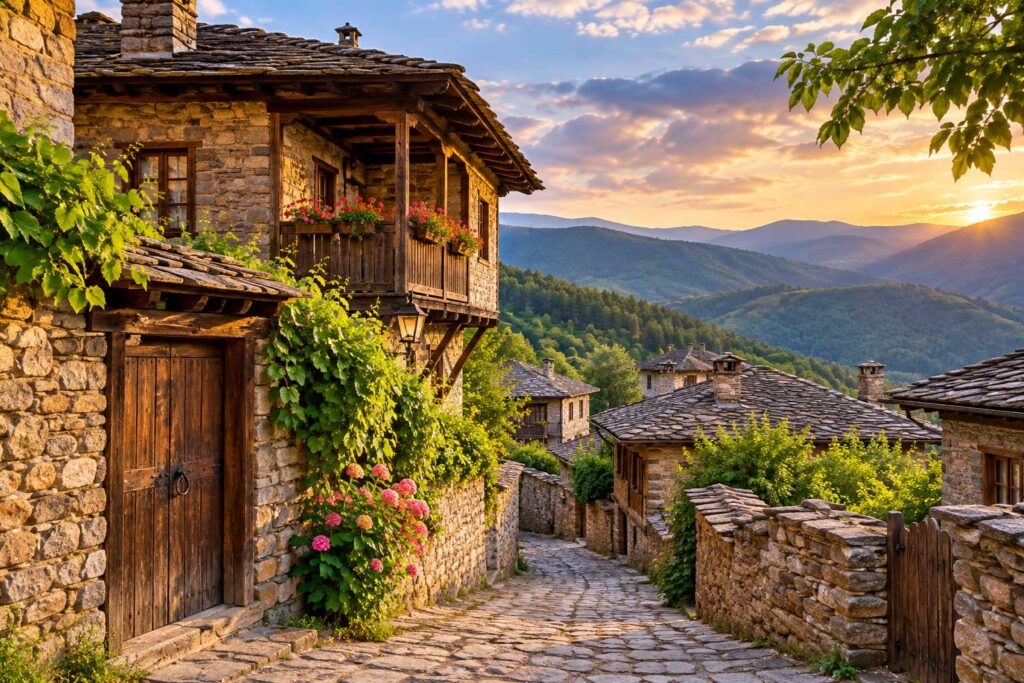
Kovachevitsa is the kind of place where it is easy to forget about schedules.
Tucked into the Western Rhodope Mountains, about 25 kilometers from Gotse Delchev, Kovachevitsa is known for its steep cobbled lanes, tall stone houses, projecting wooden upper floors, and distinctive traditional architecture. Its preserved houses are among the clearest examples of the traditional building style of the southwestern Rhodopes.
Kovachevitsa easily earns a place among the best villages in Bulgaria for slow travel, especially if you enjoy traditional architecture, mountain scenery, and days without a packed itinerary.
Spend the morning wandering uphill through the old streets, stopping to notice wooden balconies, heavy stone walls, and views opening between the houses. Later, settle in for a long lunch at a guesthouse or simply find a quiet spot overlooking the surrounding Rhodope Mountains.
There is no need to hurry from one attraction to the next.
Why Kovachevitsa Is Perfect for Slow Travel
Much of Kovachevitsa’s charm comes from the village itself.
The historic houses, quiet lanes, mountain setting, and slower pace are the main reasons to come. Many traditional homes have been restored, and some now operate as guesthouses, allowing visitors to stay in buildings that reflect the same architectural style they came to see.
If your itinerary allows, stay at least one night rather than treating Kovachevitsa as a quick stop.
Early mornings and evenings are especially peaceful, when most day visitors have left and the cobbled streets become noticeably quieter.
Things to Do in Kovachevitsa
Start with a walk through the old part of the village.
You do not really need a strict route. Kovachevitsa is built along a mountain slope, so simply following the cobbled lanes uphill reveals different views, courtyards, houses, and architectural details along the way.
Visit the Church of St. Nicholas, built in 1847, and look for the old school building, which has been restored as a museum.
If you want to spend more time outdoors, the surrounding area also offers hiking opportunities toward places such as Sini Vir Waterfall and Kozi Kamak.
Nearby Leshten, only around 8 kilometers away, is easy to combine with Kovachevitsa as part of a slower trip through southwestern Bulgaria.
But do not feel that every hour needs to be planned.
Order something homemade, find a terrace with a mountain view, and let part of the afternoon pass without doing much at all.
That is part of what makes Kovachevitsa worth visiting.
Best for: Traditional architecture, couples, photography, mountain scenery, and quiet weekends.
Ideal stay: 1–2 nights.
Best time to visit: Late spring through autumn. September and October are especially attractive for cooler walks, quieter streets, and changing mountain colors.
2. Leshten – A Tiny Rhodope Village Made for Unhurried Days
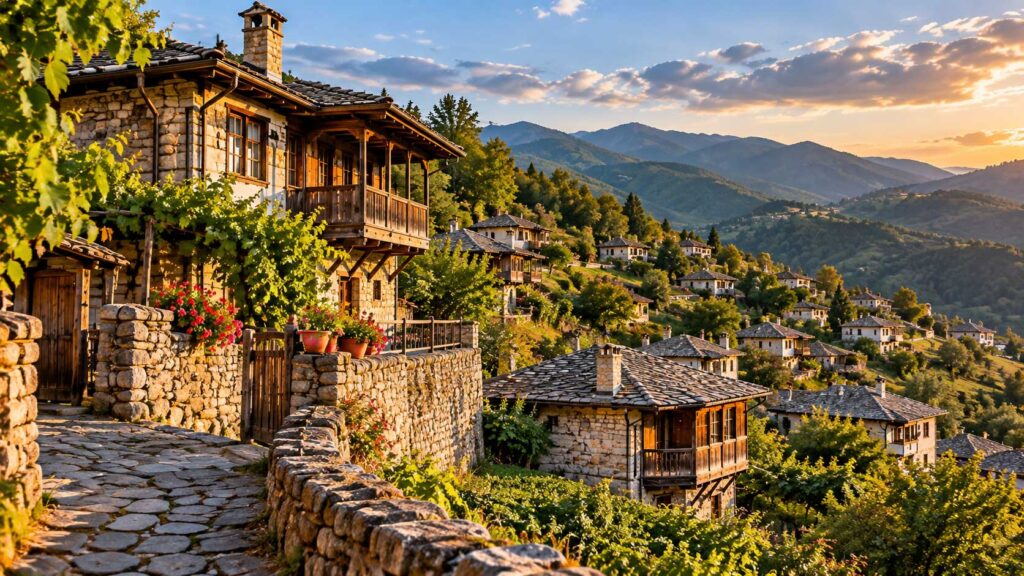
Just a short drive from Kovachevitsa, Leshten is another beautiful place to experience the quieter side of southwestern Bulgaria.
The village sits among the green hills of the Western Rhodopes, where stone-and-wood houses climb the hillside and narrow lanes wind between gardens, stone walls, and wooden gates. Leshten is known for its restored Revival-era houses, old cobbled streets, and strong connection with rural tourism in the region.
Leshten is small enough to walk through fairly quickly.
But there is little reason to rush.
This is a village better enjoyed with frequent stops—for coffee on a terrace, a long homemade lunch, or simply a few quiet minutes taking in the mountain views.
Why Leshten Is Perfect for Slow Travel
Leshten does not overwhelm you with attractions, and that is part of its appeal.
The experience is more about the setting and pace of village life.
Wake up in a restored traditional house, take an early walk before breakfast, listen to birds instead of traffic, and leave part of the afternoon completely unplanned.
That combination of traditional houses, mountain scenery, local food, and easy access to nature makes Leshten particularly well suited to a slower stay.
Staying overnight is especially worthwhile.
Once most daytime visitors have left, the streets grow quieter, lights begin appearing in the old houses, and the surrounding hills seem to settle into the evening with you.
What to Do in Leshten
Start with a walk through the old part of the village.
Take time to notice the details rather than simply photographing the houses from a distance. Stone foundations, wooden balconies, small courtyards, heavy roofs, and narrow lanes give Leshten much of its character.
The village is also known for several newer houses built with natural materials, including the unusual Clay House, sometimes referred to as the Flintstone House.
You still do not need a long sightseeing checklist.
Wander through the lanes, stop at viewpoints overlooking the hills, enjoy traditional Rhodope food at a local guesthouse, and give yourself time to simply sit outside.
That slower rhythm is exactly why Leshten belongs among the best villages in Bulgaria for slow travel.
Combine Leshten With Nearby Villages
Leshten works particularly well as part of a relaxed road trip through this corner of Bulgaria.
Nearby Kovachevitsa offers another beautifully preserved mountain setting, while Dolen has its own collection of traditional stone houses and quiet historic streets. The mineral springs around Ognyanovo are also close enough to add a relaxing stop between village visits.
Rather than trying to fit all of them into one busy day, spend two or three nights in the area and explore at a gentler pace.
It is a much better way to experience this part of the Rhodopes.
Best for: Couples, traditional architecture, quiet escapes, photography, and mountain scenery.
Ideal stay: 1–2 nights.
Best time to visit: Spring through autumn, especially May–June and September–October, when the surrounding countryside is particularly beautiful.
3. Dolen – A Quiet Rhodope Village Where Time Feels Slower
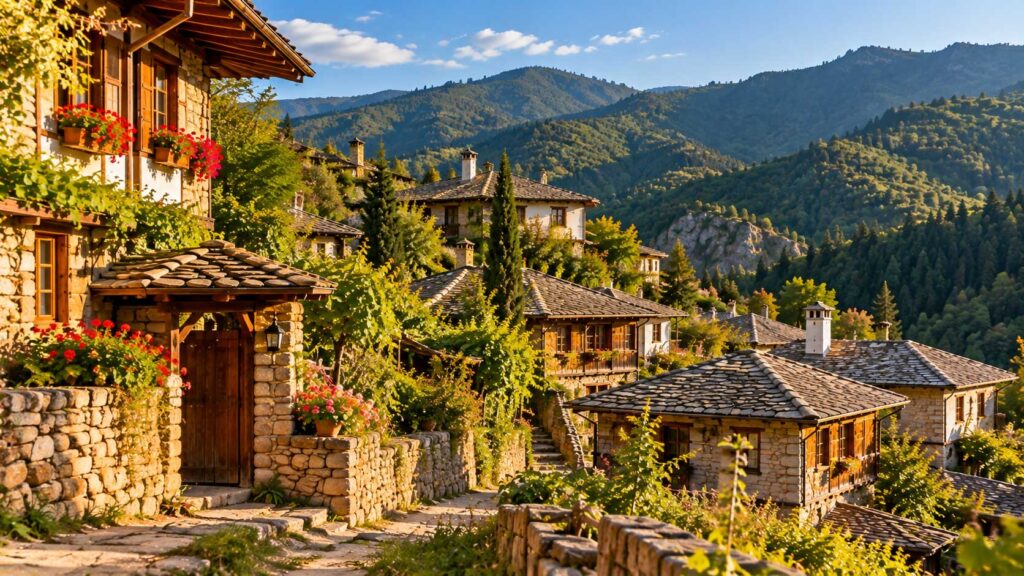
If Kovachevitsa and Leshten are among the better-known traditional villages in southwestern Bulgaria, Dolen feels a little more understated.
That quieter character is part of what makes it such a good choice for slow travel.
Set high in the Western Rhodopes, around 26 kilometers northeast of Gotse Delchev, Dolen is a historic mountain village filled with stone houses, wooden upper floors, slate roofs, and narrow cobbled streets. The village was declared a historical and architectural reserve in 1977, and the protected area includes around 70 Bulgarian Revival-era cultural monuments.
Dolen is not a place where you need to rush between major attractions.
The pleasure comes from walking through the old streets, noticing the houses and courtyards, stopping when something catches your eye, and letting the village reveal itself gradually.
Why Dolen Is Perfect for Slow Travel
Dolen is especially appealing if you want to experience a village that still feels closely connected to its historic surroundings.
The old streets preserve much of their traditional character, while many houses feature classic Bulgarian Revival elements such as stone lower levels, broad wooden upper floors, and decorative wooden ceilings.
As you walk, you will pass vegetable gardens, stone walls, wooden gates, quiet courtyards, and houses partly hidden beneath their heavy roofs.
It feels less like visiting a formal attraction and more like wandering through a mountain village that has simply kept much of its old character.
What to See in Dolen
The best way to explore Dolen is on foot.
Follow the cobbled lanes through the historic part of the village and look for Charshiyska Street, the Kavalite crossroads, and Nikolovska Fountain. These smaller landmarks offer a glimpse into how village life once revolved around streets, water sources, homes, and communal meeting places.
Another important landmark is the Church of St. Nicholas, built in 1834 together with a monastery school. Inside, the church preserves historic icons and an impressive iconostasis from the period.
Still, Dolen is one of those places where the overall atmosphere often stays with you more than any single landmark.
Stay Overnight Instead of Rushing Through
Dolen can easily be combined with Leshten and Kovachevitsa, but trying to see all three in a few rushed hours takes away much of what makes this part of Bulgaria special.
A better option is to choose one village as a base and explore the others at a relaxed pace.
Stay in a traditional village house, enjoy breakfast without watching the clock, and take an evening walk when the streets are almost empty.
Even cloudy or rainy weather can suit Dolen surprisingly well. Mist over the surrounding hills, dark wooden houses, and wet stone roofs can give the village an even more atmospheric feel.
A Good Base for Exploring the Western Rhodopes
From Dolen, you can continue toward Leshten, Kovachevitsa, Ognyanovo, and other places around the Gotse Delchev region.
There is no need to fit everything into one day.
Part of slow travel is giving yourself enough time to enjoy where you are instead of constantly thinking about the next stop.
Best for: Architecture, quiet countryside, photography, couples, and travelers looking for less-touristy villages.
Ideal stay: 1–2 nights.
Best time to visit: May through October, with spring greenery and early autumn especially beautiful.
4. Shiroka Laka – Rhodope Traditions, Stone Bridges, and Long Mountain Afternoons
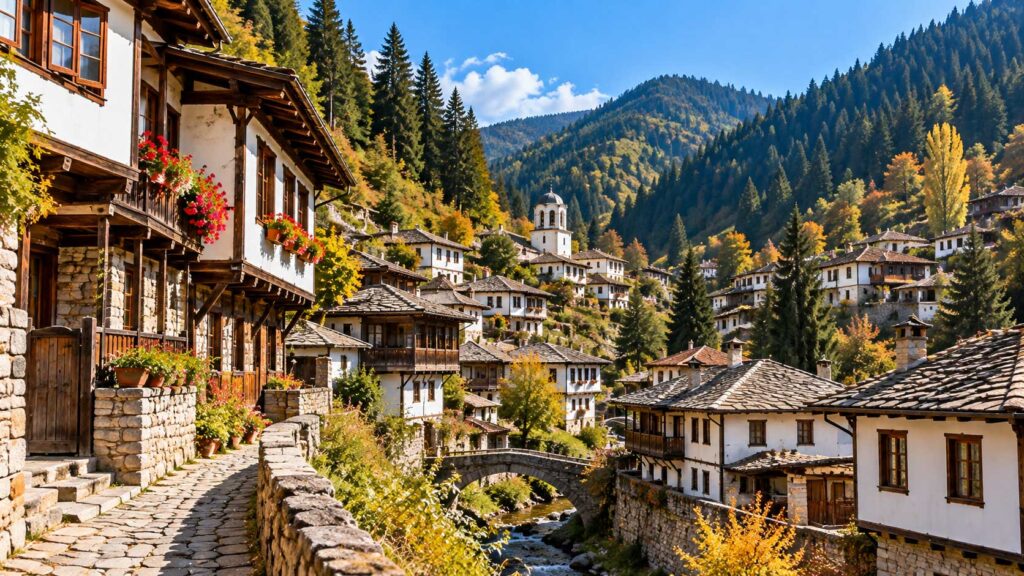
Few villages capture the character of the Rhodope Mountains as well as Shiroka Laka.
Built along a narrow mountain valley, the village is known for its whitewashed Revival-era houses, dark wooden beams, stone roofs, arched bridges, and steep streets climbing toward the surrounding forest. In Shiroka Laka, 97 houses, bridges, and churches are protected as cultural monuments, and some of the oldest houses date from the early 19th century.
Shiroka Laka is better known than some of the smaller places on this list, but it still deserves a spot among the best villages in Bulgaria for slow travel, especially if you stay overnight instead of treating it as a quick stop.
Why Shiroka Laka Is Perfect for Slow Travel
Shiroka Laka has enough to keep you interested without making you feel as though you need to rush.
You can walk beside the river, cross one of the old stone bridges, explore the cobbled lanes between traditional houses, stop for coffee, and spend the rest of the morning simply wandering.
Much of the appeal comes from the village itself.
Traditional Rhodope architecture surrounds you, while forested slopes rise immediately behind the houses. Even an ordinary morning walk can feel special here, especially before the village becomes busier.
Staying overnight also gives you a chance to experience Shiroka Laka after most day visitors have left, when the streets become quieter and the mountain setting feels more pronounced.
Wander Through the Historic Village
The best way to explore Shiroka Laka is on foot.
Many of the traditional houses were built in the characteristic Rhodope style, with stone lower levels, whitewashed walls, wooden details, bay windows, and broad upper floors.
There is no need to follow the most efficient route.
Turn into smaller side streets, cross the old bridges, and look back across the rooftops toward the surrounding mountains. Some of the most memorable views are the ones you find without planning them.
Experience Rhodope Music and Culture
Shiroka Laka is also closely associated with traditional Rhodope music.
That musical tradition is still very much part of village life. Shiroka Laka is home to the National School of Folk Arts, where students study Bulgarian folk singing, instruments, and dance.
The region is especially known for the kaba gaida, the deep-sounding Rhodope bagpipe. Hearing one played in this mountain setting feels completely natural and offers a strong sense of the culture that has shaped the area for generations.
Take a Slow Walk Into the Mountains
Shiroka Laka is surrounded by countryside that is easy to explore on foot.
Several walking routes connect the area with nearby settlements including Gela, Stoykite, and Solishta, making it easy to combine village sightseeing with time in the mountains.
You do not need to turn every walk into a serious hike.
Even a short route beyond the village can lead into forest, open meadows, and quiet mountain scenery where birds, running water, and livestock bells replace the sounds of traffic.
Stay for the Evening
Shiroka Laka is another place where staying overnight can change the experience completely.
Enjoy a long dinner with traditional Rhodope food, walk beside the river in the evening, and watch the lights appear gradually in the houses along the hillsides.
The next morning, head out early before the village becomes busier.
Those quieter hours are often when Shiroka Laka feels most memorable.
Best for: Rhodope culture, traditional architecture, folk music, photography, and mountain walks.
Ideal stay: 1–2 nights.
Best time to visit: May through October for walking and green mountain scenery, although winter can be especially atmospheric when snow settles over the village.
5. Bozhentsi – A Village Made for Wandering Slowly
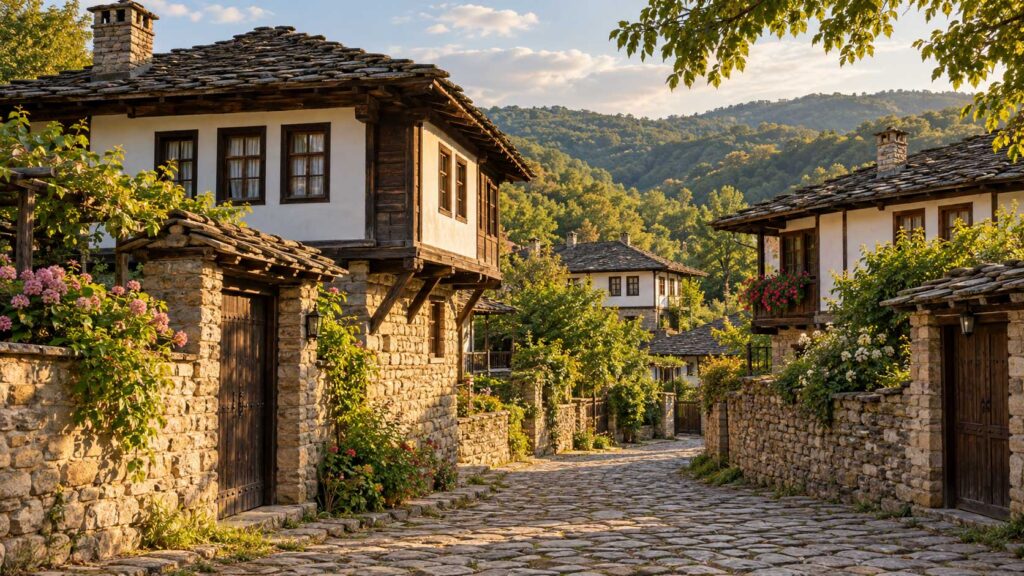
Tucked into the hills north of Gabrovo, Bozhentsi is one of Bulgaria’s most atmospheric villages for travelers who enjoy history, traditional architecture, and quiet countryside.
The village was declared an architectural and historical reserve in 1964 and preserves around a hundred houses from the Bulgarian Revival period. Narrow cobbled streets, stone walls, wooden gates, small bridges, fountains, and old workshops give Bozhentsi a remarkably cohesive historic character.
For travelers interested in history and traditional architecture, Bozhentsi is one of the best villages in Bulgaria for slow travel rather than a place to rush through in an hour.
Much of its charm comes from moving slowly enough to notice the details.
Why Bozhentsi Is Perfect for Slow Travel
Bozhentsi is compact, peaceful, and easy to explore on foot.
Rather than moving quickly between attractions, you can wander through the village at your own pace, stop beside an old stone fountain, admire carved wooden details on the houses, and sit down for a long lunch before continuing.
The surrounding greenery and lack of a busy urban atmosphere make it easy to settle into a quieter rhythm.
Several restored traditional houses also offer accommodation, so staying overnight gives you the chance to experience Bozhentsi after most daytime visitors have left.
That is often when the village feels most peaceful.
Explore the Historic Houses and Streets
The best way to see Bozhentsi is simply to walk.
Follow the cobbled lanes between whitewashed houses and stone walls without worrying too much about where they lead.
Several historic buildings have been turned into museum spaces.
The Baba Rayna House Museum is one of the oldest preserved buildings in the village and contains an ethnographic exhibition focused on 18th-century life. Nearby, the Doncho Popov House Museum presents the home of a prosperous 19th-century merchant family.
You can also visit the Mengema, a traditional wax-cleaning workshop dating from the early 19th century, along with the old monastery school.
Another important landmark is the Church of St. Prophet Elijah, built around 1839–1840 and closely connected with the history of the village.
None of these places takes very long to visit on its own, but together they help tell the story of Bozhentsi and the people who once lived and worked here.
Enjoy Traditional Food Without Rushing
Bozhentsi is also a good place to make a long meal part of the day rather than just a stop between sights.
Traditional Bulgarian dishes feel especially fitting here, whether you eat in a rustic tavern or at a guesthouse serving homemade food.
Leave enough time for coffee, lunch, or dinner to become part of the experience rather than something you squeeze in before moving on.
Walk Beyond the Village
Bozhentsi works well for travelers who want to combine village life with easy countryside walks.
Several routes pass through the surrounding forests and hills, including paths that connect the wider area around Gabrovo and Dryanovo.
Even a short walk beyond the historic center gives you a different perspective.
Within minutes, the houses begin to disappear behind trees and the surrounding countryside takes over.
Stay Overnight for the Best Experience
Many visitors see Bozhentsi as a day trip from Gabrovo or Veliko Tarnovo.
That works, but spending a night here suits the village much better.
Take an evening walk when the cobbled streets are nearly empty, enjoy dinner without watching the clock, and head out early the next morning before the village becomes busier.
Those quieter hours are often the ones that stay with you.
Best for: Bulgarian Revival architecture, couples, history, photography, and relaxed countryside weekends.
Ideal stay: 1–2 nights.
Best time to visit: Spring and autumn for comfortable walks and beautiful countryside, although winter can make the old houses especially atmospheric.
6. Zheravna – Wooden Houses, Cobbled Lanes, and Old Balkan Mountain Traditions
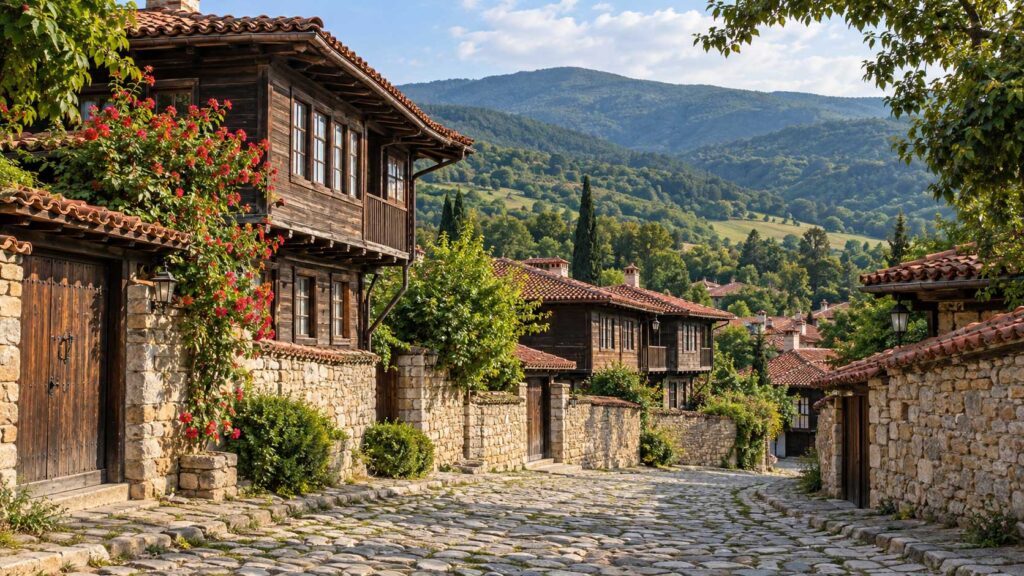
Set in the Balkan Mountains near Kotel, Zheravna is one of Bulgaria’s best-preserved historic villages and a wonderful place to experience the country at a gentler pace.
The village became an architectural reserve in 1964, when 172 houses were officially designated as cultural values. Dark wooden Revival-era houses, red-tiled roofs, stone walls, narrow cobbled lanes, and old drinking fountains still define the historic center today.
Zheravna is best enjoyed on foot.
Instead of wide streets and busy sightseeing routes, you move between old wooden houses, quiet courtyards, fountains, churches, and small museums, with the surrounding hills appearing between the rooftops.
Why Zheravna Is Perfect for Slow Travel
Zheravna has enough history and character to fill a full day without ever making you feel rushed.
Spend the morning wandering through the old streets, stop for coffee somewhere quiet, visit one or two historic houses, and then head out again later when the afternoon light changes the look of the wooden façades.
Many local guesthouses are set inside restored Revival-period buildings rather than modern hotels, which makes staying overnight especially appealing.
Once most day visitors have left, the village becomes noticeably quieter.
Wander Without a Strict Route
The best way to discover Zheravna is simply to follow whichever cobbled lane catches your attention.
Many of the houses have broad wooden upper floors, carved details, stone foundations, deep rooflines, and enclosed courtyards. Small fountains also appear throughout the village, supplied by springs in the surrounding area.
You could easily spend an hour walking and photographing architectural details without entering a single museum.
The streets themselves are a big part of the experience.
Visit the House Museums
Zheravna has several small museums that offer a closer look at village life and culture during the Bulgarian National Revival.
One of the most important is the Yordan Yovkov House Museum, the birthplace of the celebrated Bulgarian writer. The exhibition explores Yovkov’s connection with Zheravna and the village landscapes and characters that later found their way into his writing.
You can also visit the Sava Filaretov House and the Rusi Chorbadzhi House, both part of the Historical Museum’s collection in Zheravna.
Because the museums are relatively small, they fit easily into a relaxed day of exploring.
See the Church of St. Nicholas
The Church of St. Nicholas, built in 1834, is another important historic landmark in the village.
Inside, you can see icons, church objects, and stone carvings connected with the religious and artistic traditions of the region.
The church is easy to include as part of a walk through the historic center rather than treating it as a separate excursion.
Stay Long Enough to See Zheravna Quiet Down
Zheravna can easily be visited as a day trip from Kotel or Sliven, but spending the night gives you a very different experience.
As evening settles in, the cobbled lanes empty, the wooden houses darken against the surrounding hills, and the village feels far removed from Bulgaria’s busier destinations.
Wake up early the next morning and take another walk before breakfast.
Those quiet hours may end up being some of the most memorable moments of your visit.
Best for: Traditional architecture, Bulgarian history, photography, crafts, and romantic countryside stays.
Ideal stay: 1–2 nights.
Best time to visit: May through October. Late spring and early autumn are particularly pleasant for comfortable temperatures and fewer visitors.
7. Arbanasi – Historic Houses and Slow Mornings Above Veliko Tarnovo
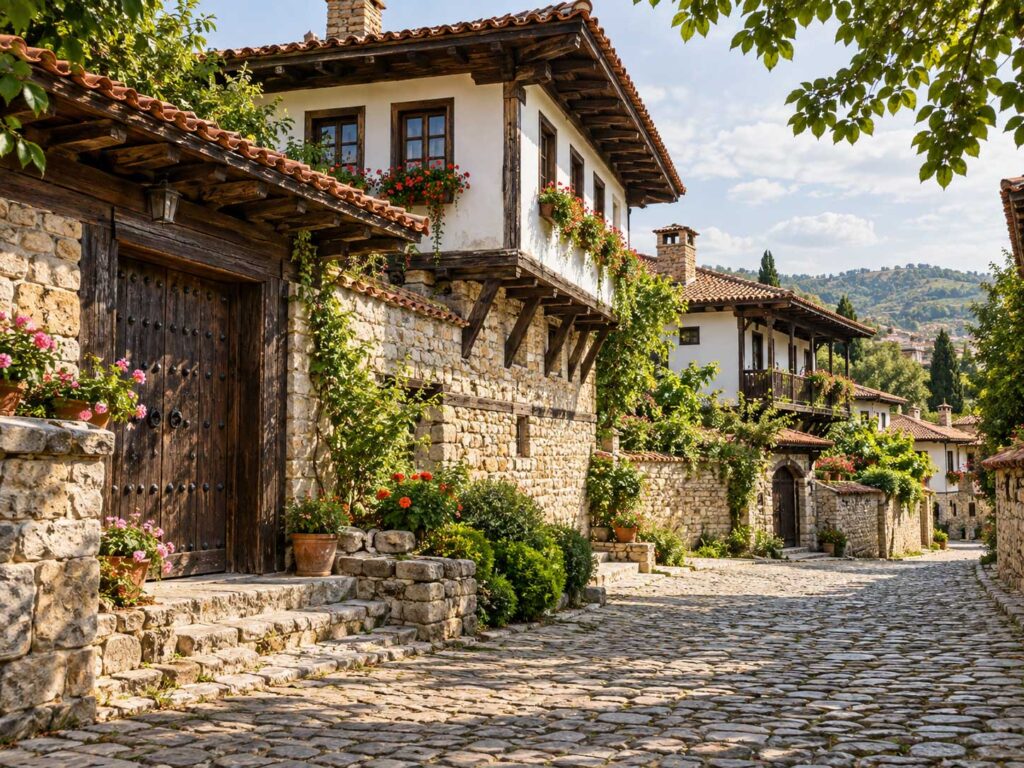
Just a few kilometers from Veliko Tarnovo, Arbanasi offers a very different village experience from the mountain settlements elsewhere on this list.
The village sits on a high plateau overlooking the surrounding landscape, with old stone houses, fortified walls, quiet courtyards, churches, and monasteries giving it a distinctly historic character.
Arbanasi grew wealthy through trade during the Ottoman period, and many of its merchant houses were built almost like small fortresses. Their exteriors are solid and restrained, while the interiors can be surprisingly elaborate, with carved woodwork, decorated ceilings, built-in furniture, and enclosed courtyards.
Why Arbanasi Works So Well for Slow Travel
Because Arbanasi is so close to Veliko Tarnovo, many visitors treat it as a short side trip.
Spending more time here gives you a very different impression.
You can walk between historic houses, sit in leafy courtyards, visit old churches, and enjoy a long lunch without needing to cover much distance. The village is compact enough to explore on foot, but there is still enough to see to fill an easygoing day.
That balance makes Arbanasi especially well suited to travelers who prefer not to rush.
Explore the Old Merchant Houses
One of the most interesting things about Arbanasi is the contrast between the outside and inside of its historic homes.
A particularly good example is the Konstantsalieva House, built at the end of the 17th century and now operated as an ethnographic museum. Its high stone walls and fortress-like exterior are characteristic of the distinctive residential architecture that developed in Arbanasi.
Inside, the atmosphere changes completely. The rooms offer a glimpse into the lives of the wealthy merchant families who lived here, with traditional furnishings and spaces arranged around the needs of a prosperous household.
You do not need to visit every historic house in the village. One or two well-preserved examples are enough to appreciate what made Arbanasi’s architecture so distinctive.
Step Inside the Historic Churches
Arbanasi is also known for its remarkable historic churches.
The Church of the Nativity of Christ is the earliest and most richly decorated surviving church in the village, with its oldest layer of wall paintings dating from the end of the 16th century.
The Church of Saints Archangels Michael and Gabriel is another important example. The building took shape over several stages, with much of the surviving church dating from the 17th century.
Their relatively restrained exteriors make the richly painted interiors even more striking. From the street, these churches can look surprisingly modest compared with what waits inside.
Visit the Monasteries
Important religious sites around Arbanasi include the Monastery of St. Nicholas and the Monastery of the Assumption of the Mother of God.
The latter is associated with the icon known as the Three-Handed Mother of God, while the St. Nicholas monastery preserves historic religious objects and carved details.
You do not need to visit every church and monastery in a single day.
Choose the ones that interest you most and leave enough time to enjoy the quieter atmosphere around them.
Combine Arbanasi With Veliko Tarnovo
Arbanasi and Veliko Tarnovo fit naturally into the same trip.
You could spend one day exploring the old capital, Tsarevets, and its hillside neighborhoods, then give Arbanasi the following morning or afternoon rather than squeezing both destinations into a rushed schedule.
If you have more time, spend a night in the village.
Once the daytime traffic fades and the streets grow quieter, Arbanasi feels much farther removed from Veliko Tarnovo than the short distance between them suggests.
Take Time for the View
Because Arbanasi sits above the surrounding landscape, part of the pleasure is simply enjoying the setting.
Find a terrace or quiet viewpoint, order coffee, and take some time to look toward the nearby hills and Veliko Tarnovo.
There may be more famous attractions only a few kilometers away, but you do not need to see all of them in the same day.
Sometimes the best part of a slow trip is deciding to stay exactly where you are.
Best for: Historic architecture, churches, couples, cultural travel, and combining village life with Veliko Tarnovo.
Ideal stay: 1–2 nights.
Best time to visit: April through October, with late spring and early autumn especially pleasant for walking.
8. Gela – Meadows, Mountain Trails, and the Quiet Heart of the Rhodopes
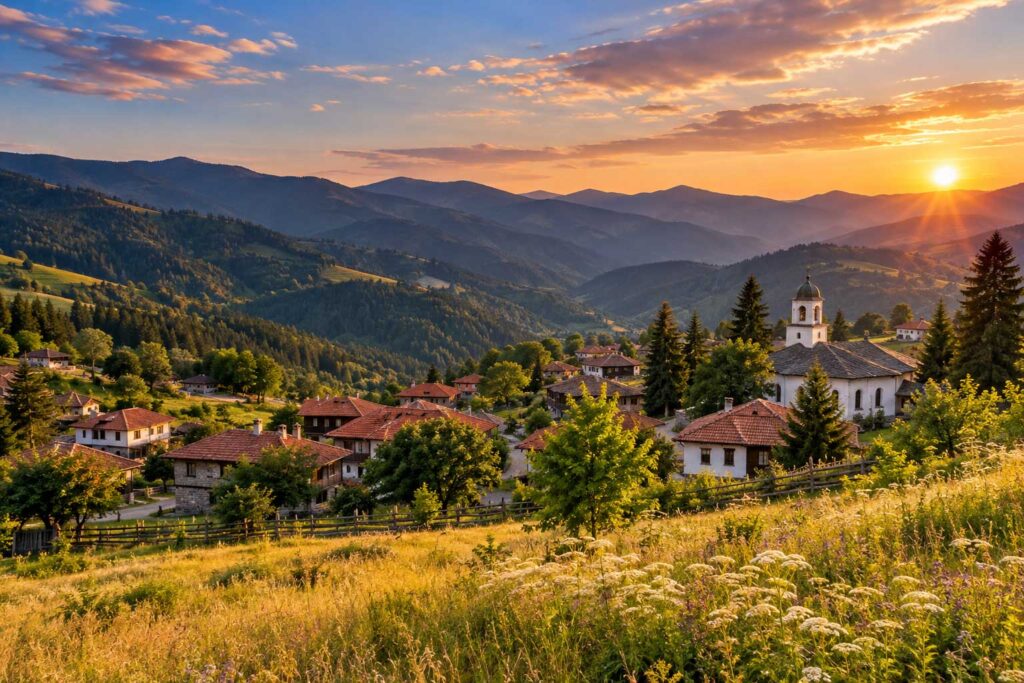
High in the Rhodope Mountains, not far from Shiroka Laka, Gela is the kind of village where slowing down feels completely natural.
Scattered across broad mountain meadows and surrounded by forest, Gela feels more open than many of Bulgaria’s compact historic villages. Houses are spread across the landscape rather than clustered around a single center, giving the area a peaceful, spacious atmosphere.
The village sits at around 1,400–1,500 meters above sea level and is only about 5 kilometers from Shiroka Laka. Its setting among high peaks and broad meadows is a large part of what makes Gela so appealing.
Why Gela Is Perfect for Slow Travel
Gela is not really a village you visit for a long list of landmarks.
The surrounding landscape is the main reason to come, and for travelers who prefer mountains and nature, Gela is easily one of the best villages in Bulgaria for slow travel.
Forests, meadows, scattered houses, and mountain ridges create the kind of setting where spending a few days in one place feels completely reasonable. You can wake up to mountain views, choose a walking route in the morning, and leave the rest of the day open.
There is no need to plan every hour.
Sometimes the best part of being in Gela is simply finding a quiet place with a view and staying there longer than you expected.
Walk Straight From the Village
One of Gela’s biggest advantages is that you do not necessarily need to drive somewhere before starting a walk.
Routes lead directly from the village into the surrounding mountains, while longer trails connect this part of the Rhodopes with nearby places such as Shiroka Laka and Solishta.
You can make the day as active or relaxed as you like.
Spend several hours hiking toward panoramic viewpoints, or follow a quiet road past meadows, forest edges, and grazing animals before returning for lunch.
You do not need to reach a summit for the walk to feel worthwhile. Even an hour outside can be enough when the scenery is this good.
Experience Rhodope Traditions
Gela also has a strong connection with traditional Rhodope music.
The wider region is closely associated with the kaba gaida, the deep-sounding bagpipe that has become one of the cultural symbols of the Rhodopes.
Each summer, Gela becomes much livelier during the National Bagpipe Competition, when musicians and visitors gather on the mountain meadows to celebrate the sound of the Rhodope kaba gaida and local folklore.
Outside those festival periods, the village returns to the quieter rhythm that makes it so appealing for a slow trip.
If you are coming mainly for peace, nature, and walking, visiting outside the busiest festival weekends will give you a very different experience.
Enjoy Traditional Rhodope Food
Gela is also a good place to slow down over a proper mountain meal.
Traditional Rhodope cuisine includes dishes such as patatnik, katmi, klin, local cheeses, trout, and roasted meats. Bulgaria’s tourism materials highlight regional food as an important part of experiencing the Rhodopes at a slower pace.
A homemade dinner at a family-run guesthouse can easily become one of the most memorable parts of the stay, especially after a long afternoon outside.
Stay for More Than One Night
Gela is easy to combine with Shiroka Laka, but there is no need to hurry between the two.
Spend a couple of nights here if you can.
Use one day for walking, another for exploring nearby villages, and leave some time with no particular plan at all.
In the evening, as the mountains darken and lights begin appearing in the scattered houses across the meadows, Gela feels wonderfully remote.
On a clear night, you may find yourself staying outside much longer than expected.
Best for: Mountain scenery, hiking, traditional culture, nature, and travelers looking for genuine peace.
Ideal stay: 2–3 nights.
Best time to visit: Late spring through early autumn for hiking and green mountain landscapes. Winter offers a much quieter version of Gela, often surrounded by snow.
9. Brashlyan – Slow Village Life in the Wild Strandzha Mountains
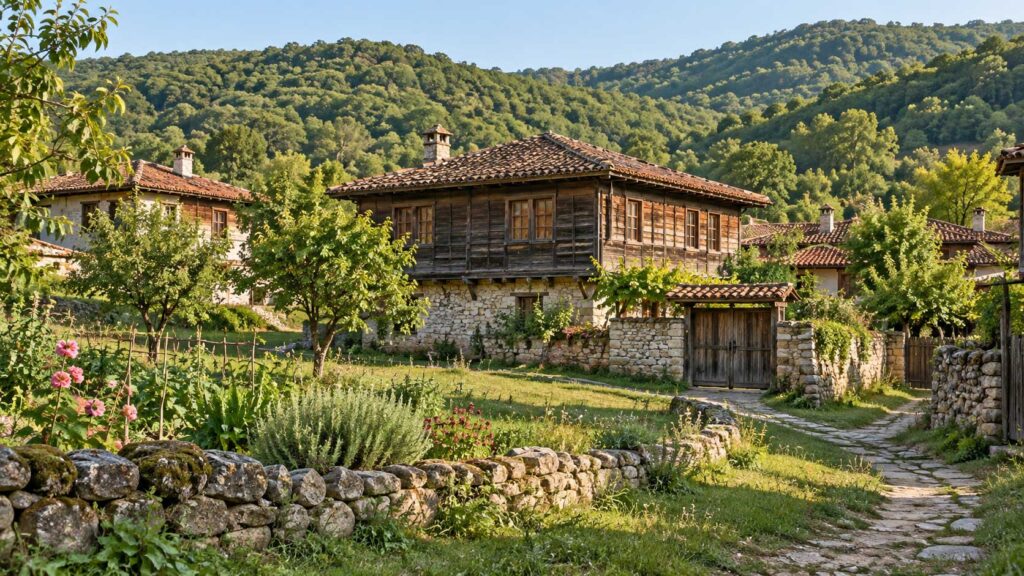
Deep in southeastern Bulgaria, surrounded by the forests of the Strandzha Mountains, Brashlyan offers a very different kind of slow-travel experience.
You will not find dramatic alpine peaks or streets lined with souvenir shops here. Instead, the village is surrounded by greenery, quiet lanes, small chapels, forest paths, traditional houses, and landscapes that feel far removed from Bulgaria’s busier tourist routes.
Brashlyan is considered one of the architectural highlights of Strandzha. Many of its traditional houses follow the regional style, with stone-and-timber lower levels, wooden upper floors, exterior staircases, and enclosed gardens.
For travelers looking for somewhere genuinely peaceful, that is a big part of the appeal.
Why Brashlyan Is Perfect for Slow Travel
Brashlyan is not a village you visit because you have a long list of famous attractions to check off.
Its appeal comes from having time to enjoy ordinary moments. You can have breakfast outside, walk through the village, follow a forest trail, stop for lunch, and spend another hour over coffee without feeling that you should already be somewhere else.
That slower rhythm, together with the surrounding forests and traditional architecture, makes Brashlyan one of the best villages in Bulgaria for slow travel if you want somewhere quieter and less touristy.
Walk Through the Old Village
Start with an easy walk through Brashlyan itself.
Look for traditional Strandzha houses with stone foundations, dark timber, exterior staircases, gardens, and high fences.
Some buildings are beautifully restored, while others clearly show their age. That mix gives Brashlyan a more lived-in feeling than villages that seem almost too polished.
One of the main landmarks is the Church of St. Demetrius, while the monastery school beside it was founded in 1871. The village also preserves an ethnographic house-museum devoted to traditional life and crafts in Strandzha.
Explore the Forests of Strandzha
One of the best reasons to spend time in Brashlyan is the landscape surrounding it.
The village lies within the wider Strandzha Nature Park region, a large protected area of forests, river valleys, villages, historic sites, and walking routes.
Several trails around Brashlyan lead through the countryside toward chapels and quiet forest areas, making it easy to combine village life with a few hours outdoors.
You do not need to turn every walk into a serious hike.
Choose a route, bring water, and enjoy the forest at a comfortable pace.
In spring and early summer, the landscape is intensely green. By autumn, the woodland takes on warmer colors and gives the region a completely different atmosphere.
Discover the Traditions of Strandzha
Brashlyan is also a good base for learning more about Strandzha culture, with its distinctive architecture, food, folklore, customs, and local legends.
The region is especially famous for nestinarstvo, the traditional fire-dancing ritual performed barefoot over glowing embers. The custom was historically practiced in a number of communities across Strandzha, but today the UNESCO-inscribed tradition is closely associated with the village of Bulgari, where the annual ritual continues around the feast of Saints Constantine and Helena.
Even if your visit does not coincide with the celebration, traveling through the villages of Strandzha offers a glimpse of a cultural region that many international visitors never reach.
Turn It Into a Slow Strandzha Road Trip
Brashlyan becomes even more rewarding when you give the wider Strandzha region more than a single day.
Nearby villages such as Balgari, Kosti, Stoilovo, Gramatikovo, and Brodilovo can all fit into a slower road trip through southeastern Bulgaria.
You can also continue toward the Veleka River and the Black Sea coast near Sinemorets, combining traditional villages, forest landscapes, rivers, and beaches in one trip.
Rather than trying to fit everything into a single afternoon, spend a few days in the region and explore it gradually.
Strandzha is one of those places that makes more sense the less you rush.
Best for: Forests, traditional culture, rural escapes, walking, photography, and travelers looking for somewhere less touristy.
Ideal stay: 1–2 nights, or longer as part of a Strandzha road trip.
Best time to visit: Late spring through autumn, with spring greenery and early autumn especially beautiful for walking.
10. Mogilitsa – Stone Houses, Quiet Valleys, and a Hidden Corner of the Rhodopes
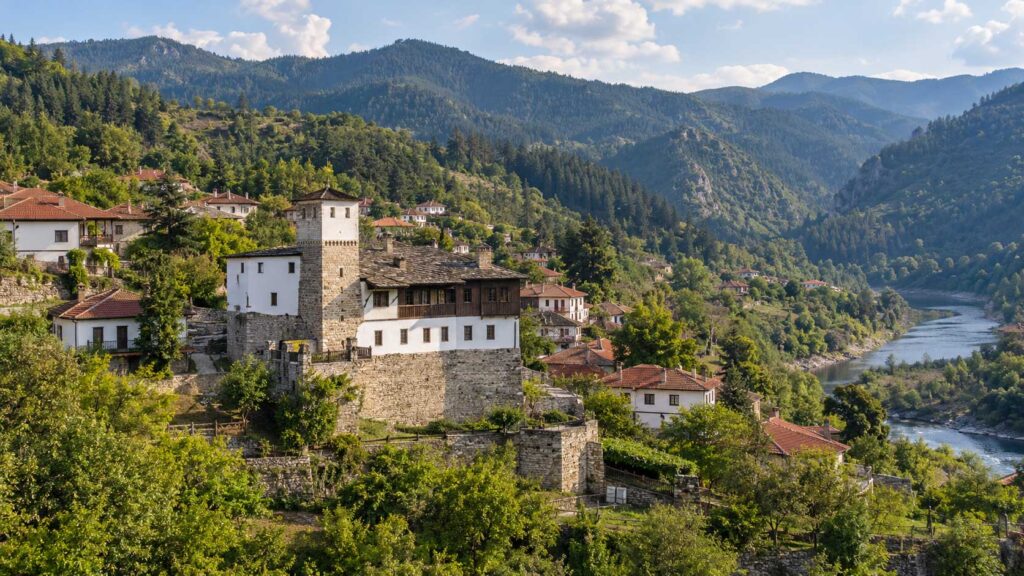
For the final village on this list, Mogilitsa takes us back into the Rhodope Mountains, this time to a part of the region that many international travelers never reach.
Set in the mountains southwest of Smolyan, Mogilitsa lies along the upper Arda River at roughly 920–950 meters above sea level. The village is surrounded by wooded slopes, small settlements, caves, and mountain routes, giving it the relaxed atmosphere that makes this part of the Rhodopes so well suited to slow travel.
Mogilitsa is also home to Agushevi Konatsi, the remarkable fortified residential complex that has become the village’s best-known historic landmark.
You do not need a long sightseeing list to enjoy Mogilitsa.
Spend time walking through the village, enjoy a slow meal, head into the surrounding countryside, and use the area as a base for exploring this quieter corner of the mountains.
Why Mogilitsa Is Perfect for Slow Travel
Mogilitsa brings together three things that work especially well on a slower trip: village life, history, and easy access to nature.
You can spend the morning exploring the village and its main historic landmark, stop for a long lunch, and then head into the surrounding countryside for the afternoon.
There is little reason to hurry.
The wider area around Mogilitsa, Smilyan, and Arda has more than 20 marked routes for hiking, cycling, and horseback riding, along with caves and other natural attractions.
There is enough nearby to fill several days without needing to repeat the same experience.
See the Remarkable Agushevi Konatsi
Mogilitsa’s best-known landmark is Agushevi Konatsi, an impressive fortified residential complex built during the first half of the 19th century.
The complex contains three connected courtyards surrounded by residential and agricultural buildings, with an extraordinary 221 windows, 86 doors, and 24 chimneys.
From the outside, parts of Agushevi Konatsi resemble a small fortress.
Thick walls, stone construction, towers, wooden details, and enclosed courtyards make the complex very different from the traditional village houses found elsewhere in the Rhodopes.
Agushevi Konatsi was declared a cultural monument of national importance in 1964.
The property is privately owned, and published opening information can vary, so check the official Agushevi Konatsi website before making a special trip.
Spend the Afternoon Outdoors
Mogilitsa becomes even more interesting once you start exploring the surrounding landscape.
This part of the Rhodopes is filled with limestone formations, caves, forest paths, river valleys, and quiet mountain roads.
Nearby Uhlovitsa Cave is one of the best-known natural attractions in the area, while the wider Smilyan region offers an extensive network of ecological trails.
You do not need to fit several attractions into the same afternoon.
Choose one walk or natural site, take your time, and return to the village before dinner rather than spending the day rushing from stop to stop.
Discover the Villages Around Mogilitsa
Mogilitsa also works well as part of a longer journey through the southern Rhodopes.
Nearby Smilyan is famous for its local beans and makes an easy addition, while the villages around Arda offer more countryside, walking routes, and mountain scenery.
There are enough small destinations in this part of Bulgaria to spend several days exploring without needing a packed itinerary.
Instead of changing accommodation every night, consider choosing one village as a base and making short trips from there.
You will spend less time packing and driving and more time actually enjoying the mountains.
Stay for the Quiet Evenings
One of the pleasures of rural Bulgaria is seeing how a village changes toward the end of the day.
The mountain slopes darken, gardens become quiet, lights begin appearing in houses, and the sound of traffic fades.
These simple moments rarely make lists of Bulgaria’s top attractions, but they are a big part of what makes places like Mogilitsa worth staying for.
If you have the time, spend at least one evening here rather than leaving as soon as the sightseeing is finished.
Best for: Rhodope scenery, historic architecture, hiking, caves, rural culture, and travelers seeking lesser-known places.
Ideal stay: 2 nights, or 3–4 nights if you use the area as a base for exploring the southern Rhodopes.
Best time to visit: May through October for hiking and countryside exploration, with September particularly pleasant for cooler temperatures and a quieter atmosphere.
Frequently Asked Questions About Slow Travel in Bulgarian Villages
What are the best villages in Bulgaria for slow travel?
Some of the best villages in Bulgaria for slow travel are Kovachevitsa, Leshten, Dolen, Shiroka Laka, Bozhentsi, Zheravna, Arbanasi, Gela, Brashlyan, and Mogilitsa.
They offer very different experiences, from stone villages in the Rhodopes and Revival-era architecture to forest walks, traditional food, local culture, and peaceful countryside stays.
How many days should I spend in a Bulgarian village?
For most villages, one or two nights gives you enough time to explore without rushing.
Places such as Gela and Mogilitsa are worth staying longer if you plan to hike or explore nearby villages and natural attractions. In those areas, two to four nights can work very well.
Which Bulgarian villages are best for traditional architecture?
Kovachevitsa, Dolen, Bozhentsi, Zheravna, Shiroka Laka, and Arbanasi are among the best choices for traditional Bulgarian architecture.
Depending on the region, you will see stone houses, wooden upper floors, cobbled streets, enclosed courtyards, old churches, fountains, and beautifully preserved buildings from the Bulgarian National Revival period.
Which villages in Bulgaria are best for hiking?
Gela, Shiroka Laka, Mogilitsa, Kovachevitsa, and Brashlyan are all good choices if you want to combine village life with walking or hiking.
The Rhodopes offer mountain meadows, forests, caves, waterfalls, and scenic trails, while Brashlyan gives you access to the forests and quieter landscapes of Strandzha.
Can I visit Bulgarian villages without a car?
Yes, but having a rental car makes exploring rural Bulgaria much easier.
Public transport reaches some villages, but connections can be limited, especially in mountain regions. A car also gives you the freedom to combine nearby villages, stop at viewpoints, and travel without planning your day around bus schedules.
Once you arrive, however, most of the historic villages on this list are best explored on foot.
What is the best time of year to visit Bulgarian villages?
May, June, September, and early October are some of the best months for exploring Bulgarian villages.
Temperatures are usually comfortable for walking, the countryside is beautiful, and popular villages tend to be quieter than during the busiest summer weeks.
July and August are also good months, particularly in the mountains. Winter offers a very different experience, with snow adding plenty of atmosphere to villages in the Rhodopes and Balkan Mountains.
Are Bulgarian villages expensive to visit?
Many rural parts of Bulgaria still offer good value compared with more heavily visited European destinations.
Prices vary by village and season, but family-run guesthouses and local restaurants can often be reasonably priced. Staying several nights in one area can also reduce the amount of money you spend on transportation.
Is English widely spoken in Bulgarian villages?
Do not expect everyone in a small Bulgarian village to speak English.
People working in guesthouses, restaurants, and tourism are more likely to know some English, while older residents may speak little or none.
Learning a few basic Bulgarian words can be useful and is usually appreciated. Even a simple “blagodarya” (thank you) can go a long way.
Are Bulgarian villages good for couples?
Yes. Leshten, Kovachevitsa, Bozhentsi, Zheravna, and Shiroka Laka are particularly good choices for couples looking for a quiet countryside escape.
Traditional guesthouses, mountain views, cobbled streets, long dinners, fireplaces in cooler weather, and peaceful evenings make these villages especially appealing for a weekend or short romantic trip.
What should I pack for a Bulgarian village trip?
Bring comfortable walking shoes, especially if you plan to visit historic villages with steep or uneven cobbled streets.
Layers are useful in mountain areas because temperatures can change quickly. A light rain jacket, reusable water bottle, sunscreen, and small daypack are also worth bringing if you plan to walk or hike.
In spring and autumn, evenings in the mountains can be much cooler than the daytime temperature suggests.
Why Bulgaria’s Villages Are Perfect for Slow Travel
The best villages in Bulgaria for slow travel are not places you visit just to take a few photos and move on.
They become more rewarding when you give them time.
In Kovachevitsa, Leshten, and Dolen, that might mean wandering through stone houses and quiet Rhodope lanes. In Bozhentsi and Zheravna, you can spend an afternoon exploring Revival-era architecture before settling in for a long traditional meal. In Gela and Mogilitsa, the surrounding mountains, meadows, and walking trails are just as much a part of the experience as the villages themselves.
Then there is Brashlyan, where the forests and traditions of Strandzha reveal a very different side of rural Bulgaria, and Arbanasi, where historic houses, churches, and monasteries sit only a few kilometers from Veliko Tarnovo.
What connects all of these places is the chance to travel at a different pace.
Instead of trying to fit three or four destinations into a single day, choose one village and stay for the evening. Walk without constantly checking your map. Eat at a family-run guesthouse. Buy honey, preserves, or another local product. Sit outside with coffee and leave part of the day completely unplanned.
Traveling this way gives you time to notice the small things that are easy to miss when you are rushing: water running from an old village fountain, smoke rising from a chimney, worn wooden balconies, bells carrying across a valley, or a quiet conversation with someone who has lived there for decades.
You also do not need to visit all ten villages on one trip.
Choose a region and explore it properly.
Spend a few days around Kovachevitsa, Leshten, and Dolen, or build a Rhodope itinerary around Shiroka Laka, Gela, and Mogilitsa. Combine Bozhentsi and Arbanasi with a trip through central Bulgaria, or dedicate several days to the forests and villages of Strandzha.
Bulgaria has no shortage of places worth seeing, but some of the most memorable experiences happen when you stop trying to see everything.
Choose a village, stay a little longer than planned, and give yourself time to experience Bulgaria at a slower pace.
More Bulgarian Villages to Explore
If you want to keep exploring rural Bulgaria, these guides can help you discover more traditional villages, mountain escapes, and lesser-known places around the country:
- 15 Most Charming Villages in Bulgaria – A collection of beautiful villages known for traditional architecture, mountain scenery, old streets, and local character.
- 10 Fairy-Tale Villages in Bulgaria to Visit – Discover picturesque villages with stone houses, cobbled lanes, wooden balconies, and historic surroundings.
- 20 Beautiful Bulgarian Villages You Should See – Explore a wider selection of scenic villages from different regions of Bulgaria.
- 12 Hidden Villages in Bulgaria Most Tourists Miss – Find quieter places away from the country’s more familiar tourist routes.
- 10 Mountain Villages in Bulgaria for a Peaceful Escape – Head into the Rhodopes, Balkan Mountains, and other highland regions for fresh air, hiking, and quiet village stays.
- 12 Traditional Bulgarian Villages Where Time Stands Still – Discover villages where old architecture, local traditions, and a slower pace of life are still easy to experience.
- 10 Most Romantic Villages and Small Towns in Bulgaria – Find atmospheric places for couples, countryside weekends, and peaceful escapes.
- Best Bulgarian Villages for Photography – Explore villages with stone houses, mountain backdrops, historic streets, and some of the country’s most photogenic rural scenery.
- Beautiful Villages Near Sofia for a Weekend Escape – Find easy village trips from the capital for a day out or relaxed weekend away.