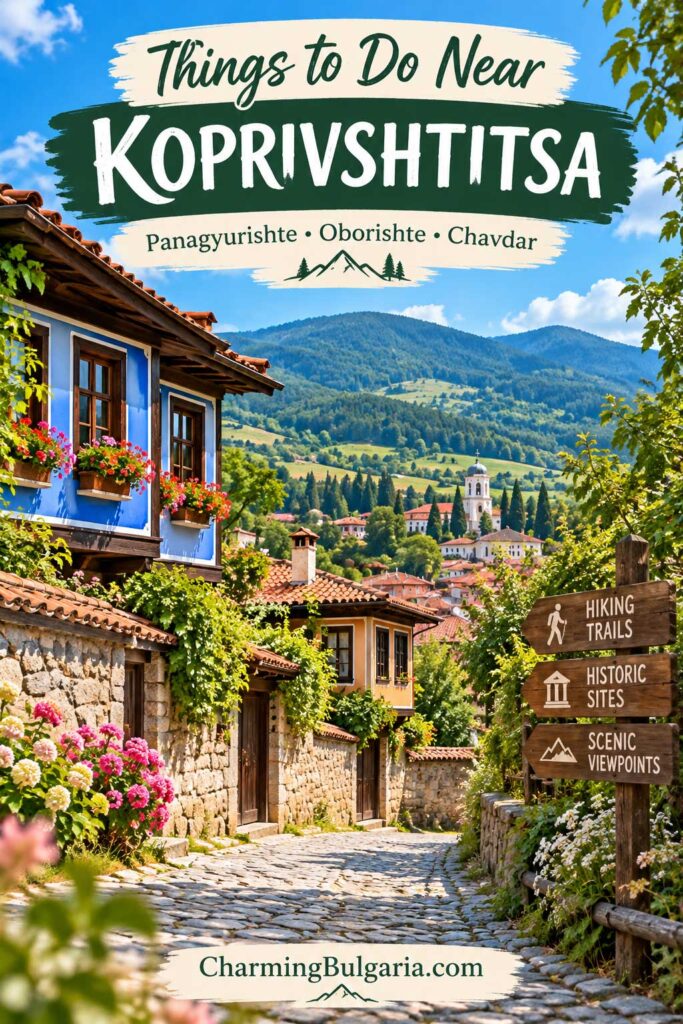
Few places capture the spirit of the Bulgarian National Revival as beautifully as Koprivshtitsa, Bulgaria.
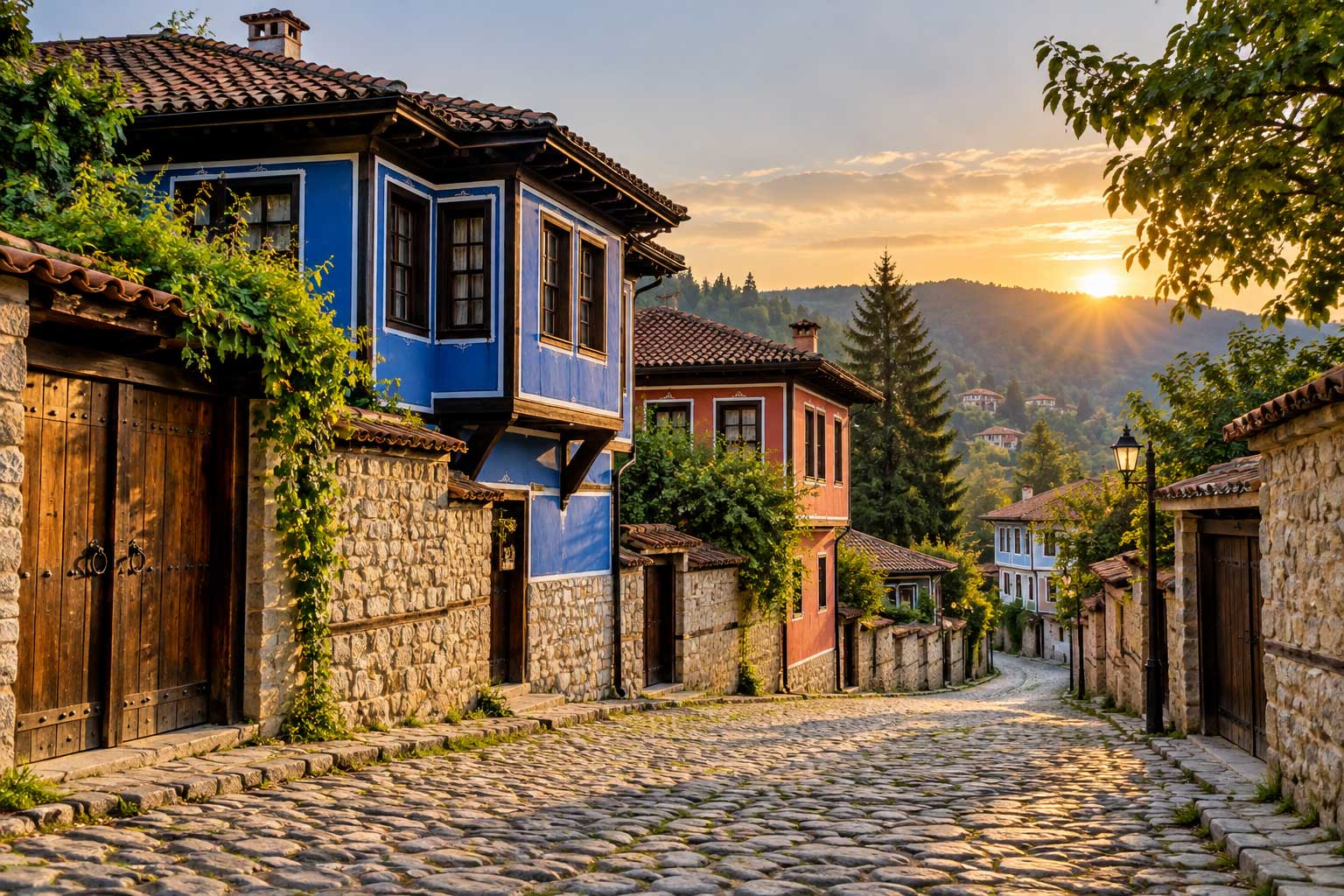
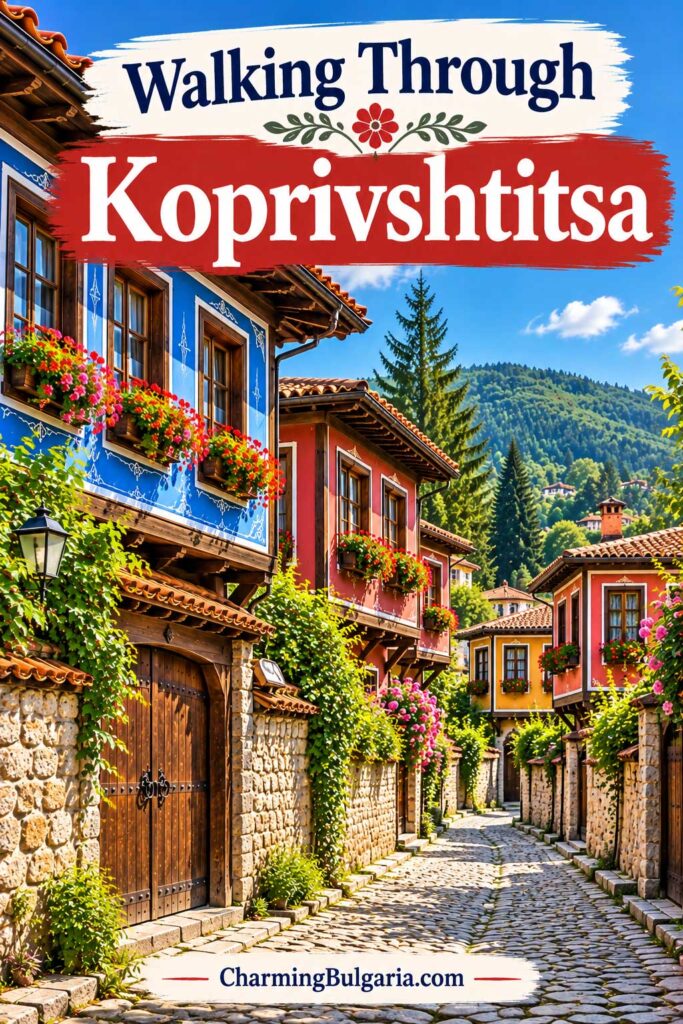
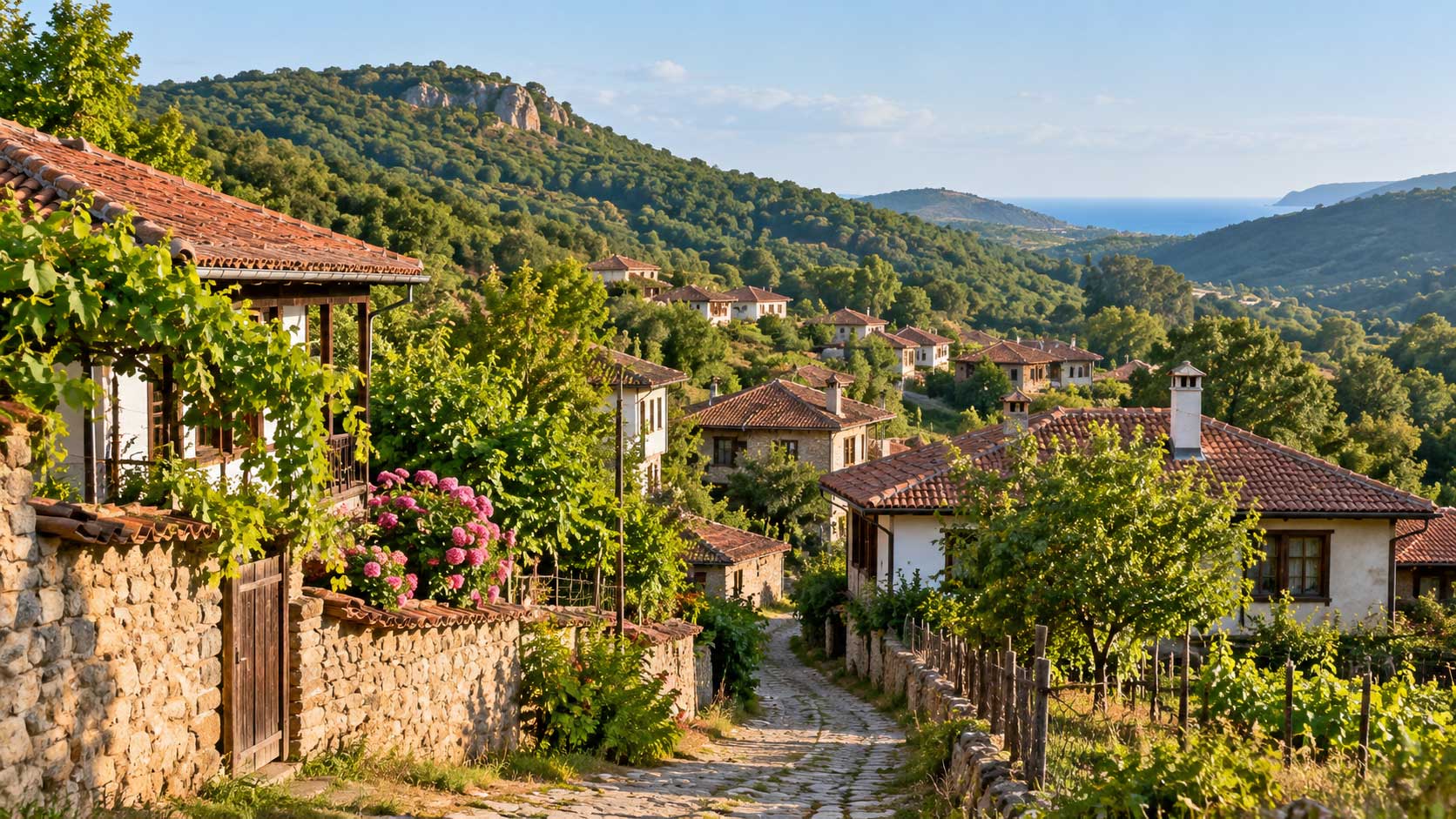
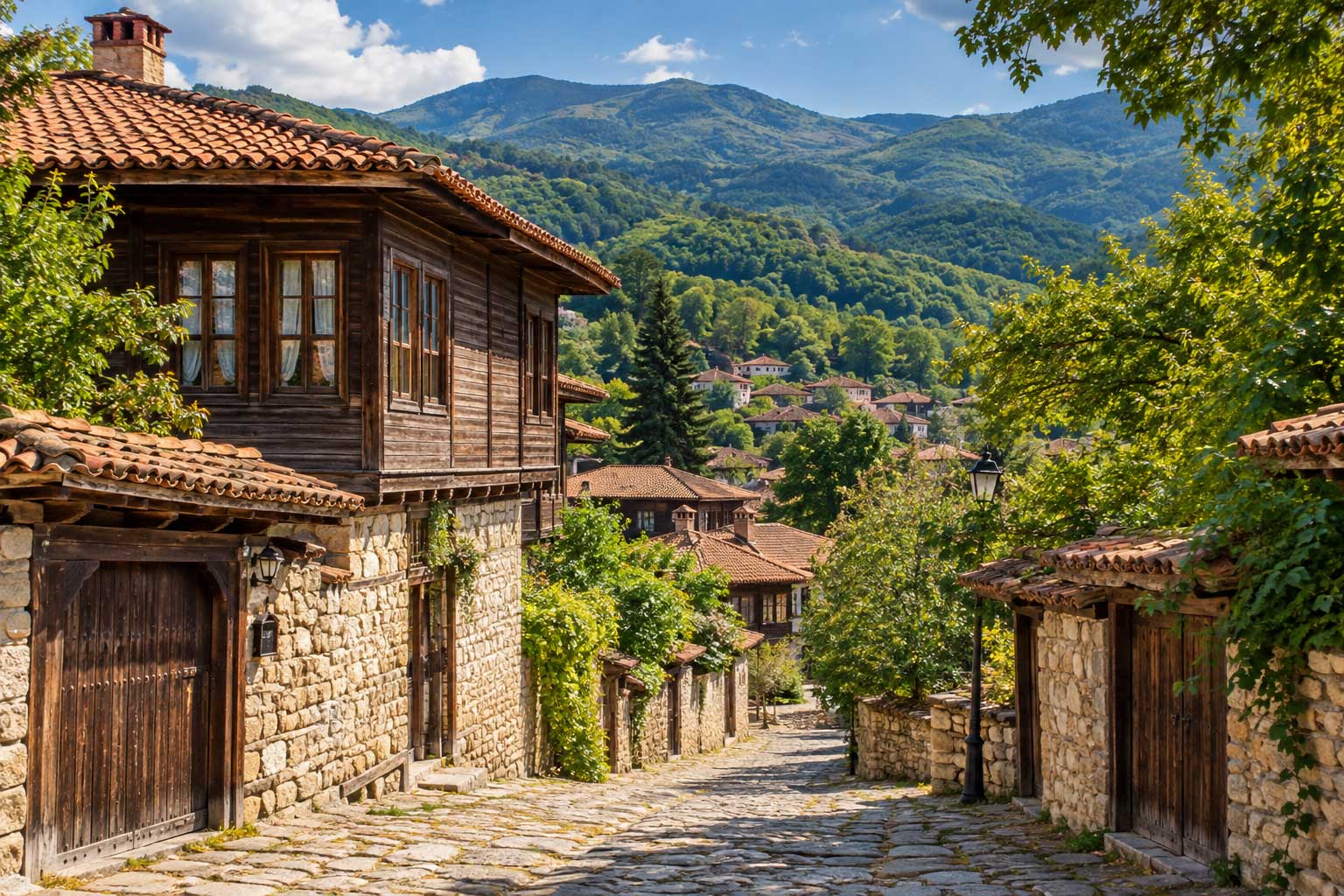
Set among the green hills of the Sredna Gora Mountains, this colorful historic town feels far removed from modern city life. Cobblestone lanes wind between stone walls, heavy wooden gates open into quiet courtyards, and beautifully preserved houses appear in shades of blue, red, yellow and warm earth tones.
In Koprivshtitsa, simply walking through town is part of the experience.
Many of its historic houses date from the 19th century, when prosperous merchants, craftsmen and prominent local families built impressive homes decorated with carved wood, painted façades and elegant interiors. Several of these buildings are now museums, giving visitors a chance to step inside and see traditional furniture, clothing, household objects and rooms preserved from the Revival period.
But Koprivshtitsa is much more than a collection of beautiful old houses.
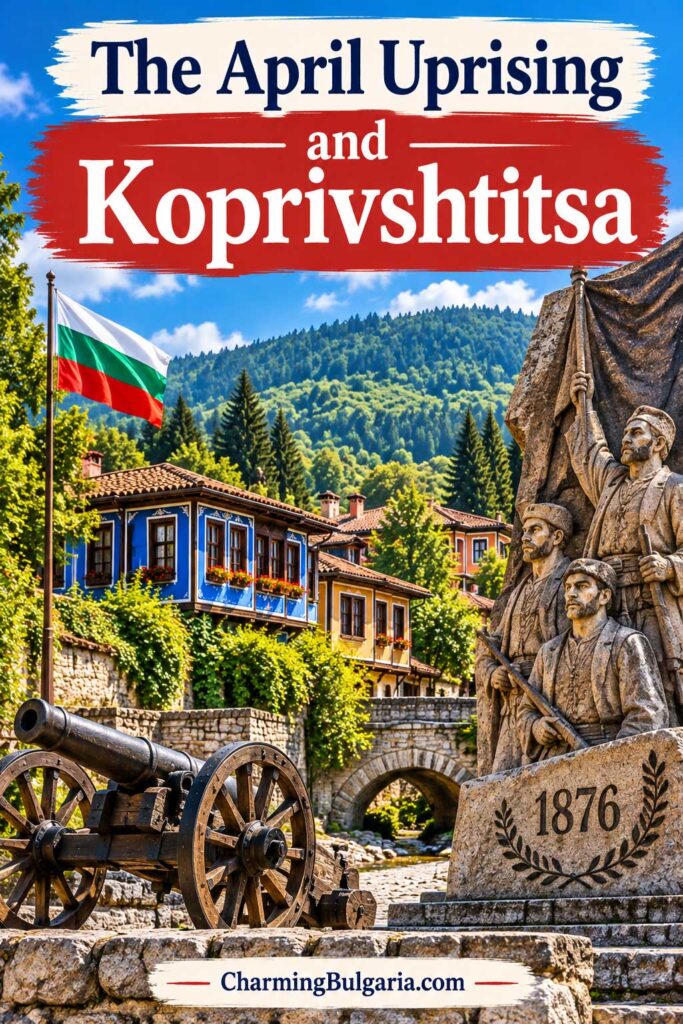
The town played an important role in the April Uprising of 1876, one of the defining events in Bulgaria’s struggle for liberation from Ottoman rule. Several notable revolutionaries were born here, and museums, bridges and historic sites connected with the uprising remain among the town’s most meaningful attractions.
Official Bulgarian tourism materials note that Koprivshtitsa contains hundreds of historical and architectural monuments, which helps explain why reminders of the past seem to appear around almost every corner.
Despite its historical importance, Koprivshtitsa never feels like a place meant only for history lessons.
Small guesthouses, traditional restaurants, flower-filled gardens and surrounding mountain views give the town a relaxed atmosphere. You can spend the morning visiting historic homes, stop for a traditional Bulgarian lunch and then wander through quiet streets lined with colorful houses and old stone walls.
For travelers interested in Bulgarian history, Revival architecture, photography and folklore, Koprivshtitsa is one of the most rewarding small towns to explore.
Colorful, deeply historic and unmistakably Bulgarian, it is one of the best places in the country to experience the architecture, stories and atmosphere of the National Revival era.
Koprivshtitsa stands out because so much of its historic character has survived within one compact, walkable town.
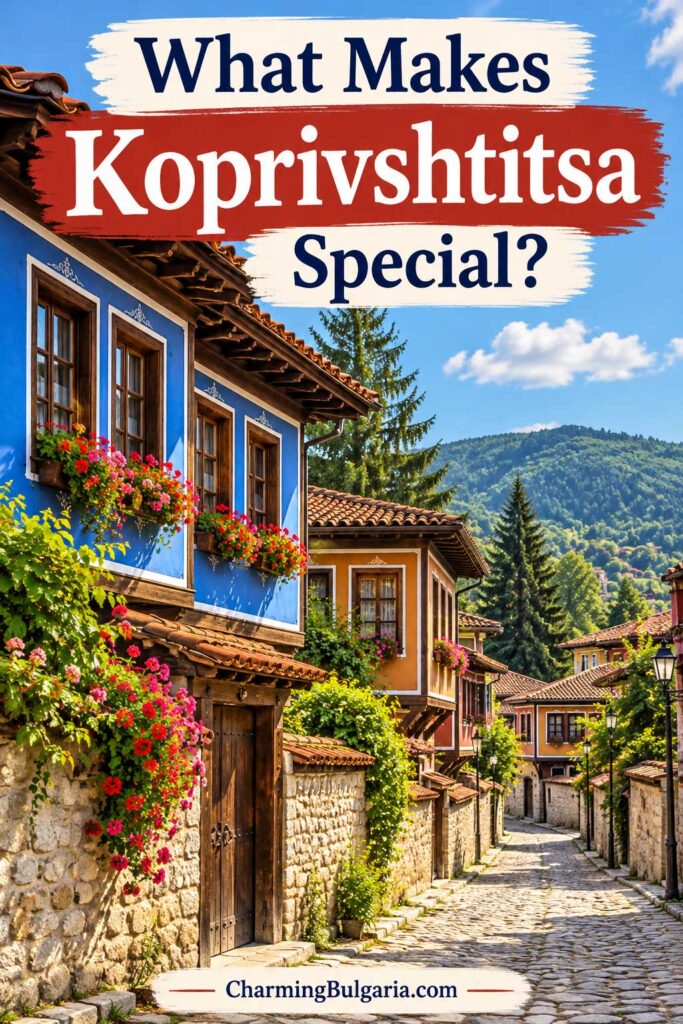
Rather than finding only a few preserved buildings, visitors can wander along entire streets lined with traditional Revival-era houses, stone walls, wooden gates and quiet courtyards. The consistency of the architecture makes it surprisingly easy to imagine what a prosperous Bulgarian town might have looked like during the 19th century.
Color is one of the first things that catches your attention.
Deep blue façades, warm ochre walls, red-tiled roofs and dark wooden details create a striking contrast with the green hills surrounding the town. Many houses also feature projecting upper floors, carved wooden ceilings and carefully decorated interiors that reflect the craftsmanship of the Revival period.
History is just as important as architecture here.
Koprivshtitsa is closely connected with the April Uprising of 1876, and several homes associated with leading Bulgarian revolutionaries have been preserved as museums. Moving between them makes the town feel almost like an open-air history book, with important events tied to real streets, homes and landmarks.
At the same time, Koprivshtitsa never feels frozen in the past.
People still live here. Flowers spill over fences, smoke rises from chimneys during the colder months, and small restaurants serve traditional Bulgarian food just a short walk from major historic sites.
That blend of living culture, colorful Revival architecture and national history is what makes Koprivshtitsa one of Bulgaria’s most memorable historic towns.
A Short History of Koprivshtitsa
Much of the Koprivshtitsa you see today was shaped by the prosperity the town enjoyed during the Bulgarian National Revival in the 18th and 19th centuries.
Local merchants, livestock traders and craftsmen traveled widely throughout the Ottoman Empire and beyond, returning home with money, new ideas and a growing sense of cultural identity. Wealthier families invested in impressive houses with colorful façades, enclosed courtyards, carved wooden ceilings and richly decorated interiors.
Koprivshtitsa also became an important center of Bulgarian education and culture.
Schools opened, books circulated more widely, and ideas about national identity and political independence gained influence among local residents. By the 19th century, the town had become closely connected with the growing revolutionary movement.
That connection reached a turning point during the April Uprising of 1876.
On April 20, 1876, according to the old-style calendar used at the time, revolutionaries in Koprivshtitsa rose earlier than planned after Ottoman authorities attempted to arrest members of the local revolutionary committee. The revolt quickly spread to other communities and became one of the defining events in Bulgaria’s struggle for liberation.
Although the uprising was suppressed, reports of the violence that followed attracted international attention and increased awareness of the Bulgarian cause across Europe.
Several important revolutionaries were born in Koprivshtitsa, including Todor Kableshkov and Georgi Benkovski. Their former homes are now museums, allowing visitors to connect the larger history of the uprising with the people who helped shape it.
This combination of political history, Revival-era architecture and cultural heritage is a major reason Koprivshtitsa remains so important today.
Visitors are not simply walking through a beautiful old town. They are exploring a place that played a significant role in the story of modern Bulgaria.
Best Things to See in Koprivshtitsa
Koprivshtitsa is compact enough to explore on foot, but there is far more to discover than its size might suggest. Bulgaria’s official tourism materials note that the town contains more than 380 historical and architectural monuments, which helps explain why even a casual walk through the center can feel like sightseeing. Learn more about Koprivshtitsa from the official Bulgaria Travel website.
Many of the town’s most interesting sights are preserved Revival-era houses connected with merchants, writers, poets and revolutionaries. Several now operate as museums, giving visitors the chance to step inside and see the interiors rather than simply admire the colorful façades from the street.
A good visit should include both the major historic landmarks and enough free time to wander through the quieter corners of town.
Todor Kableshkov House Museum
The former home of Todor Kableshkov is one of the most meaningful historical sites in Koprivshtitsa.
Kableshkov played a leading role in the April Uprising of 1876, and visiting his house helps put the events of that period into a more personal context.
The museum explores his life, the revolutionary movement and the tense atmosphere surrounding the uprising. Seeing the house where he lived connects the events of 1876 with a real person and place.
Georgi Benkovski House Museum
The birthplace of Georgi Benkovski is another essential stop for anyone interested in Bulgaria’s revolutionary history.
Benkovski became one of the best-known leaders of the April Uprising, and his former home preserves the memory of his early life in Koprivshtitsa.
The house is more modest than some of the grand merchant residences elsewhere in town, but that simplicity is part of what makes the visit interesting. It offers a different perspective on the people who became central figures in Bulgaria’s struggle for liberation.
Oslekov House
For architecture lovers, Oslekov House is one of the highlights of Koprivshtitsa.
Built for a prosperous merchant family, the house is known for its richly decorated exterior, painted details and elegant Revival-era interiors.
It offers one of the clearest examples of the wealth, craftsmanship and decorative style that shaped Koprivshtitsa during the 19th century.
Even visitors who are less interested in museums will likely appreciate the house for its architecture alone.
The First Rifle Bridge
One of the town’s most symbolic landmarks is the First Rifle Bridge, traditionally associated with the beginning of the April Uprising in Koprivshtitsa.
Official Bulgarian tourism materials identify the site with the first gunshot of the uprising on April 20, 1876.
The bridge itself is small and easy to overlook, but its historical significance gives it far more weight than its appearance might suggest.
Wander the Old Streets
Do not spend the entire visit moving directly from one museum to another.
Some of the best moments in Koprivshtitsa come from walking without a fixed route.
Follow the cobblestone lanes, cross the small bridges, pause beside old fountains and notice the colorful houses rising behind stone walls and wooden gates.
If you enjoy wandering through preserved historic streets, Bozhentsi offers a quieter village experience with whitewashed Revival-era houses, stone roofs and cobblestone lanes.
Quiet residential streets often reveal just as much character as the main attractions.
The town itself is part of the sightseeing, and leaving enough time to explore it slowly is one of the best ways to experience Koprivshtitsa.
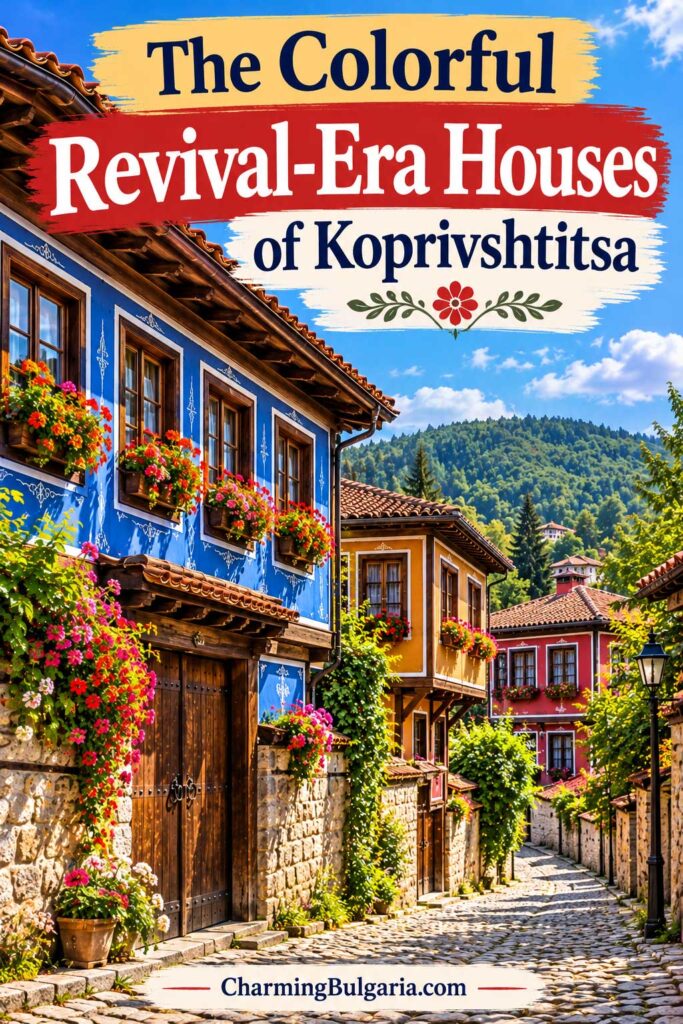
The Colorful Revival-Era Houses of Koprivshtitsa
The architecture is one of the main reasons to visit Koprivshtitsa.
Throughout the historic center, you will find beautifully preserved homes from the Bulgarian National Revival period, when prosperous merchants and craftsmen built increasingly elaborate family houses. Official Bulgarian tourism materials highlight Koprivshtitsa as one of the country’s best places to experience authentic Revival-era architecture.
Many of these houses stand out immediately because of their color.
Bright blues, deep reds, warm ochres and soft earthy tones contrast with dark wooden shutters, stone foundations and traditional red-tiled roofs. In spring and summer, flowering gardens and climbing greenery make the streets even more photogenic.
But these homes were designed for much more than appearance.
Architecture Designed Around Family Life
Traditional houses in Koprivshtitsa were often built behind high stone walls and heavy wooden gates, creating a sense of privacy from the street.
Inside, courtyards provided space for everyday family life, household work, storage and, in some cases, animals.
Many homes combine sturdy stone lower levels with lighter timber-framed upper floors. Wide overhanging roofs helped protect the walls from rain and snow, while larger windows brought more light into the main living spaces.
The layout often reflected the needs of extended families, with rooms arranged for both daily use and entertaining guests.
Beautiful Interior Details
Some of the most impressive craftsmanship is found inside the houses.
Wealthier homes could include:
carved wooden ceilings and cupboards
painted walls and decorative details
built-in seating areas
woven textiles and carpets
traditional household objects
formal reception rooms
These interiors offer a glimpse into the prosperity Koprivshtitsa enjoyed during the 18th and 19th centuries.
Successful merchant families invested heavily in their homes, and architecture became a way to express both status and local craftsmanship.
More Than Museum Pieces
One of the most appealing things about Koprivshtitsa is that Revival architecture is not confined to a single museum complex.
Historic buildings are woven throughout the town.
Some remain museums, while others have been adapted into guesthouses, restaurants or private homes. Official tourism materials also note that a number of historic houses now offer accommodation, giving visitors the chance to experience the town beyond a quick daytime visit.
Because many of these buildings are still part of everyday life, Koprivshtitsa feels like a living historic town rather than a carefully staged attraction.
For photographers, Koprivshtitsa is especially rewarding. Almost every turn reveals another colorful façade, carved wooden gate, quiet courtyard or cobblestone lane worth stopping to photograph.
Travelers who enjoy this style of architecture may also want to explore Zheravna, another beautifully preserved Revival-era settlement known for its traditional wooden houses.
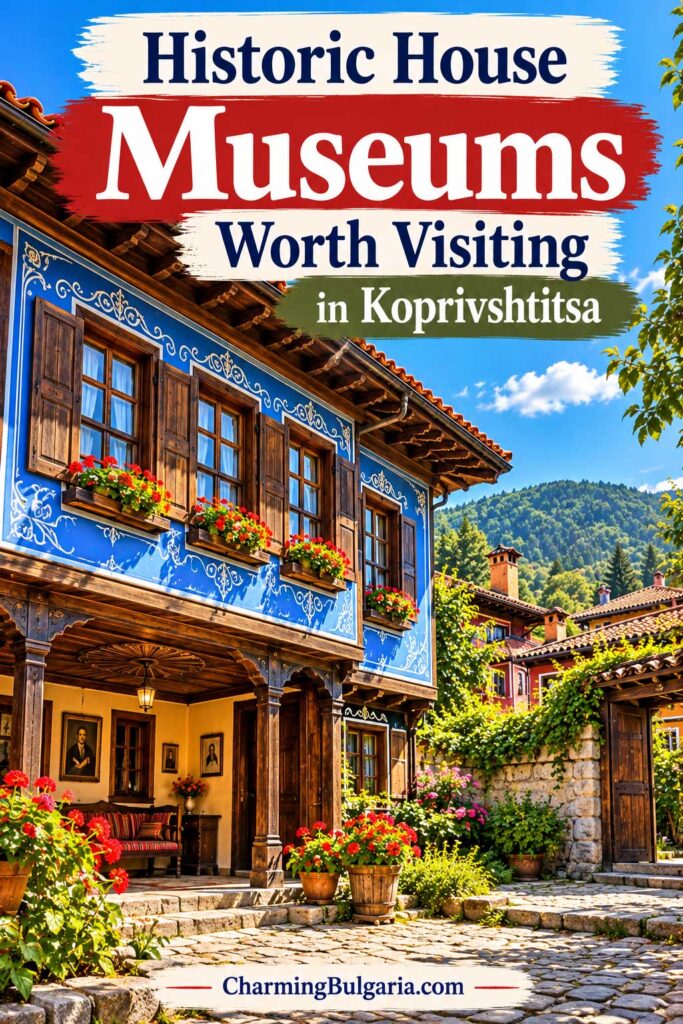
Historic House Museums Worth Visiting
One of the best ways to understand Koprivshtitsa is to step inside its preserved homes.
Several Revival-era houses now operate as museums, and each tells a different part of the town’s story. Some belonged to writers and revolutionaries, while others were built for wealthy merchant families whose homes reflect the prosperity Koprivshtitsa enjoyed during the 19th century.
Lyuben Karavelov House
The Lyuben Karavelov House is connected with one of Bulgaria’s best-known writers, journalists and revolutionary thinkers.
The museum complex offers insight into the Karavelov family and the intellectual atmosphere of the Bulgarian National Revival, when literature, education and political ideas were becoming increasingly important.
For visitors interested in Bulgarian culture as well as history, the house adds another dimension to Koprivshtitsa beyond its better-known revolutionary landmarks.
Dimcho Debelyanov House
Koprivshtitsa was also the birthplace of Dimcho Debelyanov, one of Bulgaria’s most beloved poets.
His family home has been preserved as a museum and feels more intimate than some of the town’s grand merchant residences.
The traditional house, peaceful garden and personal atmosphere make it one of the most touching stops in Koprivshtitsa, even for visitors who are unfamiliar with Debelyanov’s poetry before arriving.
Lyutov House
Lyutov House is another beautiful example of Revival-era architecture and craftsmanship.
Its elegant rooms, decorative details and traditional furnishings offer a glimpse into the lifestyle of a prosperous family during one of Koprivshtitsa’s most successful periods.
Together with Oslekov House, it is especially worthwhile for travelers interested in historic interiors, decorative arts and traditional Bulgarian architecture.
Why the House Museums Matter
Visiting several house museums rather than just one gives a much fuller picture of Koprivshtitsa.
You begin to see that the town was shaped by far more than a single historical event. It was a community of merchants, craftsmen, teachers, poets, writers and revolutionaries whose lives were closely connected with Bulgaria’s wider cultural and political awakening.
Together, these museums reveal different sides of Koprivshtitsa—from wealthy merchant life and literature to the revolutionary movement that shaped modern Bulgarian history.
Taken together, the houses make it possible to see several sides of Koprivshtitsa’s history within just a few streets.
These houses are not simply attractive places to photograph. Together, they help tell the story of an entire period in Bulgarian history through the people who actually lived there.
By the mid-19th century, revolutionary committees across the Bulgarian lands were preparing resistance against Ottoman rule. Koprivshtitsa became one of the important centers of this movement, with local teachers, merchants and young revolutionaries taking part in secret meetings and preparations for an armed uprising.
Events in the town, however, moved faster than planned.
On April 20, 1876, according to the old calendar used at the time—May 2 on the modern Gregorian calendar—Ottoman authorities attempted to arrest members of the local revolutionary committee. The revolutionaries resisted, and the uprising in Koprivshtitsa began.
One of the central figures in the events was Todor Kableshkov, a young revolutionary born in Koprivshtitsa.
After the uprising began, Kableshkov wrote the famous “Bloody Letter” to the revolutionary committee in Panagyurishte, announcing that the revolt had started and calling on the other revolutionary centers to act.
The letter became one of the enduring symbols of the April Uprising and of the determination of the people involved in it.
Today, Kableshkov’s former home is preserved as a museum, allowing visitors to learn more about his life and the revolutionary movement he helped organize.
Georgi Benkovski
Another major figure connected with Koprivshtitsa was Georgi Benkovski.
Born in the town, he became one of the most prominent leaders of the April Uprising and played a major role in organizing revolutionary forces across the region.
His birthplace is also preserved as a museum in Koprivshtitsa, bringing the wider national story back to the streets and homes where some of its leading figures grew up.
Why the Uprising Still Matters Here
The April Uprising was ultimately suppressed, but its consequences reached far beyond the towns and villages where the fighting took place.
Reports of the violence that followed drew international attention to the Bulgarian cause and helped place the Bulgarian question more prominently in European political debate. Official Bulgarian tourism materials describe the uprising as an event that brought the Bulgarian national question to the center of international political attention.
The uprising became an important part of the chain of events leading toward the Russo-Turkish War of 1877–1878 and the re-establishment of Bulgarian statehood.
In Koprivshtitsa, that history still feels unusually close.
The preserved houses, museums, memorials and First Rifle Bridge connect the uprising with real people and specific places rather than leaving it as an abstract chapter in a history book.
Understanding that story adds an entirely different dimension to walking through the town today.
Walking Through Koprivshtitsa
One of the best things about Koprivshtitsa is that you do not need a complicated itinerary to enjoy it.
The historic center is compact, and much of the experience comes from simply walking.
Cobblestone streets wind between colorful Revival-era houses, high stone walls and heavy wooden gates. Small bridges cross the Topolnitsa River, while quieter lanes lead toward museums, churches and residential corners that many visitors pass without noticing.
Take Your Time in the Old Town
Koprivshtitsa is a place that rewards a slower pace.
Some of its most memorable details are easy to miss if you move too quickly between attractions.
Look for carved wooden balconies, faded painted façades, old fountains, traditional gates and small gardens hidden behind stone walls.
Early morning and late afternoon are especially pleasant, when the streets tend to be quieter and softer light brings out the colors and textures of the old houses.
Walk Along the River
The river adds another layer of charm to the town.
Small bridges connect different parts of the historic center, and walking beside the water offers a peaceful break from the busier streets.
Old houses, stone walls, trees and flowing water come together in some of Koprivshtitsa’s most photogenic scenes.
Explore Beyond the Main Sights
It is worth wandering a few streets away from the best-known museums.
Some of the prettiest corners are found in residential areas where traditional houses are still used as family homes.
These quieter streets are a reminder that Koprivshtitsa is not simply a preserved historical attraction. It is still a living town.
You may pass someone tending a garden, a cat sleeping beside an old wooden gate or neighbors talking outside their homes.
Small everyday scenes like these give Koprivshtitsa much of its character.
A Town Made for Slow Travel
Koprivshtitsa is at its best when you leave room in the day for unplanned stops.
Sit beside the river for a while, stop for coffee, step into a house museum that catches your attention or photograph a doorway simply because you like the way it looks.
The town is small enough that wandering rarely becomes inconvenient.
In fact, leaving the main route behind for a while is often the best way to discover some of Koprivshtitsa’s most charming corners.
For another perspective on Bulgaria’s historic architecture, Arbanasi near Veliko Tarnovo is known for its stone walls, fortified houses and richly decorated churches.
Best Time to Visit Koprivshtitsa
Koprivshtitsa can be visited year-round, but the experience changes noticeably with the seasons.
Spring brings fresh greenery, summer is lively and easy for sightseeing, autumn surrounds the town with warm fall colors, and winter gives the old streets a much quieter atmosphere.
Spring
Spring is one of the most pleasant times to explore Koprivshtitsa.
The surrounding hills turn green, gardens begin to bloom, and the weather is often comfortable for spending several hours outdoors.
April and May are especially appealing if you want mild conditions, colorful scenery and fewer visitors than during the busiest summer period.
A light jacket is still useful, particularly in the morning and evening.
Summer
Summer brings long days and plenty of time to explore the museums, historic streets and surrounding countryside.
This is also one of the livelier times of year, especially on weekends and during local events.
Because Koprivshtitsa sits in the Sredna Gora Mountains, mornings and evenings can feel cooler than in lower-lying Bulgarian cities.
If you visit in July or August, start your sightseeing early. The streets are quieter, the light is better for photography and you can explore several museums before the busiest part of the day.
Autumn
Autumn is arguably the most photogenic time to visit Koprivshtitsa.
The forests and hills surrounding the town take on shades of yellow, orange and deep red, creating a beautiful backdrop for the colorful Revival-era houses and red-tiled roofs.
September and early October are particularly good for walking, photography and relaxed weekend trips.
The combination of autumn foliage, cooler temperatures and historic architecture gives the town an especially atmospheric feel.
Winter
Winter reveals a completely different side of Koprivshtitsa.
When snow covers the rooftops, stone walls and cobblestone streets, the historic center can feel remarkably peaceful and almost timeless.
Days are colder and some museums or local businesses may operate on reduced schedules, so winter requires a little more planning.
For travelers who value quiet streets, snowy scenery and atmosphere over a packed sightseeing itinerary, however, it can be a beautiful time to visit.
When Should You Go?
For the best balance of comfortable weather and easy sightseeing, late spring and early autumn are excellent choices.
Choose summer if you prefer long daylight hours and a livelier atmosphere. Visit in autumn for the most colorful scenery, or come in winter if you want to experience Koprivshtitsa at its quietest.
Whatever the season, wear comfortable shoes. The old cobblestone streets are part of the town’s charm, but they can be uneven and become slippery after rain or snow.
How to Get to Koprivshtitsa
Koprivshtitsa is easy to include in a trip through central Bulgaria and is especially popular as a day trip from Sofia or a relaxing overnight stop.
The town lies roughly 110 kilometers east of Sofia, and most visitors arrive by car, train or bus.
By Car
Driving is usually the easiest and most flexible way to reach Koprivshtitsa.
From Sofia, the journey is approximately 110 kilometers and generally takes around 1.5 to 2 hours, depending on traffic, weather and the route you take.
Having a car also makes it much easier to combine Koprivshtitsa with nearby destinations such as Panagyurishte, smaller villages or other stops in the Sredna Gora region.
The final part of the journey passes through attractive mountain scenery, so the drive itself can be part of the experience.
By Train
Koprivshtitsa can also be reached by train from Sofia and other parts of Bulgaria.
The important thing to know is that Koprivshtitsa railway station is located outside the historic town, rather than within walking distance of the main sights.
You will therefore need additional transportation from the station into Koprivshtitsa, so factor that extra transfer into your travel plans.
Train schedules can change, especially when railway maintenance is underway, so check the current timetable on the official Bulgarian State Railways (BDZ) website shortly before traveling.
By Bus
Bus or minibus connections between Sofia and Koprivshtitsa may also be available.
This can be a convenient option for travelers who do not want to rent a car, but services are generally more limited than transportation between Bulgaria’s larger cities.
Check the latest departure point, schedule and return times before your trip rather than relying on an older timetable.
Day Trip or Overnight Stay?
Koprivshtitsa is close enough to Sofia to visit as a day trip, particularly if you are traveling by car.
A full day gives you enough time to see several house museums, walk through the historic center and enjoy lunch in town.
However, staying for one night is even better if your itinerary allows it.
Once many day visitors leave, Koprivshtitsa becomes noticeably quieter. Evening and early-morning walks through the cobblestone streets offer a completely different atmosphere, and photographers will appreciate having the colorful Revival-era houses almost to themselves.
If you enjoy history, photography, traditional architecture or slow travel, spending one night in Koprivshtitsa is well worth considering.
What to Eat in Koprivshtitsa
A visit to Koprivshtitsa is a good excuse to slow down and enjoy traditional Bulgarian food.
Many restaurants in town lean toward familiar home-style dishes, often served in rustic dining rooms, shaded courtyards or old houses that fit naturally with Koprivshtitsa’s Revival-era atmosphere.
Try Traditional Bulgarian Classics
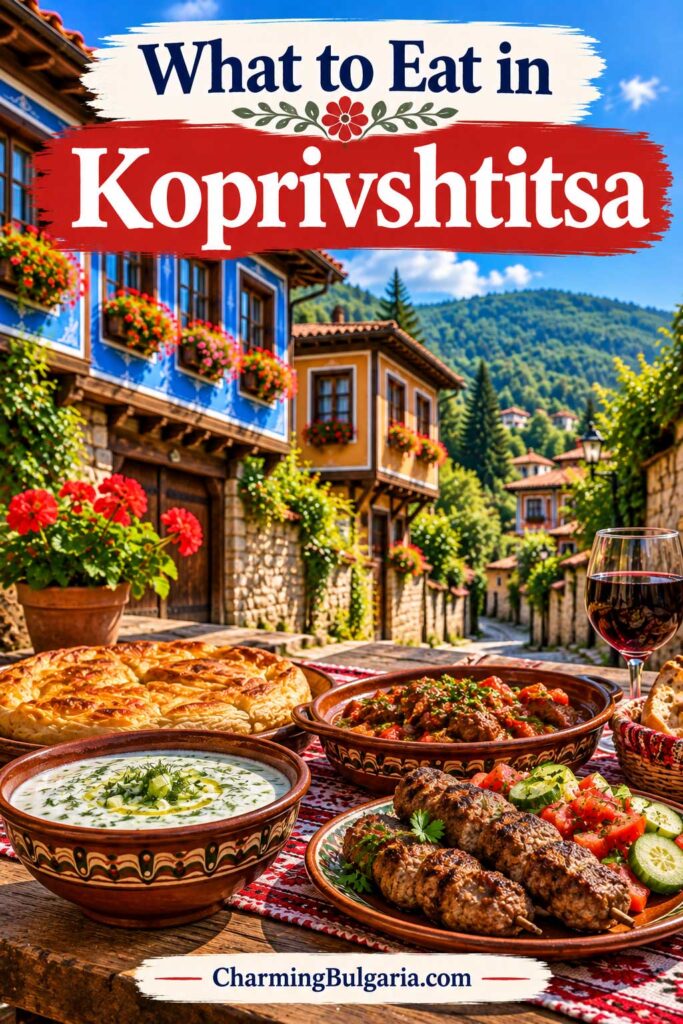
Menus vary from place to place, but you will often find well-known Bulgarian dishes such as:
shopska salad with tomatoes, cucumbers, peppers and white cheese
kavarma, a hearty combination of slow-cooked meat and vegetables
kebapche and kyufte from the grill
bean soup
stuffed peppers
banitsa
grilled meats with seasonal vegetables
Bulgarian yogurt served with honey or preserves
These dishes are not unique to Koprivshtitsa, but enjoying them in an old Bulgarian town surrounded by stone walls and colorful Revival houses adds something to the experience.
Look for Homemade and Seasonal Food
Smaller taverns and family-run restaurants are often worth checking for homemade dishes and seasonal specials.
Fresh bread, Bulgarian white cheese, homemade preserves, herbal tea and vegetables prepared in simple traditional ways can be just as satisfying as the heavier meat dishes.
Rather than arriving with one particular meal in mind, take a look at what the restaurant is preparing that day.
Eat at a Traditional Mehana
For a more atmospheric meal, try at least one mehana, the traditional Bulgarian style of tavern.
Expect wooden furniture, stone or plaster walls, folk-inspired decoration and a menu built around hearty Bulgarian comfort food.
After several hours of walking on Koprivshtitsa’s cobblestone streets, sitting down to a warm meal in a traditional dining room feels especially welcome.
Make Lunch Part of the Day
Koprivshtitsa is not a place where lunch needs to be rushed.
Give yourself time to sit in a courtyard, order a salad and a few traditional dishes, and enjoy the slower pace of the town.
A relaxed meal fits naturally into a day of museums, historic houses and wandering through the old streets.
Here, food is not just a break from sightseeing. It is part of the experience of being in Koprivshtitsa.
Where to Stay in Koprivshtitsa
Koprivshtitsa has a good selection of small guesthouses, family-run hotels and traditional homes converted into places to stay.
For most visitors, the historic center is the most convenient base.
Staying there keeps the main museums, restaurants and colorful Revival-era streets within easy walking distance and makes it simple to enjoy the town early in the morning or after the day-trip crowds begin to leave.
Stay in a Traditional Revival-Style House
For the most atmospheric experience, look for a guesthouse inside one of Koprivshtitsa’s traditional homes.
Some properties feature wooden ceilings, stone walls, carved furniture, flower-filled courtyards and balconies overlooking the old streets.
You still get modern comforts, but the setting feels much more connected to the character of the town than a standard hotel room.
Choose the Historic Center for Convenience
First-time visitors will usually find the central area the easiest place to stay.
You can walk to the major house museums, churches, bridges and restaurants without needing to use your car again once you arrive.
That is especially useful in a town where so much of the experience comes from exploring on foot.
Consider a Quieter Guesthouse on the Edge of Town
Travelers who prefer more space, mountain views or a slightly more rural atmosphere may enjoy staying outside the busiest central streets.
These guesthouses can feel more peaceful while still keeping you within easy reach of the historic center.
They can also be a good choice if you plan to spend time walking in the surrounding countryside.
Is One Night Enough?
For most travelers, one night is enough to experience Koprivshtitsa at a relaxed pace.
It gives you time to visit the main museums during the day, enjoy dinner without rushing and take an evening walk after many day visitors have gone.
Two nights can be worthwhile if you want to explore more slowly, photograph the town in different light or spend additional time walking in the surrounding Sredna Gora hills.
Staying overnight adds something that a quick day trip cannot quite offer: the chance to see Koprivshtitsa when the streets feel calmer and the town settles into its everyday rhythm.
Best Photo Spots in Koprivshtitsa
Koprivshtitsa is one of the most photogenic historic towns in Bulgaria.
Colorful Revival-era houses, cobblestone streets, old wooden gates, small bridges and mountain scenery create interesting compositions almost everywhere you look.
You do not need to chase a long list of viewpoints. Much of the town’s beauty comes from ordinary streets, quiet corners and architectural details that appear naturally as you explore.
The Historic Center
Start with the central streets, where many of Koprivshtitsa’s most colorful houses are concentrated.
Blue, yellow and red façades stand out beautifully against stone walls, dark wooden details and traditional tiled roofs.
For a more natural composition, photograph the houses from farther down the street rather than standing directly in front of them. Including cobblestones, walls or neighboring buildings often gives the image more depth and a stronger sense of place.
Oslekov House
The richly decorated exterior of Oslekov House makes it one of the most distinctive buildings in Koprivshtitsa.
Its painted façade, architectural details and traditional proportions photograph especially well in soft morning or late-afternoon light.
It is a good place to capture both wider views of the building and closer details of the decoration.
The First Rifle Bridge
The First Rifle Bridge is worth photographing not only for its appearance but also for its connection with the April Uprising.
Rather than focusing only on the bridge, try including some of the surrounding greenery, nearby houses or stone walls in the frame.
That wider context often creates a more atmospheric photograph.
Streets Along the River
Some of Koprivshtitsa’s prettiest scenes can be found along the river.
Small bridges, old stone walls, trees and colorful houses create a quieter and softer side of the town.
Reflections, flowing water and overhanging greenery can also add variety to photographs dominated by architecture.
Wooden Gates and Courtyards
Do not overlook the smaller details.
Weathered wooden gates, carved balconies, stone foundations, flower-filled windows and glimpses into traditional courtyards can be just as memorable as the major landmarks.
These details help capture the everyday character of Koprivshtitsa rather than only its most famous sights.
When photographing residential areas, respect private property and avoid entering courtyards unless they are clearly open to visitors.
Photograph the Town Early or Late
Early morning is especially rewarding.
The streets are quieter, parked cars are less distracting, and the low light brings out the texture of the cobblestones, stone walls and painted façades.
Late afternoon and the period before sunset can be equally beautiful, especially when warm light reaches the colorful houses.
Koprivshtitsa is the kind of place where it pays to keep your camera ready even when you are simply walking back to your guesthouse.
Some of your favorite photographs may come from a side street you never planned to visit.
Festivals and Traditions in Koprivshtitsa
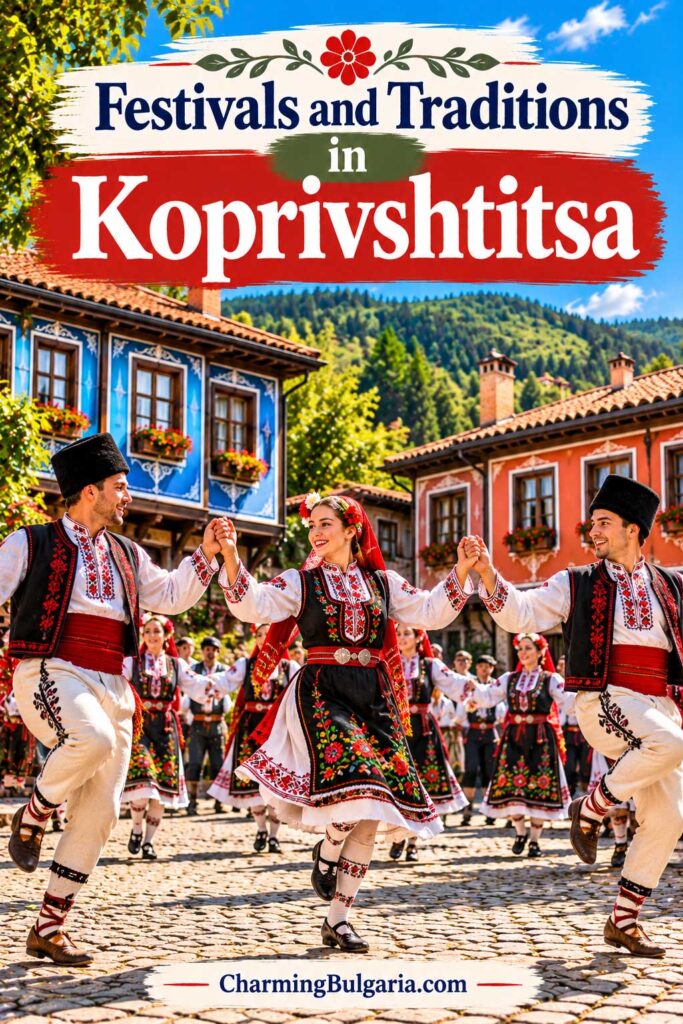
Koprivshtitsa is known not only for its colorful architecture and revolutionary history, but also for its deep connection with Bulgarian folklore and traditional culture.
Music, dance, regional costumes, craftsmanship and old customs all remain part of the town’s identity, making Koprivshtitsa one of Bulgaria’s most important places for experiencing living folk traditions.
Held in the hills above the town, the festival brings together thousands of singers, musicians, dancers, storytellers and folk groups from different regions of Bulgaria.
Performers present regional songs, dances, customs, traditional clothing and other forms of intangible cultural heritage, creating an extraordinary overview of Bulgaria’s cultural diversity.
The festival dates back to 1965 and has traditionally been organized every five years. UNESCO recognizes the festival’s system of preserving and transmitting folklore as an example of good safeguarding practice.
Because it is not an annual event, travelers hoping to attend should always check the official schedule before planning a trip.
Traditional Music and Dance
Even outside festival years, Koprivshtitsa remains closely connected with Bulgarian folk culture.
Traditional songs, instruments, embroidered clothing and regional customs appear in museums, local celebrations and cultural events.
For international visitors, this is a wonderful introduction to the variety of Bulgarian folklore. Different regions developed their own styles of singing, dancing, costumes and musical traditions, many of which are represented during major events in Koprivshtitsa.
Travelers interested in Bulgarian folk music should also explore Shiroka Laka, a Rhodope village famous for its traditional architecture and strong musical heritage.
Crafts and Local Heritage
Traditional craftsmanship is another part of the town’s cultural character.
You may find embroidery, woven textiles, woodwork, pottery and other handmade items in small shops or during cultural events.
When buying souvenirs, look for pieces made by local or Bulgarian artisans rather than mass-produced products. A handmade textile, carved wooden object or traditional decorative item makes a much more meaningful reminder of the town.
A Living Connection to Bulgarian Culture
What makes Koprivshtitsa particularly special is the way history and folklore exist side by side.
The same town known for Revival-era merchants and revolutionaries also serves as a gathering place for singers, musicians, dancers and craftspeople preserving traditions passed down through generations.
That combination gives Koprivshtitsa a cultural importance that goes far beyond its beautiful old houses.
Koprivshtitsa preserves more than architecture; it also helps keep Bulgaria’s music, dances, craftsmanship, customs and stories alive.
Things to Do Near Koprivshtitsa
Koprivshtitsa can easily fill a full day, but travelers with more time can use the town as a starting point for exploring the Sredna Gora Mountains, nearby historic towns and quieter rural destinations.
This part of central Bulgaria is especially rewarding by car, allowing you to combine Revival-era history with mountain scenery, archaeological sites and small villages.
Explore the Sredna Gora Mountains
Koprivshtitsa sits in the heart of the Sredna Gora Mountains, surrounded by forests, open hills and walking routes.
If you want a break from museums and historic houses, spend a few hours exploring the countryside outside town.
The nearby Bogdan Reserve protects old beech forest and includes Bogdan Peak, the highest point in the Sredna Gora Mountains at 1,604 meters. The area around Koprivshtitsa also has marked hiking routes of varying difficulty.
Even if you are not planning a long hike, getting beyond the historic center reveals a much quieter side of the region.
Visit Panagyurishte
Panagyurishte is one of the best places to combine with Koprivshtitsa, especially if the history of the April Uprising interests you.
The town became one of the main centers of the uprising in 1876 and today has museums, Revival-era houses and memorials connected with that period. The local history museum also includes exhibitions connected with the famous Panagyurishte Gold Treasure.
Visiting both Koprivshtitsa and Panagyurishte gives you a much fuller picture of the people and events behind the April Uprising.
Delegates from revolutionary committees gathered here in April 1876 to discuss and organize the planned uprising. Today, a walking path leads through the forest to the memorial marking the historic meeting place.
It is a particularly meaningful stop after visiting the revolutionary museums in Koprivshtitsa because it connects many of the same historical figures with the wider organization of the uprising.
Stop in Chavdar
The village of Chavdar offers something completely different.
One of its most interesting attractions is Topolnitsa Archaeological Park, created around the remains of an Early Neolithic settlement dating back more than 7,000 years.
The park includes reconstructed Neolithic dwellings, an exhibition and demonstrations related to prehistoric crafts such as pottery, stone-tool production and leatherworking.
Chavdar also has walking areas and mountain scenery, making it an enjoyable stop if you want to mix history with a quieter rural experience.
Turn the Journey Into a Scenic Road Trip
One of the pleasures of exploring this part of Bulgaria is that the drive itself can become part of the trip.
Roads through the Sredna Gora region pass forests, valleys, mountain slopes and small settlements that feel far removed from the pace of Sofia.
If you have a car, avoid treating Koprivshtitsa as an isolated attraction.
Combining Koprivshtitsa, Panagyurishte, Oborishte and Chavdar can turn a simple overnight trip into a much richer introduction to the history, landscapes and rural character of central Bulgaria.
How Long to Spend in Koprivshtitsa
How much time you need in Koprivshtitsa depends on whether you want a quick introduction or a slower visit that includes museums, photography and time in the surrounding countryside.
Half a Day
A few hours are enough to get a first impression of the town.
You can walk through the historic center, admire several of the colorful Revival-era houses, visit one or two museums and stop at the First Rifle Bridge.
This works well if Koprivshtitsa is one stop on a longer road trip, but it can feel rushed if you enjoy history or photography.
One Full Day
For most first-time visitors, one full day is ideal.
That gives you enough time to visit several of the main house museums, explore the old streets, enjoy a relaxed lunch and wander along the river without constantly watching the clock.
A full day also leaves room for spontaneous stops, which are often some of the most enjoyable parts of visiting Koprivshtitsa.
One Night
Staying overnight makes the experience even better.
After many day visitors leave, the town becomes noticeably quieter and the historic center takes on a more peaceful atmosphere.
An overnight stay also gives you the chance to walk the streets early the next morning, when the town is calm and the soft light is excellent for photography.
Two Days
Two days are worthwhile if you prefer slow travel or want to see more than the main sights.
You can visit additional museums, spend more time photographing the town, walk in the surrounding hills or combine Koprivshtitsa with nearby places such as Panagyurishte or Chavdar.
For travelers interested in Bulgarian history, Revival architecture, photography and mountain scenery, the extra time is unlikely to feel wasted.
Koprivshtitsa may be small, but it is one of those places that becomes more rewarding when you give it time rather than rushing through.
Practical Tips for Visiting Koprivshtitsa
Koprivshtitsa is easy to explore, but a few simple preparations can make your visit more comfortable and enjoyable.
Wear Comfortable Shoes
The historic center is filled with cobblestone streets, uneven surfaces and occasional slopes.
Comfortable walking shoes are a much better choice than thin-soled sandals or dress shoes, especially if you plan to spend several hours exploring.
After rain or snow, some of the stones can also become slippery.
Check Museum Hours in Advance
Many of Koprivshtitsa’s main attractions are historic house museums, and opening hours may vary by season.
Some museums also keep shorter hours during quieter seasons.
If there is a particular house you do not want to miss, check the latest opening information shortly before your visit rather than relying on an older guide.
Carry Some Cash
Card payments are widely accepted in Bulgaria, but carrying some euros in cash is still useful for smaller museums, cafés, shops and local stalls.
Dress for Mountain Weather
Koprivshtitsa sits in the Sredna Gora Mountains, so conditions can feel cooler than in lower-lying parts of Bulgaria.
Even in warmer months, a light jacket can be useful in the morning or evening.
In spring and autumn, bring an extra layer and be prepared for changing weather.
Leave Time to Wander
Try not to schedule every hour of your visit.
Many of Koprivshtitsa’s most interesting details appear beyond the best-known museums, so leave room for side streets, bridges, old fountains and colorful houses that may not be on your original sightseeing list.
Respect Private Homes
Not every beautiful Revival-era house is open to visitors.
Many are still private residences.
Photograph façades from public streets, avoid entering courtyards unless they are clearly open to the public, and remember that people still live in many of the historic buildings.
One-Day Koprivshtitsa Itinerary
If you have one full day in Koprivshtitsa, you can see the main sights without turning the visit into a race from one museum to another.
The town is compact, so the best approach is to combine a few important historic sites with plenty of time to wander.
Morning: Start in the Historic Center
Begin your day in the old town while the streets are still relatively calm.
Take a little time to admire the colorful Revival-era houses, wooden gates and cobblestone lanes before heading into the museums.
A good morning route can include:
Todor Kableshkov House Museum
Oslekov House
the First Rifle Bridge
several of the central Revival-era streets
Morning is also one of the best times for photography, especially before the busiest part of the day.
Late Morning: Visit More Historic Houses
Continue with one or two additional house museums depending on your interests.
The Georgi Benkovski House, Lyutov House, Dimcho Debelyanov House and Lyuben Karavelov House are all worthwhile choices.
There is no need to see every museum in a single visit.
Choosing a few allows you to spend more time inside and understand the stories behind the houses instead of rushing through them just to say you have been there.
Lunch: Stop at a Traditional Mehana
Around midday, take a proper break for lunch.
Look for a traditional mehana or family-run restaurant where you can try Bulgarian dishes such as shopska salad, grilled meats, bean soup, kavarma or something seasonal.
Koprivshtitsa suits a slower pace, so give yourself time to enjoy the meal rather than treating lunch as something to squeeze between attractions.
Afternoon: Explore the Quieter Streets
After lunch, leave the main museum route for a while.
Follow the river, cross some of the smaller bridges and wander into residential streets away from the busiest part of the center.
Away from the main museum route, the town begins to feel more lived-in.
You may find flower-filled gardens, old wooden gates, traditional homes and small architectural details that are easy to miss when focusing only on the major landmarks.
Late Afternoon: Photography and Coffee
As the light begins to soften, return to some of the streets or buildings that caught your attention earlier in the day.
Late afternoon is particularly good for photographing the colorful façades, stone walls and textured cobblestones.
Finish with coffee, dessert or a relaxed break near the historic center before deciding whether to continue exploring.
Evening: Enjoy the Town After the Day-Trippers Leave
If you are staying overnight, take one more walk after many day visitors have left.
The atmosphere changes noticeably in the evening.
The streets feel calmer, the houses stand out more clearly without the daytime activity, and Koprivshtitsa takes on a more intimate character.
A one-day itinerary like this gives you enough structure to see the highlights while still leaving room for the unplanned moments that often make a visit to Koprivshtitsa most memorable.
Koprivshtitsa for Slow Travel
Koprivshtitsa is an excellent destination for travelers who prefer to experience a place rather than simply move from one attraction to the next.
The town is small enough to explore without feeling rushed, yet full of enough detail to reward several hours of slow wandering.
Instead of planning every minute, leave space to notice the smaller things: painted houses rising behind stone walls, flowers spilling over wooden fences, old fountains, quiet courtyards and narrow streets leading away from the main sights.
If this slower style of travel appeals to you, Dolen is another preserved Bulgarian village where old stone streets and traditional houses reward unhurried exploration.
Slow Down Between the Museums
The historic house museums are an important part of Koprivshtitsa, but they do not need to define the entire visit.
Take your time walking between them.
Pause when a street catches your attention, sit beside the river for a few minutes or stop for coffee somewhere with outdoor seating.
Those unplanned breaks often become just as memorable as the museums themselves.
Stay Overnight If You Can
Koprivshtitsa works well as a day trip, but slow travelers will get more from spending at least one night.
Once many daytime visitors leave, the atmosphere changes.
The streets become calmer, restaurants feel more relaxed, and you can enjoy an evening walk without thinking about museum closing times or the drive back to Sofia.
The following morning brings another advantage: peaceful streets, fewer distractions and beautiful light for photography.
Choose a Traditional Guesthouse
Staying in a traditional house can make the experience feel even more connected to Koprivshtitsa.
Instead of leaving the historic setting at the end of the day, you remain surrounded by the architecture, courtyards and mountain atmosphere that make the town special.
A Revival-style guesthouse can turn an overnight stay into part of the experience rather than simply a place to sleep.
Leave Space for Unplanned Moments
Not every hour needs an activity.
Koprivshtitsa is the kind of place where sitting with a coffee, watching people pass through the center or following a street simply because it looks interesting can become part of the trip.
Sometimes the best part of the visit is simply having nowhere else you need to be.
For travelers drawn to historic towns, traditional architecture and a slower style of travel, Koprivshtitsa is one of the most rewarding places to spend time in Bulgaria.
Frequently Asked Questions About Koprivshtitsa
Is Koprivshtitsa worth visiting?
Yes. Koprivshtitsa is one of Bulgaria’s best historic towns for travelers interested in Revival-era architecture, national history, folklore and traditional culture.
Its colorful houses, cobblestone streets, museums and connection with the April Uprising make it well worth a day trip or overnight stay.
Can you visit Koprivshtitsa as a day trip from Sofia?
Yes.
Koprivshtitsa is about two hours from Sofia by car, so it works well as a day trip.
If you have more time, staying overnight gives you a quieter experience and more time to visit the museums without rushing.
How much time do you need in Koprivshtitsa?
For most first-time visitors, one full day is enough to see the main sights.
Staying one night is better if you enjoy photography, museums or slow travel.
Is Koprivshtitsa easy to walk around?
Yes. Most of the main attractions are concentrated within the historic center and are easy to reach on foot.
The streets are often cobbled and uneven, so comfortable walking shoes are recommended.
What is Koprivshtitsa famous for?
Koprivshtitsa is best known for its Bulgarian National Revival architecture, colorful historic houses and important role in the April Uprising of 1876.
The town is also closely associated with Bulgarian folklore and the National Festival of Bulgarian Folklore.
What are the best things to see in Koprivshtitsa?
Some of the top sights include:
Oslekov House
Todor Kableshkov House Museum
Georgi Benkovski House Museum
Dimcho Debelyanov House
Lyuben Karavelov House
Lyutov House
the First Rifle Bridge
the old cobblestone streets and colorful Revival-era houses
Simply wandering through the historic center is also one of the best things to do.
What is the best time of year to visit Koprivshtitsa?
Late spring and early autumn are excellent for comfortable temperatures and pleasant walking conditions.
Summer brings longer days and a livelier atmosphere, while winter can be especially beautiful when snow covers the rooftops and surrounding hills.
Is Koprivshtitsa good for photography?
Yes. Koprivshtitsa is one of Bulgaria’s most photogenic historic towns.
Colorful façades, stone walls, wooden gates, small bridges and cobblestone streets create excellent photo opportunities throughout the center.
Early morning and late afternoon usually offer the best light and quieter streets.
Can you stay overnight in Koprivshtitsa?
Yes.
Koprivshtitsa has guesthouses, small hotels and traditional homes converted into accommodations.
Staying overnight is a great way to experience the town after many day visitors have left.
Is Koprivshtitsa suitable for families?
Yes.
Families can explore the historic center on foot, visit house museums and enjoy the town’s open-air atmosphere.
Travelers with very young children should keep in mind that the cobblestone streets can make stroller use less convenient.
Why is Koprivshtitsa important in Bulgarian history?
Koprivshtitsa was one of the important centers of the April Uprising of 1876.
Several prominent Bulgarian revolutionaries were born here, and the town still preserves their homes, museums and landmarks connected with the uprising.
Why Koprivshtitsa Belongs on Your Bulgaria Itinerary
Koprivshtitsa is one of the best places in Bulgaria to experience Revival-era architecture, revolutionary history and traditional culture in one compact destination.
Its brightly painted houses may be the first thing that catches your attention, but the town becomes more interesting the longer you stay.
Behind the colorful façades are stories of merchants, poets, craftsmen and revolutionaries who helped shape modern Bulgarian identity. The museums add historical depth, while the cobblestone streets, wooden gates, small bridges and surrounding hills make Koprivshtitsa enjoyable even for travelers who are not usually drawn to history.
The best way to experience the town is slowly.
Visit a few of the historic houses, walk beside the river, stop for a traditional Bulgarian meal and leave enough time to explore streets that were never part of your original plan.
If your itinerary allows it, stay overnight.
The quieter evening and early-morning hours reveal a softer side of Koprivshtitsa that many day visitors miss. The streets feel calmer, the architecture stands out more clearly, and the town takes on a more intimate atmosphere.
For anyone exploring Bulgaria’s historic towns and traditional villages, Koprivshtitsa deserves a place near the top of the list.
It is colorful, deeply historic and full of character—a place where Bulgaria’s past does not feel distant, but woven into the streets, houses and everyday life of the town.
More Charming Places to Explore in Bulgaria
If you enjoy the atmosphere of Koprivshtitsa, there are several other Bulgarian villages and historic towns worth adding to your itinerary.
Some are known for Revival-era architecture, others for mountain scenery, traditional crafts or quiet rural character, but all offer another glimpse into Bulgaria’s cultural heritage.
Bozhentsi
Bozhentsi is one of Bulgaria’s best-preserved Revival-era villages, with whitewashed houses, stone roofs and narrow cobblestone lanes.
It is smaller and quieter than Koprivshtitsa, making it a wonderful choice for travelers who enjoy slow walks, historic architecture and a more peaceful village atmosphere.
Zheravna
Set in the eastern Balkan Mountains, Zheravna is famous for its beautifully preserved wooden Revival-era houses and narrow stone streets.
The village feels especially atmospheric in the early morning and evening, when the streets are quieter and the dark timber façades stand out against the surrounding hills.
Shiroka Laka
Shiroka Laka offers a completely different architectural style.
Located in the Rhodope Mountains, the village is known for its stone houses, arched bridges, mountain views and strong musical traditions.
It is an excellent place to experience the architecture and folklore of the Rhodopes while enjoying one of Bulgaria’s most scenic mountain settings.
Kovachevitsa
Kovachevitsa is one of Bulgaria’s most striking historic mountain villages.
Its tall stone houses rise along narrow lanes on the slopes of the western Rhodopes, creating a dramatic setting that feels very different from the colorful Revival architecture of Koprivshtitsa.
It is particularly rewarding for travelers interested in photography, architecture and quieter destinations.
Leshten
Nearby Leshten offers a smaller and more intimate rural escape.
Traditional houses overlook the surrounding mountains, and the village has become a popular place for travelers looking for peace, scenery and a slower pace.
Leshten pairs especially well with Kovachevitsa if you are exploring the western Rhodopes by car.
Arbanasi
Just outside Veliko Tarnovo, Arbanasi is known for its fortified historic houses, stone walls and richly decorated churches.
Its architecture feels more enclosed and defensive than the colorful homes of Koprivshtitsa, giving visitors another perspective on Bulgaria’s historic settlements.
Because it is so close to Veliko Tarnovo, Arbanasi is also easy to include in a wider trip through central northern Bulgaria.
Exploring several of these places reveals just how varied Bulgaria’s historic villages and small towns really are.
From the wooden houses of Zheravna to the stone villages of the Rhodopes, each destination preserves a different part of the country’s architectural and cultural heritage.
Koprivshtitsa may be one of Bulgaria’s best-known historic towns, but it is only the beginning.