Brashlyan – A Hidden Historic Village in Strandzha

- January 7, 2024
- 407
- Architecture & Heritage , Slow Travel Bulgaria
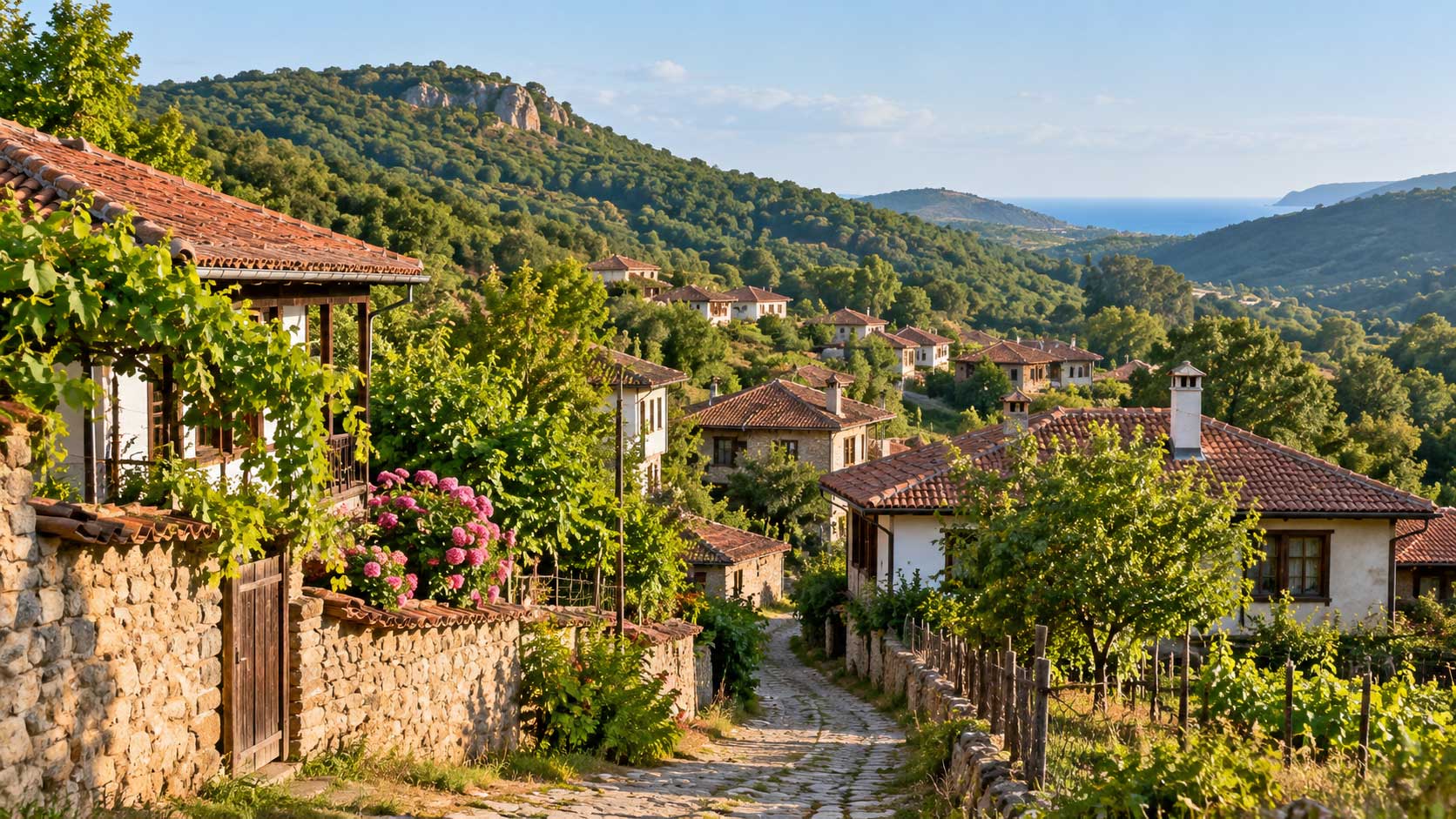
Brashlyan Bulgaria is a peaceful historic village tucked deep into the green hills of Strandzha in the southeastern part of the country. Old wooden houses line quiet lanes, red-tiled roofs peek through gardens, and dense oak and beech forests surround the village on almost every side.
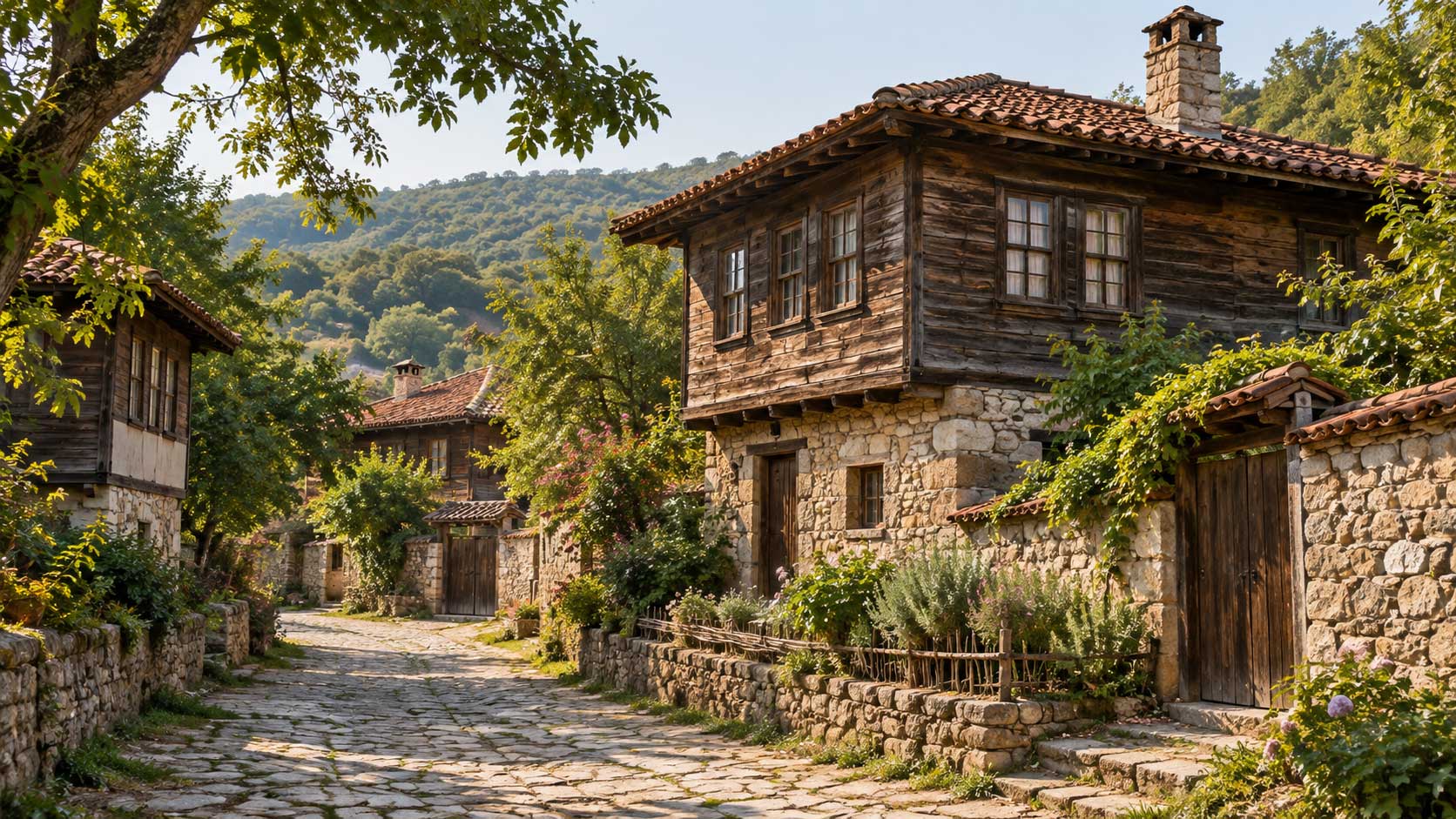
Located about 14 kilometers northwest of Malko Tarnovo, Brashlyan is protected as an architectural reserve and is known for its traditional Strandzha houses, some dating back around two centuries. Stone ground floors, timber upper levels, wooden verandas and weathered gates give the village a character that feels quite different from Bulgaria’s better-known Revival towns.
But Brashlyan is more than a collection of beautiful old houses. Its small St. Dimitar Church, restored monastery school, ethnographic house and local stories preserve pieces of the culture and everyday life that once shaped this remote corner of Bulgaria.
The surrounding Strandzha Nature Park adds another layer to the experience. Forest trails lead toward old trees, chapels, archaeological sites and secluded countryside, making Brashlyan a rewarding stop for travelers who enjoy combining history with nature.
For anyone searching for a quieter side of Bulgaria—away from crowded resorts and major sightseeing routes—Brashlyan is one of Strandzha’s most atmospheric historic villages.
Why Visit Brashlyan?
Brashlyan is worth visiting because it offers something increasingly difficult to find: a historic Bulgarian village that still feels peaceful, lived-in and closely connected to its surroundings.
Unlike some of Bulgaria’s better-known heritage destinations, Brashlyan has never developed into a busy tourist center. You can wander through the village at your own pace, notice the details of the traditional houses and hear little more than birds, footsteps and the occasional conversation drifting from a nearby garden.
Traditional Architecture in a Forest Setting
One of the main reasons to visit is the architecture. Many homes preserve the characteristic Strandzha style, with stone lower floors, timber upper levels, deep wooden eaves and courtyards hidden behind old gates.
The setting makes the village even more memorable.
Brashlyan lies among the densely forested hills of Strandzha, giving it a secluded atmosphere that feels very different from Bulgaria’s larger towns and more open landscapes. Winding roads, thick woodland and scattered villages make the journey here feel like part of the experience rather than simply a way to reach the destination.
Brashlyan is especially appealing if you enjoy:
- traditional Bulgarian architecture
- quiet historic villages
- photography
- local history and folklore
- forest walks and nature
- slow travel away from crowded attractions
You do not need a long sightseeing checklist to enjoy Brashlyan. Much of its charm comes from simply wandering through the old streets, noticing the houses and gardens, and giving yourself enough time to appreciate how peaceful this corner of Bulgaria still feels.
A Brief History of Brashlyan
Brashlyan has a long history shaped by the remote forests and borderlands of Strandzha.
The village was formerly known as Surmashik, sometimes transliterated as Sarmashik. Its present Bulgarian name, Brashlyan, is a literal translation of the older name and means ivy. Surrounded by oak and beech forests, the village remained relatively isolated for generations, helping preserve much of its traditional character.
Life in Old Brashlyan
For centuries, life here was closely connected with the surrounding mountain landscape.
Animal husbandry and small-scale agriculture were important livelihoods throughout Strandzha, while forestry, crafts and other practical skills supported everyday village life. Traditional houses were designed around those needs, with sturdy stone ground floors often used for animals or storage and wooden living quarters above.
Many of those architectural features can still be seen in Brashlyan today.
Brashlyan and the Ilinden–Preobrazhenie Uprising
One of the most significant chapters in the village’s modern history came in 1903, during the revolutionary movement that led to the Ilinden–Preobrazhenie Uprising.
On April 2, 1903, Ottoman troops surrounded the Balyuvata House, where voivode Pano Angelov and revolutionary Nikola Ravashola were sheltering. Both men were killed there and are remembered among the first fighters associated with the Preobrazhenie uprising in Strandzha.
The Balyuvata House survives today as an important architectural and historical landmark.
A Village Where the Past Is Still Visible
Brashlyan’s historic character was eventually protected, and today the village is recognized as an architectural reserve.
Its narrow streets, centuries-old houses, St. Dimitar Church, restored monastery school and ethnographic house preserve a remarkably vivid picture of traditional life in Strandzha. Some of the village houses are around two centuries old and are protected as cultural monuments.
What makes Brashlyan especially interesting is that its history does not feel separated from the present. Old houses remain part of the living village, and walking through its quiet streets gives you a sense of how generations of families lived in this remote corner of southeastern Bulgaria.
Traditional Architecture in Brashlyan
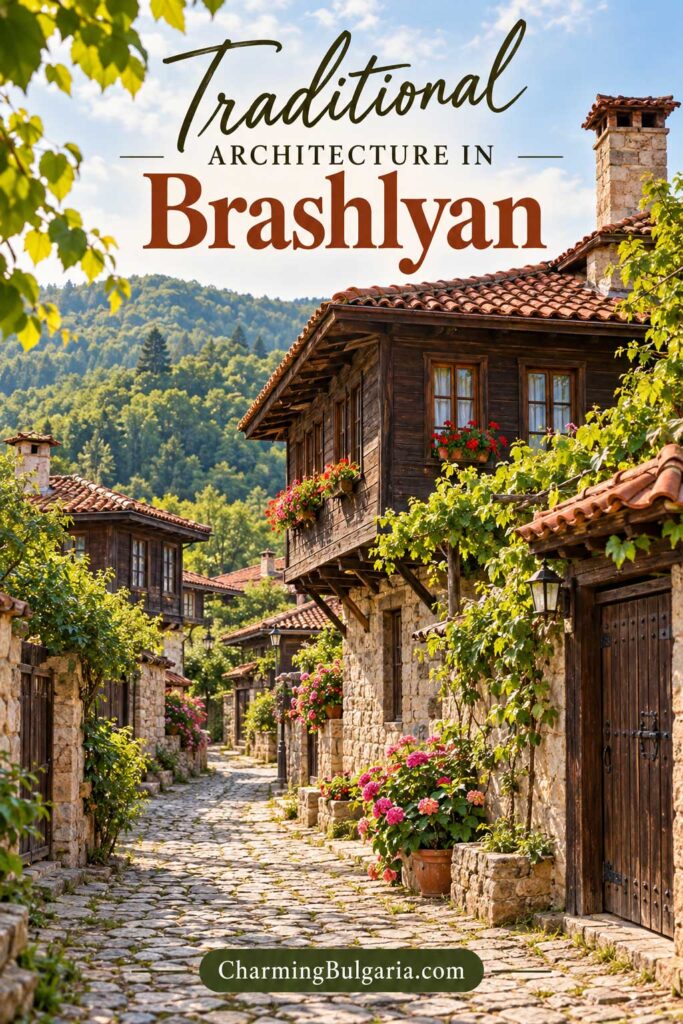
One of the most memorable things about Brashlyan is its traditional Strandzha architecture.
Many of the village houses were built with a practical two-story design suited to rural life. Stone was commonly used for the lower level, while the upper residential floor was constructed largely from wood. Several of Brashlyan’s surviving houses are around two centuries old and are protected as cultural monuments.
Wooden beams, tiled roofs, covered verandas and heavy gates give the village much of its character. Rather than looking grand or decorative, the houses feel sturdy and functional, shaped by the everyday needs of families living in this remote part of Strandzha.
Houses Built for Village Life
The lower stone floor was often used for practical purposes.
In Brashlyan’s preserved ethnographic house, for example, the ground level once served as a cattle pen, while the wooden floor above contained the main living spaces. The Balyuvata House follows a similar traditional plan, with a stone ground floor and an entirely wooden residential level reached by exterior wooden stairs.
This arrangement made sense for families who depended heavily on livestock, farming and household production.
Courtyards were equally important. Behind the wooden gates, families had space for animals, tools, gardens and everyday work, so the house and yard functioned together rather than as separate spaces.
A Village That Still Feels Authentic
Part of Brashlyan’s appeal is that its historic architecture does not feel separated from the rest of the village.
Traditional houses still stand beside gardens, fruit trees and narrow lanes. Some have been carefully restored, while others retain weathered wood, uneven stonework and signs of generations of use.
That mixture gives Brashlyan a more natural atmosphere than a reconstructed heritage attraction.
You are not simply looking at examples of old Bulgarian architecture. You are walking through a village where traditional Strandzha houses are still part of the landscape and everyday life.
St. Dimitar Church and the Monastery School
One of the most important historic landmarks in Brashlyan is the Church of St. Dimitar, a modest building with a surprisingly rich history.
The church was built in the late 17th century and is partly sunken into the ground, a feature found in older churches from the Ottoman period. According to Strandzha Nature Park, the site had previously been associated with an ancient Thracian sanctuary believed to have been dedicated to Dionysus.
From the outside, St. Dimitar may not look especially grand, but several details make it one of the most fascinating places in the village.
Its bell dates from the first half of the 19th century and was cast in Yaroslavl, Russia. The church was later recognized for its cultural and architectural importance, helping preserve it as part of Brashlyan’s historic landscape.
The Old Monastery School
Beside the church is a small restored monastery school, one of the most interesting reminders of everyday life in 19th-century Brashlyan.
A schoolroom was added to the church complex in 1870, and the school itself was founded the following year, in 1871.
In its early years, it was attended by boys around 12 or 13 years old. They learned to read and write in Bulgarian while also assisting the priest during church services.
The restored classroom shows just how different education was from the modern school experience.
Children did not sit at rows of wooden desks. Instead, they sat on animal skins spread across the floor and practiced writing with sticks on wax tablets.
It is a small detail, but one that makes the history of Brashlyan feel remarkably personal.
Standing in the old schoolroom, it is easy to imagine village children learning their first letters here more than a century ago, only a few steps from the church and surrounded by the forests of Strandzha.
The Balyuvata House and Revolutionary History
One of Brashlyan’s most important historic landmarks is the Balyuvata House, a traditional 19th-century home closely connected with the revolutionary history of Strandzha.
On April 2, 1903, several months before the Ilinden–Preobrazhenie Uprising, Ottoman troops surrounded the house. Inside were voivode Pano Angelov and revolutionary Nikola Ravashola, both of whom were killed during the confrontation.
Their deaths made the Balyuvata House an important memorial site connected with the revolutionary movement that was developing across Strandzha at the beginning of the 20th century.
A Traditional Strandzha House With a Powerful Story
The house is historically significant, but it is also a good example of traditional Strandzha residential architecture.
Its ground floor is built from stone reinforced with wooden belts, while the upper living floor is constructed entirely from wood. Two exterior wooden staircases lead to the residential level, reflecting the practical design commonly used in the region during the 19th century.
What makes the Balyuvata House especially memorable is the contrast between its peaceful appearance today and the dramatic events that took place here in 1903.
It is not simply another preserved old building. It connects the quiet Brashlyan of today with one of the most turbulent periods in Strandzha’s modern history.
The house remains privately owned, so visitors should view it respectfully and avoid treating it like an open museum unless access is specifically available. During the summer, its courtyard has also been used for local folklore performances.
For travelers interested in Bulgarian history, the Balyuvata House is one of the places in Brashlyan worth pausing to understand rather than simply passing by.
The Ethnographic House-Museum
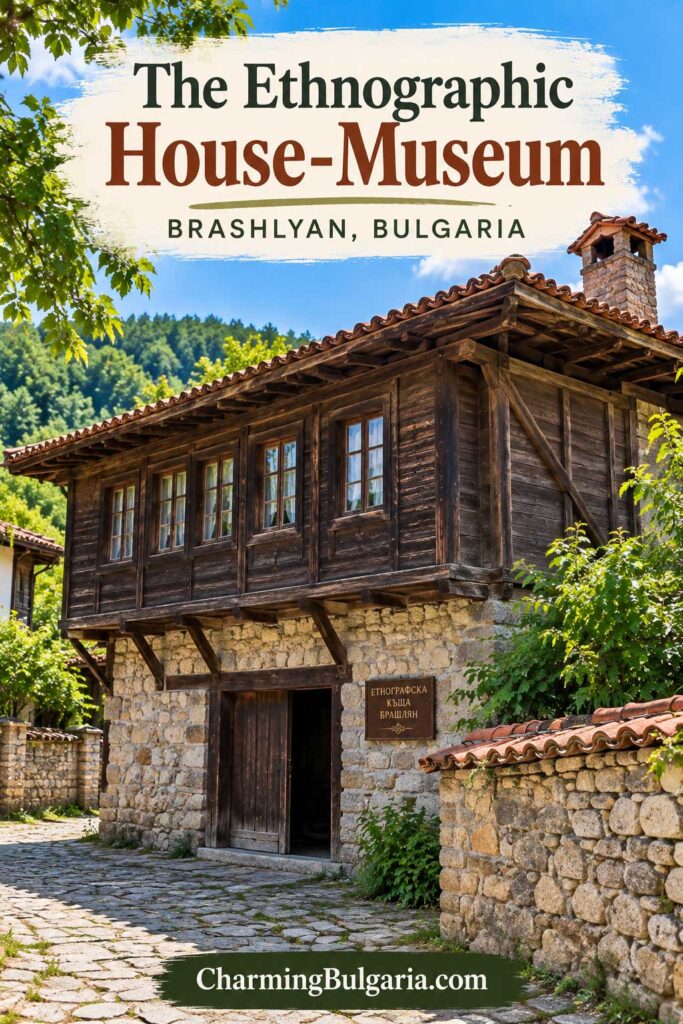
To get a clearer picture of everyday life in old Brashlyan, visit the village’s Ethnographic House-Museum.
The house is around 150 years old and preserves the traditional two-story design typical of Strandzha. Its lower level is built from stone, while the upper floor contains the main living spaces and is constructed largely from wood.
Inside, the museum recreates aspects of village life from the second half of the 19th century through the first half of the 20th century.
You can see household objects, traditional tools and examples of local crafts that were once part of everyday life. A large stone fireplace dominates part of the upper living area, while the lower floor—originally used for keeping livestock—has been adapted into a small space dedicated to traditional crafts.
Try Traditional Weaving
One of the most interesting features is the old loom.
Rather than simply viewing objects behind glass, visitors may have the chance to see how traditional weaving was done and, when demonstrations are available, even try working with the loom themselves.
It is a small experience, but it makes the history of Brashlyan feel much more immediate.
The museum helps you imagine the village not as a collection of preserved houses, but as a working rural community where families cooked over open fires, cared for animals, made textiles and relied on practical skills passed from one generation to the next.
Walking Through the Old Village Streets
One of the best things to do in Brashlyan is also the simplest: walk through the village without rushing.
You do not need a strict sightseeing route. Brashlyan is compact enough to explore on foot, and much of its charm comes from the small details you notice between the main landmarks.
Narrow lanes wind past traditional houses, old wooden gates hide quiet courtyards, and stone walls are softened by vines, flowers and fruit trees. It is the kind of place where slowing down makes a real difference.
Look Beyond the Main Landmarks
St. Dimitar Church, the Balyuvata House and the ethnographic museum are important stops, but some of Brashlyan’s most memorable scenes are much simpler.
You might pass an old barn beneath a red-tiled roof, a vegetable garden tucked behind a wooden fence or a weathered house partly hidden by climbing plants.
These everyday details are what make the village feel lived-in rather than staged for visitors.
Take a closer look at the buildings as you walk. Rough stone walls, heavy wooden beams, handmade gates and uneven roof tiles reveal the practical craftsmanship behind traditional Strandzha homes.
A Beautiful Village for Photography
Brashlyan is especially rewarding if you enjoy travel photography.
The mix of old architecture, greenery and narrow lanes creates interesting compositions almost everywhere you turn. Early morning and late afternoon are particularly attractive, when softer light brings out the warm tones of wood, stone and terracotta roof tiles.
You do not need a dramatic viewpoint to capture the character of the village.
Often the best photographs are the simplest: an old doorway, ivy climbing over a stone wall, flowers beside a wooden fence or an empty lane disappearing between traditional houses.
That quiet, understated beauty is a big part of what makes Brashlyan memorable.
Nature and Walking Trails Around Brashlyan
Brashlyan is surrounded by the dense forests of Strandzha Nature Park, making it an excellent destination for travelers who want to combine village history with time outdoors.
Marked walking routes lead from the village toward old trees, small chapels, archaeological remains and areas known for their unusual plant life. Oak and beech forests dominate the landscape, giving the countryside around Brashlyan a greener, quieter and more secluded feel than many other parts of Bulgaria.
Walk to St. Pantaleon Chapel
One of the easiest nearby walks leads to St. Pantaleon Chapel, about one kilometer south of the village.
The chapel stands in a peaceful wooded setting beside a tributary of the Katun River. Restored in the 1990s, it is surrounded by mature trees that add to the sense of seclusion. A simple recreation area with tables and benches also makes this a pleasant place to stop for a break.
Nearby is a spring traditionally associated with healing beliefs.
Whether or not you are interested in the folklore, the combination of forest, water and quiet surroundings makes this one of the most atmospheric short walks from Brashlyan.
Walk to St. Petka Chapel
For a slightly longer outing, a marked path leads roughly two kilometers east of the village toward St. Petka Chapel.
Like many sacred places in Strandzha, the chapel is connected with a holy spring and local traditions that have been passed down through generations.
These small forest chapels are an important part of the region’s identity. They are not grand monuments, but intimate places where religion, folklore and nature come together in a way that feels especially characteristic of Strandzha.
Slow Down and Enjoy the Forest
You do not need to plan a demanding hike to appreciate the countryside around Brashlyan.
Even a short walk beyond the village takes you beneath dense woodland, past streams and into the peaceful landscape that has helped keep Brashlyan relatively isolated for generations.
If you have enough time, spend a few hours exploring both the village and the surrounding forest. That combination of historic architecture, local traditions and quiet nature gives you a much fuller sense of what makes Brashlyan and Strandzha so distinctive.
Local Traditions and Village Life in Brashlyan
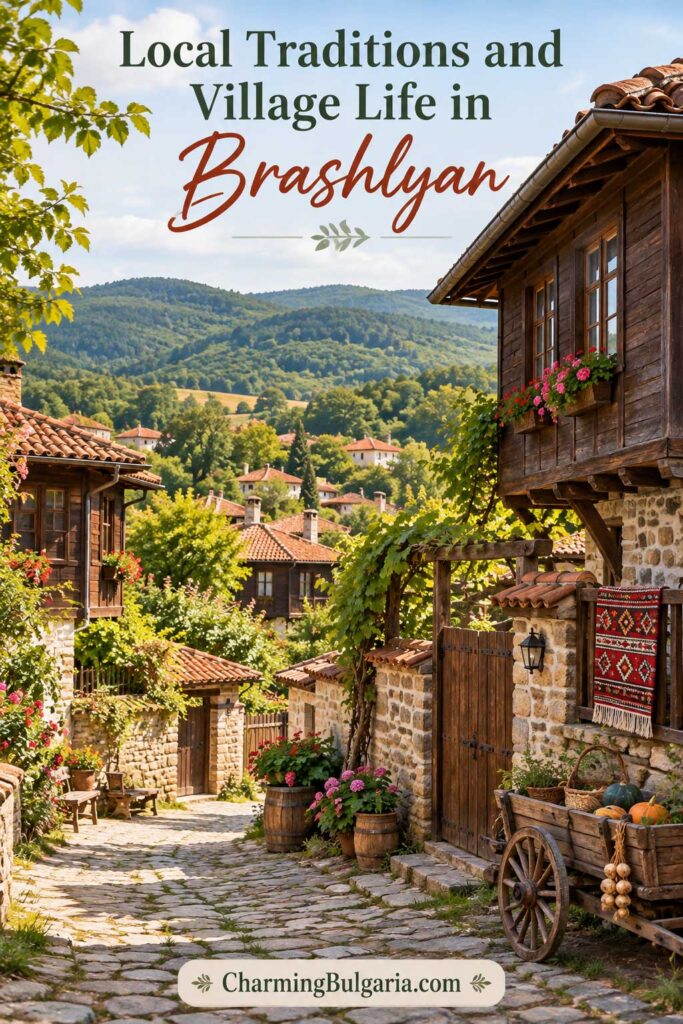
Brashlyan is interesting not only because of its preserved houses, but also because it still reflects the slower rhythm of life that has long shaped the Strandzha region.
For generations, families here depended on farming, livestock, forestry and practical household skills. Much of what people needed was produced locally, and knowledge was often passed from one generation to the next within the family.
That connection with traditional rural life is still part of Brashlyan’s character today.
Traditional Crafts and Everyday Skills
Skills such as weaving, woodworking, wool processing and food preservation were once part of ordinary village life.
The ethnographic displays in Brashlyan help show how important these activities were. Household textiles, tools and everyday objects were made to be useful and durable, often with materials available locally.
This practical approach can also be seen in the village itself.
Wooden gates, simple furniture, stone walls and sturdy houses were created for everyday use rather than decoration, which is one reason Brashlyan still feels so closely connected to its rural past.
Folklore and Local Customs
Strandzha has long been known for its rich folklore, religious traditions and beliefs connected with the natural landscape.
Small chapels hidden in the forest, holy springs and local stories about healing places are part of that wider cultural world. In Brashlyan, these traditions are especially visible around places such as St. Pantaleon and St. Petka chapels, where religion, folklore and nature come together.
These customs help explain why the forests around the village are more than simply scenery. For generations, certain springs, trees and secluded places held spiritual as well as practical meaning for local communities.
A Living Village, Not Just a Museum
Perhaps the most appealing thing about Brashlyan is that it still feels like a real village rather than an open-air museum.
People live behind many of the old wooden gates. Gardens are tended, houses are maintained and the village streets remain part of everyday life.
That is also why Brashlyan should be explored respectfully.
Many of the beautiful historic houses are private homes, so stay on public paths, avoid entering courtyards without permission and ask before taking close photographs of residents.
That everyday life is not separate from Brashlyan’s historic character. It is part of what makes the village feel authentic in the first place.
Best Time to Visit Brashlyan
Brashlyan can be visited through much of the year, but spring and autumn are especially rewarding if you want to enjoy both the village and the surrounding Strandzha countryside.
In spring, the forests turn bright green, wildflowers appear along roads and walking paths, and the milder weather is usually comfortable for exploring on foot.
It is an excellent season for combining the historic village with short walks through Strandzha Nature Park.
Summer in Brashlyan
Summer brings long days, lush vegetation and plenty of time for exploring.
Southeastern Bulgaria can become hot, but Brashlyan’s forested setting provides more shade than many exposed inland areas. If you are walking through the village or heading onto nearby trails, early morning and late afternoon are usually the most pleasant times of day.
Summer also works well if Brashlyan is part of a larger road trip through Malko Tarnovo, Strandzha and Bulgaria’s southern Black Sea coast.
Autumn Colors in Strandzha
Autumn may be the most atmospheric season to visit Brashlyan.
As the surrounding forests shift to shades of gold, orange and brown, the old stone walls, wooden houses and red-tiled roofs blend beautifully into the landscape.
The softer seasonal light also makes autumn particularly good for photography.
With the busiest summer travel period over, the village can feel even quieter, making this a great time for slow walks and exploring the surrounding countryside.
What About Winter?
Winter gives Brashlyan a very different character.
The village becomes especially quiet, and mist, bare trees or occasional snow can create a dramatic atmosphere. On the other hand, wet or icy conditions may make forest trails less convenient, and some local visitor services can be more limited outside the main travel season.
For most travelers, late spring through autumn offers the easiest overall experience.
Whenever you visit, give yourself enough time to wander through the old streets, explore a little beyond the village center and enjoy the peaceful Strandzha setting without rushing.
How to Get to Brashlyan
Brashlyan’s secluded location is part of its appeal, but it also means that traveling by car is the easiest way to visit.
The village lies about 64 kilometers from Burgas and approximately 14 kilometers northwest of Malko Tarnovo, within Strandzha Nature Park. It sits away from the busiest tourist routes, surrounded by the forested hills that give this part of southeastern Bulgaria its distinctive character.
Driving From Burgas
From Burgas, head south toward Malko Tarnovo and Strandzha Nature Park.
As you leave the coast behind, the scenery gradually changes. Busier roads and flatter countryside give way to wooded hills, winding stretches of road and small settlements scattered through the forest.
Brashlyan is reached by a local road branching from the main Burgas–Malko Tarnovo route.
The drive is part of the experience, so allow a little extra time rather than treating the village as a quick roadside stop. Strandzha’s winding roads and forest scenery are best enjoyed without rushing.
From Malko Tarnovo
Brashlyan is particularly easy to combine with Malko Tarnovo, which lies only about 14 kilometers away.
You can explore Brashlyan in the morning and continue to Malko Tarnovo later in the day, or use Malko Tarnovo as a base for a longer trip through Strandzha.
This also makes it easier to combine the village with hiking routes, archaeological sites and other small settlements in the region.
Can You Reach Brashlyan by Public Transport?
Public transportation in this rural part of Bulgaria is limited.
Strandzha Nature Park publishes regional bus information for routes connecting Burgas, Brashlyan and Malko Tarnovo, but rural services may operate only on selected days and schedules can change.
If you plan to visit without a car, confirm the latest departure and return times before traveling rather than relying on an older online timetable.
For most visitors, having a car provides much more flexibility and makes it easier to explore several places in Strandzha during the same trip.
A Good Stop on a Strandzha Road Trip
Brashlyan fits naturally into a road trip through southeastern Bulgaria.
You can spend a few hours walking through the historic village, follow a short forest trail and then continue toward Malko Tarnovo or other parts of Strandzha Nature Park.
Brashlyan takes a little more effort to reach than Bulgaria’s better-known tourist towns, but that relative isolation is also a large part of its appeal. It is one of those places where the journey through Strandzha feels like part of the destination.
What to See Near Brashlyan
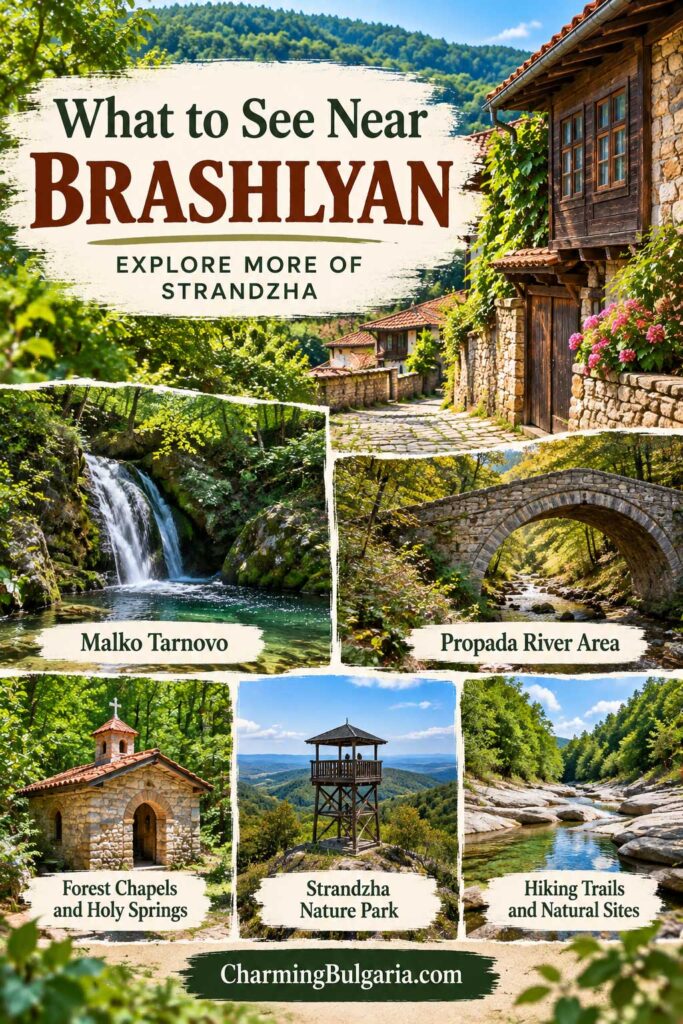
Brashlyan is small enough to explore in a few hours, which makes it easy to combine with other places in Strandzha.
The surrounding region offers a mix of forest landscapes, historic villages, Thracian archaeological sites and small towns. If you have a car, Brashlyan can easily become part of a full day—or several days—exploring southeastern Bulgaria.
Malko Tarnovo
The most natural place to combine with Brashlyan is Malko Tarnovo, only about 14 kilometers away.
The small town is one of the best bases for exploring inland Strandzha and has deep connections with the region’s history, archaeology and traditional culture. From here, you can continue toward archaeological sites, forest areas and other villages scattered throughout the mountains.
If you are spending more than one day in Strandzha, Malko Tarnovo is also a practical place to stay, eat and plan additional excursions.
Mishkova Niva
Near Malko Tarnovo, Mishkova Niva is one of the most important archaeological sites in Strandzha.
Located about three kilometers southwest of the town, the complex developed over centuries from an early Thracian dolmen and burial mound into a monumental sanctuary and mausoleum. During the Roman period, the site was rebuilt with large marble blocks and became an important religious center associated with the worship of a mythical ancestor-hero and Apollo.
For travelers interested in ancient Bulgaria, Mishkova Niva adds a completely different layer to a day otherwise focused on traditional villages and Revival-era architecture.
Strandzha Nature Park
Brashlyan lies within Strandzha Nature Park, so you do not need to travel far to experience the region’s natural side.
Forest roads, walking routes, old trees, streams and secluded countryside surround the village. Strandzha is also known for its distinctive vegetation and protected natural areas, which help give the region a landscape unlike most other parts of Bulgaria.
Even if you are not planning a long hike, leave some time simply to enjoy the drive through the forest and make a few stops along the way.
Travelers interested in traditional villages can also continue toward Balgari and Brodilovo, two more villages that reveal the distinctive culture and landscapes of southeastern Bulgaria.
Continue Toward the Southern Black Sea Coast
If Brashlyan is part of a longer road trip, you can eventually continue toward Bulgaria’s southern Black Sea coast.
Ahtopol, Sinemorets and Rezovo are all part of the wider Strandzha region and provide a dramatic contrast to the quiet inland villages. Here, dense forests eventually give way to beaches, rocky coastline, river landscapes and views across the Black Sea.
This makes Brashlyan a particularly interesting inland stop if you are already exploring Bulgaria’s far southeastern coast.
Turn the Visit Into a Full Strandzha Day
A relaxed itinerary could begin with a morning walk through Brashlyan, continue to Malko Tarnovo, and then include Mishkova Niva or another nearby nature stop in the afternoon.
If you have several days, continue deeper into Strandzha or toward the coast rather than trying to squeeze everything into one day.
This is a region that rewards slow travel. Choose a few places, leave room for forest roads and unexpected stops, and enjoy the journey between them as much as the destinations themselves.
How Long to Spend in Brashlyan
Brashlyan is a small village, so you do not need a full day to see its main historic sights.
For most visitors, two to four hours is enough to walk through the old streets, visit the church and ethnographic sites, take photographs and enjoy the atmosphere without rushing.
If you also want to follow one of the nearby forest trails or walk to a chapel, plan on spending half a day.
A Short Visit
If Brashlyan is one stop on a larger Strandzha road trip, around two hours can still give you a good introduction to the village.
Focus on the main sights:
- walk through the historic center
- visit St. Dimitar Church
- see the old monastery school
- stop by the Balyuvata House
- explore a few of the quieter lanes and traditional houses
This works especially well if you plan to continue toward Malko Tarnovo later in the day.
Half a Day in Brashlyan
A half-day visit gives you more time to experience what makes Brashlyan special.
After exploring the village, you can follow one of the shorter walking routes into the surrounding forest, visit a nearby chapel or simply spend more time photographing the traditional houses and quiet streets.
Brashlyan is not a place where you need to move quickly from one attraction to another.
Its appeal comes from the combination of architecture, history, nature and peaceful village life, so an extra hour or two can make the visit feel much more relaxed and memorable.
Should You Stay Overnight?
An overnight stay is not necessary for most visitors, especially if you are already staying in Malko Tarnovo or exploring Strandzha by car.
However, spending a night somewhere in the region can be worthwhile if you want to explore additional hiking trails, archaeological sites and villages without trying to fit everything into a single day.
Early mornings and evenings are especially peaceful in Strandzha, when the roads are quieter and the surrounding forests take on an even more secluded atmosphere.
Practical Tips for Visiting Brashlyan
Brashlyan is an easy village to explore, but a little preparation can make the visit more comfortable. This part of Strandzha is rural, quiet and far less developed for tourism than Bulgaria’s major cities and coastal resorts.
Wear Comfortable Shoes
Brashlyan is best explored on foot.
Some village streets and paths are uneven, so comfortable walking shoes are a better choice than sandals or dressier footwear. If you plan to continue onto one of the nearby forest trails, shoes with good grip are even more useful, particularly after rain.
Bring Water and a Few Snacks
Do not expect the same range of shops, cafés and restaurants you would find in a larger Bulgarian town.
Bring water and a few snacks, especially if you plan to spend several hours exploring the village and surrounding forest.
You can also combine your visit with lunch or dinner in Malko Tarnovo, where you will generally find more options.
Carry Some Cash
It is worth carrying a small amount of cash in euros, even if you normally pay by card.
Smaller rural businesses, guesthouses or local attractions may not always accept cards, so having cash available can be useful for food, drinks, entrance fees or locally made products.
Bulgaria adopted the euro in January 2026, and the euro is now the country’s official currency.
Download an Offline Map
Mobile reception can be less reliable once you move deeper into the forested parts of Strandzha.
Downloading an offline map before your trip is a good precaution, particularly if you plan to visit forest chapels, walking trails or archaeological sites outside the main settlements.
Check Opening Hours Before You Go
Small museums and heritage buildings in villages such as Brashlyan may not follow the regular schedules you would expect at major tourist attractions.
Opening hours can vary by season, and access to some interiors may depend on a local guide or prior arrangement.
If visiting a particular museum, church interior or historic house is important to you, check the latest information before making the trip.
Respect the Village
Remember that Brashlyan is not simply a heritage attraction—it is still home to local residents.
Many of its beautiful historic houses are private property. Avoid entering courtyards without permission, stay on public paths and ask before taking close photographs of residents.
A respectful approach helps preserve the quiet, lived-in atmosphere that makes Brashlyan Bulgaria so rewarding to visit in the first place.
Where to Stay Near Brashlyan
If you want to experience Strandzha at a slower pace, spending a night in or near Brashlyan can be a wonderful addition to your trip.
Accommodation in the village is naturally limited compared with Bulgaria’s larger tourist destinations, but Brashlyan has several small guesthouses and traditional rural properties. Many fit the character of the village much better than a conventional hotel would, offering a quieter and more personal stay surrounded by old houses and forest.
Do not come expecting resorts or a busy hotel district. Staying in Brashlyan is more about peaceful evenings, traditional surroundings and waking up in the heart of Strandzha.
Stay in Brashlyan for the Atmosphere
Choosing a guesthouse in the village makes sense if your priority is peace, traditional architecture and slow travel.
After most day visitors leave, Brashlyan becomes even quieter. An overnight stay gives you the chance to walk through the old streets in the early morning or evening, when the lanes are peaceful and the historic houses feel especially atmospheric.
Some guesthouses are themselves traditional or restored Strandzha homes, which can make the overnight experience feel like a natural extension of exploring the village. One current example is Maystor Nikola Gogov, a restored historic house offering accommodation and traditional Strandzha meals.
Staying locally also puts you close to the surrounding walking routes, making it easier to start a forest walk before continuing your journey through Strandzha.
Stay in Malko Tarnovo for More Convenience
Another practical option is to stay in Malko Tarnovo, around 14 kilometers from Brashlyan.
The town has a wider selection of accommodation and is a convenient base if you plan to spend several days exploring Strandzha. Current listings include several guesthouses and apartments, giving travelers more flexibility than staying directly in the smaller village.
From Malko Tarnovo, it is easy to visit Brashlyan as a half-day trip while also exploring archaeological sites, forest trails and other attractions in the region.
Book Ahead for Weekends and Summer
Because the number of places to stay in Brashlyan is relatively small, it is worth booking ahead for summer weekends, public holidays and other busy travel periods.
Availability can also change seasonally, so check current listings before building an overnight stay into your itinerary.
For a simple day trip, staying overnight is not necessary. But if you want to experience the quieter, more traditional side of Strandzha, spending a night in Brashlyan or nearby Malko Tarnovo can turn a short visit into a much richer experience.
Traditional Food to Try Around Brashlyan
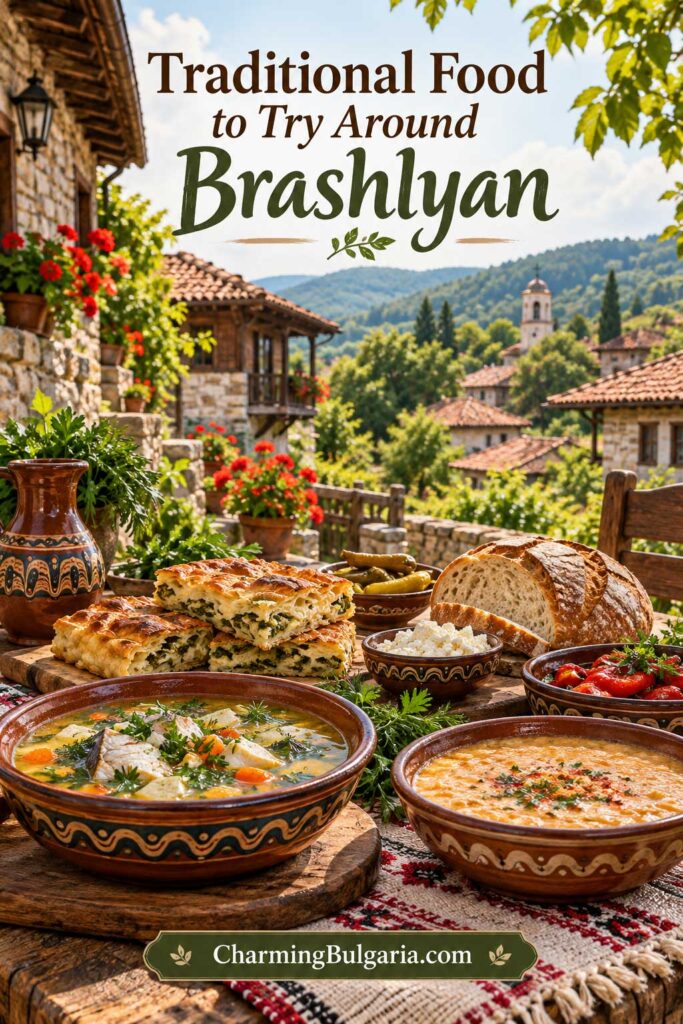
Food is another reason to slow down while exploring Strandzha.
Traditional cooking in this part of southeastern Bulgaria grew out of rural life and the ingredients people could raise, grow, gather or preserve themselves. The result is a cuisine that tends to be simple, filling and closely tied to the seasons.
Try Traditional Fish Soup
One dish connected with Brashlyan is traditional fish soup, which has been featured at the Delicious Dishes of Strandzha culinary festival, showcasing traditional recipes from communities across the region.
It may seem unexpected in a forested inland village, but freshwater fish has long had a place in the food traditions of the wider region.
If you come across homemade fish soup during your visit, it is worth trying as part of the local culinary experience.
Look for Zelnik and Trahana
Nearby Malko Tarnovo is also associated with traditional Strandzha dishes such as zelnik and trahana.
Zelnik is a rustic baked pastry made with thin layers of dough and savory fillings, while trahana is an old preserved grain-based mixture often prepared as a warm soup or porridge.
Recipes vary from household to household, so the same dish may taste quite different depending on where you try it.
Simple Village Food Is Part of the Experience
Depending on the season, you may also find dishes made with beans, peppers, leeks, bulgur, mushrooms, dairy products and other ingredients traditionally used in Strandzha kitchens.
Do not expect a large restaurant scene in Brashlyan itself. The village is small, and dining options can be limited or seasonal.
Instead, think of food as part of the wider Strandzha experience. A home-cooked meal at a guesthouse, a small local tavern or a traditional dish in Malko Tarnovo can fit naturally into a day of exploring the region.
Like Brashlyan itself, the food of Strandzha is often at its best when it is simple, local and rooted in tradition.
How to Spend Half a Day in Brashlyan
Brashlyan is easy to enjoy in half a day, especially if you are exploring Strandzha by car and want to combine village history with a short walk in nature.
Morning: Explore the Historic Village
Start with a slow walk through Brashlyan’s old streets.
Take time to notice the traditional Strandzha houses, stone walls, wooden gates and quiet courtyards before making your way to St. Dimitar Church and the old monastery school.
From there, continue toward the Balyuvata House and the ethnographic house to learn more about everyday village life and Brashlyan’s revolutionary history.
There is no need to rush between these sights. Part of the appeal is simply seeing how the historic buildings fit into the village around them.
Late Morning: Explore the Quieter Streets
Once you have seen the main landmarks, leave some time for wandering.
Follow the smaller lanes, photograph traditional houses and look for details that are easy to miss at first glance—weathered doors, old roof tiles, stone foundations, gardens and vines climbing over wooden fences.
Brashlyan is compact, but these quieter corners are often what make the village most memorable.
Early Afternoon: Walk to St. Pantaleon Chapel
If the weather is good, finish your visit with a short walk into the surrounding Strandzha forest.
The route toward St. Pantaleon Chapel, about one kilometer south of the village, is a good choice if you want to experience the countryside without committing to a longer hike.
The wooded setting, nearby spring and quiet surroundings provide a peaceful contrast to the historic streets of Brashlyan.
Bring water and comfortable shoes, especially if the ground is wet after rain.
Continue to Malko Tarnovo
After exploring Brashlyan, continue toward Malko Tarnovo for lunch and more sightseeing.
The two places work especially well together because they offer different sides of Strandzha: Brashlyan gives you traditional village architecture and forest scenery, while Malko Tarnovo adds more regional history, archaeology and local services.
Together, they make an easy and rewarding day trip through one of Bulgaria’s most distinctive regions.
Photography Tips for Brashlyan
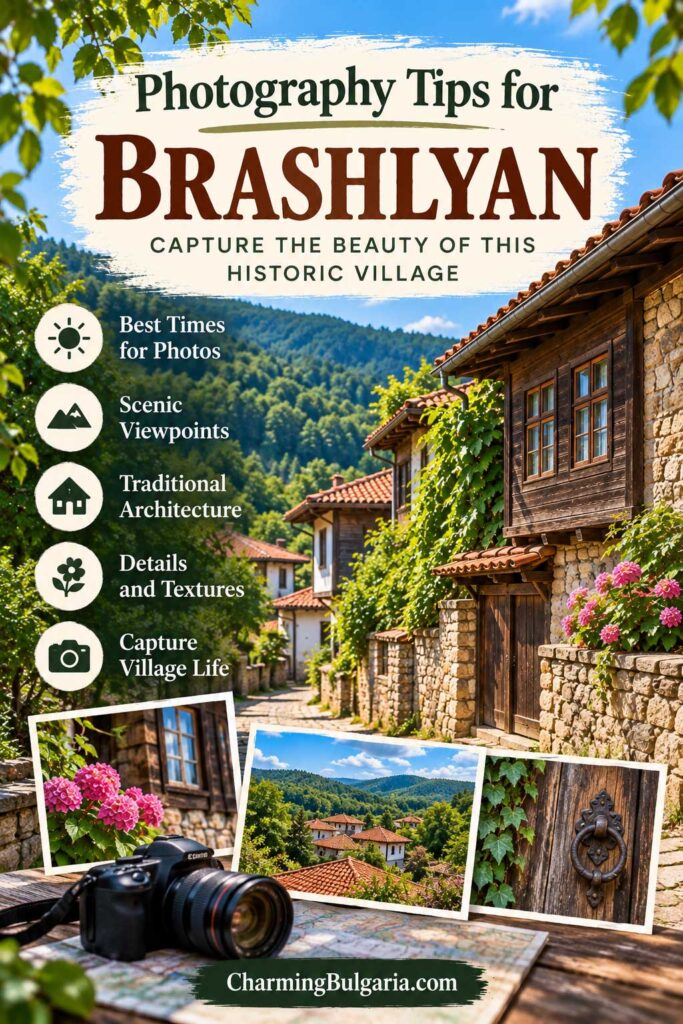
Brashlyan is one of those villages where the most memorable photographs often come from the smallest details rather than the biggest landmarks.
Traditional houses, weathered wooden gates, stone walls, red-tiled roofs and the surrounding Strandzha greenery create plenty of natural compositions throughout the village.
Visit Early or Late in the Day
Early morning and late afternoon usually provide the most flattering light.
At these times, the sun is softer, shadows are less harsh and the textures of old timber, stone and roof tiles stand out more clearly than they do around midday.
Morning also has another advantage: the village is often especially quiet, making it easier to photograph empty lanes and traditional houses without distractions.
Focus on the Small Details
Do not limit yourself to wide views of entire houses.
Some of the most interesting photographs may be a weathered wooden doorway, an old window frame, vines climbing across a stone wall or flowers growing beside a traditional fence.
Details such as handmade gates, roof tiles, stone foundations and narrow lanes help capture the character of Brashlyan just as well as broader village scenes.
Include the Forest in Your Photos
Brashlyan’s setting is an important part of its identity.
Try framing traditional houses with trees or including the surrounding forest and hills in wider compositions. This helps show how naturally the village fits into the landscape of Strandzha.
The contrast between old architecture and dense greenery is especially attractive in spring and early autumn.
Photograph the Village Respectfully
Many of Brashlyan’s historic houses are still private homes.
Avoid entering courtyards without permission, and ask before taking close photographs of local residents.
Part of what makes Brashlyan special is that it still feels like a real village rather than an outdoor museum. Respecting that everyday life is just as important as finding the perfect photograph.
Is Brashlyan Worth Visiting?
Yes—especially if you enjoy historic villages, traditional architecture, quiet surroundings and places that still feel slightly off the main tourist trail.
Brashlyan is not packed with major attractions, and that is part of what makes it appealing.
The experience here is less about checking off sights and more about atmosphere. You come to walk between old Strandzha houses, visit a small historic church, learn about local village life and spend time in the surrounding forest.
Who Will Enjoy Brashlyan Most?
Brashlyan is particularly rewarding for travelers interested in:
- traditional Bulgarian villages
- historic architecture
- local history and ethnography
- slow travel
- photography
- forest walks
- folklore and traditional culture
- quieter destinations away from large tour groups
It also fits naturally into a road trip through Strandzha and southeastern Bulgaria.
Who Might Find It Too Quiet?
If you prefer destinations with large museums, nightlife, busy shopping streets and a long list of organized attractions, Brashlyan may feel too small.
This is not a place that rewards rushing.
Its charm comes from noticing the details: weathered wooden gates, old stone walls, quiet lanes, forest views and the way the historic village blends into the surrounding Strandzha landscape.
For travelers who enjoy that slower style of travel, Brashlyan is one of the most rewarding historic villages in southeastern Bulgaria.
Why Brashlyan Feels Different From Bulgaria’s Better-Known Villages
Bulgaria has many beautiful historic villages, but Brashlyan offers a noticeably different experience.
Places such as Koprivshtitsa, Bozhentsi and Shiroka Laka are known for their preserved architecture, museums and strong cultural identity. Brashlyan shares some of that historic character, yet its setting deep in Strandzha gives it a quieter and more secluded atmosphere.
That difference is a large part of its appeal.
A Village Surrounded by Forest
Brashlyan lies among the wooded hills of Strandzha, away from Bulgaria’s busiest sightseeing routes.
The journey here feels more deliberate than a stop in one of the country’s better-known heritage towns. Forest roads, scattered settlements and the surrounding countryside create a stronger sense of remoteness before you even reach the village.
Once you arrive, that landscape remains part of the experience. Historic houses sit only a short walk from woodland, streams and small forest chapels.
Historic Without Feeling Overly Polished
Brashlyan does not feel like a carefully arranged open-air museum.
Some houses have been restored, while others still show weathered timber, uneven stonework and the marks of generations of use. Gardens extend toward old fences, vines climb walls and everyday village life continues around the historic buildings.
That mixture makes Brashlyan feel lived-in rather than frozen in time.
A Distinctly Strandzha Character
The village also reflects a part of Bulgaria with its own strong cultural identity.
Traditional architecture here is closely connected with the forests and rural lifestyle of Strandzha. Small chapels, holy springs, local folklore and old customs are woven into the surrounding landscape in ways that feel quite different from villages in the Rhodopes, Balkan Mountains or central Bulgaria.
For travelers who have already explored some of Bulgaria’s more famous historic settlements, Brashlyan offers another side of rural heritage: quieter, greener and deeply connected to the forests and traditions of Strandzha.
What to Pack for a Visit to Brashlyan
You do not need much special gear for Brashlyan, but a few practical items can make the visit more comfortable.
Because the village combines uneven streets, forest paths and a relatively remote setting, it helps to be prepared for a little walking.
Comfortable Walking Shoes
Good footwear is one of the most useful things to bring.
Some village lanes are uneven, and forest paths can become muddy after rain. Sneakers or lightweight hiking shoes are a better choice than sandals if you plan to explore beyond the main streets.
Water and Snacks
Bring enough water, especially during the warmer months.
Brashlyan is a small village, so it is sensible to carry a few snacks as well, particularly if you plan to spend several hours walking through the village and surrounding forest.
A Light Extra Layer
A light jacket or sweater can be useful in spring, autumn and during early morning visits.
Even when temperatures are warm, shaded areas in the forest can feel noticeably cooler.
Sun and Insect Protection
If you plan to walk through Strandzha, pack sunscreen and insect repellent.
Nearby trails pass through dense vegetation, where mosquitoes and other insects may be more noticeable during the warmer months.
A Camera or Fully Charged Phone
Brashlyan is full of small photographic details, from weathered wooden gates and stone walls to red-tiled roofs and forest scenery.
Make sure your phone or camera is fully charged before you arrive.
Offline Maps
Downloading an offline map before entering Strandzha is also a good idea.
Mobile coverage can be less reliable in remote forested areas, especially if you plan to visit chapels or walking trails outside the village.
A little preparation goes a long way and leaves you free to focus on what makes Brashlyan special: quiet streets, traditional architecture and the surrounding Strandzha landscape.
Brashlyan for Slow Travel
Brashlyan is especially well suited to travelers who prefer slow travel over packed sightseeing schedules.
There is little reason to rush here. The village is small, quiet and best experienced at an easy pace, with time to notice how the old houses, gardens and forest all fit together.
Pause beside a stone wall covered in greenery. Sit for a while near the church. Follow a quieter lane beyond the main sights, or keep walking until the village gradually gives way to forest.
Those simple moments are often what make Brashlyan most memorable.
Give Yourself More Time Than You Think
On paper, Brashlyan may look like a place you could see quickly.
You probably can—but rushing through it misses much of the appeal.
An extra hour gives you time to explore a side street, notice architectural details, stop for photographs or follow one of the short walking routes beyond the village.
The experience becomes less about how many sights you see and more about how well you get to know the place.
Combine Culture With Nature
Brashlyan works particularly well for slow travel because history and nature are so closely connected.
You can spend the morning exploring traditional houses, St. Dimitar Church and the old monastery school, then continue into the forests of Strandzha in the afternoon.
There is no need to choose between cultural sightseeing and time outdoors—the two naturally become part of the same visit.
Support Local Life
If you stay overnight, eat locally or buy something during your visit, choosing small local businesses can help support the community.
A locally run guesthouse, home-cooked meal or handmade product can also add more meaning to the trip than simply passing through for a few photographs.
Most importantly, remember that Brashlyan is still a living village.
Respect private homes, avoid entering courtyards without permission and give residents the same consideration you would want in your own neighborhood.
That balance—visiting without overwhelming the place—is exactly what helps preserve the quiet character that makes Brashlyan special.
Frequently Asked Questions About Brashlyan
Where is Brashlyan located?
Brashlyan is a historic village in southeastern Bulgaria, within Strandzha Nature Park. It lies about 14 kilometers northwest of Malko Tarnovo and can be reached by road from Burgas.
What is Brashlyan famous for?
Brashlyan is known for its traditional Strandzha houses, preserved village architecture, St. Dimitar Church, old monastery school and revolutionary history.
The village is also surrounded by forest trails, chapels and protected nature, making it a good destination for travelers interested in both Bulgarian history and the outdoors.
How much time do you need in Brashlyan?
For most visitors, two to four hours is enough to see the main sights and walk through the historic village.
Plan for half a day if you also want to visit one of the nearby forest chapels or spend more time exploring Strandzha Nature Park.
Is Brashlyan easy to reach?
The easiest way to reach Brashlyan is by car.
Public transportation in rural Strandzha is limited and schedules may vary, so having your own vehicle gives you much more flexibility, especially if you want to combine Brashlyan with Malko Tarnovo and other nearby places.
Is Brashlyan good for families?
Yes. Brashlyan can be a good destination for families who enjoy history, nature and easy outdoor exploration.
The village is compact and relatively easy to walk around, while nearby forest paths add an outdoor element to the visit. Comfortable footwear is recommended because some streets and trails can be uneven.
Can you stay overnight in Brashlyan?
Yes. There are small guesthouses and rural accommodations in and around Brashlyan, although choices are more limited than in larger tourist destinations.
Malko Tarnovo is another convenient option if you prefer a wider range of accommodation, restaurants and services.
What is the best time to visit Brashlyan?
Spring and autumn are especially good times to visit Brashlyan.
Spring brings fresh greenery, wildflowers and comfortable walking weather, while autumn adds beautiful color to the surrounding Strandzha forests.
Summer is also a good choice, particularly if you are combining Brashlyan with Malko Tarnovo or Bulgaria’s southern Black Sea coast.
Is Brashlyan worth adding to a Bulgaria road trip?
Yes, especially if you are traveling through Strandzha or southeastern Bulgaria.
Brashlyan offers a quieter and more traditional experience than Bulgaria’s major tourist destinations and combines easily with Malko Tarnovo, Strandzha Nature Park, archaeological sites and the southern Black Sea coast.
For travelers who enjoy historic villages, forest scenery and slower travel, Brashlyan is well worth the detour.
Why Brashlyan Deserves a Place on Your Bulgaria Itinerary
Brashlyan is the kind of place that shows how much of Bulgaria’s character can still be found away from the country’s busiest destinations.
You will not find grand boulevards, huge monuments or a packed sightseeing schedule here. Instead, Brashlyan offers old Strandzha houses, quiet village lanes, small historic landmarks, forest paths and a strong sense of place.
That simplicity is exactly what makes it memorable.
Take your time walking through the village. Notice the wooden houses and stone walls, visit St. Dimitar Church and the old monastery school, learn about Brashlyan’s revolutionary history, and, if you have time, follow one of the nearby paths into the surrounding forest.
Brashlyan also fits naturally into a wider trip through Strandzha and southeastern Bulgaria. Malko Tarnovo, forest chapels, archaeological sites and the southern Black Sea coast can all be combined into a slower road trip that reveals a very different side of the country.
If you enjoy historic Bulgarian villages, traditional architecture, peaceful nature and destinations that still feel closely connected to local life, Brashlyan is well worth adding to your itinerary.
More Charming Places to Explore in Bulgaria
If Brashlyan appeals to you, several other Bulgarian villages offer a similar combination of traditional architecture, local culture, history and beautiful natural surroundings.
- Balgari – Traditions and Nestinarstvo in Strandzha – Discover one of Strandzha’s best-known villages, closely associated with the centuries-old tradition of fire dancing and local folklore.
- Brodilovo – A Traditional Village Near the Black Sea – Explore a peaceful Strandzha village surrounded by forest and countryside not far from Bulgaria’s southern coast.
- Zheravna – A Step Back in Time – Walk among beautifully preserved wooden houses, quiet lanes and some of Bulgaria’s finest Revival-era architecture.
- Medven – A Quiet Revival Village Near Zheravna – Discover traditional homes, peaceful streets and mountain scenery in a village that still feels wonderfully unhurried.
- Bozhentsi – Cobblestone Streets and Bulgarian Revival Houses – Wander through stone-paved lanes lined with historic houses in one of Bulgaria’s most atmospheric architectural reserves.
- Koprivshtitsa – Bulgaria’s Colorful Revival-Era Treasure – Explore colorful historic homes, museums and cobblestone streets in one of Bulgaria’s most important Revival-era towns.
- Shiroka Laka – Traditional Houses, Music and Rhodope Culture – Experience distinctive Rhodope architecture, folklore and mountain traditions in one of southern Bulgaria’s best-known villages.
Visiting several of these places reveals just how varied Bulgaria’s historic villages can be. From the forest traditions of Strandzha to the wooden houses of Zheravna and the stone lanes of Bozhentsi, each region has developed its own architecture, customs and way of life while preserving a strong connection to the past.