Etara Bulgaria – Traditional Crafts, Architecture & Travel Guide

- January 10, 2026
- 5
- Culture & Traditions
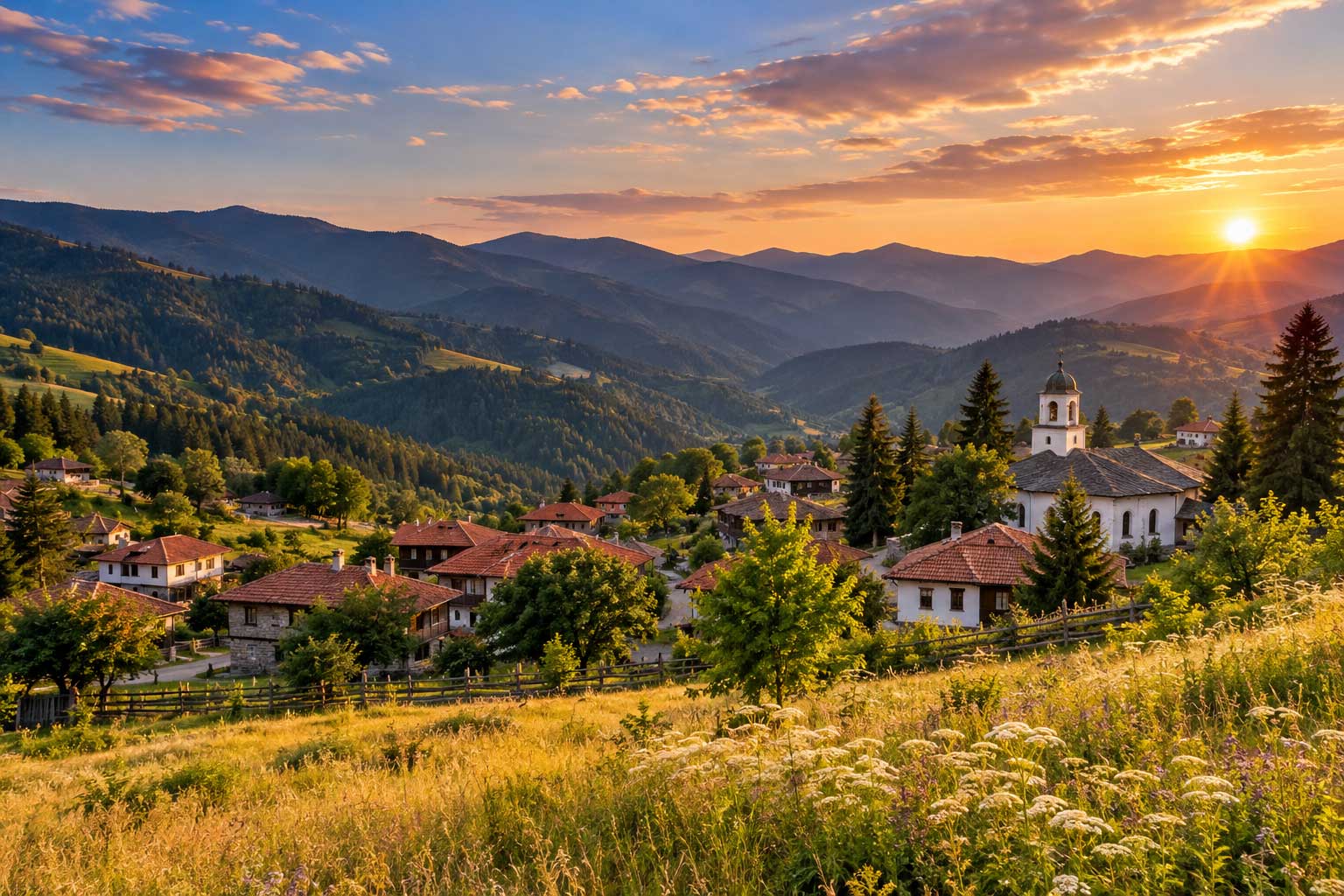
Etara Bulgaria is one of the best places in the country to experience traditional crafts, Revival-era architecture and living cultural heritage.
There are places where history is displayed behind glass, and then there is Etara, where the past still feels alive.
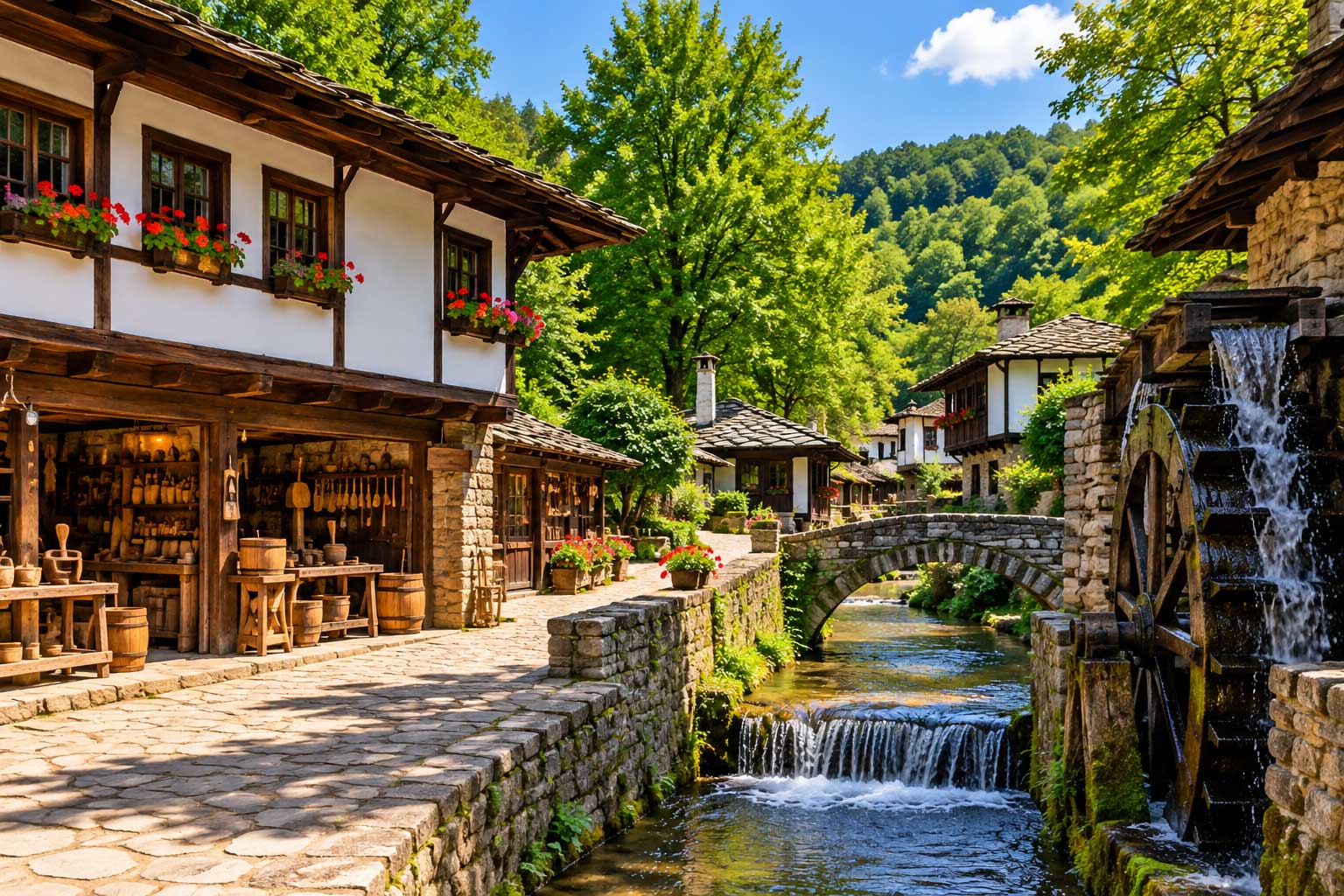
Set in a green valley just outside Gabrovo, this open-air ethnographic museum recreates the atmosphere of a Bulgarian craft settlement from the National Revival period. Stone paths wind between timber-framed houses, small workshops open directly onto the street, and the sound of running water follows you through much of the complex.
What makes Etara especially interesting is that it is not simply a collection of historic buildings. Traditional crafts are still practiced here, giving visitors a chance to see skills that once shaped everyday life across Bulgaria.
Inside the workshops, artisans work with pottery, wood, metal, textiles, leather and other materials using techniques passed down through generations. The museum’s Craftsman Street brings together workshops and buildings inspired by the character of Gabrovo during the 18th and 19th centuries.
Water is another important part of Etara’s story.
Channels running through the complex power historic machinery once used for grinding grain, processing wool and supporting different crafts. Etara’s collection of traditional water-powered installations offers a fascinating look at how flowing water was turned into a practical source of energy long before electricity became part of everyday life.
But Etara’s appeal goes well beyond its history.
Wooden balconies lean over narrow streets, stone roofs blend into the surrounding hills, and workshop shelves are filled with objects made by the artisans working inside. Between the sound of the stream, the working waterwheels and the forested slopes around the museum, the entire place encourages you to slow down.
For travelers interested in traditional Bulgarian crafts, Revival-era architecture and everyday village life, Etara offers one of the most immersive cultural experiences in central Bulgaria.
Etara does more than preserve Bulgarian traditions.
It keeps many of them alive.
Where Is Etara and How to Get There
Etara is located about 8 kilometers south of Gabrovo, at the northern edge of the Balkan Mountains in central Bulgaria.
Its location also makes Etara easy to combine with Bozhentsi and Tryavna, two of the best places nearby for travelers interested in traditional Bulgarian architecture.
Getting to Etara by Car
Driving is the easiest and most flexible way to reach Etara.
From central Gabrovo, the journey usually takes around 15 minutes, making the museum an easy half-day outing from the city.
If you are traveling from Veliko Tarnovo, allow a little over an hour by car. This makes it possible to combine Etara with other attractions in central Bulgaria, especially if you are planning a road trip through the Balkan Mountains.
Parking is available near the museum, although weekends, public holidays and major cultural events can be noticeably busier.
Visiting Etara Without a Car
You do not necessarily need a rental car if you are staying in Gabrovo.
Gabrovo city buses serve the Etara area, although routes and schedules can change, so check current transport information before traveling. A taxi from central Gabrovo is another easy option because the museum is only a short drive away.
Once you arrive, you will explore Etara on foot, so comfortable shoes are a good idea for the cobblestone paths and uneven surfaces.
Places to Combine With Etara
Etara works especially well as part of a longer day exploring the Gabrovo region.
Nearby places worth adding to your itinerary include:
- Sokolski Monastery, tucked into the mountains just beyond Etara
- Gabrovo, known for its crafts, museums and famous sense of humor
- Shipka Memorial Church, one of the region’s most recognizable landmarks
- Shipka Pass, for mountain scenery and Bulgarian history
- Bozhentsi, a beautifully preserved Revival-era village
- Tryavna, known for traditional architecture and woodcarving
If your schedule allows, spending one or two nights in Gabrovo or Tryavna gives you enough time to visit Etara without rushing and explore several of the surrounding historic towns, villages and mountain attractions.
The Story Behind Etara
Etara began with a simple but ambitious idea: to preserve a way of life that was rapidly disappearing from the Bulgarian mountains.
Construction of the museum started in 1963, largely through the vision of Lazar Donkov, a Gabrovo-born researcher who devoted years to studying the region’s traditional buildings, crafts, workshops and water-powered machinery.
His goal was not to create a conventional museum filled only with objects behind glass.
He wanted visitors to experience the atmosphere of an old Bulgarian craft settlement—to walk through its streets, enter its workshops and understand how people once lived and worked.
The first part of the complex developed around existing water-powered installations along the Sivek River. Other structures and workshops were later restored, reconstructed or transferred from nearby villages. Etara officially opened to visitors on September 7, 1964, and continued expanding in the years that followed.
You can read more about the museum’s beginnings in the official history of Etara.
A Window Into Bulgaria’s National Revival Period
Much of Etara recreates the atmosphere of the late 18th and 19th centuries, when Gabrovo was developing into an important center of crafts, trade and small-scale production.
The narrow streets, stone foundations, wooden upper floors and workshops facing directly onto the road reflect the character of a traditional Bulgarian charshiya, or craft and commercial street.
In many Revival-era houses, the ground floor was used as a workshop or shop while the family lived upstairs.
This close relationship between home and work shaped the appearance of towns such as Gabrovo and helps explain why Etara feels more like a small neighborhood than a collection of separate museum buildings.
The museum’s Craftsman Street brings together architectural examples inspired by real houses and workshops from the Gabrovo region. Many were recreated using drawings, photographs and field research gathered by Lazar Donkov and his team.
More Than Preserved Buildings
What makes Etara especially interesting is that the story does not end with the architecture.
Traditional craftsmanship remains part of the experience.
Potters, woodcarvers, metalworkers, weavers and other artisans continue to demonstrate techniques connected with trades that once supported families and entire communities across the Balkan Mountains.
Watching someone shape clay on a wheel, carve a piece of wood or work metal by hand gives you a much better sense of the patience and skill required to produce even ordinary household objects.
That connection between architecture, craftsmanship and everyday life is what makes Etara more than a historical reconstruction.
It feels like a place where the past has been carefully preserved, but not completely frozen in time.
If this period of Bulgarian architecture interests you, Koprivshtitsa offers another excellent look at colorful National Revival houses and preserved historic streets.
Traditional Bulgarian Architecture at Etara
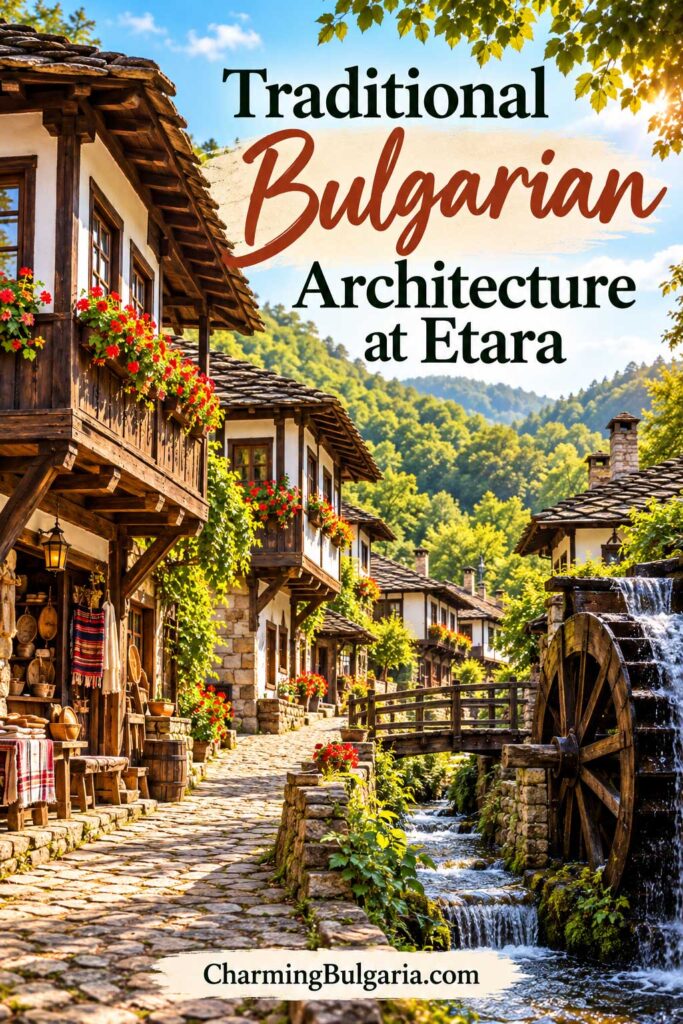
One of the first things you notice at Etara is how naturally the buildings seem to belong to the landscape.
The museum’s Craftsman Street, which forms the heart of Etara’s traditional craft bazaar, recreates the atmosphere of a main street in 19th-century Gabrovo, with workshops, small shops and living spaces arranged closely together. The buildings are based on real architectural examples that once stood in Gabrovo and nearby settlements.
Narrow streets, stone foundations, wooden upper floors and broad overhanging roofs give the area the distinctive character associated with Bulgarian National Revival architecture.
Stone, Wood and Whitewashed Walls
Traditional houses in the Gabrovo region were built largely from materials that were available locally.
Stone provided strong foundations and lower walls, while timber was used for upper floors, balconies, roof structures, doors and decorative details.
Many façades were plastered and painted in white or muted colors, creating a strong contrast with the dark wooden beams and heavy stone-covered roofs.
Wide eaves protected the walls from rain and snow, while open chardaks—covered wooden verandas—provided additional living and working space.
These practical features also gave the houses much of their visual character.
Homes and Workshops Under One Roof
One of the most interesting features of Gabrovo’s traditional architecture is the close relationship between work and family life.
A typical craftsman’s house often had a shop or workshop on the ground floor and living quarters above it.
At Etara, you can still see this arrangement clearly.
Workshop doors open directly onto the street, while wooden balconies, windows and residential rooms rise above them. Craftsmen could work downstairs while their families lived only a few steps away.
This layout helps Etara feel less like a collection of museum exhibits and more like a small working neighborhood.
Craftsman Street
The architectural heart of Etara is Craftsman Street, a compact lane lined with workshops, shops, houses and traditional commercial spaces.
The buildings were reconstructed at the museum mainly between 1967 and 1976, using examples of houses that had existed in Gabrovo and the surrounding region.
Walking along Craftsman Street today, it is easy to imagine craftsmen, merchants, customers and local families filling the area during the 19th century.
Doors open directly toward the street, neighboring buildings sit close together, and workshops occupy the spaces where people once produced and sold goods.
That compact arrangement is a big part of what gives Etara its atmosphere.
Architectural Details Worth Looking For
It is worth slowing down and looking beyond the workshops themselves.
Notice the wide wooden eaves, carved projecting windows, stone roofs, heavy doors and open chardaks above the street.
Some buildings are simple craftsmen’s homes, while others reveal the growing prosperity of Gabrovo’s merchants during the later National Revival period.
One particularly interesting example is the reconstructed Sakov House, originally built in Gabrovo in 1850. Its architecture shows outside influences that were beginning to appear in wealthier urban homes toward the end of the Revival era.
These details make Etara one of the best places in Bulgaria to look closely at traditional Gabrovo architecture.
You are not simply seeing an idealized old village. You are walking among carefully recreated examples of the homes, shops and workshops that once shaped everyday life in this part of Bulgaria.
For another beautifully preserved Revival-era setting, Bozhentsi combines cobblestone streets, whitewashed houses and dark wooden balconies in a quieter village atmosphere.
Traditional Bulgarian Crafts You Can See at Etara
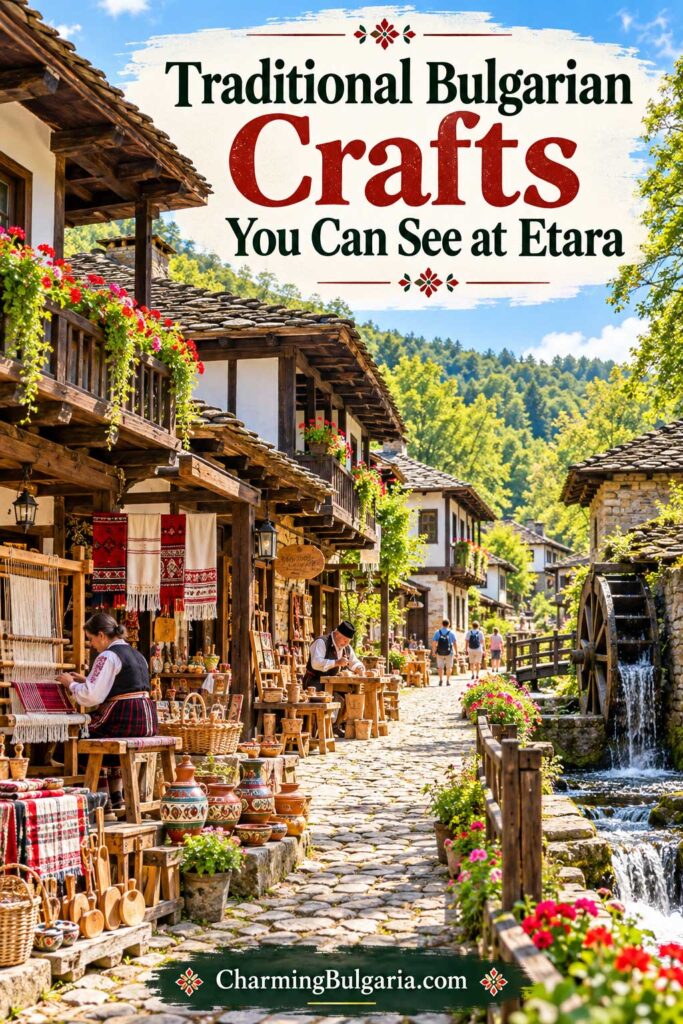
The workshops are one of the biggest reasons to visit Etara.
Instead of seeing traditional objects only inside display cases, you can watch craftspeople work with clay, wood, metal, textiles and other materials using techniques closely connected with the history of Gabrovo and the Balkan Mountains.
Many of these skills are still practiced in front of visitors, so the workshops feel active rather than staged.
The museum’s traditional crafts collection covers trades that once provided a living for generations of families throughout the region.
Pottery
Pottery became one of Gabrovo’s important crafts during the Bulgarian National Revival.
By the 1870s, the city had dozens of pottery workshops and kilns, concentrated in neighborhoods known locally as the Upper and Lower Potters. Etara preserves that tradition through its pottery workshop and historical displays.
Watching a potter work is one of the simplest pleasures of a visit.
A lump of clay gradually becomes a bowl, jug or other household vessel as it turns on the wheel, offering a glimpse into a skill that once supplied families with many of the objects they used every day.
Wood Turning and Woodcarving
Woodworking was especially important in the mountain communities south of Gabrovo, where forests provided craftsmen with plentiful raw material.
Traditional wood-turners worked with species such as sycamore, beech, walnut, cherry and plum, creating bowls, salt containers, candlesticks, vessels and other practical household objects.
Some of Etara’s wood-turning equipment is particularly interesting because it is connected to the museum’s historic water-powered machinery.
Watching a craftsman turn an ordinary piece of timber into a smooth, useful object makes it easy to appreciate how much experience lies behind what initially looks like a simple process.
Travelers interested in traditional woodcarving should also consider Tryavna, one of Bulgaria’s best-known centers for the craft.
Knife Making and Metalworking
Gabrovo was once famous for its metalworkers, and knife making was one of the crafts that helped establish the town’s reputation as an important Bulgarian craft center.
During the National Revival period, local craftsmen produced more than 150 different types of knives.
These were not simply decorative objects. Different knives were designed for particular occupations, markets and everyday tasks, and many even had their own traditional names.
Etara preserves an authentic knife-making workshop transferred from the former village of Nova Mahala. Inside are a traditional forge, old tools and equipment that reveal just how demanding the craft once was.
Blacksmithing was equally important. By the 1860s, the wider Gabrovo region had hundreds of blacksmith workshops producing everything from agricultural tools and household objects to hinges, locks, woodworking tools and religious items.
Weaving and Textile Crafts
Textiles were another essential part of everyday life.
Before factory-made fabrics became widely available, many household items had to be woven or produced by hand.
Traditional weaving created rugs, fabrics, cushions and other practical objects, while decorative patterns helped turn everyday textiles into something distinctive.
Etara continues to present weaving as part of its Craftsman Street, helping visitors understand how much work once went into producing objects that today are easily bought in a shop.
Copperware, Leatherwork and Other Crafts
The range of crafts at Etara extends well beyond pottery and woodworking.
Along Craftsman Street, workshops and displays represent traditions including copperware, jewelry making, saddle making, tannery work, cart and ironwork, goat-hair processing, weaving, musical-instrument making and icon painting.
Some crafts are immediately familiar, while others reveal occupations that have almost disappeared from everyday life.
That variety is part of what makes wandering through Etara so interesting—you never quite know what the next doorway will reveal.
Handmade Souvenirs
Many workshops also offer handmade objects connected with the crafts practiced at Etara.
Depending on which artisans are working during your visit, you may find pottery, carved or turned wooden pieces, textiles, metalwork, jewelry and other traditional items.
Buying something directly from a workshop feels different from picking up a mass-produced souvenir.
You may have just watched the artisan shape, carve or decorate an object similar to the one you are taking home.
Buying directly from the craftspeople also helps keep these traditional skills alive and gives artisans a reason to continue practicing them.
That is one of Etara’s greatest strengths: traditional Bulgarian craftsmanship is not simply explained here—you can still watch it happening in front of you.
The Water-Powered Workshops of Etara
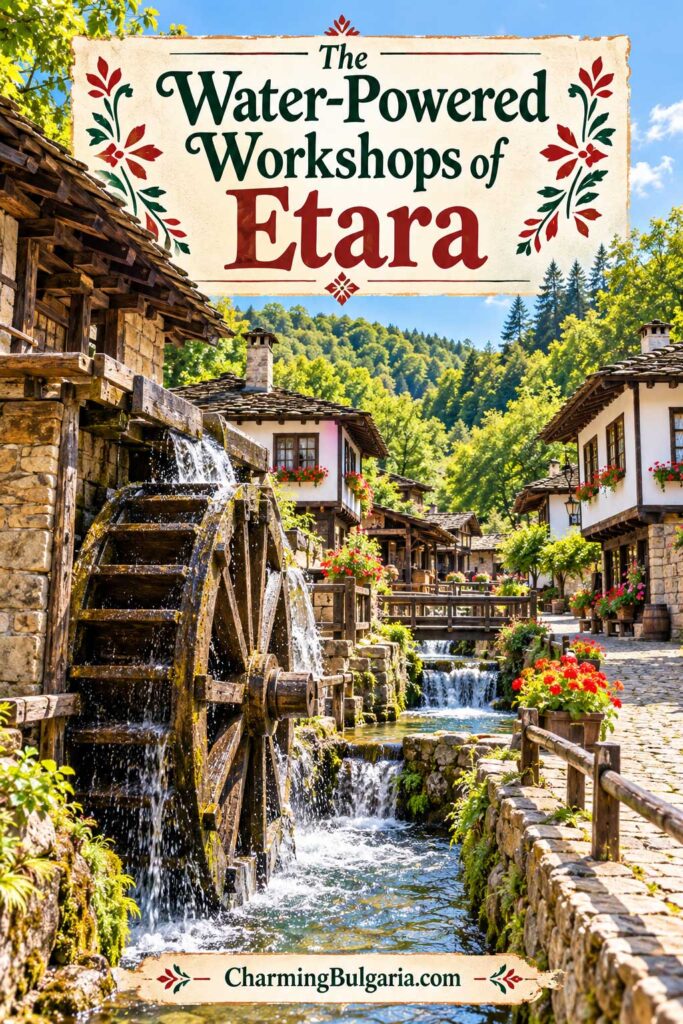
One of the most memorable things about Etara is the constant presence of water.
Channels run beside the paths and between the workshops, feeding a network of wheels and mechanisms that once helped craftsmen grind grain, process wool, cut wood, sharpen tools and turn wooden objects.
This is not just a decorative part of the museum.
Etara preserves a remarkable collection of traditional water-powered installations, with 10 different facilities connected through a working mill-race system.
How Water Powered Everyday Work
Before electricity reached mountain communities, flowing water was one of the most useful sources of mechanical power available.
Water was directed through channels toward wheels, which transferred movement to machinery inside the workshops.
That energy could then be used for jobs that would otherwise require enormous amounts of physical effort.
According to the museum’s history of the complex, water power was used for milling grain, processing wool and textiles, cutting wood, turning wooden vessels, making braid and sharpening metal tools.
What looks like a peaceful stream running through the museum was once part of a surprisingly efficient production system.
Traditional Watermills
Two different types of watermill are represented at Etara.
Both were used to grind grain, but their mechanical systems worked differently.
The Dolapkinya watermill uses a large wheel fitted with wooden containers that fill with water and turn the wheel through their weight. Gears then transfer that movement to the millstones.
The Karadzheyka watermill uses a more direct system in which a horizontal waterwheel drives the millstones through a vertical shaft.
Seeing the mechanisms in action makes it much easier to understand how important rivers and mountain streams once were to everyday village life.
Water did not simply shape the landscape.
It helped produce the flour people depended on for bread.
Fulling Mills and Wool Processing
Some of Etara’s most interesting machines were used to process wool.
The museum preserves both valyavitsa and tepavitsa fulling installations, which performed slightly different jobs.
Valyavitsa mills were used to work homespun woolen fabrics such as blankets and rugs. Water moved and beat the material until it became softer and developed a thicker, fleecier surface.
According to Etara’s description of its traditional water facilities, the process could take 5 to 10 hours, depending on the fabric and water temperature.
The tepavitsa performed a heavier form of mechanical treatment, repeatedly beating woolen cloth to strengthen and felt it.
Etara’s tepavitsa is especially important because it is an original mid-19th-century installation that already stood here when construction of the museum began, according to the museum’s crafts and livelihoods collection.
Water-Powered Woodworking
Water was also used for woodworking.
Etara includes a traditional sawmill where water power helped move the cutting mechanism, along with lathes used to shape wooden bowls, containers and traditional flasks.
Instead of turning the wood entirely by hand, craftsmen could use the moving water to keep the machinery rotating.
It is a simple idea, but watching the system work reveals how ingenious these workshops were.
Braid Making and Tool Sharpening
Other installations powered jobs that are even less familiar today.
A traditional braid-making workshop used water power to produce decorative woolen cords known as gaytan, once widely used on Bulgarian clothing.
A water-driven grindstone helped craftsmen sharpen knives and metal tools.
Together, these installations show how one source of energy could support many completely different trades.
A Rare Look at Early Technology
It is easy to focus on Etara’s colorful houses and craft shops and walk past the water channels without thinking much about them.
But the water-powered installations are one of the museum’s greatest treasures.
They show that traditional mountain communities were anything but technologically simple.
Craftsmen understood how to combine water, gravity, wooden gears, shafts and mechanical movement to make difficult work faster and more productive.
Take a few minutes to follow the channels, watch the wheels turn and listen to the machinery operating beside the stream.
It offers a glimpse into an older Bulgaria where the rhythm of work was quite literally powered by water.
Walking Through Etara’s Craftsman Street
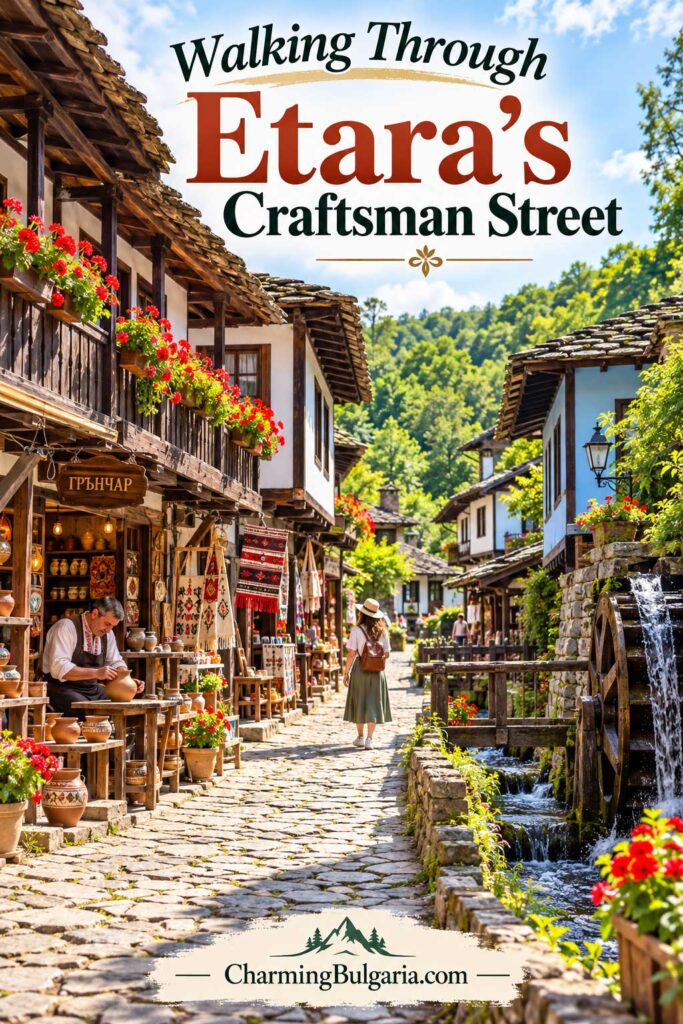
Craftsman Street is where Etara feels most alive.
Instead of moving from one exhibition room to another, you walk along a narrow Revival-era street lined with workshops, small shops, wooden balconies, craftsmen’s houses, a bakery and places serving traditional treats.
The atmosphere is different from a preserved village such as Zheravna, but both places offer a memorable look at Bulgaria’s National Revival heritage.
Doors stand open toward the street, and behind many of them artisans are still making the objects displayed for sale.
It feels much closer to wandering through an old Bulgarian craft quarter than visiting a conventional museum.
You can explore the different workshops and their history on Etara’s official Craftsman Street guide.
Watch the Craftspeople at Work
One of the best things to do at Etara is simply stop and watch.
Depending on which workshops are active during your visit, you might see a potter shaping clay, a coppersmith working metal, an artisan weaving goat hair, a jeweler forming small decorative pieces or a craftsman making traditional bells.
The interesting part is not only the finished object.
You can see the old tools, raw materials and repeated hand movements involved in producing something from beginning to end.
Some of these techniques have changed very little over generations.
Step Inside the Workshops
Many of the workshops are small enough that you can watch the craftspeople from only a few feet away.
That closeness makes the experience feel surprisingly personal.
There is no large barrier separating the visitor from the work. You can see clay spinning on the wheel, metal being shaped or thread passing through a loom almost at arm’s length.
Some artisans may also explain what they are making or demonstrate particular techniques when time allows.
Even without an explanation, simply watching the process often tells much of the story.
Browse Handmade Bulgarian Products
The workshops are also among the best places in Etara to look for a meaningful souvenir.
Many artisans sell objects connected directly with the crafts they practice, so you may find Gabrovo-style pottery, jewelry, woven items, wooden pieces, traditional bells and other handmade goods.
Etara also has a dedicated souvenir shop selling items made by museum artisans alongside books, postcards and other gifts.
Rather than buying the first thing you see, browse several workshops.
Part of the enjoyment is discovering how different each craft feels and finding something connected to a demonstration you actually watched.
Stop for Something Traditional
Craftsman Street is not only about workshops.
Food and drink also help recreate the atmosphere of an old commercial street.
Depending on what is available during your visit, you may find simid, banitsa, sesame rings, halva, traditional sweets and coffee brewed on hot sand.
These small stops make it easy to spend longer on Craftsman Street than you originally planned.
Enjoy the Street Without Rushing
You do not need to buy anything to enjoy this part of Etara.
Much of its charm comes from simply walking slowly through the street.
Listen to the workshops, look up at the wooden balconies and projecting upper floors, step into doorways that catch your attention and watch craftspeople continue traditions that once formed an important part of everyday life in Gabrovo.
Craftsman Street is where Etara’s architecture, craftsmanship and daily life come together most naturally.
Give yourself time here. It is the part of Etara that comes closest to feeling like the old craft town the museum was created to preserve.
Traditional Food and Treats to Try at Etara
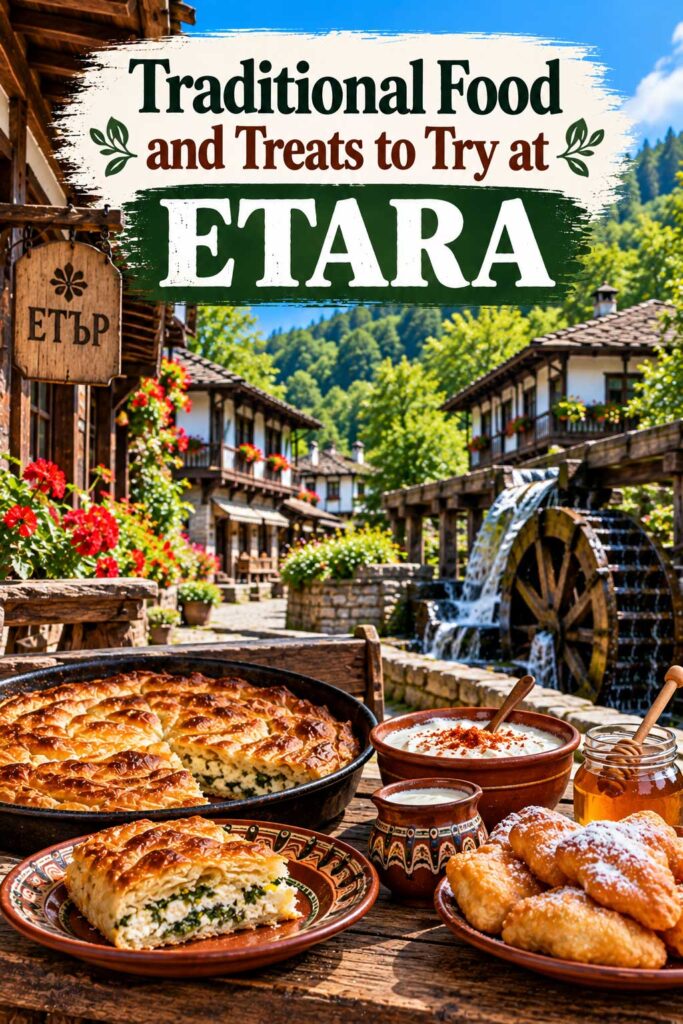
Etara is best known for its crafts and architecture, but food is another part of the experience.
Along Craftsman Street, the historic bakery, confectionery workshop and old coffee house continue the story of everyday life in Revival-era Gabrovo.
Rather than expecting a large food market, look for traditional foods such as simid, banitsa, sesame rings, halva and locally made sweets, along with coffee brewed on hot sand.
Try Simid From the Traditional Bakery
One of the most interesting foods to look for is simid, a traditional bread roll with a long history in Bulgaria.
Etara’s historic bakery contains a wood-fired oven, while the bread is prepared and shaped in the rooms above.
Traditional simid uses fine white flour and a special fermentation process involving chickpeas, which helps give the bread its distinctive aroma.
It is a simple food, but that is exactly what makes it fit so naturally into Etara.
Stop for Coffee Brewed on Hot Sand
The reconstructed Motkovo coffee house represents the type of social gathering place that existed in 19th-century Gabrovo.
Coffee houses were places where people met, rested and discussed local news and events.
Today, one of the experiences associated with the coffee house is Turkish-style coffee brewed on hot sand, served in surroundings that feel very different from a modern café.
If you enjoy coffee, this is one of the easiest ways to slow down for a few minutes during your visit.
Look for Traditional Sweets
Etara’s confectionery workshop preserves another part of Gabrovo’s culinary history.
Traditional treats associated with the workshop include brown halva, Turkish delight, sesame sticks and handmade lollipops.
You may also encounter a traditional sweet made from walnuts and concentrated grape must, part of a broader Balkan tradition of preserving nuts inside thickened fruit juice.
The museum’s Craftsman Street guide explains how confectionery developed in Gabrovo during the 19th century, when some sweets that had previously been imported from places such as Istanbul and Romania began to be produced locally.
Enjoy Something Fresh From the Bakery
The smell coming from the bakery is sometimes enough to make you stop.
The traditional oven is used for bread and baked goods, adding another working craft to a street already filled with pottery, woodworking and metalworking.
Food production may seem different from the other trades at Etara, but historically it was just as much a skilled occupation.
Take a Break Before Continuing
Etara is best experienced slowly.
Stopping for a warm simid, a small sweet or a cup of coffee gives you a chance to sit for a while and enjoy the surroundings instead of moving immediately to the next workshop.
With water running through the complex, wooden houses above the street and craftsmen working nearby, even a simple snack becomes part of the atmosphere.
Food is not the main reason to visit Etara, but it adds another layer to the experience.
You are not only seeing how people once worked—you can also taste a small part of everyday life in old Gabrovo.
Best Time to Visit Etara
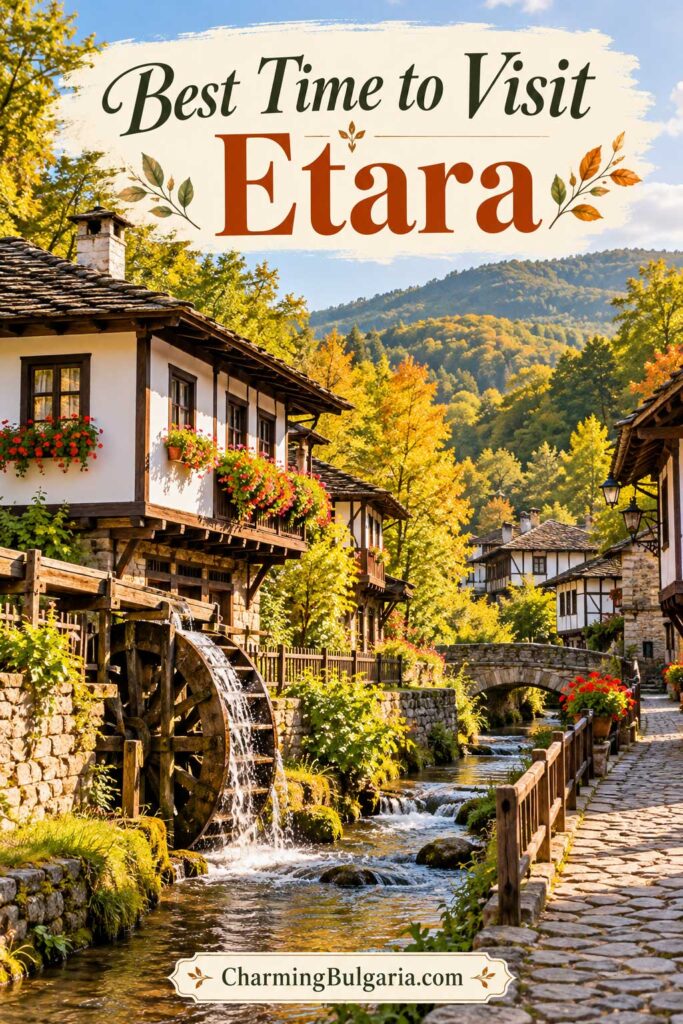
Etara can be visited throughout the year, but the atmosphere changes noticeably with the seasons.
For most travelers, late spring through early autumn offers the easiest combination of comfortable weather, active workshops and time outdoors.
If photography is a priority, autumn is especially beautiful. For fewer crowds, spring and weekdays outside major holidays are often better choices.
Spring
Spring is one of the nicest times to visit Etara.
The hills around Gabrovo turn green, trees begin filling out and the museum feels fresh after winter.
Temperatures are generally comfortable for walking, and visitor numbers are often lower than during the busiest summer weekends.
Late spring is especially pleasant if you want to spend time exploring the outdoor areas without intense heat.
Summer
Summer brings long days and a livelier atmosphere.
Craftsman Street, the workshops and the outdoor areas tend to feel livelier, making summer a good time to see Etara at its busiest.
Because much of the museum is outdoors, warm weather works well for a relaxed visit.
On particularly hot days, arriving earlier in the morning can make walking the cobblestone streets more comfortable.
Autumn
Autumn may be the most atmospheric season of all.
The wooded hills surrounding Etara begin changing to yellow, orange and red, creating a striking backdrop for the dark wooden balconies, stone roofs and old workshops.
This is one of the best times to visit if you enjoy photography.
The softer light, colorful forests and traditional architecture can make the entire museum feel especially picturesque.
If you are planning a longer autumn trip, historic villages such as Bozhentsi and Zheravna can be especially beautiful when the surrounding forests begin changing color.
Winter
Winter gives Etara a much quieter character.
When snow covers the roofs, bridges and surrounding hills, the museum can look almost like a traditional Bulgarian village from a storybook.
The tradeoff is colder weather, shorter days and potentially more challenging driving conditions in the mountains.
Some parts of the experience may also feel quieter than during the warmer months, so winter is best for travelers who value atmosphere more than a busy schedule of activities.
Weekdays vs. Weekends
If your schedule is flexible, weekdays are usually better for a slower visit.
Weekends, public holidays and major cultural events can attract more visitors, particularly in spring and summer.
That is not necessarily a disadvantage.
Special events can bring additional craftspeople, demonstrations, music and traditional activities that make the museum feel even more alive.
How Much Time Do You Need at Etara?
For most visitors, 2 to 3 hours is a good amount of time to spend at Etara.
That gives you enough time to explore Craftsman Street, step into several workshops, watch artisans at work and see the water-powered installations without feeling rushed.
If you enjoy photography, traditional architecture or handmade crafts, it is easy to stay longer.
If You Only Have a Short Time
If Etara is one stop on a busy day, allow around 1.5 to 2 hours.
Focus on Craftsman Street, a few working workshops, the water-powered machinery and the most interesting Revival-era buildings.
You will still get a good sense of the museum, but you may need to skip some of the smaller workshops.
For a More Relaxed Visit
Around 3 hours is better if you want to explore at an easy pace.
This gives you time to stop and watch the craftspeople, browse handmade products, take photographs and pause for coffee, simid or something sweet.
During Festivals and Special Events
If your visit coincides with a craft festival, folklore event or special demonstration, plan for more time.
Additional artisans, performances and cultural activities can easily turn Etara into a half-day experience.
Popular events may also mean larger crowds, so you may spend longer moving between workshops and activities.
For a first visit, around three hours is ideal. That gives you enough time to see the main workshops, water-powered installations and Craftsman Street without turning the visit into a rushed checklist.
Is Etara Worth Visiting?
Yes—Etara is absolutely worth visiting, especially if you are interested in traditional Bulgarian culture, craftsmanship and National Revival architecture.
What makes it different from a conventional museum is that you are not simply looking at historical objects behind glass.
You are walking through a recreated craft settlement, stepping inside workshops, watching artisans work and seeing traditional water-powered machinery still in motion.
That combination makes the experience much more immersive.
Why Etara Stands Out
Etara brings several parts of Bulgaria’s cultural history together in one place.
You can explore Revival-era houses, watch traditional crafts, see historic machinery operating, browse handmade products and learn how families once combined work and home life in the Gabrovo region.
Few cultural attractions in Bulgaria show all of those elements so clearly in one setting.
The museum is especially good at turning abstract history into something you can actually see and hear.
Instead of simply reading about an old craft, you may watch it being practiced only a few feet away.
A Great Introduction to Traditional Bulgaria
For first-time visitors, Etara offers an excellent introduction to Bulgaria beyond its major cities and famous monuments.
After seeing the workshops, timber-framed houses and traditional tools here, places such as Tryavna, Bozhentsi and Koprivshtitsa often become easier to appreciate.
You start to notice why the houses were designed the way they were, how craftsmen earned a living and how strongly everyday life was connected with local materials, water and manual skills.
Who Will Enjoy Etara Most?
Etara is especially rewarding if you enjoy historic architecture, handmade crafts, photography or places where you can actually watch traditions being practiced rather than simply read about them.
It is also a good choice for families because the working workshops and water-powered machinery make the visit more visual and interactive than a conventional museum.
When Etara May Not Be for You
If your trip is focused almost entirely on dramatic natural scenery, nightlife or major archaeological sites, Etara may not be the highest priority on a short itinerary.
Its appeal is quieter.
The memorable moments come from watching a craftsman work, hearing water move through an old mill channel, noticing the wooden balconies above the street or stopping for something traditional from the bakery.
For travelers who enjoy those kinds of details, Etara can easily become one of the highlights of a trip through central Bulgaria.
What to See Near Etara
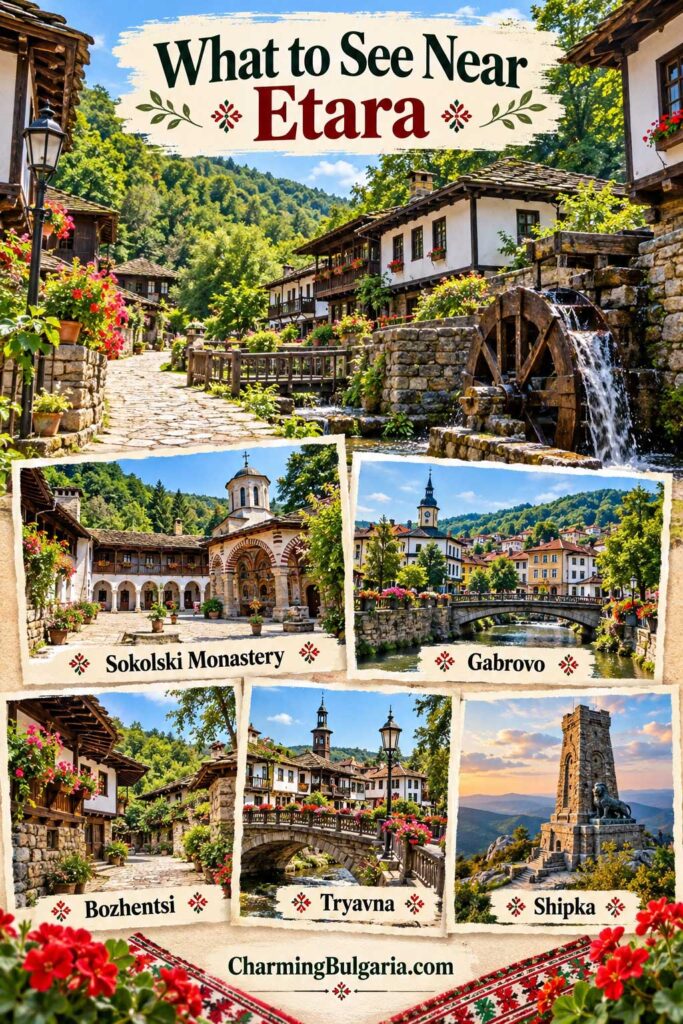
One of the advantages of visiting Etara is how many worthwhile places are nearby.
Within the wider Gabrovo region, you can combine traditional crafts with monasteries, preserved Revival-era villages, historic towns and dramatic Balkan Mountain scenery.
If you have a car, Etara works especially well as the centerpiece of a one- or two-day road trip through central Bulgaria.
Sokolski Monastery
Sokolski Monastery is one of the easiest places to combine with Etara.
Set among forested hills above Gabrovo, the monastery was founded in the 1830s and has a peaceful courtyard surrounded by traditional buildings.
One of its most recognizable features is the elegant white-stone fountain created by master Kolyu Ficheto, one of Bulgaria’s most celebrated National Revival builders.
Because Etara and the monastery are so close to each other, visiting both makes an excellent half-day combination.
Gabrovo
Do not treat Gabrovo simply as the city you pass through on the way to Etara.
The city has a long connection with craftsmanship, manufacturing and Bulgarian humor, and in 2017 it became part of UNESCO’s Creative Cities Network in the category of Crafts and Folk Art.
Spend some time walking through the center, exploring the museums or following the Yantra River before continuing deeper into the region.
Gabrovo provides the modern context for many of the craft traditions you see preserved at Etara.
Bozhentsi
If Etara shows you how craftsmen once worked, Bozhentsi shows you what a remarkably well-preserved Revival-era village can still look like.
Located north of Gabrovo, the architectural and historical reserve contains around 100 authentic houses, along with narrow cobbled streets, stone fountains, wooden gates and several historic buildings open as museums.
Bozhentsi feels quieter and more residential than Etara.
Visiting both places on the same trip gives you two very different experiences of Bulgaria’s National Revival heritage—one centered on living crafts and another on a preserved historic village.
Tryavna
Tryavna is one of the strongest additions to an Etara itinerary if you are interested in traditional architecture, woodcarving and Bulgarian craftsmanship.
Its historic center preserves the Daskalov House, old craft workshops, traditional houses and the famous Clock Tower, while Dyado Nikola Square remains one of Bulgaria’s most recognizable Revival-era urban ensembles.
Tryavna is particularly associated with woodcarving, making it a natural continuation of the craftsmanship you encounter at Etara. The municipality describes Dyado Nikola Square as a uniquely preserved Revival architectural ensemble.
Unlike Etara, Tryavna is a living town, so it is also a good place to stay overnight, eat dinner and enjoy an evening walk after the day-trippers leave.
Shipka Pass and Shipka Memorial Church
Continue south across the Balkan Mountains and the landscape changes dramatically.
Shipka Pass combines mountain scenery with some of the most important events in modern Bulgarian history.
Nearby, the colorful Shipka Memorial Church, with its golden domes and richly decorated exterior, provides a striking contrast to the simpler architecture of Etara and the surrounding villages.
This makes Shipka an especially good addition if you want to combine culture, history and mountain views in the same day.
The Best Etara Day Trip
If you have a full day and do not want to rush, one of the easiest combinations is:
Gabrovo → Etara → Sokolski Monastery → Tryavna
If traditional villages are your priority, try:
Etara → Gabrovo → Bozhentsi → Tryavna
With two days, you can explore these places at a much slower pace and add Shipka Pass and the Shipka Memorial Church as you continue south across the Balkan Mountains.
That concentration of crafts, Revival architecture, mountain scenery and historic villages is one of the reasons the Gabrovo region deserves more than a quick stop.
Practical Tips for Visiting Etara
Etara is easy to explore, but a little preparation can make the visit more comfortable—especially because much of the museum experience takes place outdoors.
Wear Comfortable Shoes
Most of Etara is explored on foot, and you will spend plenty of time walking along cobblestone paths, uneven surfaces and gently sloping streets.
Comfortable walking shoes with good grip are the best choice.
This becomes even more important after rain or during colder months, when stone surfaces can be slippery.
Check the Weather Before You Go
Etara sits close to the Balkan Mountains, so conditions can feel different from lower and more open parts of central Bulgaria.
A light jacket or extra layer is useful in spring and autumn, while summer visitors should bring water and sun protection.
If you are visiting in winter, prepare for cold temperatures and possible snow.
Bring More Than One Payment Option
Cards are widely accepted in Bulgaria, but carrying a small amount of cash in euros is still useful when buying from individual workshops or food stalls.
Payment options can vary between artisans, so having both cash and a card gives you more flexibility.
Take Your Time Inside the Workshops
Do not treat Craftsman Street simply as a row of souvenir shops.
Watching the artisans work is one of the most interesting parts of Etara.
Spend a few minutes inside the workshops that catch your attention. Watching clay being shaped, wood being turned or metal being worked often makes the finished objects far more meaningful.
Ask Before Taking Close-Up Photos
Etara offers plenty of opportunities for photography, from stone roofs and wooden balconies to waterwheels and narrow craft streets.
When photographing an individual artisan at close range, however, it is polite to ask first.
For general street scenes, architecture and landscapes, you will find plenty to photograph without interrupting anyone at work.
Check the Event Calendar Before Your Visit
Etara hosts cultural celebrations, craft demonstrations, workshops and seasonal events throughout the year.
Depending on your travel dates, you might encounter traditional holiday customs, food demonstrations, folk performances or special craft activities.
Check Etara’s official website for the latest events and cultural programs before you go.
If one of the larger events matches your itinerary, it can add a completely different dimension to the visit.
Arrive Earlier on Busy Days
Weekends, public holidays and major cultural events can attract significantly more visitors.
Arriving earlier gives you more time to explore Craftsman Street before it becomes busy and usually makes photography easier.
It also gives you a better chance to stop and watch artisans without feeling that you need to keep moving.
Leave Room in Your Schedule
Perhaps the most useful advice is simply not to rush Etara.
On paper, it may look like a museum you can quickly walk through.
In reality, much of the experience comes from unexpected moments—following a water channel to an old mill, watching a craftsman at work, discovering a small workshop or stopping for coffee and something traditional to eat.
Give yourself enough time to wander.
That slower pace is where much of Etara’s charm begins.
Photography Tips for Etara
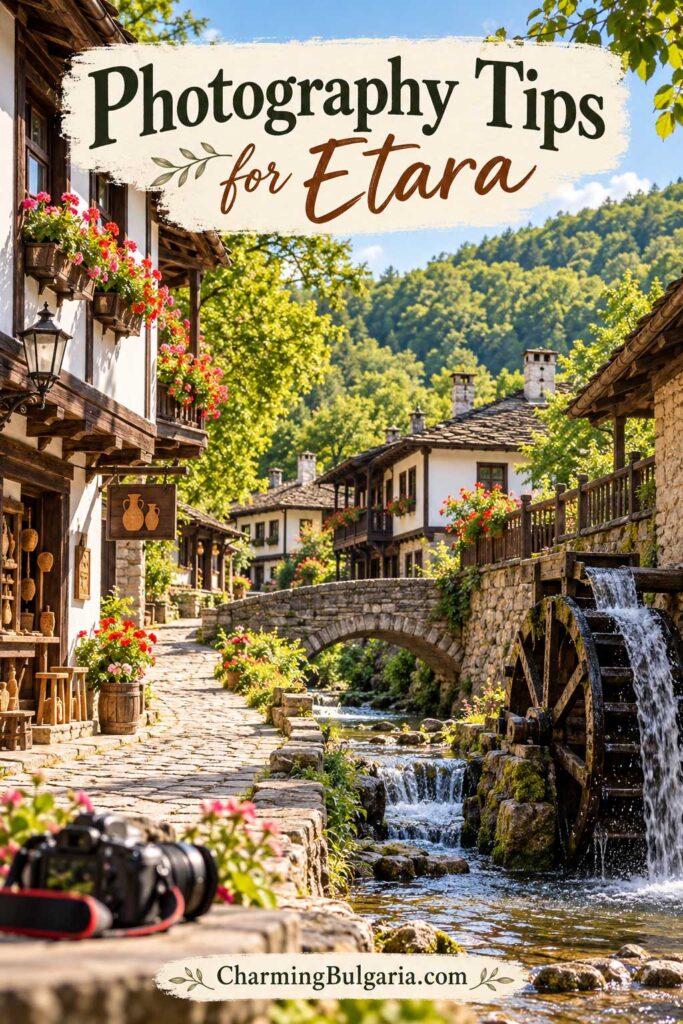
Etara is one of the most photogenic cultural attractions in central Bulgaria.
The combination of cobblestone streets, dark wooden balconies, stone roofs, working workshops, water channels and forested hills gives you plenty to photograph without needing professional equipment.
The best images usually come from slowing down and looking beyond the obvious wide views.
Photograph Craftsman Street Early
If you want cleaner street scenes with fewer people, arrive earlier in the day.
The narrow Craftsman Street looks especially atmospheric before it becomes busy, and the softer morning light can work beautifully with the contrast between whitewashed walls, dark timber and stone surfaces.
Early light also helps bring out the texture in old doors, balconies and rooflines.
Look for Architectural Layers
Etara works especially well for compositions that include several layers at once.
Try framing a workshop doorway in the foreground, a wooden balcony above it and the surrounding hills or trees in the background.
This helps show how closely the architecture is connected with the landscape.
Details such as carved railings, heavy wooden doors, projecting upper floors and stone roofs can also make strong standalone photographs.
Focus on the Crafts
Some of the most memorable images come from inside the workshops.
Hands shaping clay, metal being worked, wood turning on a lathe or thread moving through a loom can tell the story of Etara more effectively than a simple building photo.
Try photographing the interaction between the artisan, the tools and the material rather than focusing only on the finished object.
For close-up portraits or detailed photos of individual craftspeople, it is polite to ask first.
Use the Water in Your Compositions
Water is one of the defining visual elements of Etara.
Include wooden channels, mill wheels, small cascades and reflections in your photographs whenever possible.
A moving waterwheel framed beside an old workshop can create a much stronger sense of place than photographing either subject alone.
If your phone or camera allows it, experimenting with a slightly slower shutter speed can also make flowing water look softer and more dynamic.
Photograph the Small Details
Do not spend the entire visit chasing wide views.
Look for smaller details too—pottery outside workshops, old hand tools, carved doors, worn stone steps, woven goods, traditional metalwork and reflections in the water channels.
These smaller details often capture the atmosphere of Etara better than a single postcard-style shot.
Visit in Autumn for the Best Color
Autumn is particularly beautiful for photography.
The surrounding forest turns yellow, orange and red, creating a warm backdrop for Etara’s dark timber, stone roofs and white façades.
The contrast between the traditional architecture and autumn foliage can make this one of the strongest seasons for photographing the museum.
Spring offers a greener and fresher look, while winter can be especially atmospheric after snowfall.
Explore Beyond the Main Street
Craftsman Street naturally attracts most of the attention, but some of Etara’s quieter corners are equally photogenic.
Follow the water channels, look for small bridges and mill buildings, and step away from the busiest areas when possible.
These less obvious angles often produce images that feel more personal and less like standard tourist photographs.
Capture the Atmosphere, Not Just the Buildings
The best Etara photographs usually include some sense of life.
A craftsman working beside an open doorway, water moving under a wooden wheel, smoke or steam rising near a workshop, or someone walking through the cobbled street can make the scene feel much more authentic.
Etara is not only about old architecture.
It is the combination of people, craftsmanship, water and historic surroundings that makes the place so visually memorable.
Visiting Etara With Children
Etara can be a very good place to visit with children because there is always something happening around them.
Instead of spending the entire visit inside quiet museum rooms, families can move between workshops, watch craftspeople at work, follow water channels and explore the old streets at their own pace.
That variety helps keep younger visitors interested.
Crafts Are Easy to Understand
Children do not need a long history lesson to enjoy watching someone shape clay, carve wood or work with metal.
Seeing an object being made from beginning to end is often far more engaging than looking at the finished piece behind glass.
The same is true of the water-powered machinery.
Watching wheels turn, channels fill and old mechanisms move can make the visit feel almost like discovering a working machine rather than visiting a museum exhibit.
Plenty to Explore Outdoors
Much of Etara is outdoors, which gives children more freedom to move around than they would have in a conventional museum.
There are bridges, streams, workshops, old houses and small details to discover along the way.
That said, parents should keep a close eye on younger children around water channels, working machinery, uneven cobblestones and steps.
Comfortable shoes are especially helpful for families.
Turn the Visit Into a Small Adventure
One easy way to make Etara more fun is to turn the visit into a simple scavenger hunt.
Ask children to look for:
- a working waterwheel
- a potter shaping clay
- carved wooden decorations
- an old hand tool
- a traditional workshop sign
- a handmade toy or souvenir
- the biggest wooden wheel they can find
Small challenges like these can make the museum feel more interactive without needing a formal activity.
Stop for a Treat
A short food break can help reset the pace of the visit.
Stopping for a traditional sweet, something from the bakery or a drink gives children time to rest before continuing through the workshops.
It also makes the day feel more relaxed rather than overly scheduled.
Good for a Family Day Trip
Because Etara can usually be explored comfortably in a few hours, it works well as part of a family day around Gabrovo.
You can combine it with Sokolski Monastery, Gabrovo or a short stop in Tryavna without making the day feel too packed.
For families interested in culture, crafts and places where children can actually watch things happening, Etara offers much more than a standard museum visit.
Festivals and Cultural Events at Etara
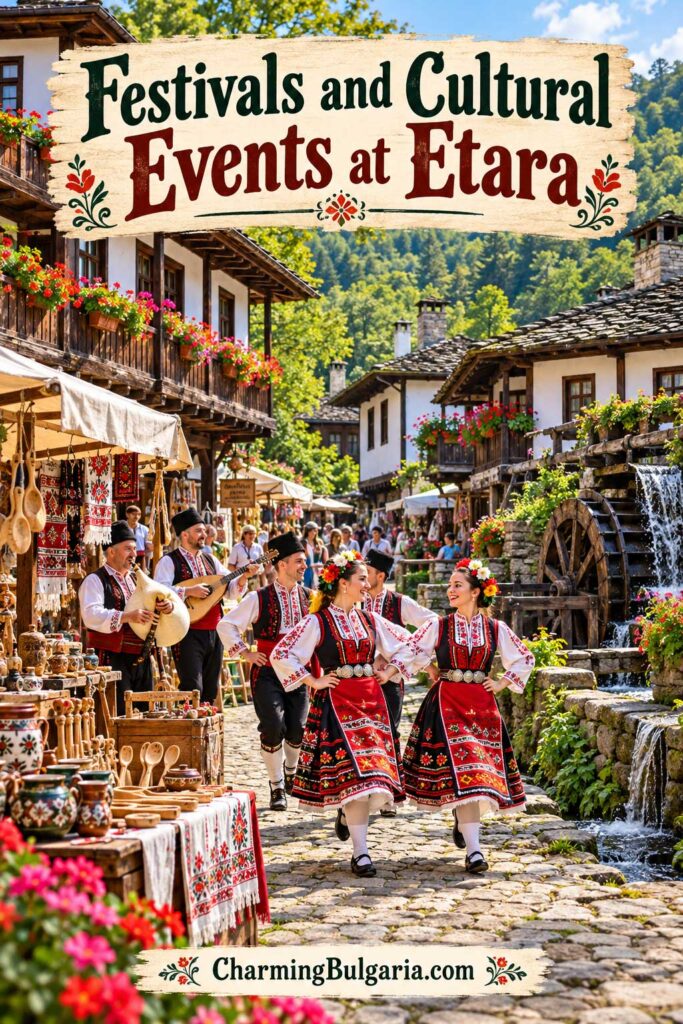
Etara is interesting on an ordinary day, but special events can transform the museum completely.
Throughout the year, the streets and workshops host craft demonstrations, traditional customs, food events, folklore performances and educational activities connected with Bulgaria’s cultural heritage.
If your travel dates are flexible, checking the museum calendar before you go can be well worth it.
Festival of Pestil
One of Etara’s signature events is the Festival of Pestil, dedicated to a traditional Gabrovo specialty sometimes nicknamed “Gabrovo chocolate.”
Pestil is made from plums that are slowly cooked and processed into a dense fruit preserve.
Etara has organized the festival since 2013, bringing together food traditions, craft demonstrations, music and activities connected with the historic production of pestil.
During the event, visitors can watch the preparation process and learn about the tools, occupations and traditions that surrounded this distinctive local food.
It is one of the best times to visit if you want to experience Etara at its liveliest.
Night in the Past
Another particularly atmospheric event is Night in the Past.
During Night in the Past, folklore performers, musicians and historical scenes bring Etara’s old streets and workshops to life after dark.
Experiencing the old workshops and Revival-era streets during an evening event gives Etara a very different character.
Seasonal Bulgarian Traditions
Etara also marks many traditional Bulgarian holidays and seasonal customs.
Around Baba Marta, visitors may encounter activities connected with making and giving martenitsi.
For Enyovden, the museum has recreated traditions associated with herbs, health and passing beneath an Enyovden wreath.
Later in the year, Christmas programs can include workshops for making traditional decorations and koledari—groups of young men recreating the Bulgarian custom of Christmas caroling.
These events are especially interesting because they show traditions as something practiced rather than simply described on an information panel.
Food and Harvest Events
Etara’s calendar also includes events connected with traditional food preservation and seasonal rural life.
For example, the museum has organized demonstrations devoted to preparing turshiya, Bulgaria’s traditional pickled vegetables, using older recipes and preservation methods.
Events like these add another dimension to Etara because they connect crafts and architecture with the everyday routines that helped families prepare for the changing seasons.
Craftspeople From Bulgaria and Abroad
Etara has a long tradition of bringing together craftspeople from different regions and countries.
Its International Fair of Traditional Crafts is one of the museum’s most important larger events, featuring artisan exhibitions, demonstrations and competitions designed to keep traditional skills visible and relevant.
The program changes between editions, so check the museum’s current schedule if the fair is one of the main reasons for your visit.
For travelers particularly interested in craftsmanship, events like this can turn a visit to Etara into something much larger than an ordinary museum day.
Check the Calendar Before You Go
Event dates change from year to year, so always confirm the schedule before planning a trip around a particular festival.
Check Etara’s official website for current festivals, workshops, exhibitions and cultural events.
A normal visit is already worthwhile, but arriving during the right event can mean seeing additional craftspeople, traditional food preparation, folk music, customs and activities that are not part of an ordinary day.
Just expect larger crowds during major festivals and consider arriving earlier if you want time to explore the permanent workshops before the main program begins.
Where to Stay Near Etara
Etara can easily be visited as a day trip, but staying nearby gives you much more flexibility to explore the wider Gabrovo region.
The best bases are usually Gabrovo, Tryavna or a rural guesthouse in the surrounding villages and mountains.
The best choice depends on whether you value convenience, historic atmosphere or a quieter countryside stay.
Stay in Gabrovo for Convenience
Gabrovo is the easiest base if Etara is your main priority.
The city is close to the museum and offers the widest choice of hotels, guesthouses, restaurants, shops and other practical services.
Staying here works especially well if you want to visit Etara early, return to the city for dinner and still have time to explore nearby places such as Sokolski Monastery or Bozhentsi.
Gabrovo is the most practical choice if easy access to restaurants, shops and transport matters most.
Stay in Tryavna for Historic Charm
If you want your accommodation to feel like part of the trip, Tryavna is the more atmospheric choice.
Its historic center is filled with Revival-era houses, cobbled streets, old workshops and traditional architecture, making it a natural base for a trip focused on Bulgarian crafts and heritage.
Evenings are especially pleasant once the daytime visitors leave and the old center becomes quieter.
Tryavna is a good choice if you want to combine Etara with slower walks, traditional architecture and a more picturesque setting.
Stay in a Rural Guesthouse for Peace and Quiet
Travelers who prefer countryside stays can choose one of the guesthouses in the villages and mountain areas around Gabrovo.
These stays are often quieter and more personal, with forest views, traditional interiors and a slower pace than staying in town.
Some guesthouses also offer breakfast or home-cooked meals, so check what is included when booking.
A rural stay works particularly well if you are traveling by car and do not mind being farther from restaurants and shops.
What About Bozhentsi?
Bozhentsi is another beautiful option if you want to stay in one of Bulgaria’s best-preserved Revival-era villages.
It is quieter than Gabrovo and more intimate than Tryavna, making it especially appealing for couples, photographers and travelers who enjoy historic villages after the day visitors leave.
The tradeoff is fewer services and dining options, so it works best if atmosphere matters more than convenience.
Which Base Is Best?
Choose Gabrovo if you want the easiest logistics.
Choose Tryavna if you want historic charm, restaurants and an attractive evening atmosphere.
Choose Bozhentsi or a rural guesthouse if you want peace, traditional surroundings and a slower stay.
Whichever base you choose, spending at least one night in the region makes it much easier to combine Etara with Sokolski Monastery, Bozhentsi, Tryavna, Gabrovo and Shipka without turning the trip into a rushed day of driving.
Frequently Asked Questions About Etara Bulgaria
Is Etara a real village?
No. Etara is an open-air ethnographic museum, not a functioning historic village.
It was created to recreate the appearance and working life of a traditional craft settlement from the Gabrovo region during Bulgaria’s National Revival period.
Its streets, workshops, houses and water-powered installations are based on real examples of regional architecture and craftsmanship.
How far is Etara from Gabrovo?
Etara is located about 8 kilometers south of central Gabrovo.
By car, the journey usually takes around 15 minutes, making Etara one of the easiest attractions to combine with a visit to the city.
How much time do you need at Etara?
For most visitors, 2 to 3 hours is ideal.
That gives you enough time to explore Craftsman Street, watch artisans at work, see the water-powered installations and stop for food or handmade souvenirs.
If you are visiting during a festival or enjoy photography, you may want to allow half a day.
Can you buy handmade souvenirs at Etara?
Yes.
Many of the workshops sell handmade items connected with traditional Bulgarian crafts.
Depending on which artisans are working, you may find pottery, wooden objects, jewelry, woven pieces, metalwork and other decorative items.
Buying directly from the workshops is also a good way to support the craftspeople who continue practicing these traditional skills.
Is Etara good for children?
Yes. Etara can be a very good family attraction.
Children can watch pottery being shaped, see waterwheels and machinery in motion, walk between workshops and explore much of the museum outdoors.
Parents should keep younger children close around water channels, steps and uneven cobblestone areas.
Can you visit Etara in winter?
Yes, Etara can be visited in winter.
The museum has a quieter atmosphere during the colder months, and snow can make the traditional buildings especially beautiful.
Opening times and the activity of individual workshops may vary seasonally, so check the museum’s current visitor information before traveling.
What is Etara famous for?
Etara is best known for its traditional Bulgarian crafts, National Revival architecture and historic water-powered machinery.
Its working workshops allow visitors to see crafts such as pottery, woodworking, metalworking and weaving demonstrated in a setting designed to resemble 19th-century Gabrovo.
Can you visit Etara and Shipka in the same day?
Yes.
Etara and the Shipka area can easily be combined if you are traveling by car.
A good day trip might include Etara, Sokolski Monastery and Shipka, although adding too many additional stops can make the day feel rushed.
Is Etara worth visiting if I have already seen Bulgarian Revival towns?
Yes.
Places such as Koprivshtitsa, Tryavna and Bozhentsi are excellent for preserved architecture, but Etara offers something different.
Its strongest focus is on living craftsmanship and traditional technology, including working workshops and water-powered machinery.
That makes Etara a complement to Bulgaria’s historic towns rather than a substitute for them.
What is the best time of year to visit Etara?
For most travelers, late spring through early autumn offers the easiest conditions for exploring the museum.
Autumn is particularly beautiful because the surrounding forests change color, while spring is often quieter.
Summer usually feels livelier, especially around weekends and cultural events.
Is Etara worth visiting?
Yes. Etara is particularly worthwhile if you enjoy Bulgarian culture, traditional crafts and Revival-era architecture. Its combination of working artisans, historic buildings and water-powered machinery makes it different from a conventional museum.
Why Etara Is One of Bulgaria’s Most Memorable Cultural Experiences
Etara is one of the best places in Bulgaria to experience traditional craftsmanship, Revival-era architecture and the working life of past generations in a setting that still feels alive.
Its appeal does not come from a single landmark.
It comes from the combination of everything around you—the sound of water moving through old channels, craftsmen working by hand, wooden balconies above the street, historic machinery turning and small workshops filled with objects made on site.
That atmosphere makes Etara feel far more personal than a conventional museum.
You can come for the history, but some of the most memorable moments are often the simplest ones: watching a potter shape clay, following a water channel toward an old mill, stepping inside a tiny workshop or sitting quietly beside the stream.
If you are exploring Gabrovo, Tryavna, Bozhentsi, Shipka or the central Balkan Mountains, Etara deserves a place on your itinerary.
It offers a rare chance to see Bulgarian cultural heritage not only preserved, but still practiced in front of you.
The past here does not feel distant—it still feels present.
Explore More of Traditional Bulgaria
If Etara made you curious about Bulgaria’s traditional villages, crafts and National Revival architecture, there are many more places worth exploring.
Continue your journey with:
- Bozhentsi – Cobblestone Streets and Bulgarian Revival Houses
- Tryavna – Traditional Woodcarving and Revival Architecture
- Koprivshtitsa – Bulgaria’s Colorful Revival-Era Treasure
- Arbanasi – Historic Houses and Churches Near Veliko Tarnovo
- Zheravna – A Step Back in Time
- Shiroka Laka – Traditional Houses, Music and Rhodope Culture
- Kovachevitsa – One of Bulgaria’s Most Beautiful Mountain Villages
- Dolen – One of Bulgaria’s Best-Preserved Mountain Villages
Together, these destinations offer a deeper look at the architecture, craftsmanship and traditions that give Bulgaria’s historic towns and villages their distinctive character.